




If you're looking at a tattoo removal course right now, you're probably in one of two positions. You either already run a clinic and know clients are asking for removal more often, or you're planning a launch and don't want to buy a laser before you understand the compliance, treatment protocols, and commercial reality behind it.
That caution is healthy. Tattoo removal can become a strong service line, but only when training covers more than button-pushing. In South Africa, the dividing line isn't who owns a device. It's who understands skin, wavelength selection, consultation, consent, SAHPRA compliance, and how to price and position the service so it stays safe and profitable.
Table of Contents
- Why Add Tattoo Removal to Your Clinic Services
- Decoding the Core Tattoo Removal Course Syllabus
- Q-Switched Versus Picosecond Laser Technologies
- Navigating Accreditation and SAHPRA Compliance in South Africa
- From Theory to Practice The Hands-On Training Component
- Building Your Business with Tattoo Removal Services
- Your Certification Outcome and Continuing Education
- Frequently Asked Questions About Tattoo Removal Training
Why Add Tattoo Removal to Your Clinic Services
A client walks in asking for help with a name on the wrist before a new job starts. Another wants to fade an old sleeve for a cover-up. A third has been turned away by two clinics because no one felt confident treating darker skin safely. That is the commercial opportunity and the clinical responsibility in one service.
For South African clinics, tattoo removal fills a gap that many practices can see but few set up properly. It brings in clients with a defined problem, a clear treatment goal, and a reason to return over months rather than once. It also suits clinics that already run consultation-led services and understand that outcomes depend on documentation, follow-up, and expectation management.
The strongest reason to add tattoo removal is not trend chasing. It is service-line quality. Removal clients usually book with more intent than general aesthetic clients. They ask better questions, they want a proper plan, and they are often prepared for staged treatment if the practitioner explains the limits clearly.
Demand comes from a different type of consultation
This is not a quick upsell at reception. It is a treatment category built on trust.
Tattoo removal consultations tend to be more serious because the client is often dealing with work requirements, a relationship change, military or corporate grooming standards, or dissatisfaction with an older tattoo. In practice, that changes how the clinic should sell the service. Hard selling performs poorly. Clear explanations, realistic timelines, visible healing protocols, and honest discussion about incomplete clearance convert better.
That matters in South Africa, where clinics also need to think beyond demand and look at legal exposure. A profitable removal service is only profitable if the device, the operator training, the consent process, and the record keeping can stand up to scrutiny. In this market, SAHPRA compliance is part of the business model, not an admin task left for later.
Why the numbers can work
Tattoo removal can produce strong revenue from a single room, but only when the setup is disciplined. Session times are often shorter than many skin treatments. The catch is that the margin only holds if consultation time, photography, consumables, cooling, aftercare, missed appointments, and patch testing are priced into the service properly.
I have seen clinics make good money with tattoo removal, and I have seen clinics lose money while staying fully booked. The difference is usually operational. Underpriced sessions, weak consultation processes, poor spacing between appointments, and buying the wrong device for the local client base will erode profit quickly.
A well-run service usually improves clinic economics in four practical ways:
- Repeat treatment cycles: Most clients need a series of sessions, which makes forecasting easier than once-off treatments.
- Higher-value consultations: The assessment has clinical weight, so the consultation can be structured and charged properly where appropriate.
- Stronger utilisation of existing systems: Clinics already using treatment photography, consent forms, and follow-up protocols can add removal without rebuilding the whole workflow.
- Better cross-referral quality: Clients who come in for removal often refer others with a similar problem because results are visible and personal.
Why clinics get this wrong
Equipment is only one part of the decision. Service design matters just as much.
Clinic owners usually make one of two mistakes. They buy a machine before they have a treatment protocol, pricing model, and complication pathway. Or they market tattoo removal like a beauty special, which attracts poor-fit clients and unrealistic expectations.
The better approach is to add tattoo removal once the clinic can deliver consistency. That means clear intake criteria, informed consent, good photography, conservative treatment planning, and staff who understand both skin response and business math. In South Africa, it also means checking the regulatory position before launch so the service can grow without creating avoidable compliance risk.
Decoding the Core Tattoo Removal Course Syllabus
A strong tattoo removal course should feel like a clinical system, not a product demo. If the programme jumps straight to machine settings without building judgement first, it's incomplete.
The best way to think about the syllabus is like constructing a treatment room from the ground up. Laser physics is the foundation. Skin assessment and safety are the frame. Protocols, documentation, and business integration are the operational finish. Remove any one layer and the service becomes unstable.

What the theory must cover
Training needs to start with skin anatomy, healing physiology, laser physics, safety protocols, client consultation, Fitzpatrick skin typing, and post-treatment care. Those are part of the competency areas identified in this training overview on expert-led tattoo removal education, which also notes that leading programmes often require 40+ hours of blended online theory and hands-on apprenticeship.
That isn't academic padding. Every module has a direct treatment consequence.
- Laser physics: If a practitioner doesn't understand wavelength-pigment interaction, settings become guesswork.
- Skin anatomy and healing: This is what helps you recognise normal healing versus an adverse response.
- Fitzpatrick typing: In South African practice, this is central to choosing a safe approach across a wide range of skin tones.
- Consultation and consent: This protects both the client and the clinic when expectations need careful management.
- Post-care: Good aftercare advice reduces preventable problems and improves the client experience.
What separates a serious course from a short demo
Many people ask whether a short introduction is enough. It usually isn't. A serious tattoo removal course should train clinical decision-making, not just device handling.
Look for signs that the course teaches practitioners to think:
| Course element | Why it matters in practice |
|---|---|
| Live skin assessment | Helps you judge response before you fire the first pulse |
| Patch testing and consultation flow | Prevents rushed treatment plans |
| Parameter selection logic | Builds confidence across different tattoo presentations |
| Complication management | Prepares you for real-world issues, not ideal cases only |
| Device safety and maintenance | Protects outcomes and protects the business |
A weak course often sounds impressive because it lists many topics. A strong one shows how those topics connect during a real client journey.
Good training teaches when not to treat, when to pause, and when to refer. That judgement protects your reputation more than any marketing campaign.
Business integration also belongs in the syllabus. If your training never addresses consultation structure, photography standards, treatment spacing, scheduling, and positioning the service inside a clinic, it leaves a commercial gap that many new providers feel immediately after launch.
Q-Switched Versus Picosecond Laser Technologies
A clinic in Johannesburg buys the cheapest tattoo removal laser it can finance, then discovers six months later that treatment times are long, colour response is inconsistent, and premium clients are asking for technology it cannot offer. I see this mistake often. Device selection affects outcomes, pricing power, client retention, and your legal exposure if the system is used outside its proper indications.
At a practical level, Q-Switched Nd:YAG platforms remain the standard starting point for many clinics. They commonly use 1064 nm for darker tattoo pigment and 532 nm for red and orange tones, with nanosecond pulses designed to break pigment into particles the body can gradually clear. Sessions are often relatively short, but treatment planning matters more than speed on paper.

How the two systems differ in practice
Q-Switched systems still earn their place. They are widely understood, generally less expensive to acquire, and often profitable in clinics treating straightforward black-ink tattoos with patients who accept a longer treatment course.
Picosecond systems push energy in shorter pulse durations. In practice, that can improve fragmentation of certain pigments and help on resistant tattoos, multicolour work, and cases where clients are paying for faster visible clearance. The commercial advantage is not just clinical. Fewer treatment visits can free diary space, tighten treatment plans, and support stronger package pricing.
The trade-off is obvious. Picosecond platforms cost more to buy, more to finance, and they do not excuse poor consultation, weak endpoint recognition, or unsafe parameter selection.
For South African clinics, this comparison also sits inside a regulatory and business reality. A device that looks impressive in a sales meeting still has to fit your scope, documentation standards, staff training level, and SAHPRA-related compliance process. I advise owners to compare technology only after they have defined the clinic's case mix, price point, and risk tolerance.
What a clinic owner should compare before buying
A sound buying decision usually comes down to five points:
- Tattoo profile: Older black amateur and professional tattoos are often well served by Q-Switched systems. Complex colour work and resistant tattoos may justify picosecond capability.
- Client expectation: If your market wants the lowest entry price, Q-Switched may suit the offer better. If your market expects premium positioning and shorter courses, picosecond can support that model.
- Capital recovery: The more expensive platform must earn its keep through pricing, utilisation, and repeat bookings. Prestige alone does not pay instalments.
- Operator skill: Better hardware still depends on good skin assessment, conservative starts where appropriate, and disciplined interval planning.
- Service mix: Some clinics justify picosecond investment because the platform supports broader pigment and aesthetic work, not tattoo removal alone.
One mistake is buying on headline specifications without testing how the device fits an actual clinic day. Ask about spot sizes, consumables, maintenance response times in South Africa, training quality, downtime risk, and whether local support can keep the room productive. Those details affect ROI more than brochure language.
For clinics assessing premium options, review a picosecond tattoo removal platform for clinical use against your consultation process, Fitzpatrick skin types, expected treatment volume, and financing model. That is how you choose technology that performs well and makes business sense.
Navigating Accreditation and SAHPRA Compliance in South Africa
The biggest mistake I see in this market is treating compliance like paperwork that can be sorted out later. It can't. In South Africa, legal operation starts with device legitimacy, scope of practice, documentation, and training that reflects local regulation rather than overseas assumptions.
The South African market's recent regulatory transition underscores this shift. SAHPRA's 2017 licensing framework for aesthetic lasers led to a 60% increase in certified training programmes by 2024, according to this report on tattoo removal trends and regulation. The same source notes that pre-regulation, a 2016 study reported complication rates around 15%. That context demonstrates that formal oversight is more than bureaucracy; it is a critical response for patient safety.
Why compliance comes before marketing
A tattoo removal course in South Africa should address local device licensing and practitioner responsibilities directly. If the course talks only about technique but never clarifies what can legally be used and under what conditions, it leaves clinic owners exposed.
One of the clearest signs of the gap is that local demand for compliance guidance is rising. The South African compliance-focused overview notes a 45% spike in "tattoo removal training SAHPRA" searches from Jan 2025 to Apr 2026, and reports that 28% of aesthetic clinics audited in Gauteng and Western Cape faced penalties for unlicensed laser use. It also states that non-compliance can risk fines up to R100,000 or practice suspension.
That is not a background issue. It is an operating risk.
A clinic with good marketing and poor compliance is not well positioned. It's vulnerable.
What to verify before enrolling or purchasing
Before you commit to a course or a device, verify these points in writing:
- Device registration status: Ask whether the system is licensed for the South African market.
- Training scope: Confirm that the course covers South African regulatory requirements, not only general laser theory.
- Safety standards: FDA and CE status matter, but local licensing still needs to be addressed.
- Operational documentation: Your provider should be able to guide you on records, safety procedures, and treatment governance.
There is also a business angle to compliance. A compliant clinic can market with more confidence, negotiate partnerships more credibly, and survive inspection without panic. An unlicensed setup may look cheaper at the start, but it usually costs more once disruption, penalties, device replacement, and reputational damage are factored in.
From Theory to Practice The Hands-On Training Component
A model is on the bed, the room is set, and the practitioner has to choose settings without guessing. That is the point where a tattoo removal course proves its value.
Classroom theory gives you the logic behind wavelength choice, skin assessment, and treatment endpoints. Practical training tests whether you can apply that logic safely under pressure. In clinic launch work, I see the same pattern repeatedly. Teams who trained properly treat with control from day one. Teams who only watched demonstrations hesitate, overtreat, or miss obvious warning signs on the skin.
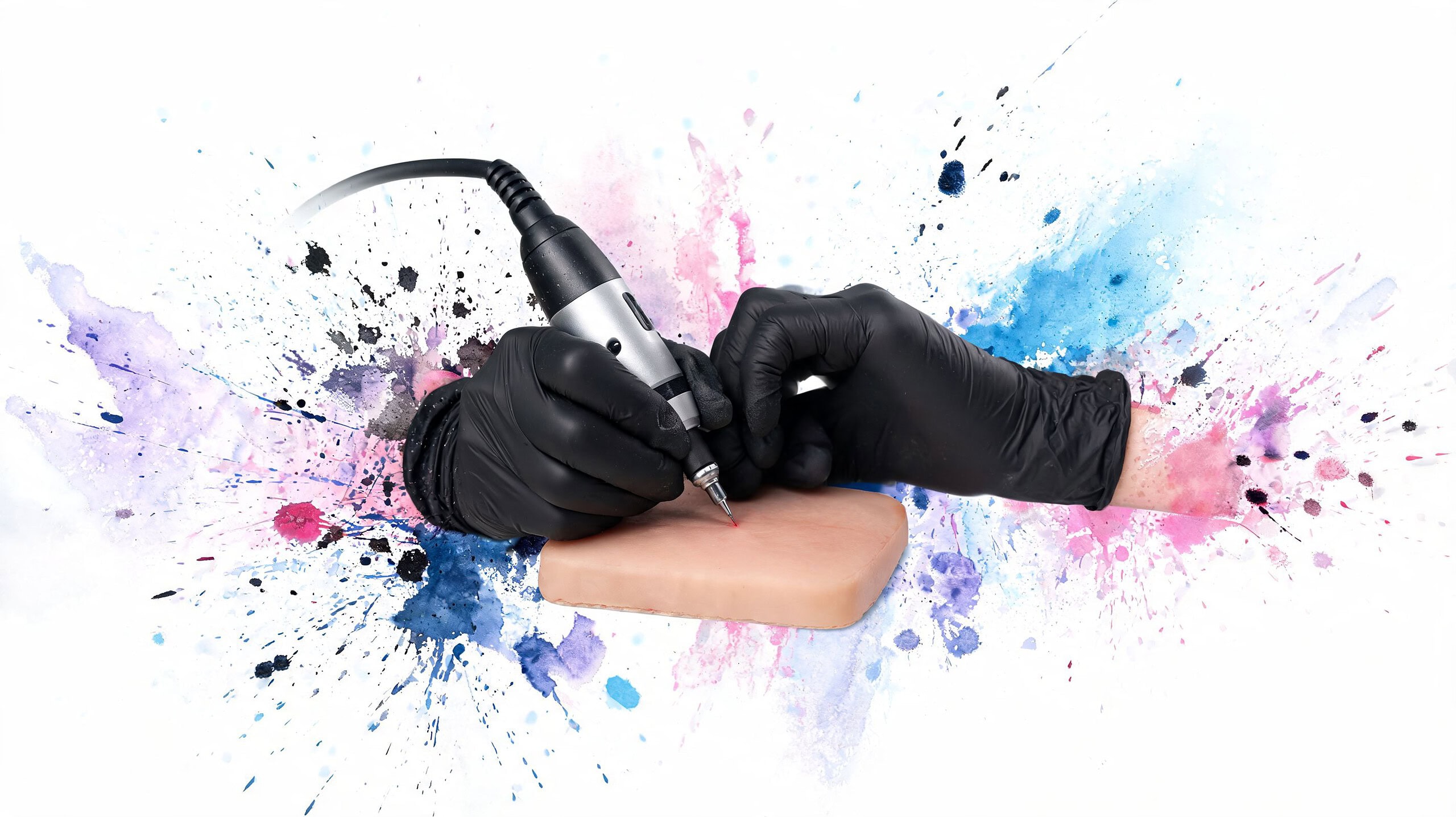
What hands-on training should actually feel like
A strong practical session starts before the first pulse. The learner should read the consultation notes, assess the tattoo in person, identify Fitzpatrick skin type, check contraindications, prepare the treatment room, and confirm that safety controls are in place.
Then the trainer needs to supervise live decision-making, not just demonstrate technique once. You should see how settings are selected, how the handpiece is positioned, how overlap is controlled, and how the skin response is read after each pass. Good training also includes the moments where the answer is to pause, reduce fluence, or defer treatment because the skin is not giving you a clean endpoint.
That judgement is what protects patients and protects revenue. A preventable adverse event can wipe out months of referral trust.
I tell new operators to watch the skin more closely than the screen.
Required elements of a practical session
Hands-on training should expose you to the work as it happens in a real clinic:
- Device-specific treatment time: Training should be done on the platform you plan to use, or one with the same operating logic and controls.
- Live model experience: Practice skins help with grip and movement, but only live tissue shows frosting, erythema, swelling, and patient tolerance.
- Safety routine: Protective eyewear, signage, room control, plume management, and pre-treatment checks need to become habit. Clinics comparing laser safety glasses for treatment rooms should buy for wavelength compatibility and certified protection, not price alone.
- Immediate correction: Trainers should correct hand speed, angle, spacing, and endpoint interpretation during treatment, while the learner can still adjust.
- Documentation discipline: Before-and-after photography, treatment notes, consent records, and aftercare instructions should be part of the practical workflow, not an afterthought.
Restraint matters as much as confidence. New practitioners often want to move faster once they realise a single session can be short. That is where overlap errors, poor coverage, and careless endpoint reading start. The better training rooms slow the process down and build a repeatable treatment sequence the clinic can use every day.
Clinical insight: Confidence comes from repeating safe technique under supervision until good judgement becomes consistent.
Building Your Business with Tattoo Removal Services
A clinic can buy a laser, finish a course, and still fail to make tattoo removal profitable. I have seen that happen repeatedly. The clinics that do well build the service around case selection, pricing discipline, consultation control, and a treatment schedule that fits real room capacity.
Tattoo removal can become a strong revenue line because it brings repeat visits, attracts cover-up clients, and creates referral relationships with tattoo studios and aesthetic practices. It also carries real operational pressure. Treatments may be short, but the service only works commercially if consultations convert, reviews are scheduled properly, and clients understand from day one that clearance is a process rather than a one-off purchase.

Pricing and packaging without undercutting yourself
Set pricing from your cost base and clinical positioning, not from the clinic down the road. South African operators often price too low at launch, then struggle to recover margin once clients have anchored to a bargain rate.
Your fee has to cover more than the laser pulse. It needs to account for consultation time, photography, consumables, cooling, staff time, follow-up communication, adverse event management, and the slower pacing required for higher-risk skin types or complex ink patterns. In South Africa, there is another commercial layer. If your paperwork, consent process, and device status are not aligned with SAHPRA expectations, a cheap treatment can become an expensive legal problem.
A stronger pricing model usually includes:
- Consultation fees or deposits: This reduces no-shows and positions assessment as clinical work, not free sales chat.
- Per-session pricing with package incentives: Clients keep flexibility, while the clinic improves retention and forward booking.
- Complexity-based fees: Amateur black ink, cosmetic pigment, layered cover-ups, and dense professional colour work should not sit under one price.
- Scheduled review points: Reassess after a defined number of sessions so settings, intervals, and client expectations stay realistic.
How to market removal ethically and effectively
Marketing should sound like a clinic, not a promise factory. Good campaigns explain who is suitable, what slowing factors matter, how many sessions might be needed, and why spacing between treatments affects outcomes.
The best-performing launch materials are usually practical:
| Asset | Why it works |
|---|---|
| Before-and-after photography | Shows real progression instead of selling unrealistic clearance claims |
| Consultation scripts | Keeps explanations consistent across staff and reduces overpromising |
| FAQ pages | Handles common objections about pain, downtime, cost, and number of sessions |
| Local search pages | Captures nearby high-intent enquiries |
| Referral pathways | Builds a steady stream of cover-up and regret-removal cases |
Referral work deserves more attention than many clinics give it. Tattoo artists regularly meet clients who want fading before a cover-up. Dermatology and aesthetic practices also see patients with pigment concerns, old cosmetic tattoos, or procedure regrets. If your clinic has clear protocols, reliable documentation, and professional communication, those partners will send work.
One mistake causes avoidable friction. Clinics advertise first and build the patient journey later. Build the service pathway before the first campaign goes live. That means consultation forms, consent documents, aftercare instructions, financing or package terms, review timing, and photography standards are already in place.
Equipment choice affects margin as much as marketing does. Clinics comparing tattoo removal machines for clinic use should assess spot sizes, wavelength options, service support, training requirements, downtime risk, and whether the platform suits the type of tattoo work common in their area. The cheapest machine on paper often costs more in retreats, slower clearance, and lost trust.
Your Certification Outcome and Continuing Education
Many practitioners treat the certificate as the finish line. It isn't. A certificate shows that you completed training and demonstrated a baseline level of knowledge and practical competence. It does not mean you've already mastered every tattoo type, every skin response, or every difficult consultation.
What your certificate really proves
A solid certification should tell clients and employers that you can assess appropriately, operate within safety protocols, document treatments properly, and perform within the scope of your training. That's valuable, especially when you're launching a new service or joining an established clinic.
Use it correctly. Display it professionally, mention it in consultations when relevant, and let it support trust. But don't lean on it as a substitute for judgement.
How specialists keep improving
The best tattoo removal practitioners continue learning after the course. They review outcomes, refine settings, photograph consistently, discuss unusual cases with senior peers, and stay current as technology evolves.
That ongoing development usually looks like this:
- Advanced workshops: Useful when you want to expand beyond straightforward cases.
- Peer discussion: Real clinics learn a lot from comparing practical experiences.
- Protocol review: Your early settings and spacing choices should improve over time.
- Device-specific updates: New platforms often require updated treatment logic.
The professionals who last in this field don't keep repeating their beginner year. They build on it.
Frequently Asked Questions About Tattoo Removal Training
Below are the questions I hear most often from clinic owners, therapists, and new aesthetic practitioners considering a tattoo removal course.
| Question | Answer |
|---|---|
| Do I need a medically focused course or a beauty-focused course? | You need training that matches your legal scope of practice, the device you will use, and the level of clinical responsibility in your setting. In South Africa, local compliance content matters as much as technical content. |
| Is online-only tattoo removal training enough? | No. Theory can be delivered online, but practical competence requires supervised hands-on work. You need to see tissue response, handle the device, and learn live corrections. |
| Should I buy a machine before I train? | Usually not. Training first helps you understand wavelength needs, safety requirements, workflow, and whether the platform fits your clinic model. |
| Can I offer fading for cover-ups as well as full removal? | Yes, if your training covers consultation, planning, and endpoint judgement properly. Fading cases still require serious assessment and clear expectation management. |
| What should I ask a training provider before enrolling? | Ask about hands-on training, device-specific teaching, live model access, safety protocols, South African compliance coverage, and what support is available after the course. |
| How do I know whether the course is commercially useful? | A useful course doesn't stop at treatment technique. It should help you think through pricing, consultation flow, photography, records, and safe service integration inside a real clinic. |
A tattoo removal course is worth it when it gives you three things at once. Safe clinical habits, clear legal footing, and a service model that can hold up commercially.
If you're ready to add tattoo removal with the right balance of compliance, device quality, hands-on education, and business support, Omega Lasers is a strong place to start. Their FDA approved, CE certified, and SAHPRA licensed platforms are backed by training, technical support, and clinic growth guidance that suits South African practitioners who want to build safely and profitably.