



A laser session can go flawlessly, your settings can be right, your endpoints can be clean, and the patient can still leave unhappy a week later if their skin barrier collapses during recovery. In clinic practice, that's the gap that affects outcomes, downtime, complaint rates, and rebooking.
For teams using lasers, RF microneedling, and resurfacing devices, barrier support isn't a retail add-on. It's part of treatment design. Always ensure the information is accurate and true, as this concerns aesthetic lasers, energy-based devices, and health. When a clinic treats barrier repair as a formal protocol instead of an afterthought, healing tends to be steadier, inflammation is easier to control, and patients understand why homecare is part of the procedure rather than separate from it.
Table of Contents
- Beyond the Treatment Room Enhancing Outcomes with Barrier Support
- The Science of the Skin's Defence System
- The Formulary Key Ingredients for Effective Barrier Repair
- How to Evaluate and Select Professional-Grade Products
- Integrating Barrier Repair with Laser and Resurfacing Workflows
- Crafting Patient Regimens and Managing Expectations
- Advanced Protocols and Practitioner Q&A
Beyond the Treatment Room Enhancing Outcomes with Barrier Support
A resurfacing patient doesn't judge your treatment only by what happened on the bed. They judge it by how their skin behaves that evening, how long redness lasts, whether makeup sits properly a week later, and whether they feel informed rather than alarmed during healing. That's why skin barrier repair products belong inside the clinical workflow, not only in the dispensary.
In practical terms, barrier support does three jobs for a clinic. It helps the skin tolerate controlled injury, it gives patients a clearer recovery pathway, and it reduces the variability that makes outcomes harder to standardise across providers. Clinics that build this into consultations, consent, treatment-day protocol, and aftercare usually run into fewer avoidable setbacks caused by over-cleansing, early active use, or poor moisturisation.
The commercial side matters too. Barrier repair is no longer a fringe topic. The global Repairing Skin Care Treatments Market was valued at USD 6.9 billion in 2026 and is projected to reach USD 12.6 billion by 2036 at a 6.30% CAGR, which supports the view that barrier repair is now a foundational part of skincare demand, not a passing trend (repairing skin care treatments market projection).
Why clinics should treat it as a core protocol
A barrier-first clinic approach changes patient conversations. Instead of promising quick recovery because a treatment is “gentle”, you explain that recovery quality depends on how well the stratum corneum is supported before and after the procedure. That sets a better expectation and protects trust when normal healing includes tightness, heat, flaking, or transient sensitivity.
A strong protocol also improves team consistency. Reception, therapists, nurses, and doctors can all reinforce the same message if the clinic has a defined barrier plan.
- Before treatment: assess baseline irritation, overuse of acids, retinoids, scrubs, and recent procedures.
- On treatment day: apply post-procedure products with a clear purpose, not by habit.
- At discharge: give short written instructions with exact stop and start points.
- At follow-up: ask barrier questions first, then discuss result progression.
Clinical reality: the procedure creates the opportunity. Home recovery protects the result.
What premium patients actually pay for
Patients paying for advanced treatments aren't only paying for energy delivery. They're paying for predictability, safety, calm guidance, and a recovery experience that feels managed. Clinics often underprice the value of aftercare education even though it's the part patients remember most vividly.
When you present barrier support properly, it stops sounding like “extra products” and starts reading as what it is: essential post-procedure management.
The Science of the Skin's Defence System
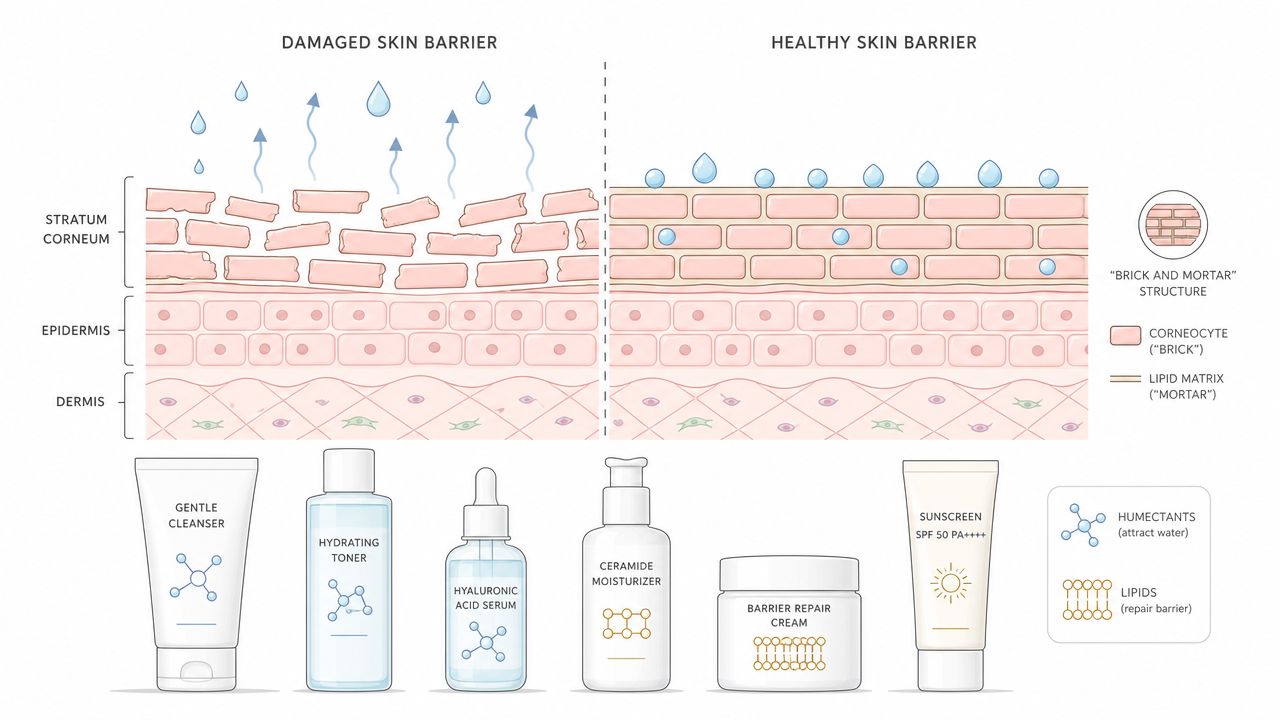
The easiest way to explain the barrier to patients is to stop using abstract language. The stratum corneum behaves like a brick wall. The cells are the bricks, and the lipid matrix is the mortar that holds the wall together. When the mortar is depleted, the wall doesn't disappear, but it becomes leaky, reactive, and easier to disturb.

Brick and mortar in clinical language
The “bricks” are corneocytes. They provide the physical structure. The “mortar” is made of intercellular lipids, especially ceramides, cholesterol, and fatty acids. If a patient has had aggressive exfoliation, repeated resurfacing, overuse of actives, or harsh cleansing, the lipid matrix is often the first place where things become unstable.
That instability shows up as burning with ordinary products, tightness after washing, increased redness, rough texture, and transepidermal water loss (TEWL). In clinic language, TEWL matters because skin that loses water too easily doesn't recover calmly. It overreacts. It stings. It often pushes patients into product hopping, which makes the problem worse.
For practitioners who want a patient-friendly explainer on skincare for compromised skin barriers, that resource is useful because it mirrors how we simplify the topic chairside: reduce irritation, replace what the barrier is missing, and keep the routine disciplined.
Why pH matters more than most patients realise
The barrier isn't only structural. It's also biochemical. The skin's acid mantle sits within a pH range of 4.0 to 5.8, and cleansers plus leave-on products intended to support repair should sit between 4.0 and 5.0 (skin barrier pH guidance). Once you explain that to patients, many of their routine mistakes make sense immediately.
A cleanser can remove makeup and still be wrong for post-procedure skin. A serum can feel active and expensive and still be unhelpful if it irritates a healing barrier.
If the barrier is compromised, the goal isn't stimulation. The goal is controlled recovery.
Use this model in consultations:
- Healthy wall: water stays in, irritants stay out.
- Damaged wall: water escapes, irritants penetrate more easily.
- Repair strategy: replace lipids, maintain hydration, reduce unnecessary exposure, protect the surface while the skin rebuilds.
That explanation usually improves compliance far more than a list of banned ingredients.
The Formulary Key Ingredients for Effective Barrier Repair
Not every cream marketed for sensitivity deserves a place in a clinic. A professional formulary has to do more than soothe on contact. It must help rebuild the barrier in a way that supports post-procedure healing, improves tolerance, and fits into a wider treatment pathway.
What belongs in a professional barrier formula
The most important ingredient group is the lipid system. Clinical studies show that products containing a 3:1:1 ratio of ceramides, cholesterol, and free fatty acids can reduce clinical disease severity by approximately 40% and significantly reduce itching within 14 days (clinical evidence for 3:1:1 lipid barrier repair formulations). In practice, that matters because barrier creams are often judged too casually. The presence of ceramides alone isn't enough. The ratio and formulation logic matter.
After the lipid base, I look at the moisture architecture. A good barrier product usually combines:
- Humectants to attract and hold water in the upper layers.
- Occlusives to reduce water escape and protect the surface.
- Support actives to calm irritation or reinforce repair.
A product that hydrates without sealing often gives a short-lived “plump” effect and then disappoints. A heavy occlusive with no meaningful lipid support can reduce evaporation but may not address the underlying deficit. The better formulas do both jobs.
Core ingredients for skin barrier repair
| Ingredient Category | Primary Function | Examples |
|---|---|---|
| Lipids | Replenish barrier structure and support repair | Ceramides, cholesterol, free fatty acids |
| Humectants | Draw and retain water in the stratum corneum | Hyaluronic acid, glycerin, panthenol |
| Occlusives | Reduce water loss and shield the surface | Petrolatum, dimethicone |
| Support actives | Soothe and assist recovery | Niacinamide, peptides |
The trade-off is texture and tolerance. Richer formulas often perform better in recovery, but some acne-prone patients resist anything that feels heavy. That's where counselling matters. Post-laser skin doesn't need a product that feels cosmetically elegant above all else. It needs one that performs when the barrier is vulnerable.
A point clinics often miss is the “seal-in” step. Barrier serums and lipid creams can still underperform if patients don't apply a protective final layer when the skin is acutely dry or inflamed. In emergency barrier recovery, that last layer can make the difference between steadier healing and repeated irritation.
Formulary rule: stock fewer barrier products, but understand exactly what role each one plays.
That usually means one lighter recovery option, one richer cream, and one occlusive-support product for short-term use when the skin is especially reactive.
How to Evaluate and Select Professional-Grade Products
A clinic shouldn't choose skin barrier repair products the same way a consumer shops a shelf. Ingredient lists matter, but formulation performance matters more. Two products can mention similar actives and behave very differently once they're exposed to a healing, sensitised face.
What to check before you stock it
Start with pH. Post-procedure support products should respect the acid mantle rather than push the skin further off balance. If a brand can't tell you the pH range of its cleanser or leave-on recovery product, that's already a warning sign. In a clinical environment, “gentle” should be measurable.
Then check packaging. Airless pumps are usually better than jars for barrier-focused formulas because they reduce repeated exposure to air and fingers. That helps protect formula stability and improves hygiene in both clinic and homecare use. Packaging doesn't make a weak product strong, but poor packaging can make a good product less reliable.
The preservative system matters as well. You want a formula that remains stable through regular use without becoming a source of irritation. That balance is not glamorous marketing, but it affects daily outcomes.
If your clinic team also handles retail communication, studying examples of beauty and skincare advertising strategies can be useful. Not as clinical evidence, but as a reminder that polished messaging often hides how little practical information is given about pH, packaging, and recovery use.
What usually disappoints in practice
The weak performers tend to share a few traits:
- Hero-ingredient marketing: one fashionable active, but no coherent barrier system.
- Jar packaging: repeated contamination risk and more formula exposure.
- Poor fit for treatment workflows: fine for daily wellness use, unreliable after procedures.
- No protocol support: no clear guidance on pre-care, post-care, or reintroduction of actives.
For clinics using topical anaesthesia before procedures, the same evaluation mindset applies to adjacent products. If a team is reviewing options such as professional numbing support, the key question remains the same: does the product fit your workflow, patient profile, and post-treatment recovery plan?
Good product selection is less about trend awareness and more about operational discipline.
Integrating Barrier Repair with Laser and Resurfacing Workflows
Barrier care works best when it's built into the treatment pathway rather than added after the skin is already irritated. That applies to laser resurfacing, RF microneedling, and peel-based programmes. The most dependable clinics treat pre-conditioning, treatment-day protection, and recovery guidance as one continuous sequence.

Pre-procedure conditioning
Patients often arrive over-exfoliated. They may be using acids, retinoids, pigment products, abrasive cleansing tools, and fragranced skincare all at once. If you treat that skin without correcting the baseline routine, you make recovery harder than it needs to be.
A sensible pre-treatment workflow includes:
- Assess the barrier first: ask about stinging, tightness after cleansing, visible flaking, and recent use of strong actives.
- Simplify the routine: pause anything that predictably increases irritation.
- Start barrier support early: give the patient a cleanser and moisturiser plan they can follow.
- Patch test where relevant: especially in patients with a history of reactive skin.
Barrier-enhancing moisturisation used before, during, and after topical retinoid therapy has been shown to facilitate adaptation, reduce TEWL, and improve hydration while reducing visible irritation (barrier-supportive moisturisation in retinoid use). That principle translates well into laser workflows. Skin that adapts better to irritant stress usually recovers more calmly after procedures too.
Immediate recovery and the following weeks
Immediately after treatment, your product choices should do less, but do it better. This is not the moment for layered actives or “recovery boosters” with unclear tolerability.
Use a simple sequence:
- Cool and calm: reduce heat and friction.
- Hydrate: apply a barrier-supportive moisturiser with a coherent lipid and humectant system.
- Seal if needed: use an occlusive layer when the skin is dry, tight, or visibly vulnerable.
- Protect from UV exposure: reinforce strict sun behaviour and suitable sunscreen use once appropriate.
For device-based clinics offering collagen induction, integrating barrier support into services such as microneedling treatment workflows improves consistency because the skin's recovery instructions become standardised rather than provider-dependent.
Patients often think the treatment ends when they leave. Clinically, the treatment isn't finished until the barrier has settled.
In the following weeks, review healing behaviour, not just the treatment result. Ask what cleansers they used, whether anything burned, when they restarted actives, and whether they added unapproved products. Those answers usually explain most recovery problems.
Crafting Patient Regimens and Managing Expectations
A patient who understands the recovery timeline is less likely to panic, self-treat, or restart an aggressive home routine too soon. The most useful regimens are boring on purpose. They remove decision fatigue and lower the chance of setbacks.

A simple recovery story clinics see every week
A typical resurfacing patient feels dry and warm on day one, tighter on day two, then starts looking for a “stronger” product because they assume discomfort means the treatment isn't being supported properly. If they've been told what normal recovery feels like, they stay consistent. If they haven't, they often add exfoliants, brightening serums, or multiple masks and then wonder why the skin becomes redder.
Expectation setting is important. Initial hydration improvement may appear within 24 to 72 hours, but full barrier restoration usually takes 28 to 56 days, which aligns with the skin's turnover cycle (barrier recovery timeline and hydration response). Patients cope much better when you tell them early improvement and full recovery are not the same thing.
Recovery feels slow to patients when nobody has explained the timetable.
Sample homecare structure
Barrier recovery phase
AM
- Gentle cleanse or rinse: keep cleansing minimal if the skin feels dry or hot.
- Barrier moisturiser: use enough product to remove tightness, not a token layer.
- Sun protection: once appropriate for the procedure and skin condition, insist on consistent use.
PM
- Gentle cleanse: no scrubs, brushes, acids, or rough cloths.
- Barrier serum or cream: choose one main recovery product.
- Seal-in step when needed: add an occlusive layer if the skin is very dry or irritated.
Maintenance phase
Once the skin is calm, hydrated, and no longer stinging with bland products, move to a maintenance structure with a cleanser, moisturiser, and carefully selected actives under supervision. Don't upgrade too quickly just because visible flaking has stopped.
For clinics formalising aftercare, it also helps to align skincare advice with broader operational hygiene standards such as infection control in aesthetic practice. Patients take homecare more seriously when they see it as part of a professional treatment protocol rather than personal preference.
A written regimen should answer four questions clearly: what to use, what to stop, when to call the clinic, and when active products may return.
Advanced Protocols and Practitioner Q&A
The difficult conversations usually happen when patients feel better before their barrier is stable. That's when they want to restart retinoids, acids, pigment correctors, exfoliating pads, or “just one” active serum.
When patients want to restart everything at once
Don't negotiate with vague language. Give a staged plan. A critical nuance in post-barrier repair is the week-by-week reintroduction of actives, starting with options such as azelaic acid or buffering retinoids with moisturiser every second night to reduce the risk of recurrent damage (week-by-week active reintroduction after barrier recovery).
In practice, I'd frame it like this:
- Week 1 of reintroduction: one low-irritation active, infrequently.
- Next step: only increase if there's no return of stinging, heat, or flaking.
- Retinoids: buffer with moisturiser and avoid nightly use at the start.
- Exfoliating acids: reintroduce later, not first.
This works better than telling patients to “listen to their skin”, because most patients only recognise they've overdone it after the setback has already happened.
The mistake that causes most setbacks
The most common mistake is chasing speed. Patients feel a bit dry or uneven, then they layer too many products in the name of repair or restart anti-ageing products before the barrier is settled. Clinics can prevent that by giving patients one rule they can remember: if a bland moisturiser stings, the barrier still needs protecting.
A few practical responses help in consults:
- If the patient says their skin looks dull: explain that dullness during recovery doesn't mean they need exfoliation.
- If they want faster results: remind them that controlled healing protects the final outcome.
- If they insist their usual routine is fine: ask whether that routine would be suitable for skin immediately after controlled thermal or mechanical injury. Usually they answer their own question.
Better outcomes often come from restraint, not from adding more.
Barrier management is one of the clearest places where clinical maturity shows. The procedure may be advanced, but recovery succeeds because the protocol is simple, repeatable, and strictly followed.
Clinics that want stronger treatment outcomes need more than capable devices. They need training, workflow support, and systems that help practitioners deliver safe, repeatable results from consultation through recovery. Omega Lasers supports aesthetic professionals with advanced medical-aesthetic technology, education, and practical business enablement built around real clinic performance.