




You're probably looking at the same question many clinic owners ask before adding any vascular service. Do you buy a device, train the team, and build a premium offering around it, or do you keep spider vein removal simple with injections and focus on volume?
That decision isn't only clinical. In South Africa, it affects room turnover, staff utilisation, consent workflow, post-care burden, marketing angles, and how quickly the service becomes profitable. A modality that clears vessels well on paper can still be the wrong choice if it slows your schedule, creates too many follow-up calls, or doesn't fit your patient mix.
Always ensure the information is accurate and true, as this concerns aesthetic lasers, energy-based devices, and health.
The right framework is practical. Match the technology to the veins you'll treat, the staff you already have, the aftercare your front desk can support, and the kind of patient journey your brand can deliver consistently.
| Modality | Best-fit use case | Operational upside | Main limitation |
|---|---|---|---|
| Sclerotherapy | Leg spider veins and small varicose patterns | Lower treatment cost, strong acceptance, scalable for volume | Needles, consumables, compression advice, not ideal for every facial vessel |
| Laser | Facial spider veins and patients wanting a needle-free option | Non-invasive, no compression stockings in the referenced ZA protocol | Higher session cost and often multiple sessions for complex patterns |
| IPL | Diffuse redness and selected superficial red vessels | Can fit into a broader skin platform strategy | Less precise for many vascular patterns than dedicated vascular options |
| RF / electrocautery | Very fine spider veins under 1 mm | Fast vessel obliteration in selected cases | Narrower indication and operator precision matters |
Table of Contents
- The Expanding Market for Spider Vein Removal
- Understanding the Clinical Landscape of Telangiectasias
- Core Treatment Modalities A Comparative Analysis
- Device Requirements and Operational Considerations
- Patient Selection and Managing Expectations
- Analysing the ROI and Pricing Models
- Marketing Your Service and Building Patient Flow
The Expanding Market for Spider Vein Removal
Spider vein removal sits in a useful category for aesthetic clinics. Patients usually understand the concern immediately, the visual target is obvious, and the treatment can connect naturally with broader skin and body services. That makes it easier to market than many categories that need more education before a patient books.
The mistake is treating modality choice as a simple equipment question. It's a business model question. A clinic with strong doctor-led injectables capability may do well with a sclerotherapy-led service. A clinic that already sells energy-based procedures and attracts patients who prefer non-invasive options may get more value from a laser-led pathway. A hybrid clinic may need both.
Why this category matters commercially
Spider veins are visible, emotionally salient, and often discussed during unrelated consultations. A patient comes in for pigmentation, skin rejuvenation, hair removal, or body contouring, then asks about the red or blue vessels on the nose, cheeks, thighs, or calves. That creates built-in cross-sell potential if the team can assess correctly and route the patient to the right provider.
The best-performing clinics don't treat spider vein removal as a single procedure. They build a treatment pathway, a follow-up rhythm, and a marketing message around it.
The four strategic options
Most clinics weigh sclerotherapy, laser, IPL, and RF or electrocautery.
They don't compete in exactly the same way. Sclerotherapy is often the commercial anchor for leg veins. Laser tends to earn its place when facial vessels, needle-averse patients, and premium positioning matter. IPL can make sense when a clinic wants a broader skin platform that handles more than one indication. RF and electrocautery are narrower, but can be very effective in selected fine vessels.
The clinic owner's job isn't to pick the “best” technology in the abstract. It's to choose the modality that fits local demand, staff capability, patient tolerance for downtime and aftercare, and the margin profile the business needs.
Understanding the Clinical Landscape of Telangiectasias
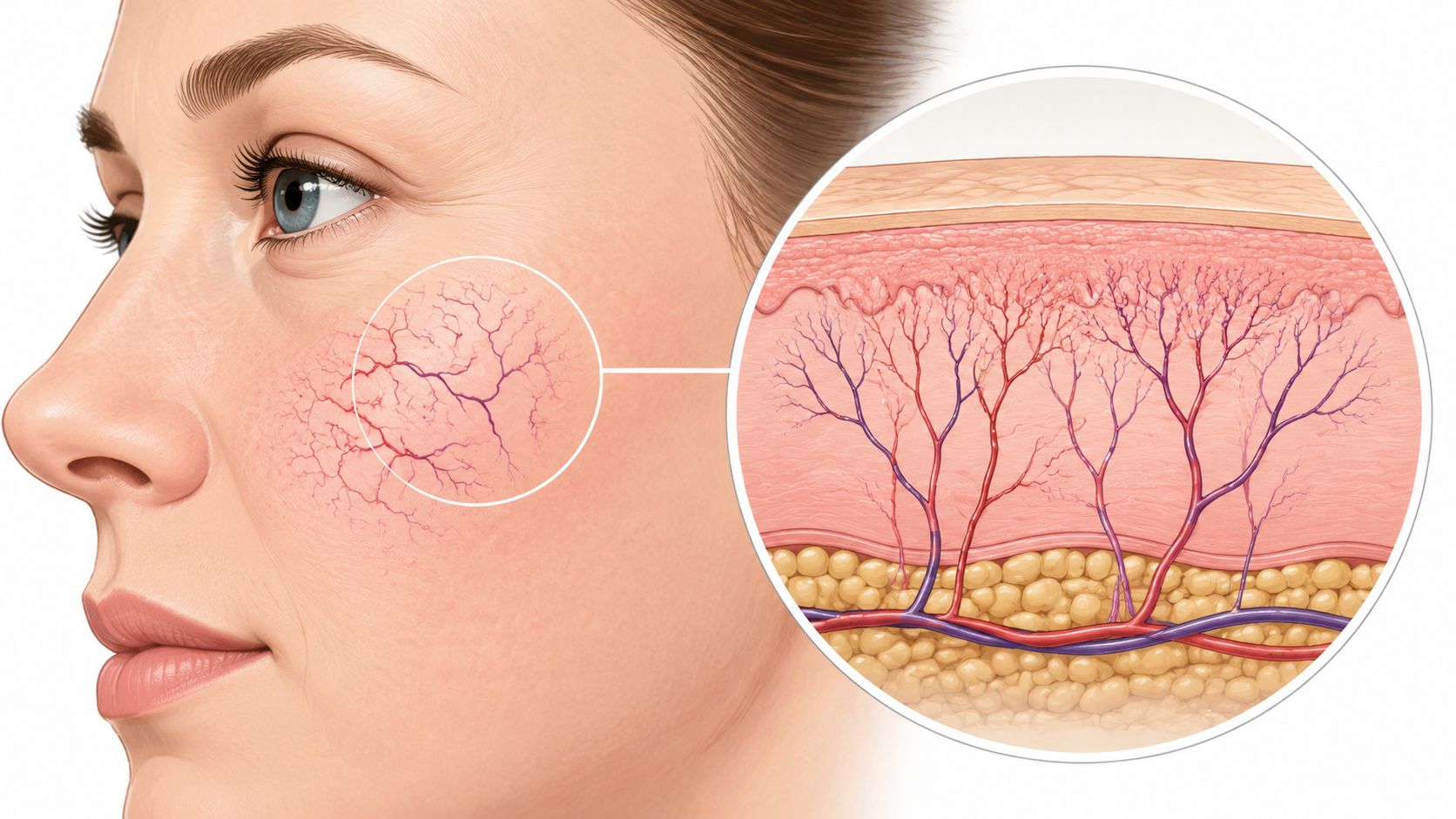
Before a clinic buys technology, it has to classify the problem correctly. Telangiectasias are superficial dilated vessels. In day-to-day practice, patients call them spider veins. They're usually aesthetic concerns, but not every visible vein belongs in an aesthetic room. Some patients need referral, not treatment.
What counts as an aesthetic spider vein case
A clean aesthetic case usually presents with fine superficial vessels on the face or legs, limited symptoms, and no red flags suggesting deeper venous disease. These patients want visible improvement, can follow aftercare, and understand they may need more than one session.
Larger, bulging, symptomatic, or medically suspicious veins change the decision. If a patient reports heaviness, swelling, skin change, significant pain, or a history that raises concern about deeper vascular issues, cosmetic treatment shouldn't be the first move. Proper triage protects the patient and protects the clinic.
Aesthetic practitioners should also separate vascular redness from pigment and inflammatory redness. That's one reason a disciplined visual assessment matters. Clinics that already manage mixed concerns often find it useful to sharpen their consultation protocols across categories, not only vascular work. A practical reference point is this guide on how to treat pigmentation, because pigment and vascular complaints often overlap in the same consultation even when the treatment plan must stay separate.
The vessel features that drive modality choice
Three features usually matter most.
- Diameter: Fine vessels behave differently from denser or larger networks.
- Depth: Superficial vessels are easier to target with some technologies than deeper ones.
- Location: Facial veins and leg veins are not interchangeable treatment problems.
Facial spider veins are often smaller and more visible immediately after treatment, so patient tolerance for redness, swelling, and downtime tends to be lower. Leg veins often involve broader networks, making practicality, treatment time, and post-care compliance more important.
Clinical rule: Don't choose the device first and force the anatomy to fit. Choose the anatomy you can treat safely and profitably, then select the modality around that.
A good consultation records vessel pattern, colour, distribution, skin type, relevant medical history, and previous treatment response. That assessment does more than improve outcomes. It determines whether the service becomes review-friendly and referral-friendly, or whether it becomes a stream of unrealistic expectations and corrective follow-ups.
Core Treatment Modalities A Comparative Analysis
The commercial reality is simple. Every modality for spider vein removal solves one problem while creating another. The profitable clinic understands the trade-off before purchase.
Sclerotherapy as the baseline commercial service
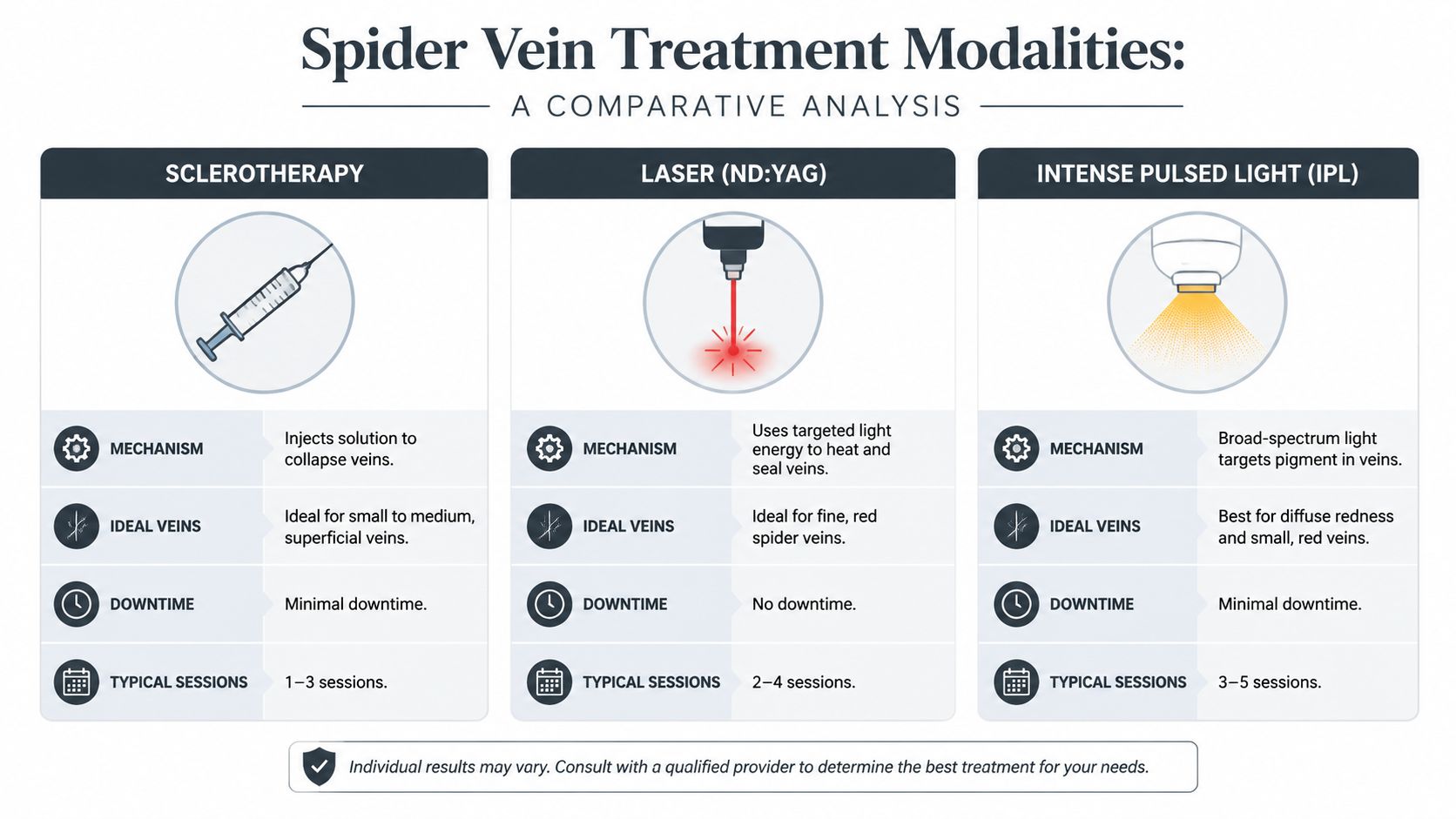
Sclerotherapy remains the benchmark because it is established, versatile for many leg veins, and comparatively cost-effective in routine practice. Clinical literature referenced in peer-reviewed medical publication data reports a clearance rate of 50% to 84% after one treatment session in 70% to 80% of patients. The same source notes that many patients require up to six treatment sessions for full clearance, which matters for both scheduling and expectation-setting.
That source also reports a specific study of 20 patients, where 66% achieved more than 70% resolution, and 14 patients experienced clearance rates between 75% and 100%. The common side effects were transient and resolved. Skin erythema occurred in 15 patients, bruising in 13, and needle stick pain in 14, with recovery described as complete and without permanent sequelae in that study. Serious complications listed there, such as major vessel thrombosis, severe allergic reactions, pigment change, ulceration, or scar formation, were absent in that cohort.
For clinics, the appeal is obvious. Sclerotherapy treats a broad set of leg-vein presentations efficiently, supports package planning, and doesn't require a major capital device purchase to start. The weakness is also obvious. It is operator-dependent, involves needles, uses consumables, and requires stronger post-treatment compliance.
Laser when anatomy and experience matter more than injection economics
Laser earns its place when the clinic sees facial vessels, patients reject needles, or the brand is built around device-based aesthetic medicine. In the referenced ZA protocol data, laser systems are described as non-invasive and needle-free, with 80% to 90% disappearance of spider veins within 3 to 6 weeks, although multiple sessions may be needed for deeper or web-like patterns. The same ZA reference notes 50% to 70% clearance in 50% to 70% of patients per pass for laser-based removal systems and states there is no need for compression stockings in that pathway. It also identifies laser as the preferred option for facial spider veins in many settings because of anatomy and patient preference.
Many owners misread the market. A higher-priced session doesn't automatically mean a better business. If the clinic's enquiry base is mostly leg veins and the team is set up for medical injectable workflows, laser can become an expensive mismatch. If the clinic already sells premium energy-based treatments and wants a needle-free vascular option, the same device can strengthen revenue quality and brand positioning.
A laser platform works best when it fits an existing energy-based business model, not when it is expected to rescue weak consultation systems.
IPL and RF where they fit and where they do not
IPL is often considered because it can serve more than one indication in a clinic. That makes it attractive from a utilisation standpoint. But broad applicability is not the same thing as best-in-class vascular performance. For diffuse redness and small superficial red vessels, IPL can be commercially sensible, especially when the clinic wants one system to support several aesthetic categories. It becomes less convincing when the clinic's main goal is dedicated, high-confidence vein work across mixed presentations.
RF and electrocautery are more selective. The benchmark data provided for the Ogden Needle electrocautery system reports 70% to 75% clearance in 50% to 70% of patients after a single pass for spider veins under 1 mm, with the same benchmark stating this outperformed traditional sclerotherapy and Nd:YAG in that specific single-pass comparison. That benchmark also characterises complications for the Ogden Needle as low, while describing sclerotherapy's risk profile more cautiously in the same comparison.
That doesn't make electrocautery the universal answer. It means it can be an excellent fit for very fine vessels under 1 mm when the operator is trained well and the case selection is strict. For most clinics, it's a targeted tool, not the whole vascular strategy.
| Criteria | Sclerotherapy | Laser | IPL | RF / Electrocautery |
|---|---|---|---|---|
| Strength | Established option for many leg veins | Strong fit for facial veins and needle-free demand | Broad platform versatility | Useful for very fine selected vessels |
| Commercial model | Volume-friendly | Premium service model | Cross-utilisation across skin services | Niche add-on or specialist service |
| Aftercare load | Higher | Lower in the referenced ZA protocol | Moderate depending on protocol | Depends heavily on treated area and operator method |
| Best buyer | Clinics with injectable workflow | Clinics already committed to devices | Clinics prioritising platform flexibility | Clinics with precise vascular niche work |
Device Requirements and Operational Considerations
A modality can look profitable in a brochure and still be operationally frustrating. Clinics feel that gap after purchase, when training absorbs calendar space, consumables start moving, and staff confidence varies from one provider to the next.
What clinics underestimate before launch
Sclerotherapy appears simple because the capital barrier is lower. In practice, it asks for disciplined clinical governance. You need consistent stock control for sclerosants and injection supplies, clear adverse-event protocols, sharper consent language, and tighter patient follow-up. It's not equipment-heavy, but it is process-heavy.
Laser shifts the burden. The clinic takes on device maintenance, calibration discipline, treatment parameter training, and service planning. If you're assessing a vascular laser route, a practical starting point is to understand what a dedicated Nd:YAG laser platform requires in clinic use, because workflow quality depends on more than the handpiece itself.
- Training depth: Laser work needs parameter fluency, endpoint recognition, and strong skin assessment. Sclerotherapy needs injection confidence and complication awareness.
- Consumables versus servicing: Sclerotherapy consumes supplies each session. Laser lowers injection consumables but raises maintenance and support demands.
- Room setup: Device-based treatment often needs stricter room planning, eye protection protocols, and cooling workflow.
Workflow determines profitability
The hidden cost in spider vein removal is interruption. If a provider spends too long on unsuitable consults, if reception gives inconsistent aftercare instructions, or if complication anxiety drives unnecessary reviews, the margin erodes quickly.
A practical clinic map usually includes:
- Front-desk screening that separates likely facial vessel cases from likely leg vein cases.
- Photographic documentation taken the same way every time.
- Consent templates matched to modality, not copied across all treatments.
- A structured review schedule so the patient knows whether fading is on track.
Buy the modality your team can deliver consistently on a busy week, not only the one that looks impressive on a quiet day.
The most efficient clinics also decide in advance who is allowed to treat which vein type, who handles referrals out, and what happens when a patient presents with mixed concerns that need staged care rather than a same-day sale.
Patient Selection and Managing Expectations
A full diary can still produce poor returns if the clinic treats the wrong vein type, overpromises speed, or allows unsuitable patients into the workflow. Spider vein removal becomes profitable when case selection is tight, consent is specific, and the patient understands the treatment path before the first session is booked.
A consultation process that protects margin and outcomes
Start with one question. Is this an aesthetic spider vein case your clinic should treat, or a vascular case that needs referral first?
That decision shapes everything that follows. Leg symptoms, a history suggestive of thrombotic disease, pregnancy or breastfeeding status where relevant, medication risks, prior vein procedures, and vessel pattern all affect suitability. A clinic that skips this step usually pays later through poor results, extra review visits, or reputational damage.
The assessment should then match the vessel to the modality, not the other way around. Facial telangiectasias, finer superficial vessels, and leg veins do not behave the same way in treatment. Mixed presentations also need staged planning. Trying to force every case into one device protocol lowers clearance rates and increases patient frustration.
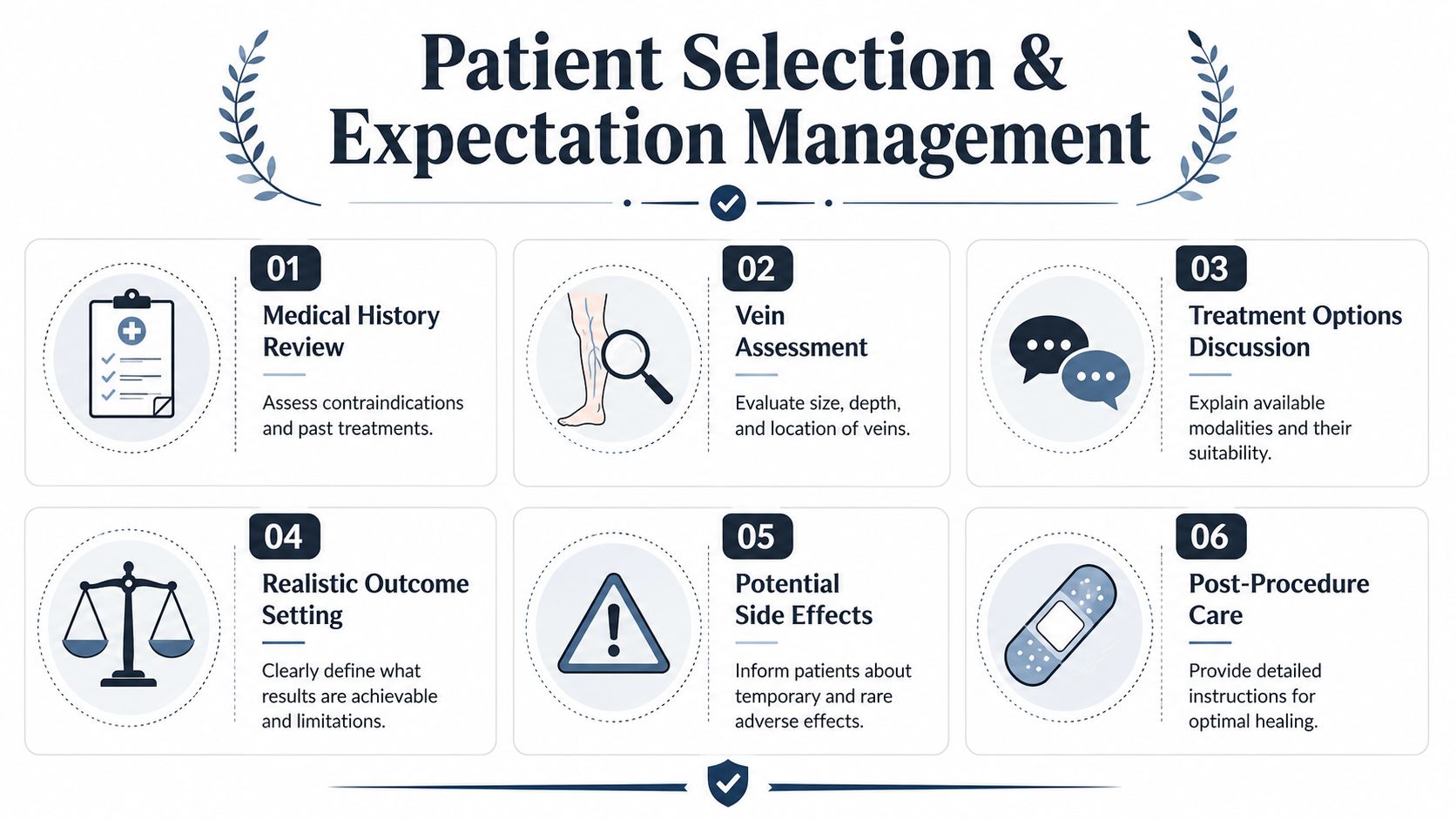
A practical consultation flow looks like this:
- Screen for red flags first: identify symptoms or history that place the patient outside an aesthetic treatment pathway.
- Map the vessels properly: assess size, colour, depth, distribution, skin type, and whether there is a feeder pattern.
- Choose the treatment plan: decide whether sclerotherapy, a light-based approach, combined care, or referral is the correct next step.
- Document the baseline: standardised photography reduces disputes and helps your team judge progress accurately.
- Set the commercial expectation clearly: quote likely session ranges, downtime, aftercare demands, and review timing before taking payment.
This is also the point to decide whether the case fits your business model. If your clinic is built around high-throughput facial aesthetics, lower-leg vein cases with compression compliance issues and slower visible improvement may create more friction than value. Clinics considering capital equipment for vascular work should assess the expected patient mix with the same discipline used in any diode laser ROI breakdown for South African professionals.
What patients need to understand before they consent
Patients do not need inflated promises. They need a clear explanation of process, likely response, and limitations.
The first expectation to set is that spider vein removal is often a course of treatment, not a one-visit event. Improvement can be gradual. Some vessels darken or look more obvious before they fade. Some patients clear well with conservative session numbers. Others need repeat treatment because vessel size, location, skin response, and adherence to aftercare all affect the endpoint.
Recurrence also needs plain language. Treated vessels can clear successfully, but patients who are predisposed to new vein formation may develop new visible vessels over time. If this is not discussed in consultation, the clinic absorbs an avoidable trust problem later.
Aftercare compliance matters financially as much as clinically. Compression, activity limits where indicated, sun avoidance for light-based treatments, and review timing all need reinforcement in writing and by reception. If staff treat aftercare as a handout rather than part of treatment delivery, callbacks rise and patient satisfaction drops.
“The consultation should define the treatment journey, the likely trade-offs, and the patient's role in getting a good result.”
Clinics that explain normal post-treatment effects upfront get fewer complaint-driven reviews. Redness, bruising, tenderness, short-term pigmentation changes, and staged fading are easier for patients to accept when they were prepared for them properly.
Expectation management also affects marketing performance. The best campaigns attract the right patient profile, not just more leads. Promoting realistic outcomes, session planning, and candidacy criteria will maximize marketing ROI because the enquiries that convert are closer to your actual treatment sweet spot.
Analysing the ROI and Pricing Models
A clinic buys a vein platform, prices a treatment well, and still struggles to see margin. The problem is usually not the tariff. It is underused room time, poor case mix, weak rebooking, or a device chosen for prestige rather than throughput.
How to calculate ROI in a way that holds up
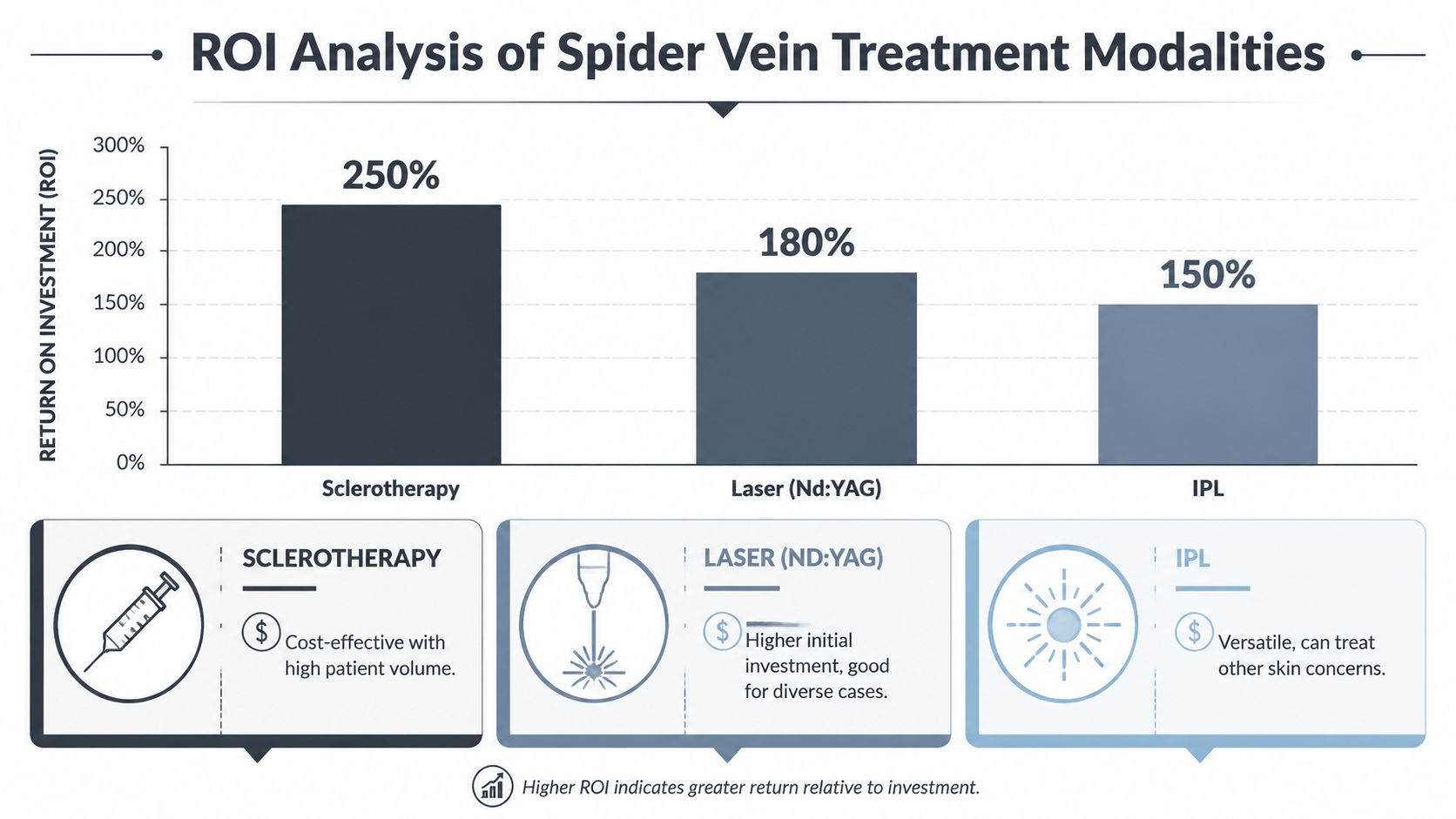
Start with contribution per treatment hour, not headline price. For each modality, map five numbers. Consumables, staff cost, room time, expected number of visits, and the percentage of consults that convert into treatment. That gives a far more honest view of profitability than a device sales projection.
Sclerotherapy is usually the easiest service to model because the cost structure is relatively clear. The capital burden is lower, consumables are predictable, and the treatment pathway is easier to price per visit or per treatment area. The trade-off is that it is operator dependent, better suited to certain vessel types, and less useful if the clinic wants one device to support multiple aesthetic indications.
Laser and IPL can produce a stronger business case, but only when utilisation is planned properly. A light-based platform that treats a small number of spider vein cases each month is expensive capacity sitting idle. A platform that also supports adjacent revenue categories can make sense because the same capital asset is working across more of the diary. That broader view matters when assessing payback, especially if you are comparing a single-indication injectable service with an energy-based purchase. Clinics weighing capital equipment often review a diode laser ROI breakdown for South African professionals for exactly this reason.
Pricing models that protect margin
Simple pricing tends to convert better and create fewer disputes at reception.
- Per-session pricing: Best where vessel density, anatomical area, and treatment time vary enough that fixed packages create margin risk.
- Course pricing: Useful when the clinic has a repeatable protocol and wants better upfront commitment, cash flow, and rebooking discipline.
- Area-based pricing: Works well for facial vessels or smaller, clearly defined zones where chair time is easier to predict.
- Combination pricing: Sensible when vein work is part of a broader skin plan and the clinic wants to increase revenue per patient without confusing the offer.
South African clinics also need to price for local operating reality, not imported expectations. Include downtime between patients, photography, consumables, post-care products where relevant, failed appointments, and review visits that do not generate direct revenue. If those costs sit outside the model, the spreadsheet looks healthy while the service underperforms in practice.
Marketing efficiency belongs inside the ROI model as well. A modality that is clinically sound but hard to explain to the right patient can become expensive to sell. Clinics that maximize marketing ROI usually present one clear treatment pathway, one target patient profile, and one pricing logic instead of mixing leg veins, facial vessels, and unrelated skin treatments in the same campaign.
The strongest pricing model is the one your front desk can explain clearly, your clinicians can deliver consistently, and your diary can sustain at useful volume. That is what turns a spider vein service into a reliable profit centre.
Marketing Your Service and Building Patient Flow
A spider vein service becomes profitable when the clinic markets it with the same discipline used to buy it. Many clinics launch with one social post, a mention on the price list, and no staff scripting. Then they conclude there isn't enough demand.
Position the service properly
Lead with patient questions, not with device jargon. Patients want to know whether they're suitable, whether the veins on the face or legs can be treated, whether the procedure involves needles, how many visits they may need, and what recovery looks like. Build content around those questions.
Use before-and-after photography carefully and ethically. Consistent lighting, angle, timing, and consent matter more than dramatic presentation. Good photographic proof reduces friction in consultation because patients can see what “improvement” means in cases like theirs.
- Train reception to qualify enquiries: They should know the difference between a likely facial vessel enquiry and a likely leg vein enquiry.
- Create short educational content: Answer the same five or six questions repeatedly across your channels.
- Use package language carefully: Present treatment plans as staged care, not miracle fixes.
Turn enquiries into treatment plans
The handover between marketing and consultation matters. A patient who arrived because of a polished ad still needs a realistic plan at the appointment. That's where many clinics lose trust. The message must remain consistent from the first enquiry to the consent form.
For content production, clinics that need faster creative testing often use tools like ShortGenius automated ad generation to turn one educational message into multiple ad variants and short-form assets. That's useful when you want to test whether your audience responds better to facial vein messaging, leg vein messaging, or a broader “visible vessels” campaign without rebuilding everything manually.
The final conversion lever is internal. Front-desk staff, therapists, and clinicians should all use the same plain-language explanation of what the service treats, who it suits, and why some patients need referral instead of treatment. That consistency is what turns enquiries into reliable patient flow.
If you're evaluating a spider vein removal service and want device guidance grounded in clinical safety, workflow practicality, and commercial reality, Omega Lasers is worth a serious conversation. Their team supports South African clinics with compliant aesthetic technology, training, technical support, and business guidance that helps turn equipment decisions into sustainable treatment revenue.