


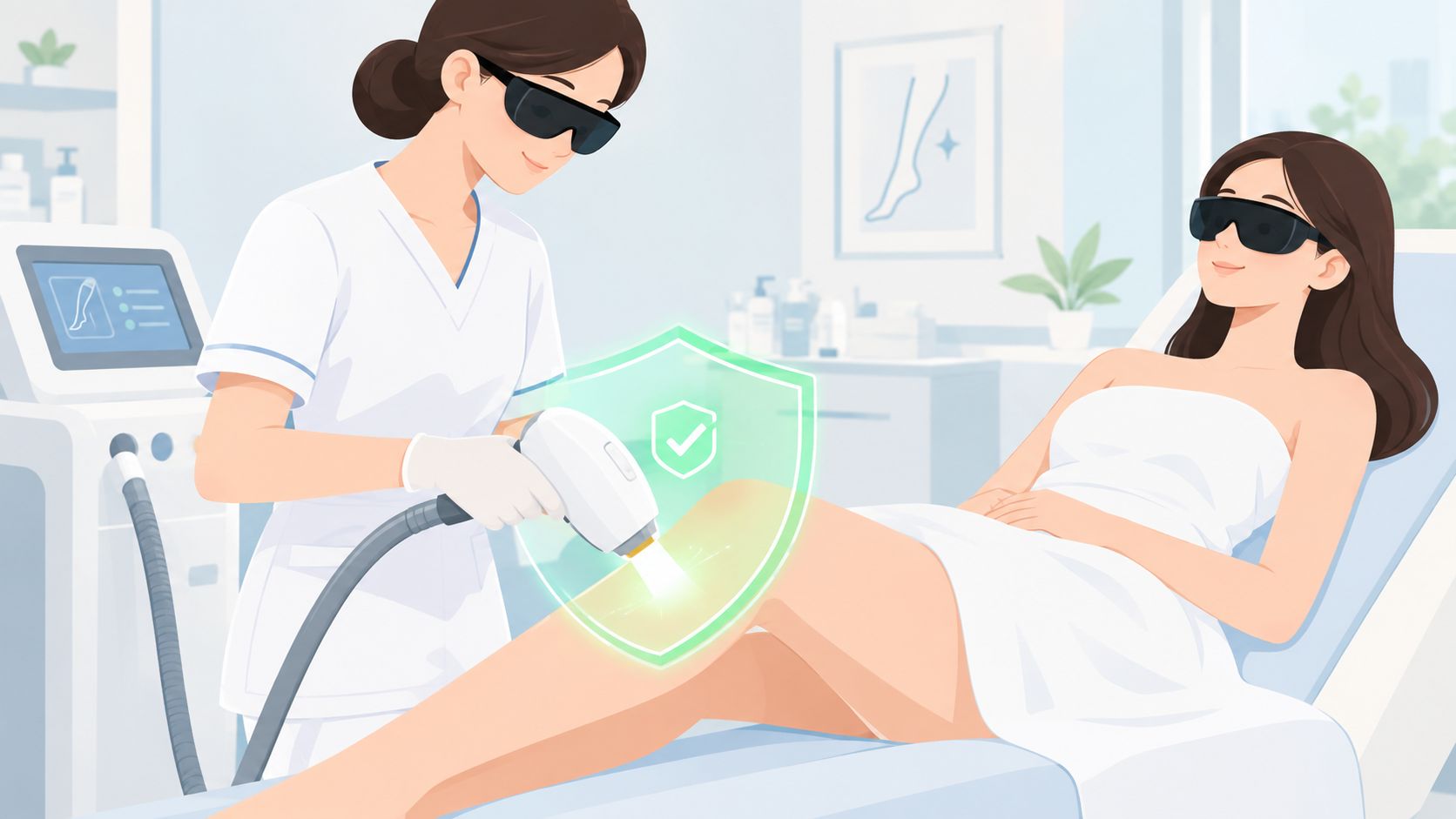
The most popular answer to “laser hair removal, is it safe?” is too simple: choose a reputable machine and follow the instructions. The machine matters, but it isn't the primary safety variable. In South Africa, the greater risk often sits in the decisions made before the pulse is delivered, including who operates the system, how the skin is assessed, whether the device is properly controlled, and whether the wavelength suits the patient.
A quality laser can still produce burns, blistering, pigment changes, scarring or eye injury when the operator uses unsuitable settings, ignores recent sun exposure, skips patch testing or fails to recognise a contraindication. Safe treatment is therefore an operational system, not a product label. Clinics need competent people, compliant equipment, documented protocols and honest patient communication.
Índice
- Redefining Laser Safety Beyond the Device
- Understanding Adverse Events and Complication Rates
- Wavelength Selection for Diverse Skin Types
- Navigating SAHPRA Licensing and Device Compliance
- The Critical Role of Operator Training and Competence
- Implementing Clinical Governance and Safety Protocols
Redefining Laser Safety Beyond the Device
A premium diode or Nd:YAG system doesn't make an unstructured clinic safe. FDA clearance, CE certification or a polished user interface may support confidence in the equipment, but none of those features can replace skin typing, parameter selection, cooling, protective eyewear or clinical judgement. The beam only delivers the energy chosen by the operator.
That distinction matters in South Africa. A 2019 mini-review identified a regulatory gap around who could perform laser treatments and the absence of a required qualification system, linking that gap to patient risk. The review's conclusion is difficult for responsible clinic owners to ignore: treatment safety depends on governance and competence as much as device design. The South African mini-review on laser hair removal safety provides the local foundation for that position.
The three-part safety model
I assess laser safety through three connected controls:
- Device control: The machine must be appropriate for the treatment, maintained, documented and operated within its intended parameters.
- Controlo do operador: The practitioner must understand skin type, hair characteristics, wavelength behaviour, fluence, pulse duration, cooling and contraindications.
- Clinic control: The practice needs standard operating procedures, consent records, patch-test documentation, incident reporting and escalation pathways.
Weakness in any one of these areas can undermine the others. A compliant device in the hands of an inexperienced operator remains hazardous. A well-trained practitioner working with poorly maintained equipment also faces avoidable risk.
Regra clínica: Never sell the machine as the safety system. The safety system is the trained operator working inside a documented clinical process.
Why governance changes the answer
The practical question isn't whether laser hair removal is safe. It is whether this patient, in this treatment area, with this recent sun exposure and this skin response, can be treated safely using this device and these settings.
That requires a consultation rather than a sales demonstration. The practitioner should establish the patient's skin tone and tanning history, inspect the area, discuss medication and relevant medical history, explain expected reactions, record the intended parameters and provide aftercare. A clinic that can't show how it makes those decisions has a governance problem, regardless of the machine's branding.
A written laser safety protocol should define who may operate each system, how treatment parameters are approved, when a patient must be deferred and what happens after an adverse reaction. That document should be used in daily practice, audited and updated when equipment or clinical guidance changes.
Understanding Adverse Events and Complication Rates
Laser hair removal is a controlled thermal treatment. The target is the follicle, but surrounding tissue can absorb energy, particularly when epidermal melanin competes with the hair for that energy. The result can range from a temporary expected response to a significant injury.
A South African 2019 mini-review summarised clinically important complications as 81.4% pigmentary changes, 25.6% scarring, 14% textural changes and 4.6% non-clearance. These figures come from the survey data discussed in the review and should not be treated as a universal complication rate for every device, population or clinic. They do show why a casual “there may be some redness” consultation is inadequate. Read the local review and its discussion of laser hair removal complications.
What the numbers mean clinically
Pigmentary change is the most prominent concern in the local data. Post-inflammatory hyperpigmentation can appear after thermal injury, while lighter areas can also develop when melanocytes are affected. The change may be temporary, but a practitioner shouldn't promise that pigment will always return to baseline.
Scarring and textural change represent more serious tissue injury. They can follow excessive thermal exposure, repeated passes over the same area, inadequate cooling or treatment of compromised skin. Burns and blisters were described as the most common adverse events in the local review, so the practitioner must respond quickly to unusual pain, whitening, blister formation or escalating redness rather than dismissing those signs as normal.
Non-clearance is different from an injury. It may reflect unsuitable hair characteristics, an incorrect treatment plan, an incomplete growth-cycle response or parameters that were too conservative. A safe clinic should explain that reducing risk sometimes means starting cautiously and adjusting after observing the skin response.
Risk rises with the wrong timing
Tanned skin and recent sun exposure increase the melanin available in the epidermis. That leaves less margin between effective follicular heating and unwanted surface heating. A classic review found that most adverse tissue reactions occurred in tanned skin or Fitzpatrick skin types III and above, and it associated higher side-effect incidence with ruby and alexandrite systems, while also identifying sun exposure and treatment area as material risk factors. Review the evidence on adverse tissue reactions and skin type.
The consultation should therefore ask about sun exposure directly, not rely on appearance alone. If the skin's baseline has changed, treatment may need to be deferred, reassessed or approached with more conservative parameters.
For patient-facing explanations of redness, swelling, pigment change and other possible reactions, clinics can also use a carefully written laser hair removal side-effects guide. The important point is to distinguish expected short-lived perifollicular swelling and erythema from warning signs that require clinical review.
Wavelength Selection for Diverse Skin Types
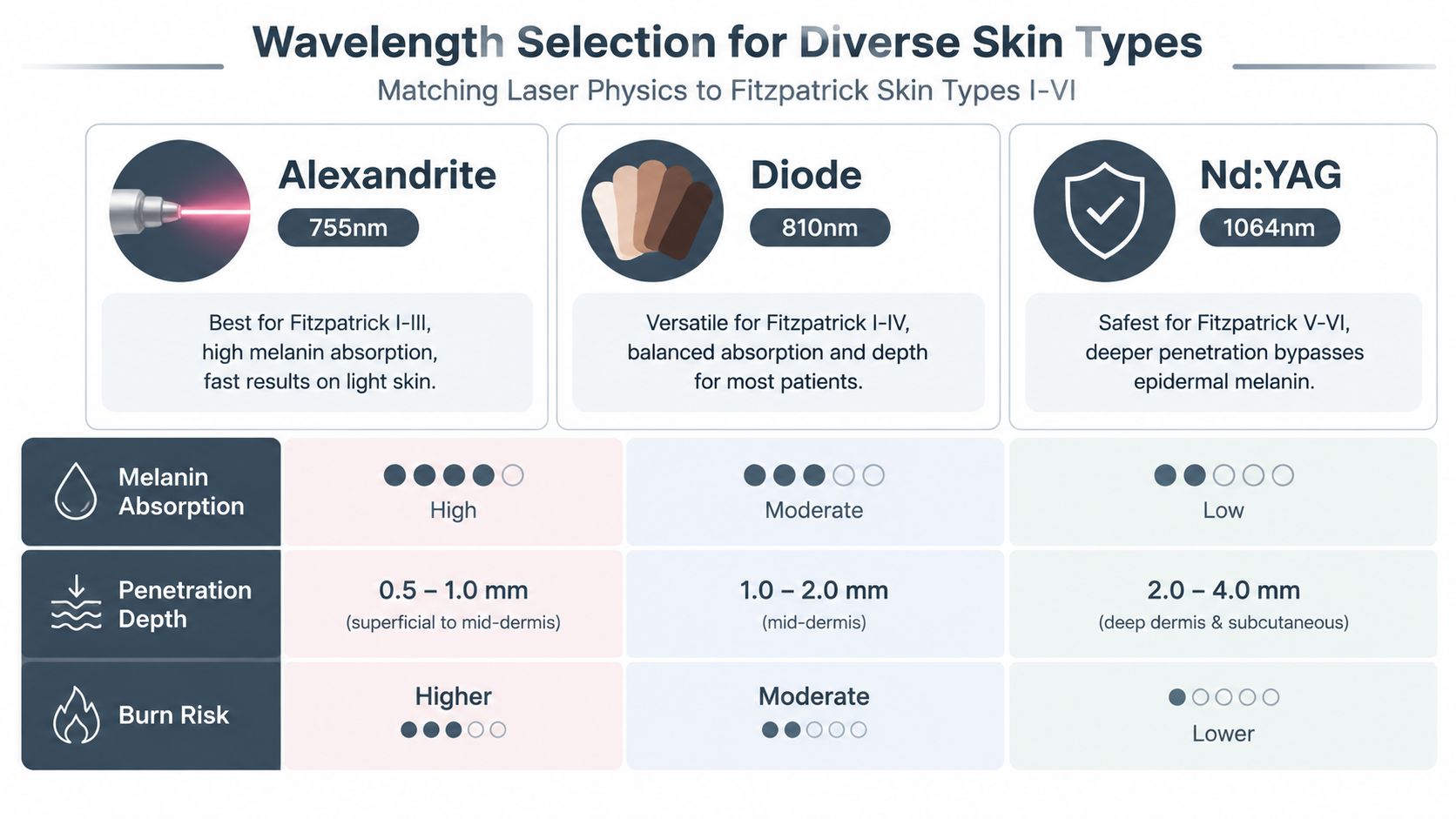
South African clinics treat a broad range of skin tones, so wavelength selection can't be reduced to choosing the strongest setting. The practitioner needs to understand melanin competition, the process by which epidermal melanin absorbs some of the laser energy intended for the follicle.
Shorter wavelengths interact more strongly with melanin near the skin surface. That can be useful in appropriately selected lighter skin, but it narrows the safety margin as epidermal melanin increases. Longer wavelengths penetrate further and are favoured for darker skin because they reduce superficial epidermal heating when used correctly.
Match the wavelength to the patient
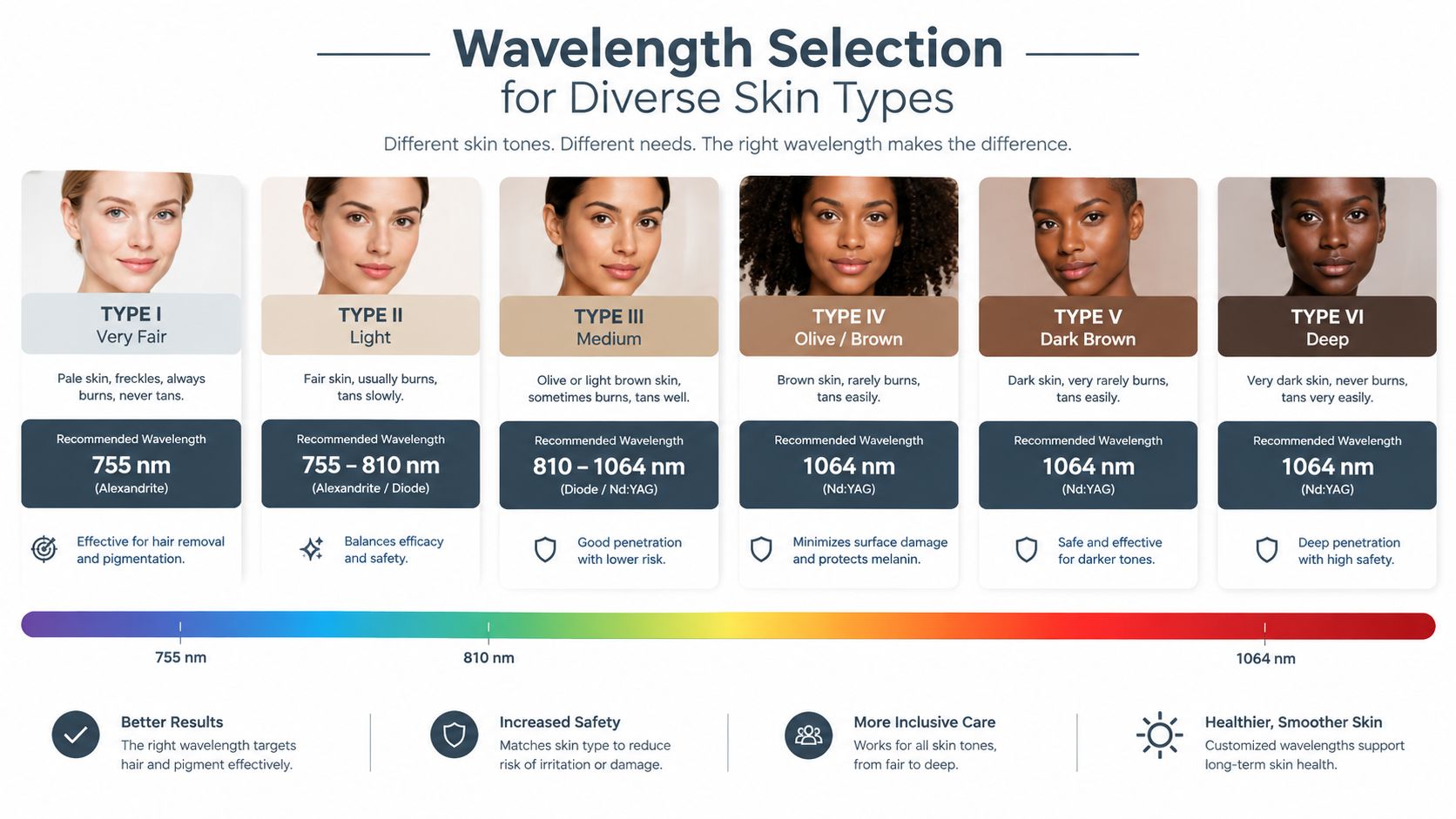
A practical starting framework is:
- Alexandrite: Often selected for lighter Fitzpatrick skin types, where epidermal melanin absorption is lower. It isn't automatically appropriate for every light-looking patient, particularly after tanning.
- Diode: Can provide a versatile option across a range of skin types when the operator understands the device's delivery profile and adjusts treatment conservatively.
- Nd:YAG: A longer wavelength that penetrates more and is favoured for darker skin types, particularly types IV to VI, because it reduces epidermal heating compared with shorter-wavelength approaches when used correctly.
This is a selection framework, not permission to treat by skin colour alone. Fitzpatrick typing has limitations, and the clinician must consider tanning, treatment site, hair colour and thickness, medication, previous reactions and the device's actual specifications.
Why Nd:YAG is often favoured for darker skin
For darker skin, the goal is to create sufficient follicular heating without depositing excessive energy in the epidermis. The Nd:YAG wavelength's deeper penetration helps move the treatment effect away from the surface, which can lower the risk of superficial burns and post-inflammatory hyperpigmentation when the system is correctly selected and operated. South African clinical guidance on laser treatment for skin of colour also emphasises sun avoidance, cooling and conservative settings.
Do not treat wavelength as a substitute for technique. A Nd:YAG system can still injure skin if the operator ignores recent sun exposure, uses excessive fluence, overlaps passes unnecessarily or fails to cool the area. The correct question is not “Which laser is safest?” but “Which wavelength and treatment approach gives this patient's skin the widest reasonable safety margin?”
Clinics adding a longer-wavelength option can review practical information on Nd:YAG laser hair removal, then validate the approach against their own training, device documentation and clinical governance.
Navigating SAHPRA Licensing and Device Compliance
Equipment purchasing is a clinical decision, not merely a capital expenditure. In South Africa, SAHPRA's medical-device mandate includes licensing medical-device establishments and registering medical devices to support acceptable safety, quality and performance. SAHPRA's medical devices information gives clinics a regulatory anchor for checking whether their equipment and operating arrangements sit inside the expected framework.
A 2026 SAHPRA communication states that licensing is required for the importation and use of laser systems under the Hazardous Substances Act, Act 15 of 1973. SAHPRA also maintains an application process for a licence to use a medical laser. The practical implication is clear: a clinic should verify the licensing position before acquiring or operating a system, not after a complaint, inspection or insurance query.
Know what technology you are buying
South African regulatory guidance distinguishes between true laser systems and other light-based devices. Class 3 and Class 4 lasers must be registered with SAHPRA, and a Laser Safety Officer must be designated for each machine, although one person may serve as LSO for multiple devices. IPL and LED devices are described as excluded from this specific licensing framework. The South African regulatory summary on aesthetic laser devices sets out this distinction.
That distinction matters because businesses often use the words “laser” and “light treatment” interchangeably. They shouldn't. The technology affects the compliance pathway, safety controls, operator training and documentation required.
Build compliance into procurement
Before signing a purchase agreement, request the device's regulatory documentation, intended use, service records, safety information and training scope. Confirm who holds responsibility for the Laser Safety Officer function, how maintenance is documented and whether the clinic's insurer has specific requirements for energy-based devices.
A vendor's statement that a system is safe isn't enough. The clinic owner remains responsible for establishing a compliant operating environment, checking local requirements and ensuring staff only use equipment for which they're trained. Proper licensing creates a documented control point, but it doesn't replace clinical competence.
The Critical Role of Operator Training and Competence
The most important safety investment in a laser clinic is the person making the treatment decision. An operator must recognise when not to treat, select an appropriate wavelength, adjust for skin response and act promptly when tissue behaves unexpectedly. Those skills aren't acquired through a quick product tour.
A South African training study reported that there was no legislation governing the supply and purchase of laser devices, allowing people with sufficient funds to buy equipment despite poor or absent formal qualifications. The same source stated that suppliers often provided only 2 to 4 days of non-accredited or informal training, while the South African Association of Health and Skincare Professionals recommended at least 100 hours of combined practical and theory training for accredited laser and IPL hair-removal education. Read the South African study on qualification and training.
What short training misses
A brief tutorial may show an operator how to switch on a device, select a preset and complete a pass. It usually won't create reliable competence in:
- Avaliação da pele: Identifying skin type, tanning, pigment irregularity and treatment areas that need caution.
- Lógica dos parâmetros: Understanding how fluence, pulse duration, spot size, repetition and cooling interact.
- Contraindications: Recognising medication, active skin conditions, infection, photosensitivity and other reasons to defer.
- Complication management: Differentiating expected erythema from burns, blistering or an escalating inflammatory response.
- Documentação: Recording the reasoning behind treatment choices so another trained person can review the case.
A supplier can be useful for device-specific orientation, but that isn't equivalent to accredited education. The clinic should require supervised practical assessment, theory covering laser physics and tissue interaction, documented competency sign-off and ongoing review of treatment records.
Train for decisions, not button pressing
A competent practitioner can explain why a chosen wavelength suits the patient, why a patch test is necessary and why treatment should be postponed after sun exposure. They can also tell the patient what normal perifollicular swelling looks like, what warning signs to report and who will review a concern.
Clinic owners should make training a condition of access to the device. New staff need supervision until they demonstrate consistent assessment and technique, while experienced staff still need refreshers when the clinic introduces a new platform or treats a wider range of skin types.
The operator should be able to justify every treatment decision before the first pulse, not reconstruct the reasoning after an adverse event.
Implementing Clinical Governance and Safety Protocols
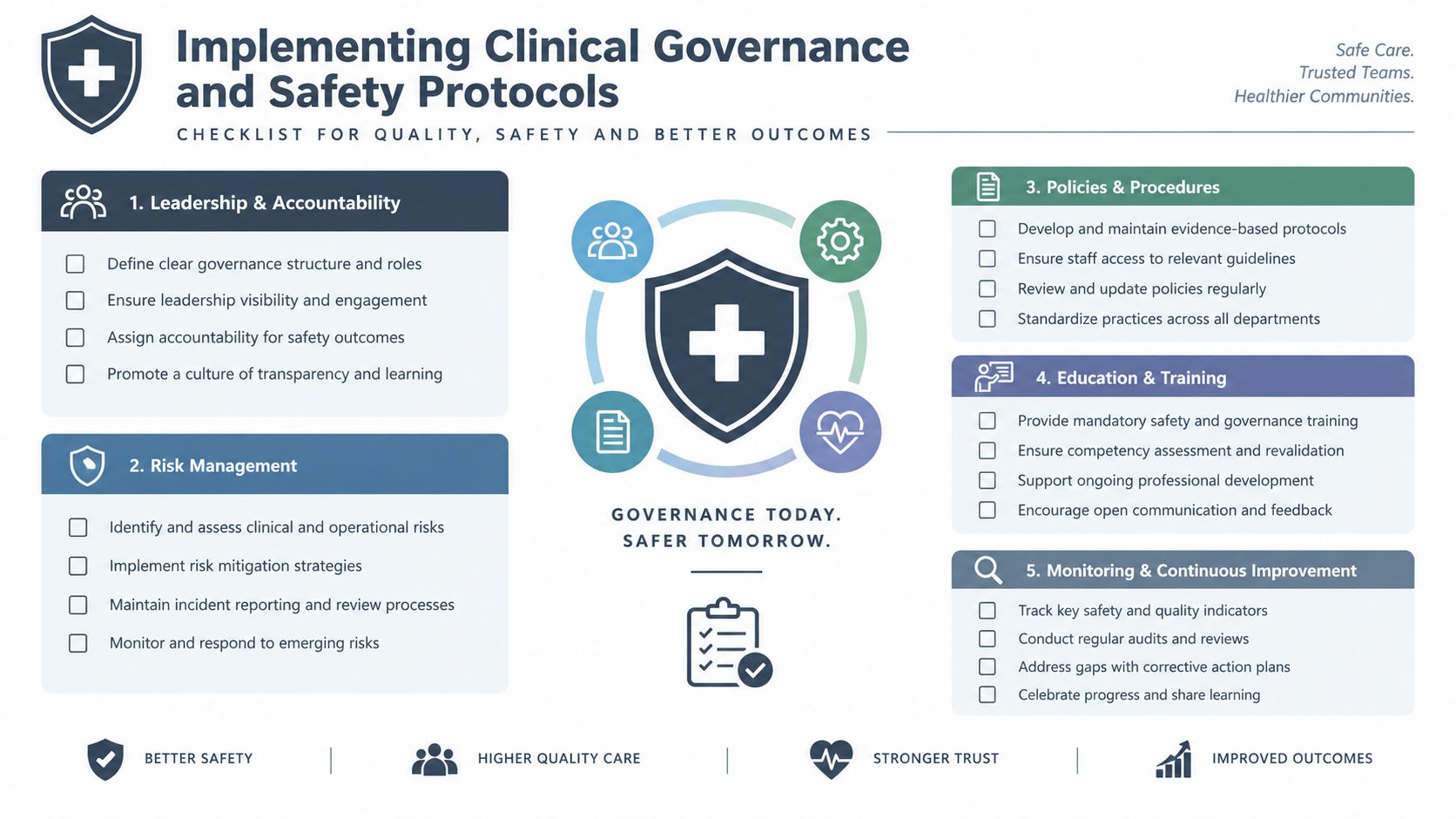
A safe clinic turns good intentions into repeatable actions. Every patient should move through the same core controls, while the practitioner retains authority to modify or stop treatment when the clinical picture demands it.
The pre-treatment gate
Start with a documented consultation. Record skin type, recent sun exposure, treatment area, hair characteristics, relevant medical history, medication, previous energy-based treatments and any history of abnormal scarring or pigment change. Explain the likely benefits, limits, expected temporary reactions and material risks in language the patient understands.
Then complete a patch test according to the clinic's written protocol. The purpose isn't to guarantee safety. It helps the practitioner observe the patient's response before treating a larger area and creates an opportunity to reassess the chosen wavelength and parameters.
A patient with recent tanning, irritated skin or an uncertain medical history should be deferred or referred for appropriate clinical input. Commercial pressure must never override that decision.
Controls during treatment
Use a written treatment record that captures the device, wavelength, area, settings, cooling approach, skin response and operator. Protective eyewear must be appropriate for the system and used by everyone exposed to the treatment beam. The practitioner should monitor the skin continuously rather than completing a pre-set sequence without inspection.
Cooling is not decorative comfort equipment. It helps manage epidermal heat and patient discomfort, but it can't compensate for poor wavelength selection or excessive energy. Avoid unnecessary overlap, watch for unusual pain or whitening, and stop when the response falls outside the clinic's expected range.
Aftercare and incident review
Give written aftercare covering sun avoidance, heat and friction management, products to avoid and the symptoms that require contact with the clinic. Temporary erythema and perifollicular swelling can be expected, while burns, blisters, marked pigment change and persistent pain need prompt review.
If an adverse event occurs, document it, photograph it where appropriate, record the treatment details and escalate according to the clinic's clinical pathway. Review the event for system failures, including inadequate training, incomplete consultation, unsuitable settings or equipment maintenance issues.
For teams building continuing education into their governance programme, find accredited CE articles that support structured professional development. Education should reinforce, not replace, device-specific competency assessment and local compliance.
Before treating the next patient, audit five basics: licensed equipment, trained operator, documented consultation, completed patch test and clear aftercare. If one is missing, the clinic isn't ready to deliver a defensible treatment.
Omega Lasers supplies professional systems such as Tetra Cool for in-office laser hair removal and supports clinics with device training, technical assistance and operational guidance. Visit Lasers Omega to explore equipment and support designed to help your team deliver safer, more consistent treatments within a properly governed practice.