



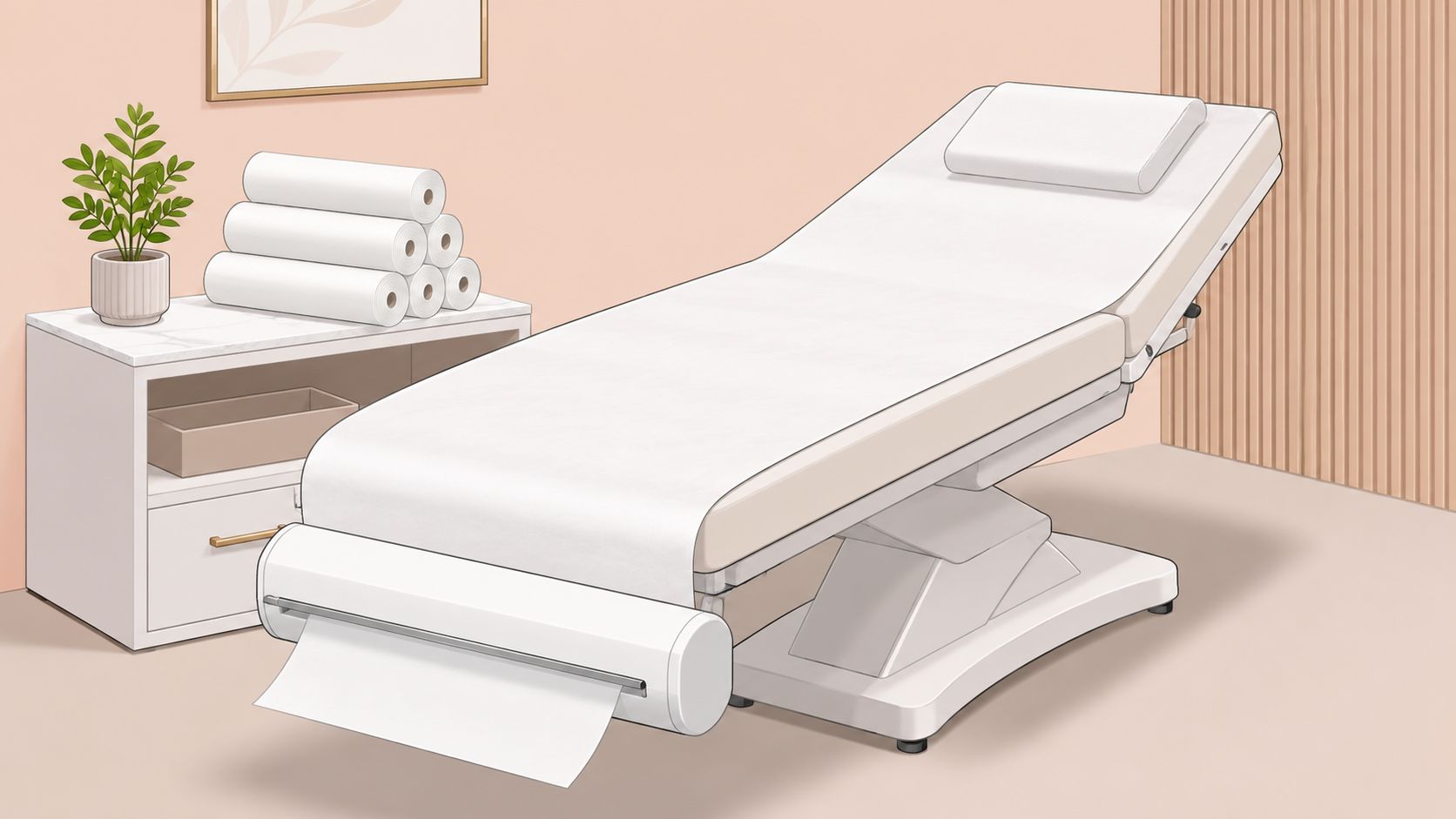
Your treatment room is fully booked, the next laser client is already in reception, and a soiled sheet is sitting on the couch with no time for a full reset. In that moment, disposable bed sheets stop being a simple supply choice and become an operational decision that affects speed, hygiene, client confidence, and the way your day runs. In South African aesthetic clinics, that decision also sits inside a harder reality, because load-shedding, utility costs, and uneven laundry reliability can turn a routine linen cycle into a bottleneck.
Disposable bedding has moved well beyond convenience. Market estimates show a category being pulled by infection-control requirements rather than consumer comfort alone, with global forecasts ranging from USD 5.58 billion in 2026 to USD 11.40 billion by 2036 at a 7.4% CAGR in one projection, and other reports showing different but still strongly growing market paths (Future Market Insights, Persistence Market Research). For clinics, the key question is not whether disposables are fashionable. It's whether they make the room turn faster, reduce contamination risk, and support the standard of care your clients expect.
Table of Contents
- The Daily Linen Decision That Impacts Your Bottom Line
- Understanding Materials and Grammage Specifications
- Disposable Versus Reusable Linens in Practice
- Sizing and Fit for Treatment Couches
- Calculating True Cost Per Bed Turnover
- Hygiene Standards and Regulatory Compliance
- Sustainability and Disposal Considerations
- Implementation Strategy for Your Clinic
The Daily Linen Decision That Impacts Your Bottom Line
The pressure usually shows up between patients, not during a spreadsheet review. A laser hair removal client leaves the room a little damp from topical gel and warmth, the next client is already five minutes early, and a staff member has to decide whether to strip the bed, send the linen away, and pull a fresh set, or wipe down, remount, and hope laundry catches up later. That small choice changes the rhythm of the whole afternoon.
Practical rule: if a linen choice slows room turnover enough to create a queue, it's no longer just a hygiene decision. It's a capacity decision.
In a busy practice, every reset has a visible effect. The client who walks into a clean, crisp room notices the workflow immediately, and so does the one who has to wait because the previous bed wasn't ready. Disposable bedding gives you a consistent reset point, which matters in short, repetitive appointments where staff need to move quickly without sacrificing presentation.
The market shift reflects that reality. Disposable bed sheets are now treated as an institutional consumable rather than a niche add-on, with market tracking showing the category expanding across healthcare and outpatient environments (Future Market Insights, IndexBox). That makes sense in a clinic where turnover speed, patient comfort, and sanitation have to work together, not compete with each other.
For South African clinics, the challenge is sharper because utility interruptions and laundry delays aren't theoretical. If your laundry plan depends on steady power, stable water, and prompt staff capacity, then the cost of reusable linens can become unpredictable in exactly the weeks when volume is highest. That's why this purchase should sit inside a wider inventory plan, not in a back cupboard as an afterthought. A practical starting point is to map consumption against scheduling patterns, then tighten stock control with an internal process like the one outlined in inventory management guidance.
Understanding Materials and Grammage Specifications
Disposable bedding looks simple until you have to match it to an actual treatment. The important differences are not marketing names, they're the build, the barrier layer, and the weight of the sheet. In South African clinical and aesthetic use, common constructions include PP non-woven, SMS, and PE-laminated non-woven, with standard clinic ranges around 20 to 45 gsm and heavier builds around 35 to 60 gsm where more tear resistance or fluid protection is needed.
Match the construction to the treatment
A PP non-woven sheet is usually the lightest, most basic option. It can suit lower-risk exams or brief consultations where contact time is short and moisture exposure is limited. An SMS build adds structure and is better when you want a stronger balance between comfort, breathability, and resistance.
A PE-laminated sheet is the one to think about when liquids matter. For laser treatments, microneedling, facial device work, and any appointment involving conductive gel or post-treatment serums, the practical question is whether the barrier prevents soak-through before it reaches the couch. That's why many clinics care less about the name on the box and more about whether the sheet is SMS or PE-backed.
Breathability matters, but so does containment. If a sheet feels comfortable yet lets fluids reach upholstery, it fails the job it was bought for.
Use grammage as a procurement filter
Grammage helps you avoid overbuying or underbuying. A lighter sheet may feel softer and cost less, but it won't hold up as well under repeated repositioning or heavier moisture. A heavier sheet offers more resistance, but it can reduce breathability and increase cost, so it's not automatically the better choice.
The right approach is to separate treatment types by risk. Short consultations and low-contact reviews need less barrier performance. Higher-turnover procedures with perspiration, gel, or repeated client movement need stronger specifications. That logic keeps procurement focused on what the room does, instead of what the brochure promises.
Disposable Versus Reusable Linens in Practice
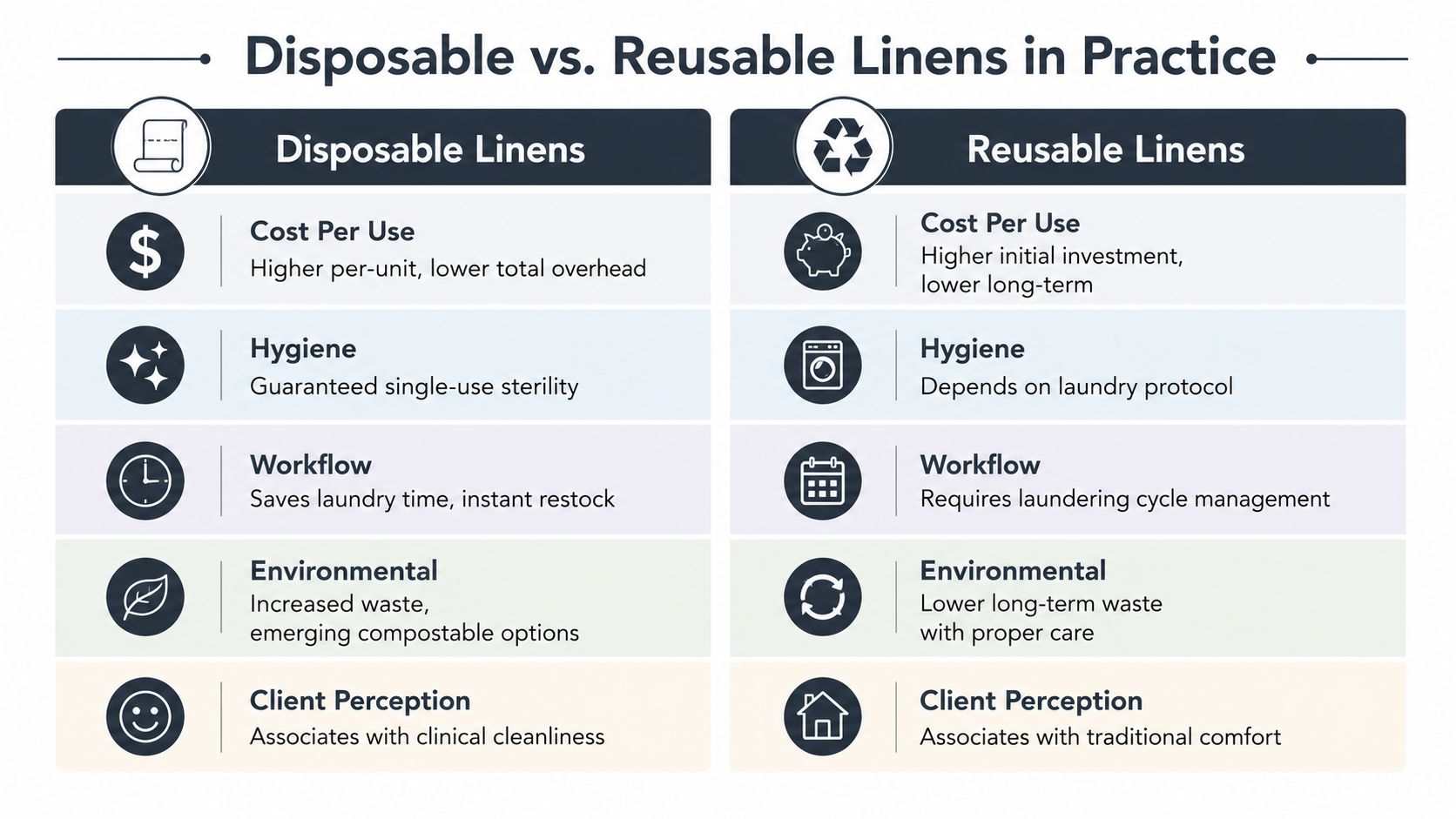
The comparison is not emotional, it's operational. Disposable linens are faster to deploy and simpler to standardise. Reusable linens can make sense when a clinic already has reliable laundry capacity, enough spares, and enough staff discipline to keep the cycle tight.
For a practice with short appointments and high client flow, disposables usually win on workflow. The room gets reset immediately, the next client sees a fresh surface, and staff don't have to stack laundry logistics on top of treatment logistics. For a practice with slower days, fewer resets, and strong in-house laundry discipline, reusables can still be the better fit, especially if linen use is heavy but predictable.
Where disposables outperform
Disposables are strongest when turnaround matters more than recovery. That includes treatment days packed with laser sessions, facial device appointments, and post-procedure reviews where staff can't afford to wait on drying or re-folding. They're also a cleaner fit for rooms that must be reset multiple times a day without exposing staff to handling soiled linen.
Where reusables still make sense
Reusable linens can work well in settings with stable occupancy, dedicated laundry staff, and reliable utility supply. They also suit clinics that prioritise a softer, more familiar textile feel and can manage the wash cycle without delay. The issue is not whether reusables are “bad”, it's whether the clinic has the control systems to make them dependable.
A useful way to think about the trade-off is to compare hidden effort, not just purchase price. If you want a deeper view of detergent, cycle management, and fabric care, the logic behind how bulk laundry pods work is a useful reminder that laundry is not just one action, it's a managed system with inputs, handling, and consistency.

| Cost Factor | Disposable Sheets | Reusable Linens |
|---|---|---|
| Purchase pattern | Single-use stock bought for ongoing turnover | Repeated purchase of linen sets plus replacements over time |
| Labour input | Low handling time between clients | Higher handling time for stripping, sorting, washing, drying, and folding |
| Utility exposure | Less dependent on water and power for each use | More exposed to water, electricity, and laundry cycle reliability |
| Turnover speed | Fast reset for the next appointment | Slower reset when laundering capacity is stretched |
| Infection-control handling | Simple single-use disposal after treatment | Depends on consistent washing and handling discipline |
Sizing and Fit for Treatment Couches
Fit gets ignored until the first time a sheet slips off the side of a couch. Then staff are left adjusting corners in front of a client, and the room stops feeling polished. Disposable sheets used on exam couches and treatment beds are commonly made around 140 × 229 cm, 135 to 140 × 240 cm, or 150 × 180 cm, while roll formats are often 68 to 120 cm wide and 50 to 200 m long with perforated tear-off sections around 195 to 220 cm.
Measure the couch, not the guess
Start with the width of the treatment surface and the drop on each side. If the sheet is too narrow, the edges remain exposed and the clinician ends up resetting more often. If it's too short, the head and foot zones are left open, which is where contact contamination tends to creep in during positioning and treatment prep.
A proper fit should cover the full working area without constant tugging. That matters more in aesthetic treatment rooms than in low-traffic spaces because staff often lean across the bed to set up devices, apply products, and adjust the client's position.
Choose flat packs or perforated rolls for workflow
Flat-pack sheets work well when you want consistent coverage and simpler stocking. They suit regulated routines, clear counts, and rooms where the same bed size is used all day. Perforated rolls are more flexible when turnover is high and staff need to tear only the length they need.
A roll saves time only if the team knows exactly how much to tear. If nobody standardises that step, waste goes up and coverage becomes inconsistent.
The best fit choice depends on throughput. If one room handles repeated short appointments, perforated stock can keep movement smooth. If the room handles longer, more varied procedures, a flat-pack format often reduces errors because every change starts from a known size.
Calculating True Cost Per Bed Turnover
Unit price is the least useful number in the room. The true cost of reusable linens includes water, electricity, detergent, labour, equipment wear, and the operational risk of a delayed or compromised wash cycle. The true cost of disposable linens is not just the purchase price, it's the replacement rate and storage discipline required to keep stock ready.
The reason this matters in South Africa is practical. Load-shedding can disrupt laundry cycles, and utility swings can make in-house laundering harder to forecast. That means a linen system that looks cheaper on paper can become more expensive once the clinic starts paying for interruptions, overtime, or emergency substitutions.
Build the calculation around turnover
A useful comparison starts with the number of bed turnovers per day and the number of rooms that depend on those turns. If a reusable system needs a wash cycle, dry time, folding time, and someone to manage it, each of those steps belongs in the cost model. Disposables remove most of that labour, but they do create a steady consumable draw.
Use a procurement table, not a guess
| Cost Factor | Disposable Sheets | Reusable Linens |
|---|---|---|
| Purchase cost | Ongoing consumable expense | Upfront linen set purchase plus replacements |
| Water use | Minimal for each turnover | Repeated laundering demand |
| Electricity use | Minimal for each turnover | Dependent on washing and drying cycle reliability |
| Detergent and chemicals | Not required for the sheet itself | Required for each laundry cycle |
| Labour time | Short changeover time | More handling, sorting, washing, drying, and folding time |
| Operational risk | Low dependence on utility continuity | Higher exposure to load-shedding and laundry delays |
If the clinic runs enough turns that laundry becomes a daily coordination task, the hidden cost is often staff time and unpredictability, not detergent alone. That's why the best decision is usually made at the room level, by looking at turnover speed, appointment mix, and the reliability of the local laundry setup. A clinic with a small number of long visits may stay comfortable with reusables. A clinic built around fast-paced aesthetic work often benefits from disposables because the workflow stays stable.
Hygiene Standards and Regulatory Compliance
A disposable sheet that looks inexpensive on a quote can become a problem if it does not fit the clinic's infection-control routine. In South African aesthetic rooms, the test is whether the sheet supports clean turnover, survives the pace of the day, and can be handled consistently when staff are working around load-shedding, mixed appointment blocks, and interrupted room resets. That is why procurement should start with hygiene requirements, not just price per pack.
Disposable bedding in clinical settings is not a generic textile choice. In the United States, medical disposable bedding is explicitly captured under 21 CFR 880.6060, which places it within the FDA medical device framework (eCFR). That classification reinforces a simple point, in healthcare environments, bedding is part of infection control, not just décor.
South African clinics should apply the same standard in practice, even if local procurement language is different. The working rule is to store, handle, and dispose of sheets in a way that keeps the treatment area controlled and reduces avoidable contact with used linen. Sealed storage, clean point-of-use handling, and immediate removal after treatment are the basics. Clinics that want a broader infection-control framework can align those habits with Omega Lasers' infection control guidance, then adapt the process to their own room setup and waste stream.
For clinics that want a wider view of room hygiene, the logic in lowering HAI risks in hospitals is a useful reminder that everyday environmental handling matters as much as the procedure itself. Linen sits inside that chain, so it needs the same discipline as any other contact surface.
Keep the room audit-ready
Storage should stay dry, clean, and organised so staff can pull the right product without opening several packs. Handling should be straightforward enough that a new team member can follow it without improvisation. Disposal should happen immediately after use, especially in rooms that deal with sweat, gel, serums, or other treatment residue.
Clean rooms rely on repeatable habits, not heroic effort. If the process only works when the senior therapist is on shift, it isn't a real process.
For clinics that already document infection-control procedures, disposable sheets fit naturally into those records. The practical move is to place linen handling in the same workflow as surface cleaning, glove changes, and room reset steps. That matters most during peak periods, when staff are under pressure and shortcuts are easier to take.
Sustainability and Disposal Considerations
Single-use bedding creates a real waste question, and it shouldn't be brushed aside. At the same time, a clinic that prioritises hygiene, speed, and contamination control can't pretend that reusable linen is automatically greener if it depends on repeated wash cycles, extra water, and disrupted utility usage. Sustainability, in this setting, is about choosing the least harmful option that still protects the client and the treatment surface.
The practical answer is to reduce avoidable waste through correct sizing, correct ordering, and correct disposal. Oversized sheets that get thrown away half-used are a bigger problem than well-matched stock used efficiently. The same applies to storage and handling, because damaged packs and poor rotation create waste before a client even lies down.
A useful lens from outside healthcare is eco-friendly packaging for UK restaurants, which shows how responsible materials choices and waste planning can coexist with daily operations. Clinics can apply the same logic by asking suppliers about material composition, packaging volume, and disposal guidance.

Reduce waste without weakening standards
Work with products that match the treatment length, so you're not over-consuming material on short appointments. If a supplier offers a more sustainable material option, check that it still performs under the moisture and turnover conditions your clinic sees. Clients notice environmental intent, but they notice visible cleanliness first.
The best sustainability strategy is honest. Say what you're doing, use what fits the workflow, and avoid pretending that waste reduction can override infection control. In a clinical room, the order of priorities matters.
Implementation Strategy for Your Clinic
Start by reviewing where your current linen process slows the day down. Look at the rooms with the most frequent resets, the appointment types that create the most moisture or residue, and the staff members who handle linen changes most often. That tells you where disposables are likely to pay back fastest.
Roll out in controlled stages
A pilot is better than a full switch if your team is still uncertain. Test disposable bedding in one or two rooms, track turnover ease, client response, and stock consumption, then compare that with your reusable baseline. If the process feels cleaner for staff and more predictable in the diary, expand from there.
Supplier choice should focus on fit, barrier performance, and reliability of delivery. Inventory discipline matters just as much, because a good product that runs out at the wrong time is still a workflow problem. Use the same thinking you'd apply to any high-use consumable, and tie it into supply chain optimisation guidance.

Keep the training simple
Staff need one clear standard for when to change, how to dispose of, and how to restock the bed. If the protocol is easy, it gets followed. If it varies by therapist, the room becomes inconsistent and stock use becomes hard to predict.
The most useful metrics are practical ones, not vanity numbers. Track room readiness, linen consumption by treatment type, and any complaints about fit, comfort, or handling. If those measures improve, you'll know the system is doing real work, not just adding another consumable to the shelf.
If you're reviewing your room setup, stock flow, or treatment workflow, Omega Lasers can help you think through the operational side of a modern aesthetic clinic. Visit Omega Lasers to explore how the right equipment, training, and support can fit into a cleaner, faster, more profitable treatment environment.