




If you're running an aesthetic clinic in South Africa, inventory problems usually don't look dramatic at first. They show up as a missing tip five minutes before treatment, a serum expiring on the back shelf, a handpiece sitting idle while you wait on a supplier response, or a client being promised a product that isn't in stock. By the time the issue is obvious, the money has already left the business.
That's why inventory management in a clinic can't be treated like a back-office admin task. It sits right in the middle of cash flow, patient safety, treatment continuity, compliance, and reputation. In aesthetic practice, you're not only managing products. You're managing regulated stock, expensive devices, shelf life, supplier dependencies, and, in South Africa, the operational reality of load-shedding and uneven connectivity.
Table of Contents
- Foundations of Clinic Inventory Categorisation
- Choosing Your Clinic's Technology Stack
- Setting Reorder Points and Forecasting Demand
- Managing Suppliers Warranties and Compliance
- Optimising Your Stockroom and Staff Workflows
- Audits KPIs and Continuous Improvement
Foundations of Clinic Inventory Categorisation
Most clinics start with one stock list. That's the first mistake. When every item sits on the same sheet with the same controls, teams miss what creates risk.
In emerging markets such as South Africa, 43% of small businesses still track inventory manually or not at all, and that lack of systemisation contributes to stockouts and overstocking that can cost businesses up to 11% of annual revenue, according to NetSuite's inventory management challenges analysis. In a clinic, that pain is sharper because stock errors don't only hit margin. They disrupt booked treatments.
Why clinics struggle when everything is treated the same
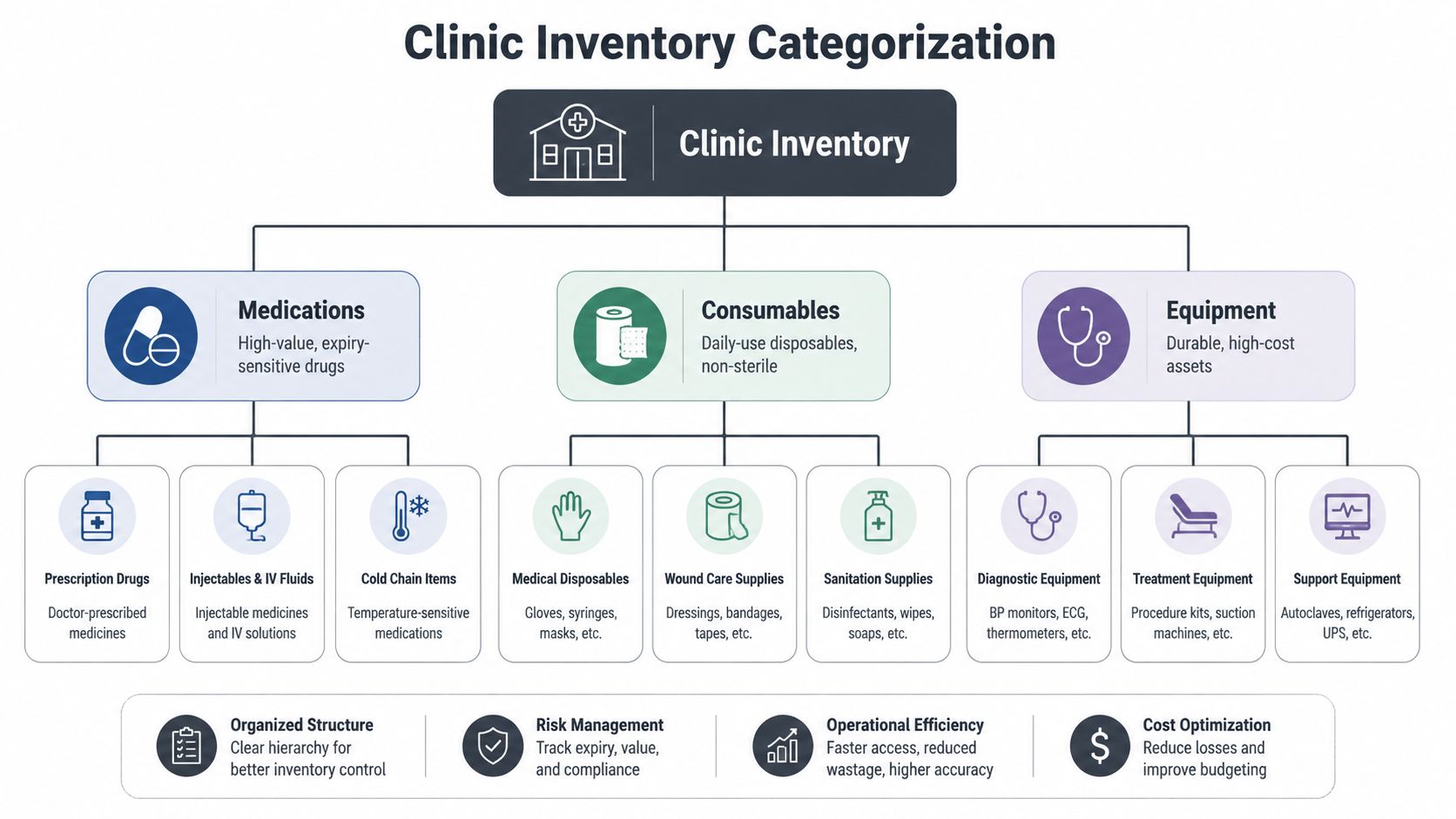
A retail cleanser, a batch-tracked injectable, a cooling handpiece, and a replacement filter should never be managed with the same logic. They move differently, expire differently, and create different levels of operational damage when unavailable.
A good inventory management process starts by sorting stock by business consequence. Ask two questions for every item. What happens if this runs out, and what happens if this sits too long?
Practical rule: If an item can stop a treatment, create a client safety concern, or tie up a meaningful amount of cash, it needs its own control method.
The four inventory groups that need different rules
High-value capital equipment
This group includes laser platforms, diagnostic systems, cooling units, and other durable treatment assets. These items don't move daily, but they affect revenue every day they are unavailable.
Control here is less about quantity and more about status. You need serial numbers, location, service history, warranty dates, consumable compatibility, and a record of who is authorised to use the device. If a device is moved between rooms or sites without a clean log, accessory loss and downtime follow quickly.
Perishable consumables
Many clinics experience financial drain from their inventory. Injectables, treatment gels, masks, ampoules, single-use tips, and opened professional skincare all carry shelf-life pressure. Some are high-value. Some are clinically sensitive. Some become unsellable or unusable the moment a seal is broken or an opening date isn't recorded.
For this category, batch tracking, expiry date visibility, opening-date controls, and first-expiry-first-out discipline matter more than bulk discount buying. Cheap stock is expensive when it expires on your shelf.
Essential spare parts
Handpieces, cables, filters, replacement applicators, and small technical components often get ignored because they don't look like “inventory”. That's a dangerous habit. One missing part can cancel a full treatment day.
These items need minimum stock rules and named ownership. If no one is responsible for checking them, everyone assumes someone else is.
Retail skincare
Retail products deserve a separate lens because they affect both cash flow and customer experience. Unlike treatment consumables, these items are visible to clients. If your team recommends a product and then can't supply it, trust drops.
Use category-level controls here. Track what sells consistently, what stalls, and what gets returned to shelf after a promo push. Retail stock should support your treatment plan, not become a storeroom full of slow movers.
A clinic that categorises inventory properly stops reacting to shortages item by item. It starts controlling stock as a portfolio of assets, each with its own risk, handling rule, and financial purpose.
Choosing Your Clinic's Technology Stack
Spreadsheets survive in clinics for one reason. They feel cheap. In practice, they're expensive because they depend on memory, manual discipline, and version control that breaks the moment more than one person touches the file.
The business case for proper software is strong. Businesses that optimise inventory management can see up to a 30% improvement in order fulfilment, and real-time visibility is a priority for 77% of retailers by 2025. The same source notes that better visibility can reduce supply chain costs from 9% to 4%, with the potential to double profits in some settings, as outlined in Fishbowl's inventory management challenges article. For clinics, the core value is simpler. Fewer missed treatments, fewer expiry surprises, and less cash trapped in guesswork.
What your system must do in a clinic setting
Generic stock software often looks fine in a demo and falls apart in daily use. A clinic needs more than item counts.
Look for these essential requirements:
- Appointment-linked stock usage: When a treatment is booked and completed, the system should support deduction of the related consumables. If usage lives separately from bookings, your stock record drifts almost immediately.
- Batch and expiry controls: This matters for regulated products and any consumable with shelf-life pressure. You need to know what arrived, when it expires, and what was used.
- Low-stock and expiry alerts: Staff shouldn't have to remember every threshold manually.
- Multi-location visibility: If you operate from more than one site, transfer tracking matters. Stock “borrowed” between branches without a logged movement creates phantom availability.
- Usage and profitability reporting: You want to know which treatments consume more than expected, which products move slowly, and which practitioner habits are affecting margin.
If you're reviewing options, a useful starting framework is this 2026 guide to inventory management solutions, especially for building a shortlist around actual operational requirements instead of feature overload.
What to ask before you commit
Don't ask a vendor if the system “does inventory”. Ask how it handles a normal clinic day.
Use questions like these:
- Can staff receive stock by batch and expiry in one workflow?
- Can the system log internal transfers, wastage, and opened products clearly?
- Can you trace a product from supplier receipt to client use?
- Can reception, therapists, and managers each have role-based access?
- What happens when internet access drops or the power is interrupted?
Software doesn't fix weak process. It exposes it. The right system makes good habits easier and bad habits visible.
One more point matters during selection. Your device and treatment offering shape inventory complexity. Clinics planning service expansion should assess equipment choices alongside stock requirements, not after the purchase. This guide on finding top salon equipment for sale in 2026 is useful for thinking through that operational link.
The wrong technology stack creates more admin. The right one turns inventory management into a daily control system instead of a month-end clean-up exercise.
Setting Reorder Points and Forecasting Demand
Most clinics order in one of two bad ways. They either wait until something is nearly finished, or they buy extra “just in case”. The first creates service disruption. The second creates expiry waste and locked-up cash.
That trade-off is especially important in aesthetics because many consumables are both expensive and shelf-life sensitive. Generic advice often misses the core problem of setting reorder points for products where overstocking leads directly to expiry waste, as discussed in this expert guide to inventory management.
Start with treatment demand, not supplier catalogues
Forecasting works better when it begins with your diary. A clinic doesn't need abstract demand planning. It needs a usable link between booked services and expected stock usage.
If next week's schedule is heavy on laser hair removal, you already know demand for cooling consumables, gel, disposables, and aftercare will rise. If injectable bookings are light, don't let a sales rep push you into volume buying that may sit too long.
Three inputs matter most:
- Booked treatments: The next two to four weeks tell you more than last quarter in isolation.
- Seasonal behaviour: Some treatments and retail lines move differently around holidays, summer exposure, or event periods.
- Marketing activity: A promotion changes demand. If marketing launches and stock planning doesn't adjust, your clinic creates its own shortage.
A practical clinic method for reorder points
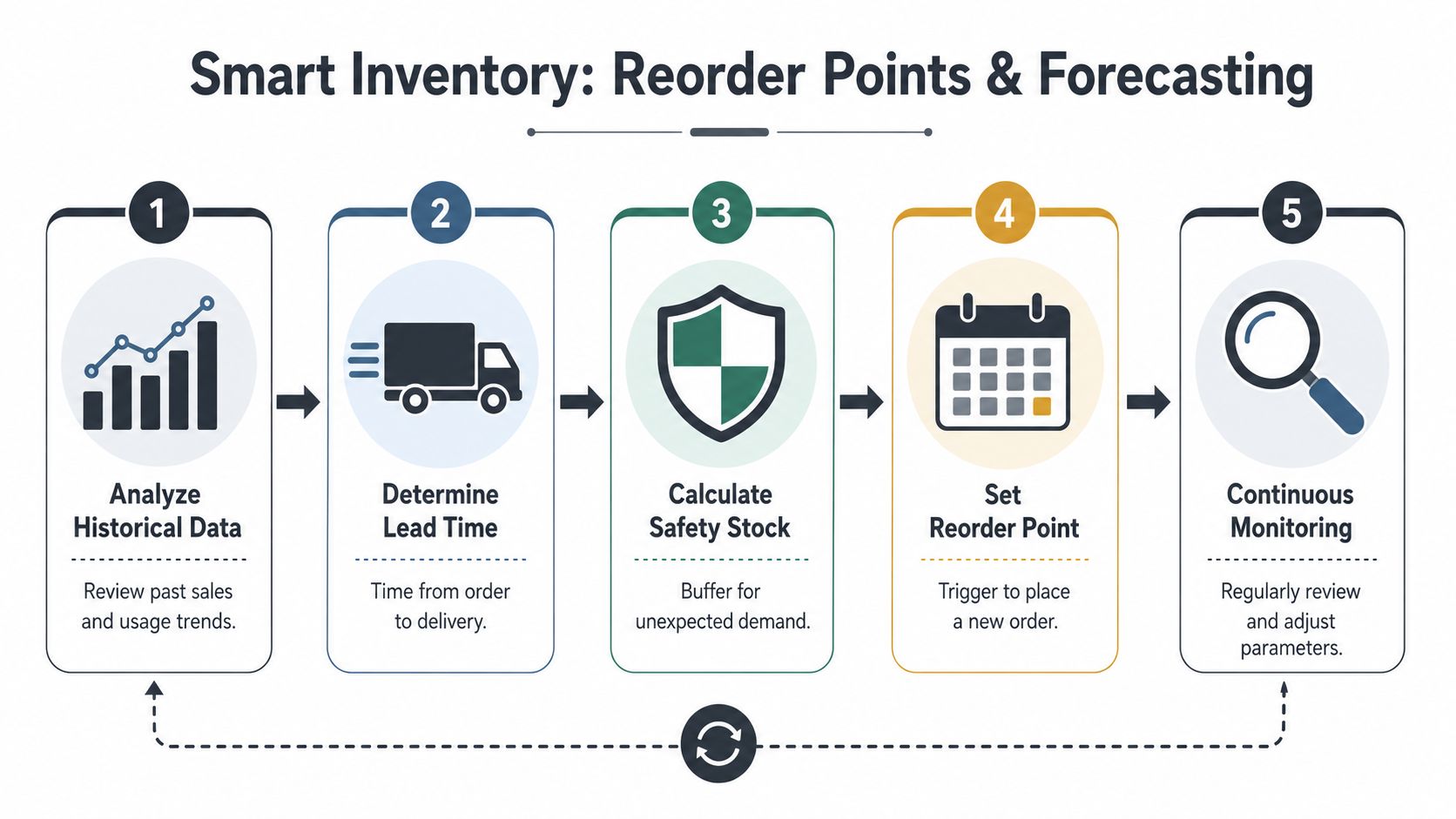
You don't need complicated formulas to improve control. You need consistent logic.
Start with a simple working method:
- For fast-moving treatment consumables: Estimate average use per treatment session, then multiply by booked sessions over your supplier lead time. Add a small safety buffer for reschedules, extra passes, or product damage.
- For short-shelf-life items: Set a lower reorder threshold and review more frequently. These products shouldn't be bought for comfort. They should be bought for realistic near-term use.
- For retail products: Base reordering on sell-through pattern, not optimism. If a product sells in bursts after consultations, align orders with consultation volume rather than shelf ambition.
- For spare parts: Reorder based on consequence of failure. A low-use item that can stop treatments may deserve a higher safety buffer than a faster-moving but replaceable item.
Buy protection for service continuity, not permission to avoid counting stock.
A practical example helps. If each booked facial protocol uses a defined set of masks, serums, and disposables, build a treatment bill of materials. Then assign expected consumption to each booking type. Once that is set up, your weekly order review becomes a calculation, not a debate.
Use a short review cycle. Weekly works well for volatile consumables. Monthly is often enough for slower retail categories. The key is that reorder points aren't fixed forever. Change them when lead times shift, promotions land, or a practitioner changes technique and product usage.
The best forecast in a clinic is not the most advanced one. It's the one your team updates consistently, understands clearly, and trusts enough to act on.
Managing Suppliers Warranties and Compliance
Poor inventory control isn't only a stock problem. In an aesthetic clinic, it's a risk problem. Supplier records, warranties, batch traceability, and outage resilience all sit inside the same operational system.
When those records live in inboxes, filing cabinets, and staff memory, the clinic becomes fragile. A treatment issue, device fault, or supplier dispute then turns into a scramble for paperwork.
Supplier records are part of risk control
Every clinic should keep one live register for suppliers and another for capital assets. That register should include supplier contacts, approved product lists, purchase dates, warranty periods, service intervals, serial numbers, and any documents tied to regulatory status.
This matters most for devices and regulated consumables. If a handpiece fails, you need to know whether it is under warranty, who to call, what the service terms are, and whether a loan unit or backup process exists. If you're formalising that process, this overview of after-sales service support shows the kind of structure clinics should expect around maintenance and continuity.
For product traceability, batch logging can't be optional. Receiving staff should record batch numbers and expiry on arrival. Treatment staff should record what was used. If a complaint, recall, or adverse event review arises, the clinic must be able to follow that product path cleanly.
A simple compliance checklist should include:
- Approved supplier status: Only order regulated stock from vetted suppliers.
- Batch visibility: Goods in, goods used, and goods returned must all leave a trace.
- Warranty calendar: Don't wait for a fault to find out coverage has lapsed.
- Document storage: Keep invoices, service reports, and compliance files in one accessible place.
- Disposal records: When devices, IT hardware, or storage media leave the business, the disposal process must protect sensitive information. This article on ensuring HIPAA compliance for IT disposal is US-focused, but the discipline around secure handling and documented disposal is still a useful operational reference.
Offline continuity is not optional in South Africa
Many inventory guides assume constant power and constant sync. That isn't how South African clinics operate. With electricity availability in South Africa still fluctuating, generic guidance misses a major real-world issue. Clinics need offline-first workflows that preserve stock visibility during outages and allow reconciliation later, as highlighted in Lowry Solutions' discussion of warehouse inventory challenges.
That means your process should answer practical questions:
- How do staff receive stock if internet access is down?
- How are treatment deductions recorded during a power interruption?
- Who reconciles paper or offline entries back into the system?
- How do you prevent duplicate entries after power returns?
A clinic that can't count, receive, or transfer stock during an outage doesn't have an inventory system. It has a fair-weather dashboard.
In South Africa, resilience is part of compliance. If your records break every time the lights do, your stock data cannot be trusted.
Optimising Your Stockroom and Staff Workflows
You can buy good software and still lose money in a bad stockroom. I've seen clinics with tidy reception areas and treatment rooms, then one cluttered cupboard in the back where expensive stock, retail overflow, old cables, and part-used consumables all live together. That room decides whether your inventory management works.
A disorganised stock area creates daily friction. Staff over-order because they can't find items. Expiry checks get skipped because shelves are crowded. High-value products are moved without sign-out. At that point, the system says one thing and the room says another.
What a chaotic stockroom costs you
In the weak version, products are stored wherever space opens up. Opened items sit beside sealed stock. Spare parts share bins with marketing materials. No one knows which shelf should be checked first for expiries. Team members interrupt each other all day with questions that should never need asking.
In the strong version, the room is boring. That's exactly what you want. Every category has a place. High-value stock is secured. Fast movers sit where they can be picked quickly. Expiry-sensitive items are rotated to the front. Returned stock is quarantined until someone verifies whether it can go back into active inventory.

The workflow that keeps records clean
Layout only works when staff follow the same handling rules. Build simple SOPs around the moments where stock records usually break.
Use a workflow like this:
- Receiving: One person checks quantity, condition, batch, and expiry before items are shelved.
- Put-away: Stock is placed immediately in its assigned location. “Temporary” placement usually becomes permanent confusion.
- Usage logging: Treatment staff record product use at point of service, not later from memory.
- Returns and wastage: Any damaged, opened, expired, or questionable item goes into a separate status area with manager review.
- Cycle counts: Staff count a small portion of stock regularly instead of waiting for one painful full count.
Good stockrooms reduce decision fatigue. Staff don't need to improvise when the space itself tells them what to do.
Assign ownership too. Reception can own retail front stock. A treatment lead can own consumables. A manager can own spare parts and capital asset records. Shared responsibility often means no responsibility.
When the room is organised and the workflow is clear, staff stop treating stock control as admin added onto their job. It becomes part of how the clinic works.
Audits KPIs and Continuous Improvement
Inventory management settles only when clinics measure it. Without audits and a few useful KPIs, teams drift back into assumptions. They think the system is accurate because no one has checked it recently.
The point isn't to create more reporting. It's to build a routine that catches small errors before they become cancelled bookings, write-offs, or compliance headaches.
The KPIs worth tracking every month
Most clinics don't need a dense dashboard. They need a short list of indicators that connect stock behaviour to operational reality.
| KPI | What It Measures | Why It Matters for Your Clinic |
|---|---|---|
| Inventory turnover | How quickly stock is used or sold | Shows whether cash is moving or sitting on shelves |
| Stock-to-sales ratio | The relationship between stock held and revenue generated | Helps identify overbuying and slow-moving categories |
| Sell-through rate | How much retail stock sells within a review period | Reveals whether retail ordering matches actual demand |
| Shrinkage rate | Losses from error, damage, theft, or unlogged usage | Flags process breakdowns and access control issues |
| Stockout frequency | How often key items are unavailable when needed | Shows where poor planning is affecting treatments and client experience |
| Expiry write-offs | Value of stock lost to expiry | Highlights weak rotation and bad reorder settings |
| Supplier performance | Reliability of order accuracy and lead time consistency | Supports better purchasing decisions and contingency planning |
These KPIs work best when paired with operational review, not viewed in isolation. A rise in stockouts might point to forecasting problems. It might also point to a delivery issue, poor receiving discipline, or stock being used without logging.
For clinics building better reporting habits, these notes on data collection methods are useful for tightening how information is captured before it reaches your KPI sheet.

A simple audit rhythm that clinics actually maintain
Full stocktakes matter, but many clinics avoid them because they are disruptive. A better rhythm combines occasional full counts with regular cycle counts.
Use a manageable audit pattern:
- Weekly: Count high-value consumables, key retail lines, and treatment-critical items.
- Monthly: Review expiry exposure, wastage, and discrepancies by category.
- Quarterly: Reconcile supplier records, spare parts, asset registers, and warranty dates.
- Periodically: Run a full physical stocktake and compare it against system records.
A workable cycle count checklist should ask:
- Was the item found in its assigned location
- Did physical quantity match system quantity
- Were batch and expiry details correct
- Were any opened items labelled properly
- Were damaged or quarantined items separated
- Was any discrepancy explained and signed off
- Was the reorder setting still appropriate
Keep the review meeting short. Focus on exceptions. If one category repeatedly fails counts, don't just correct the number. Fix the process causing the error.
The strongest clinics don't chase perfect counts once a year. They build a rhythm that keeps records trustworthy every week.
Inventory management improves when counting becomes normal, discrepancies become discussable, and every adjustment leads to a better operating rule.
If your clinic is expanding treatments, replacing ageing equipment, or tightening control around regulated stock, Omega Lasers supports practices with advanced medical-aesthetic platforms, training, technical support, and after-sales guidance that helps turn equipment investment into reliable daily operations.