



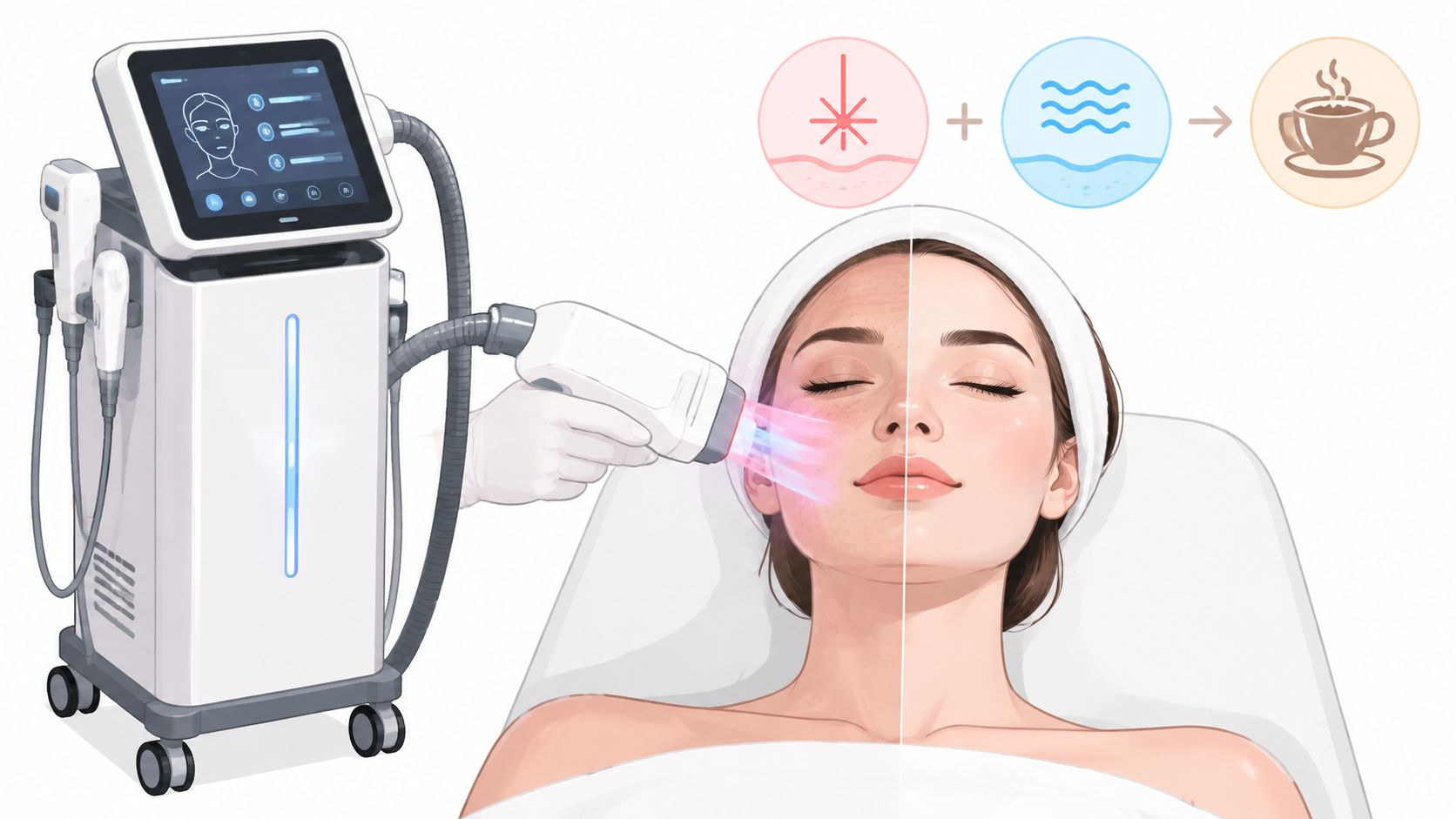
You're sitting in a Sandton med-spa with two treatment rooms, a growing stream of enquiries about pigmentation and texture, and R1.2 million in a reserve account. The distributor is showing polished videos of fractional resurfacing, RF microneedling, IPL and combination platforms. Every system looks capable. None of that answers the commercial question: which machine will earn its place in your rooms?
A skin rejuvenation machine isn't merely a technology purchase. It becomes a revenue-mix decision that affects chair utilisation, average ticket size, treatment consistency and patient retention for years. South Africa's energy-based aesthetic devices market was valued at USD 77.8 million in 2022 and is projected to reach USD 171.9 million by 2030, with skin rejuvenation identified as the fastest-growing segment in that market (South Africa radiofrequency skin rejuvenation devices outlook).
The right decision rests on four questions. Which modality fits your strongest indications? Should you buy a dedicated platform or a multi-application system? What does South African compliance require? And how will you model payback without relying on optimistic distributor assumptions? Treat the purchase as a profit-centre decision, not a catalogue exercise.
Table of Contents
- Why Your Clinic Is Really Buying a Skin Rejuvenation Machine
- How Skin Rejuvenation Machines Actually Work
- Matching Modality to Indication and Fitzpatrick Type
- Safety, Screening and SAHPRA Compliance in South Africa
- Key Specs to Evaluate Before You Buy
- Dedicated Rejuvenation vs Multi-Application Platform
- ROI, Payback and After-Sales Support
- Your Buying Checklist and Next Steps
Why Your Clinic Is Really Buying a Skin Rejuvenation Machine
The first mistake clinic owners make is starting with brands and handpieces. Start with patient demand instead. Review your recent enquiries, consultations and declined treatments, then group them into practical indications such as pigmentation, fine lines, acne scarring, laxity and overall texture.
That exercise tells you what your rooms can sell repeatedly. A machine that performs beautifully for a low-volume indication may produce weaker economics than a less glamorous platform that fits the needs of most of your existing patients. A busy clinic needs a repeatable treatment pathway, not a device that only looks impressive during a demonstration.
Build the business case before the clinical shortlist
Use four filters:
- Indication fit: Identify the three concerns patients ask about most often. Choose the modality family that addresses those concerns safely and credibly.
- Room utilisation: Estimate how many treatment hours the machine can occupy each week after consultation, preparation, cleaning and follow-up time.
- Patient journey: Decide whether the device creates a course of treatments, maintenance appointments or cross-selling opportunities.
- Operational control: Assess training, consumables, servicing and documentation before comparing energy delivery or screen design.
South African demand is already distributed across multiple metro areas, including Pretoria, Cape Town, Durban, Johannesburg-area locations, Benoni, George and Centurion. Durban laser resurfacing listings show an average rating of 4.0 out of 5 across 417 reviews, which indicates that patients increasingly assess access, comfort, recovery and visible outcomes alongside the procedure itself.
Commercial rule: A machine earns its keep through repeatable treatment cycles and reliable room occupancy, not through its maximum specification.
If you're researching how different providers position rejuvenation services, it can help to compare anti-aging clinics by treatment scope, patient experience and stated outcomes. Use that comparison to understand the market, then build your own investment case from your patient mix.
How Skin Rejuvenation Machines Actually Work
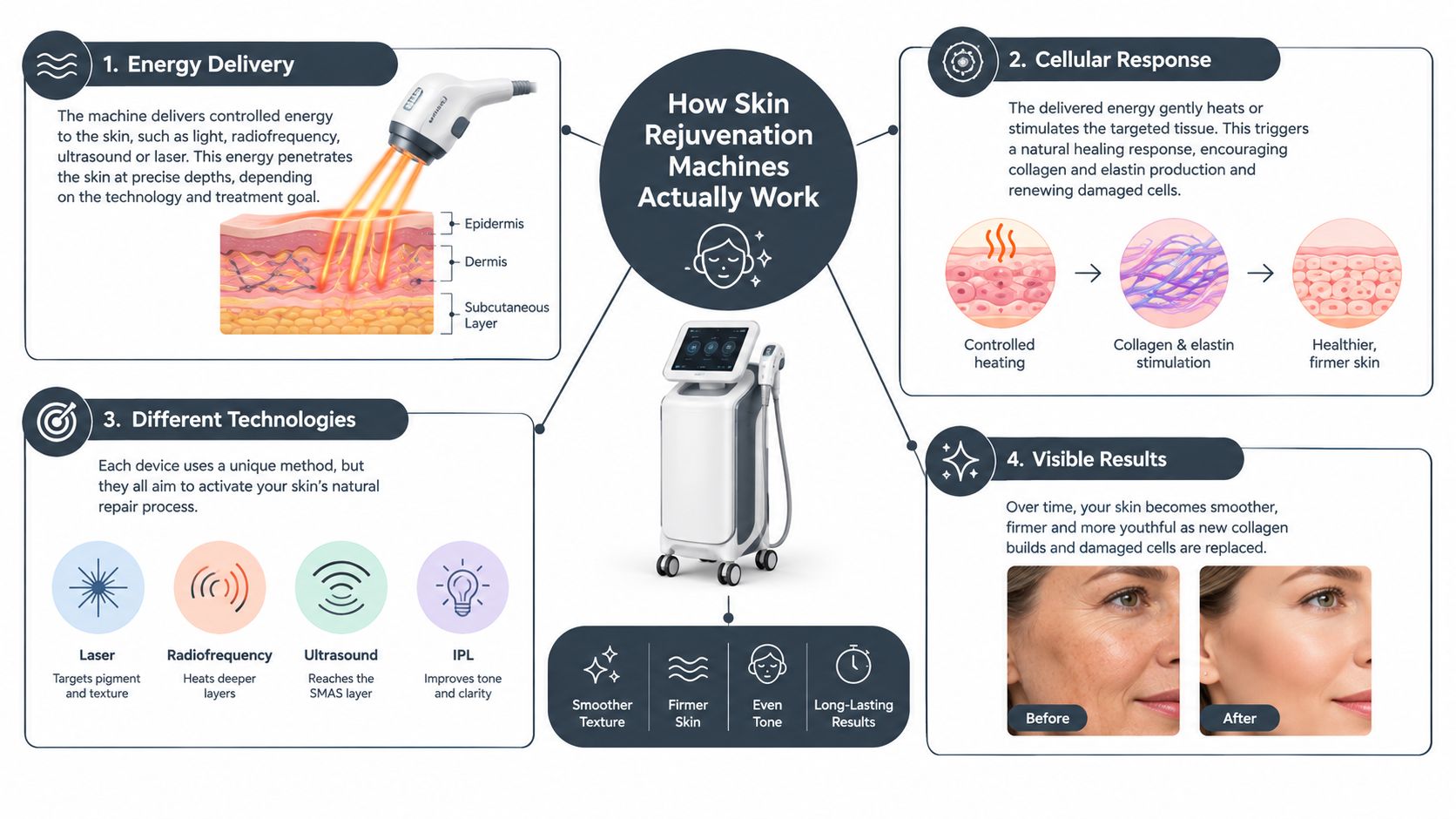
Think of the skin as a café kitchen. Each modality uses a different way to apply heat, light or controlled injury. The aim is to influence pigment, remove damaged tissue, tighten collagen or stimulate a wound-healing response.
IPL and BBL-style systems deliver broad-spectrum light absorbed by chromophores such as melanin and haemoglobin. They're useful for selected pigmentation and redness concerns, but epidermal melanin competes for the energy, so settings and patient selection matter greatly in darker skin.
Fractional non-ablative lasers heat columns within the dermis without removing the entire surface. The tissue responds by remodelling collagen while untreated skin between the columns supports recovery. Ablative fractional lasers remove microscopic columns of epidermal and dermal tissue, producing a stronger resurfacing response with more downtime and a greater need for careful aftercare.
RF microneedling uses insulated or semi-insulated needles to deliver radiofrequency energy below the epidermis. The controlled dermal injury and thermal effect can support collagen remodelling for texture, acne scarring and selected laxity concerns. Focused ultrasound concentrates energy at defined depths to create thermal coagulation points, making it more relevant to tightening than surface pigment correction.
Bipolar RF transfers energy between electrodes over a controlled field. It generally targets dermal heating and collagen contraction without relying on melanin as the primary chromophore. That makes the mechanism different from IPL and laser, although safety still depends on device design, settings and operator skill.
Match the mechanism to the service
- IPL and broad-spectrum light: Best considered for selected pigment, redness and tone services.
- Fractional non-ablative laser: Suited to texture and fine-line programmes where controlled downtime is important.
- Fractional ablative laser: Better for stronger resurfacing and deeper textural correction, with greater recovery demands.
- RF microneedling: A strong option for acne scarring, texture and selected tightening pathways.
- Focused ultrasound or RF tightening: More relevant when laxity is the primary commercial indication.
The key distinction is whether the device targets a chromophore, creates controlled dermal injury or heats tissue at a defined depth. A useful primer on the broader treatment field is this overview of advanced injectables and lasers. For terminology and treatment planning, review what skin resurfacing means before you sit through supplier demonstrations.
Matching Modality to Indication and Fitzpatrick Type
No modality wins every category. Your shortlist should reflect the concerns your clinicians can treat safely and the recovery your patients will accept.
The table below is a procurement guide, not a substitute for clinical training, device-specific protocols or medical assessment. “Average downtime” varies by energy, treatment density, patient response and aftercare.
Modality comparison
| Modality | Best Indications | Avg Downtime | Fitzpatrick I-III | Fitzpatrick IV-VI | PIH Risk |
|---|---|---|---|---|---|
| IPL | Selected pigmentation, redness and tone concerns | Low to moderate | Broad suitability with correct settings | Requires conservative selection, testing and parameter control | Meaningful if epidermal melanin absorbs excess energy |
| Fractional non-ablative laser | Fine lines, texture and mild scarring | Low to moderate | Broad suitability with trained operators | Use cautious parameters and pigment-risk protocols | Moderate, depending on wavelength and settings |
| Fractional ablative laser | More substantial resurfacing and acne scarring | Moderate to high | Strong resurfacing potential | Higher caution, particularly with aggressive density and fluence | Higher |
| RF microneedling | Acne scarring, texture and selected laxity | Low to moderate | Broad suitability when depth and energy are controlled | Often attractive because energy is delivered below the epidermis, but screening remains essential | Lower to moderate, not zero |
| Focused ultrasound or monopolar RF | Laxity and collagen remodelling | Low | Broad suitability | Generally useful where epidermal melanin absorption is a concern, subject to device protocol | Lower, but thermal injury remains possible |
Use Fitzpatrick type as a planning variable
For types IV to VI, the question isn't whether a device can be used. The question is whether your clinic can control the variables that increase post-inflammatory hyperpigmentation risk. Pulse duration, fluence, overlap, cooling and treatment density must be standardised, recorded and adjusted to the patient.
RF microneedling and non-ablative approaches can be commercially attractive in a diverse South African patient base because they may reduce direct epidermal melanin absorption. That doesn't make them automatically safe. Needle depth, energy, passes and endpoint assessment still determine outcomes.
A South African article on Tixel states that skin types I to VI can be treated and lists contraindications including immunocompromised status, active infection, connective tissue disorders, keloid history, herpes simplex, vitiligo and unrealistic expectations (South African Tixel treatment and contraindication guidance). Use that principle broadly: screening and protocol discipline matter as much as the modality name.
For an indication-led service menu, review skin rejuvenation treatment options and then rank each platform against your actual patient demand. Don't let a distributor choose your top three indications for you.
Safety, Screening and SAHPRA Compliance in South Africa
Compliance starts before the machine arrives. In South Africa, class 3 and class 4 laser devices must be registered with SAHPRA, and the clinic must appoint a Laser Safety Officer for each machine. One person may serve as LSO for multiple machines. IPL and LED devices fall outside this stricter laser-device licensing framework, although import licensing can still apply (South African laser device regulations).
SAHPRA's official process covers licensing for the importation and use of laser systems under the Hazardous Substances Act, Act 15 of 1973. Its medical-device framework refers to the Medical Devices and IVD Regulations published in Government Gazette No. 40480 on 9 December 2016 (SAHPRA laser system licensing requirements). The authority's medical-device materials identify those regulations as the core legal basis for device oversight in the country (SAHPRA medical-device framework).
Build an audit-ready workflow
Your file should show who is responsible, what was checked and which settings were used. At minimum, organise the process around these controls:
- Device documentation: Keep registration, import, manufacturer and maintenance records together.
- Responsible personnel: Confirm the licensed responsible person and appoint the LSO before clinical use, not after installation.
- Competency evidence: Record initial training, supervised cases, refresher training and protocol updates.
- Patient screening: Check pregnancy status where relevant, active infection, suspicious lesions, photosensitising medication, immune status, connective tissue disease, herpes history, keloid tendency and pigmentary disorders.
- Patch testing: For Fitzpatrick IV to VI, use a documented patch-test process where the device protocol and clinical risk justify it.
- Consent: Explain expected results, downtime, pigmentary change, burns, recurrence, the need for multiple sessions and aftercare responsibilities.
CE marking under the EU medical-device framework and FDA clearance can provide useful evidence of manufacturing and safety review, but they don't replace South African obligations. Ask the supplier to identify exactly what is licensed, for which device configuration and under whose responsibility.
Key Specs to Evaluate Before You Buy
Brochures lead with peak power. You should lead with control.
For IPL and laser systems, ask how precisely the device selects its wavelength range and how consistently it delivers fluence and pulse duration. Broad output isn't automatically better. Uncontrolled absorption outside the intended target can increase epidermal heating, particularly in darker skin.
RF microneedling systems need more than a depth number on a screen. Confirm whether needle depth is adjustable through the clinically relevant range, including 0.5 to 3.5 mm, and ask how the system verifies needle contact, impedance and energy delivery. Tip pin counts should match the treatment area and the clinic's consumable budget.
Separate useful specifications from sales language
| Spec | Minimum Clinical Threshold | Why It Matters |
|---|---|---|
| Wavelength control | Clearly defined wavelength or controlled range | Improves target selectivity and reduces off-target absorption |
| Fluence control | Adjustable, repeatable energy density | Allows conservative starting settings and graduated protocols |
| Pulse duration | Flexible timing suited to the target and skin type | Influences heat spread, endpoint control and pigment risk |
| Cooling | Active, consistent cooling where indicated | Supports comfort and epidermal protection |
| RF needle depth | Adjustable within the intended treatment range, including 0.5 to 3.5 mm where clinically appropriate | Matches energy delivery to indication and anatomy |
| Impedance monitoring | Real-time or clearly documented tissue-contact control | Helps detect inconsistent delivery and poor needle engagement |
| Spot size | Options suited to broad areas and facial contours | Balances speed against fluence uniformity |
| Consumables | Transparent cost per shot, tip or cartridge | Determines lifetime operating cost |
| Service access | Defined maintenance intervals and response process | Protects uptime and treatment continuity |
| Software | Documented upgrade and protocol pathway | Extends operational usefulness without forced replacement |
A larger spot can shorten treatment time, but it may be harder to keep energy uniform across curved areas. A smaller spot offers control but can reduce throughput. Compare the effect on a full-face treatment, not only the handpiece specification.
Finally, ask for warranty exclusions, loaner-device terms and software support in writing. A machine that sits idle while a service issue is investigated damages the payback model more than a modest difference in purchase price.
Dedicated Rejuvenation vs Multi-Application Platform
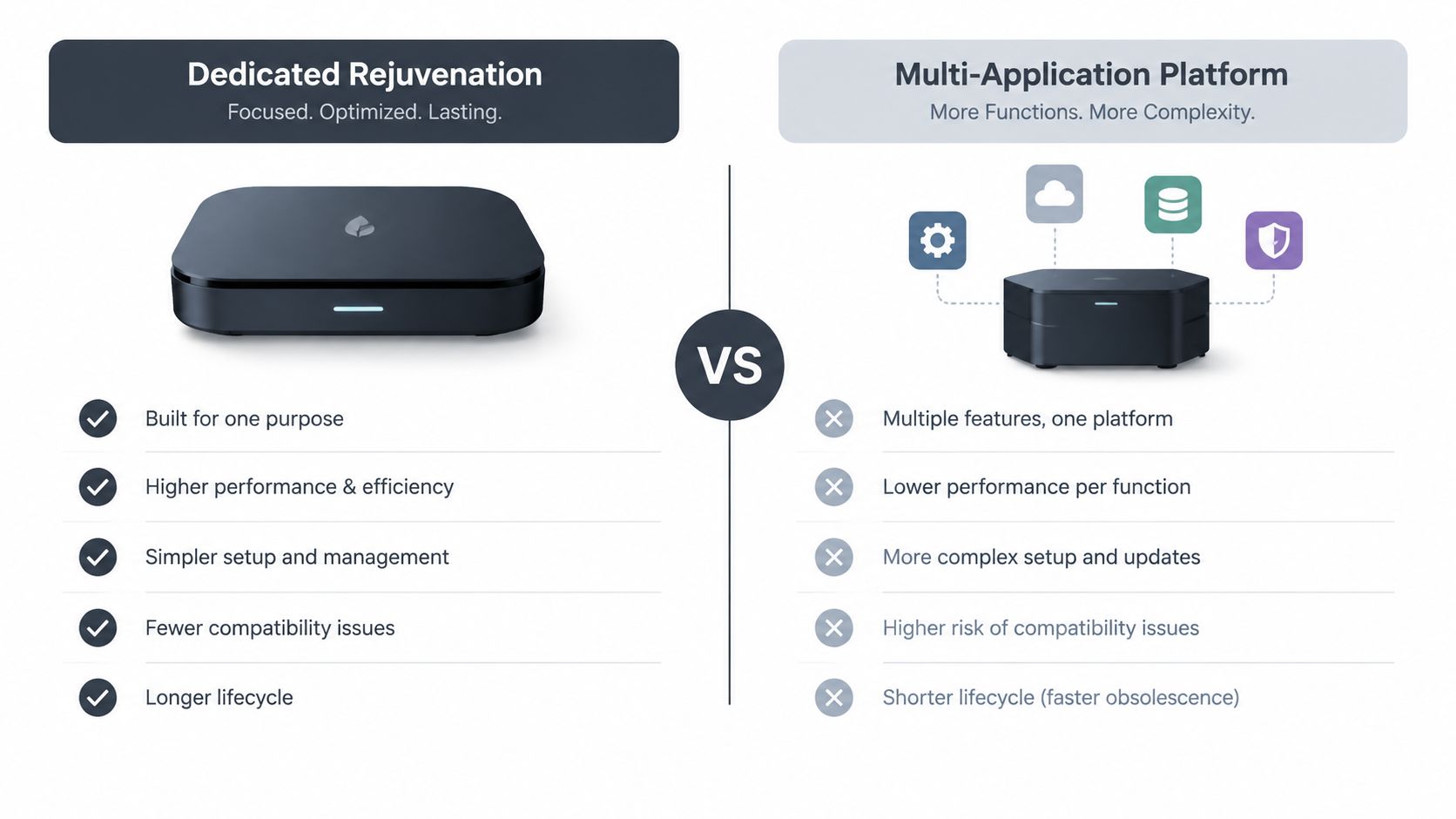
A dedicated platform is usually the better first purchase for an emerging clinic or a practice with one dominant indication. It gives the team a shorter learning curve, clearer positioning and fewer consumable categories. If your demand is concentrated around texture, acne scarring or pigmentation, specialisation can produce a cleaner patient journey and stronger clinical consistency.
A multi-application platform makes sense when the clinic already has the staff, patient base and room capacity to sell several categories. South Africa's aesthetic devices market is projected to grow from USD 186.55 million in 2025 to USD 211.21 million in 2026, and to USD 393.17 million by 2031, at a projected 13.22% CAGR (South Africa aesthetic devices market outlook). The same market data identifies hair removal as the largest application, with a 31.20% share in 2025, while body contouring and cellulite reduction are projected to grow at a 14.92% CAGR to 2031, according to that source.
That growth doesn't mean every clinic should buy a combination system. It means the revenue opportunity exists across categories. The platform only wins if your clinic can turn those categories into booked treatment hours.
Make the choice by utilisation
Choose a dedicated machine when:
- Your patient demand is concentrated in one or two rejuvenation indications.
- Your team needs a simple, repeatable protocol.
- You're launching a service and don't yet have reliable cross-selling data.
- Consumable control and clinical focus matter more than menu breadth.
Choose a multi-application platform when:
- You already sell complementary services.
- Multiple trained operators can use the system.
- Your rooms can support several treatment categories.
- You've attached utilisation projections to each application.
The practical threshold is not a universal promise of weekly treatment hours. It's your own booking evidence. If the platform can't credibly fill more billable time than a dedicated device, don't pay for unused capability.
ROI, Payback and After-Sales Support
A worked example can clarify the model, but it must be labelled as an illustration rather than presented as a market case study. Consider a mid-size Johannesburg med-spa evaluating an RF microneedling device priced at R850,000, with a treatment price of R4,500, an average course of six sessions per patient, and a target contribution margin of 40%.
At eight treatments a week, the clinic would generate roughly R144,000 in gross monthly treatment revenue if it maintained four treatment weeks. At eighteen treatments a week, gross monthly revenue would be roughly R324,000. Those figures are arithmetic examples based only on the assumptions in this scenario, not verified market averages.
The 40% margin would imply a monthly contribution of R57,600 at the lower utilisation level and R129,600 at the higher level, before considering financing, tax and other fixed overheads. A simple capex-only payback calculation would therefore be about 15 months at the lower level and about seven months at the higher level. Real payback will be longer or shorter depending on consumables, marketing, therapist time, servicing, cancellations, financing and ramp-up.
Use scenarios, not one optimistic forecast
| Scenario | Treatments/Month | Gross Revenue (R) | Net Contribution (R) | Payback (Months) |
|---|---|---|---|---|
| Conservative illustration | 32 | 144,000 | 57,600 | About 15 |
| Realistic illustration | 52 | 234,000 | 93,600 | About 9 |
| Aspirational illustration | 72 | 324,000 | 129,600 | About 7 |
The realistic row assumes a midpoint between the lower and higher treatment volumes. It isn't a forecast of what a South African clinic will achieve. Build your own version from signed pricing, actual therapist capacity and documented consumable costs.
Track the marketing side separately from machine economics. A practical guide to how to measure advertising ROI can help you distinguish lead-generation cost from treatment contribution. For the machine itself, demand after-sales service is part of the investment, not an optional extra.
Ask the supplier for:
- Consumable pricing: Cost per shot, cartridge or tip, with replacement intervals.
- Warranty scope: What is covered, what is excluded and how quickly support responds.
- Loaner protection: Whether a replacement device is available during a prolonged repair.
- Training depth: Initial training, supervised treatments, protocol updates and staff turnover support.
- Marketing enablement: Approved patient education, treatment photography guidance and launch support.
- Uptime terms: Response times, escalation routes and service-level commitments.
ROI is decided after installation. A well-priced machine with weak support can lose revenue through downtime, inconsistent treatment and staff uncertainty.
Your Buying Checklist and Next Steps
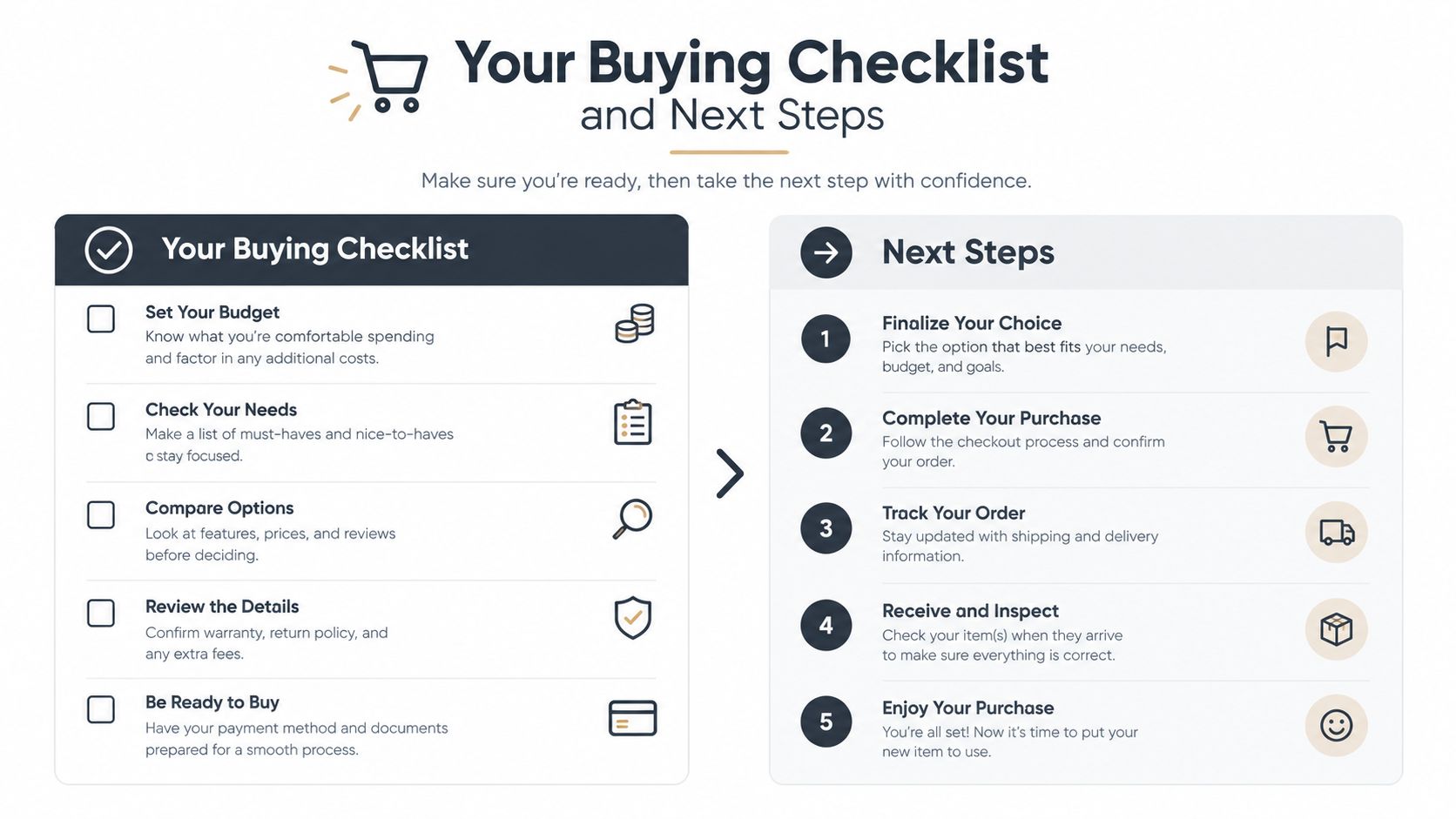
Take this checklist into the supplier meeting and refuse to move forward until each item has an owner and a document.
- Confirm indication fit. Match the modality to your top patient concerns, not the distributor's preferred demonstration.
- Verify compliance. Check SAHPRA requirements, device status, import documentation and the LSO appointment.
- Review Fitzpatrick IV to VI evidence. Ask for protocol details, adverse-event guidance, patch-testing recommendations and pigment-risk controls.
- Validate the specifications. Test wavelength control, fluence, pulse duration, cooling, depth, impedance monitoring and treatment-area ergonomics.
- Choose the revenue model. Decide between dedicated and multi-application only after attaching utilisation projections to every application.
- Build local pricing into the ROI model. Use your consultation fees, treatment prices, staffing cost, consumables, marketing and service contract.
- Lock after-sales terms. Put training hours, consumable pricing, warranty coverage, loaner policy and response times into the agreement.
If a supplier can't answer these questions clearly, walk away from the purchase. Before signing, ask three direct questions: What is your uptime guarantee? What happens to my patients during a service event? Can you show me three local reference sites?
Omega Lasers supplies laser and multi-technology systems for skin rejuvenation, resurfacing and related aesthetic services, with training, technical support, marketing guidance and after-sales support. Visit Omega Lasers to discuss a device pathway that matches your patient mix, compliance requirements and utilisation model.