



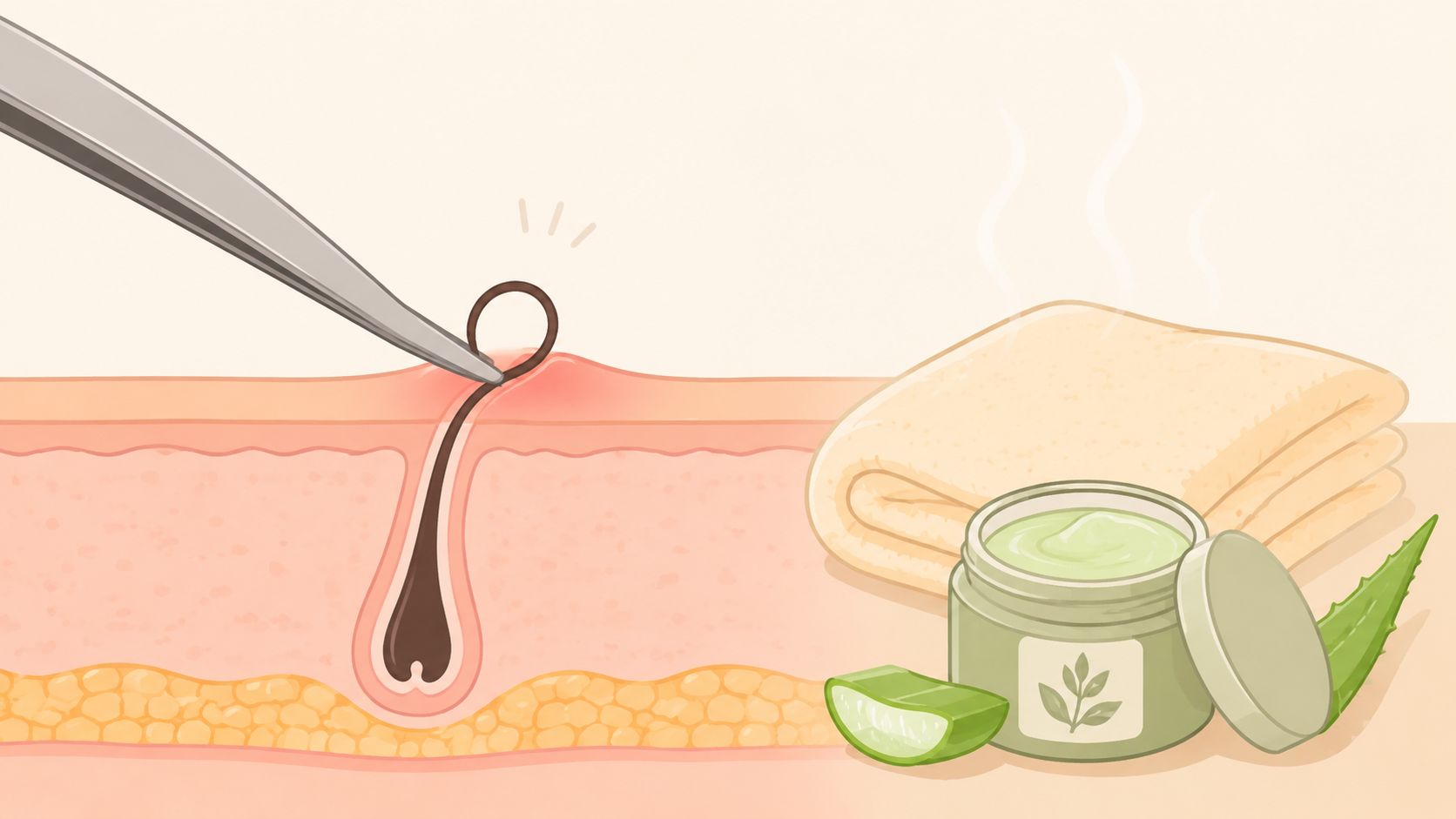
You shave on Monday, and by Wednesday there's a tender bump catching on your collar, your underwear line, or your hand when you're cleansing. A few days later, the bump settles but the dark mark stays behind, and the same spot seems to flare again the next time you remove hair. That cycle is usually not bad luck, it's an ingrown hair pattern that keeps getting re-triggered.
Treating it well means separating three things, the single trapped hair you can sometimes release, the inflamed follicle that needs calming, and the recurrence pattern that won't stop unless the removal method changes. For many people, especially anyone with textured hair or skin of colour, the answer isn't endless tweezing. It's learning when home care is enough, and when laser hair removal or clinical treatment makes more sense.
Table of Contents
- Why Ingrown Hairs Keep Showing Up
- Safely Releasing an Ingrown Hair at Home
- Home Remedies and Topical Treatments That Actually Help
- Shaving and Waxing Habits That Prevent Ingrown Hairs
- When Professional Treatment Makes More Sense
- Choosing Between Home Care, Clinical Treatments, and Laser
- Aftercare Routine and Prevention Checklist
Why Ingrown Hairs Keep Showing Up
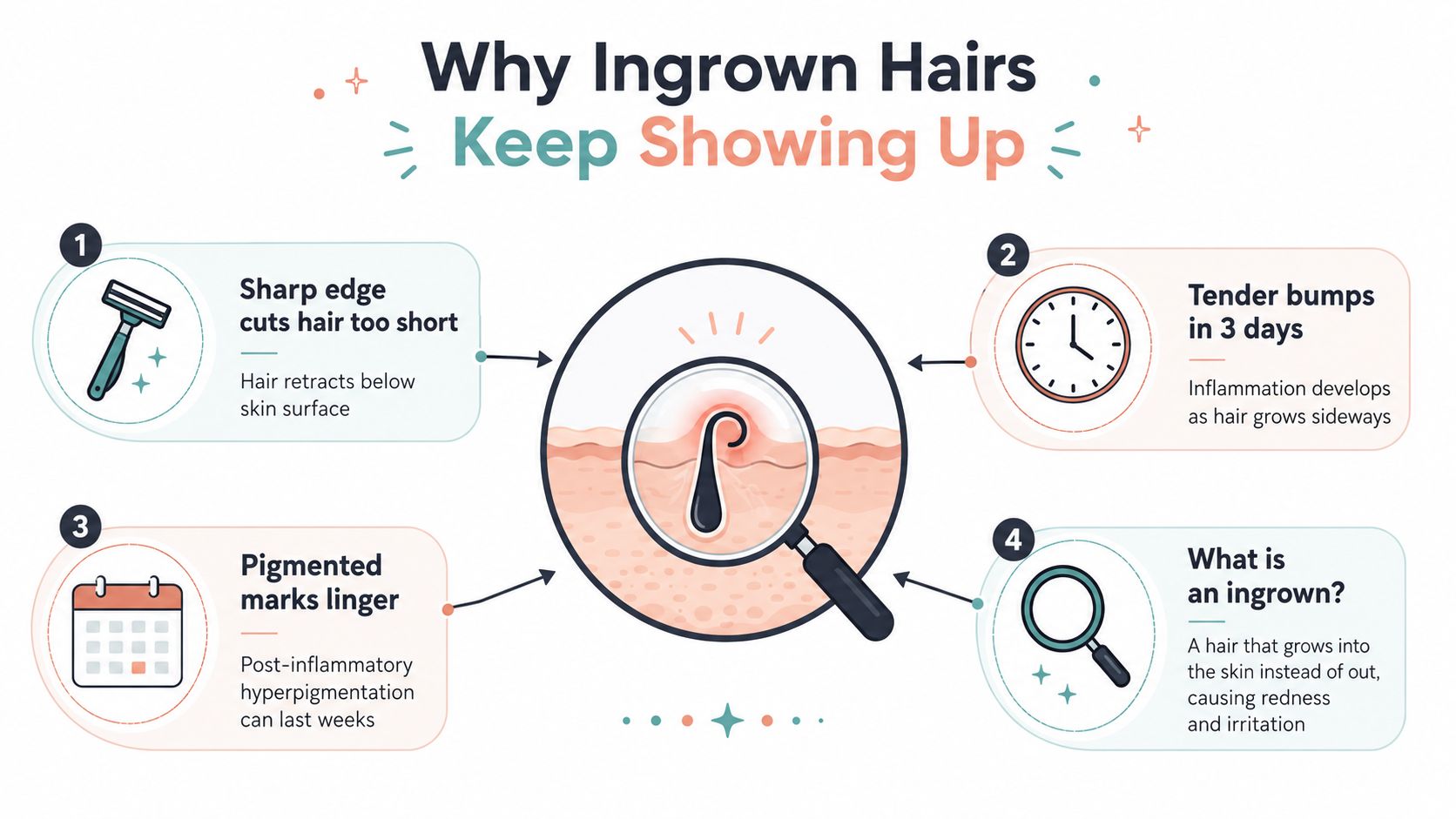
A lot of people think an ingrown hair is just a tiny nuisance. In practice, it's usually a hair that's been cut too short, turned back on itself, and started growing into the skin instead of out of it. That creates redness, tenderness, and a bump that can linger long after the original shave or wax.
What the bump actually is
The hair doesn't need to be infected to be uncomfortable. It often starts as low-grade inflammation when a shaved tip curves back into the follicle or breaks the skin surface and keeps irritating the area. That's why people with coarse or curly hair often struggle more, the hair naturally has more tendency to curl back.
Practical rule: if the same area keeps flaring after every shave, the problem is usually mechanical, not a lack of scrubbing.
Dead skin can make it worse by sitting over the follicle opening and trapping the emerging hair. Tight clothing adds friction, especially around the bikini line, underarms, and anywhere skin rubs against fabric. Heavy post-shave products can also aggravate the area if they're too occlusive for your skin type.
The condition is common enough to be a real skin-health burden in South Africa, not just a cosmetic complaint. Pseudofolliculitis barbae, the medically relevant form of ingrown-hair inflammation, has been documented in men of African ancestry with estimated prevalence ranging from 45% to 83%, and up to 80% in some reports, while a South Africa-focused field study found it was more prevalent in men Global Psoriasis Atlas.
What this article focuses on
The practical path is simple, even if the problem isn't. First, you calm the bump safely. Then you choose topicals that help. After that, you fix shaving habits so the same follicle doesn't keep getting injured. If the bumps keep returning, a clinic or laser treatment is often the smarter move, especially when the goal is long-term reduction rather than one more round of tweezing.
How to manage sensitive skin matters here because irritated skin needs a lighter touch, not more force.
Safely Releasing an Ingrown Hair at Home
A visible ingrown hair can sometimes be lifted at home, but only if you can see the loop near the surface. The goal is to free the trapped tip, not dig for a hidden hair or squeeze the follicle open. If you're forcing it, you've already crossed into the wrong approach.
The clean, low-trauma method
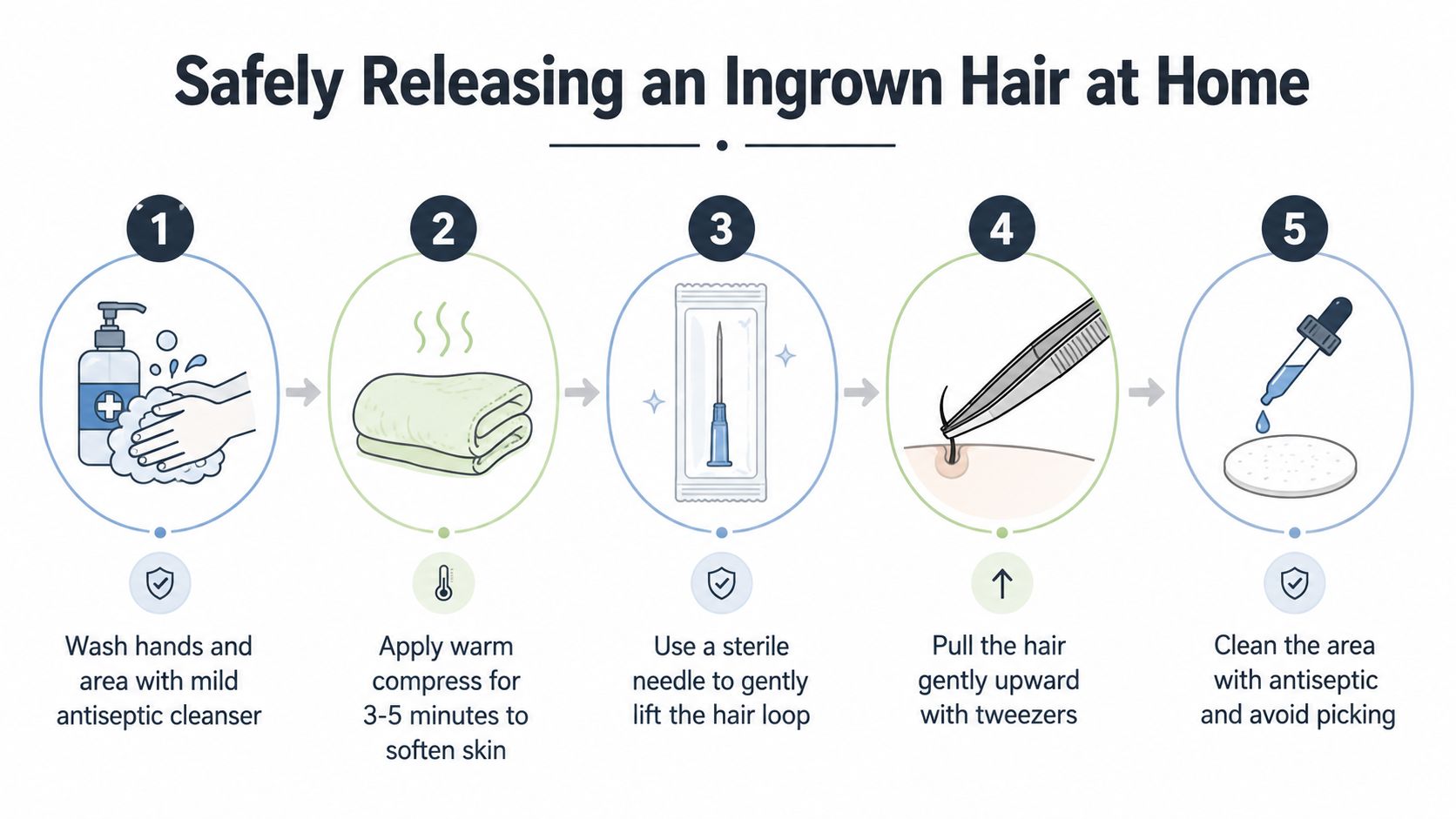
Start by washing your hands and cleansing the area with a mild antiseptic cleanser. A warm compress for 3 to 5 minutes softens the skin enough to make the hair easier to lift without tearing the surrounding tissue. Use a sterile needle or fine-tipped tweezer to nudge the looped tip out, then stop once the hair is released.
Sterility matters. Wipe tools with rubbing alcohol first, and don't touch the bump with unwashed fingers while you work. If the hair doesn't surface quickly, leave it alone and let the compress do the work later. Picking harder usually means more swelling, more irritation, and a longer healing time.
If there's pus, a firm deep lump, or increasing pain, stop. That's no longer a simple home-release job.
Aftercare that protects the follicle
Once the hair is free, the skin still needs a little protection. A thin layer of petroleum jelly or a fragrance-free soothing balm can shield the open follicle overnight and reduce friction. If the area feels puffy, a clean ice pack wrapped in cloth can settle the swelling.
Don't shave over an inflamed bump until it has fully healed. The South African clinical guidance is clear that repeated trauma drives the cycle back into the same spot, and the practical stepwise approach is to stop the trigger first before trying anything else dermatologist guidance. If the lesion is deep, painful, or spreading, skip home extraction and get it assessed.
Home release is unsafe when
- The bump is large, firm, or deep.
- There's pus, warmth, or spreading redness.
- Pain is getting worse rather than settling.
- You can't see the hair tip clearly.
- The same area keeps recurring after you've already tried home care.
Home Remedies and Topical Treatments That Actually Help
Not every bump needs digging. Some settle best when you reduce blockage, soften the skin, and calm inflammation. The trick is matching the product to the stage of the bump instead of throwing every remedy at it at once.
What helps, and when
Warm compresses are the best starting point for a superficial loop because they soften the skin and make it easier for the hair to surface on its own. Gentle exfoliation can help too, but it needs to be soft, not aggressive. A washcloth, a mild chemical exfoliant, or a leave-on acid can lift dead skin without scraping the follicle raw.
Salicylic acid works well when the skin is oily or clog-prone, especially on the jawline or bikini area, because it helps clear the keratin plug that's trapping the hair. Glycolic acid is a better fit for thicker body skin such as the underarms or legs, where the surface layer needs more lift. Hydrocortisone 1 percent is for short, limited use on an angry, itchy bump, not for routine daily application.
Useful rule: if the bump is already raw, avoid harsh scrubs. If the skin is closed but blocked, a chemical exfoliant is usually more useful than a physical scrub.
Tea tree oil or witch hazel can be soothing for mildly inflamed spots, but they need to be diluted and used carefully because irritation is easy to trigger. Squeezing, pore strips, and rough scrubbing usually backfire because they damage the skin barrier and don't solve the trapped-hair problem. Consistent chemical exfoliation works better than one-off digging because the issue is usually repeated blockage, not a single stubborn hair.
| Home Remedies and Topical Treatments at a Glance | ||
|---|---|---|
| Treatment | Best Used For | Key Caution |
| Warm compress | Early, superficial bumps | Don't burn the skin or overheat the area |
| Gentle exfoliation | Dead-skin buildup around a visible bump | Avoid harsh scrubs on inflamed skin |
| Salicylic acid | Oily, clog-prone areas | Can sting if the skin barrier is already open |
| Glycolic acid | Thicker body skin | Use gradually to avoid over-drying |
| Diluted tea tree or witch hazel | Mildly irritated bumps | Irritation is common if it's too strong |
| Hydrocortisone 1 percent | Short-term itch or angry redness | Don't make it a daily habit |
Shaving and Waxing Habits That Prevent Ingrown Hairs
Prevention starts before the blade touches skin. If your prep is rushed, you're more likely to cut hair too short, irritate the follicle, and create the sharp edge that curls back in. That's why the best routine begins with warm water, proper slip, and light pressure.
The shaving setup that lowers relapse
Use warm water first, then apply a non-comedogenic shave gel so the blade glides instead of scraping. A single-blade or safety razor is usually gentler than a crowded cartridge because it's less likely to cut the hair too close. Shave with the grain on the first pass, rinse the blade every couple of strokes, and don't press hard into the skin.
Blade care matters more than many realise. A dull blade tugs and fractures the hair, which leaves an irregular edge that re-enters the skin more easily. Replacing blades every five to seven shaves is a sensible hygiene habit when the blade still feels smooth, and sooner if it starts dragging.
Where waxing fits
Waxing can be helpful when hair is long enough and the skin tolerates it, because hair is removed from the root rather than clipped at the surface. For some people, that reduces the sharp-tip problem that follows shaving. If you're considering a body-area option, smooth skin with waxing is a useful reference point for understanding the trade-off between root removal and skin sensitivity.
That said, waxing isn't a free pass for everyone. In melanin-rich skin, repeated trauma can leave post-inflammatory marks, so the aftercare has to stay gentle. Wax for face is relevant when the concern is facial hair, but the same principle still applies, reduce trauma and avoid overdoing it.
The South African field and clinic guidance also supports a practical, long-haul view, stopping shaving for 4 to 6 weeks can let inflammation settle, and shaving only 2 to 3 times per week rather than daily can reduce papules and ingrown hairs Global Psoriasis Atlas. That advice lines up with the clinical point that relapse is common if you go right back to the same close-shave pattern.
When Professional Treatment Makes More Sense
Some bumps are too persistent, painful, or frequent for home care to control. Seek clinical review if a lesion is larger than a pea, contains pus, becomes more painful, or has redness that continues spreading. A bump that has not settled after 4 to 6 weeks of consistent care also warrants assessment. Repeated inflammation can leave lasting marks, especially in skin that develops pigmentation easily.
When to Seek Professional Treatment
For many people with darker skin tones, each inflamed follicle carries a risk of post-inflammatory hyperpigmentation. The bump may heal while the mark remains. Earlier assessment can therefore prevent another flare and reduce the need to treat discoloration later.
Clinical treatment can address problems that home care cannot. A trained practitioner can release a trapped hair with sterile technique, assess whether the pattern is folliculitis, and prescribe treatment when retinoids or anti-inflammatory or antibiotic combinations are appropriate. These options depend on the diagnosis, so persistent lesions should not be repeatedly squeezed or tweezed at home.
Long-term planning matters when the same area relapses. If shaving continues to trigger inflammation, discuss permanent hair removal as a way to reduce regrowth and limit the repeated irritation cycle permanent hair removal. This does not replace assessment of active infection, scarring, or pigmentation, and it should be planned around the condition of the skin.
When laser becomes the smarter next step
If you shave the same area regularly and still develop ingrown hairs, repeating the same close-shave routine is unlikely to solve the cause. Laser hair removal targets the follicle and can reduce future hair growth, which means fewer sharp regrowth points and less need to manage the aftermath skin renewal guidance.
Some clinical guidance reports improvement in stubborn ingrown hairs within 2 to 3 treatments, although the response depends on hair type, skin tone, treatment settings, and the growth cycle skin renewal newsletter. A qualified provider should assess skin tone, active inflammation, and hair type before treatment, with suitable precautions for darker skin.
If you are comparing clinic options, laser hair removal treatment Portsmouth illustrates the treatment information a service page should explain. Look for clear discussion of assessment, realistic outcomes, possible reactions, and aftercare rather than choosing on treatment claims alone.
Choosing Between Home Care, Clinical Treatments, and Laser
A single bump after an unusual shave can usually stay in the home-care lane. Repeated bumps in the same area, especially when they leave dark marks or raised scars, call for a more deliberate plan. The right option depends on recurrence, skin response, and how much time you want to spend managing each flare-up.
A simple decision framework
| Choosing the Right Ingrown Hair Treatment Path | Home Care | Clinical Treatments | Laser Hair Removal |
|---|---|---|---|
| Best for | First-time or occasional bumps | Frequent recurrence in one spot | Chronic sufferers, dense hair areas, repeated relapse |
| Main tools | Warm compress, gentle exfoliation, adjusted shaving | Sterile extraction, prescription topicals, anti-inflammatory care | Follicle-targeting treatment to reduce regrowth |
| Time commitment | Low to moderate | Moderate | Higher upfront, less repetitive maintenance later |
| Skin tone considerations | Good for mild cases if handled gently | Better when marks or infection risk are rising | Requires careful assessment and suitable settings |
| Downtime tolerance | Minimal | Depends on the treatment | Usually planned and discussed in advance |
Decision cue: if you keep treating a bump in the same place, you are managing a recurring pattern rather than an isolated event.
Who should skip straight to a dermatologist
People who are immunocompromised, have diabetes affecting healing, or have scarring alopecia should not keep treating recurring lesions as routine ingrown hairs. Slower healing and follicle damage increase the downside of self-treatment. A clinician can determine whether the problem is an ingrown hair, folliculitis, or another condition, then address active infection, inflammation, pigmentation, or scarring appropriately.
For chronic pseudofolliculitis barbae, laser is a documented long-term option in South African clinical guidance, particularly when close shaving repeatedly triggers inflammation dermatologist guidance. The trade-off is timing. Laser should not be used as a shortcut over an angry, untreated bump. Settle active inflammation first, then discuss whether reducing follicle activity suits your skin tone, hair type, and treatment goals.
Laser does not guarantee that every mark or bump will disappear, and it requires an upfront commitment. It can, however, reduce reliance on close shaving, which is often the trigger worth removing for chronic sufferers and many skin-of-colour clients.
If you are comparing providers, laser hair removal treatment Portsmouth should be assessed by the information it gives about consultation, realistic outcomes, possible reactions, skin-tone precautions, and aftercare, not by bold treatment promises.
Aftercare Routine and Prevention Checklist
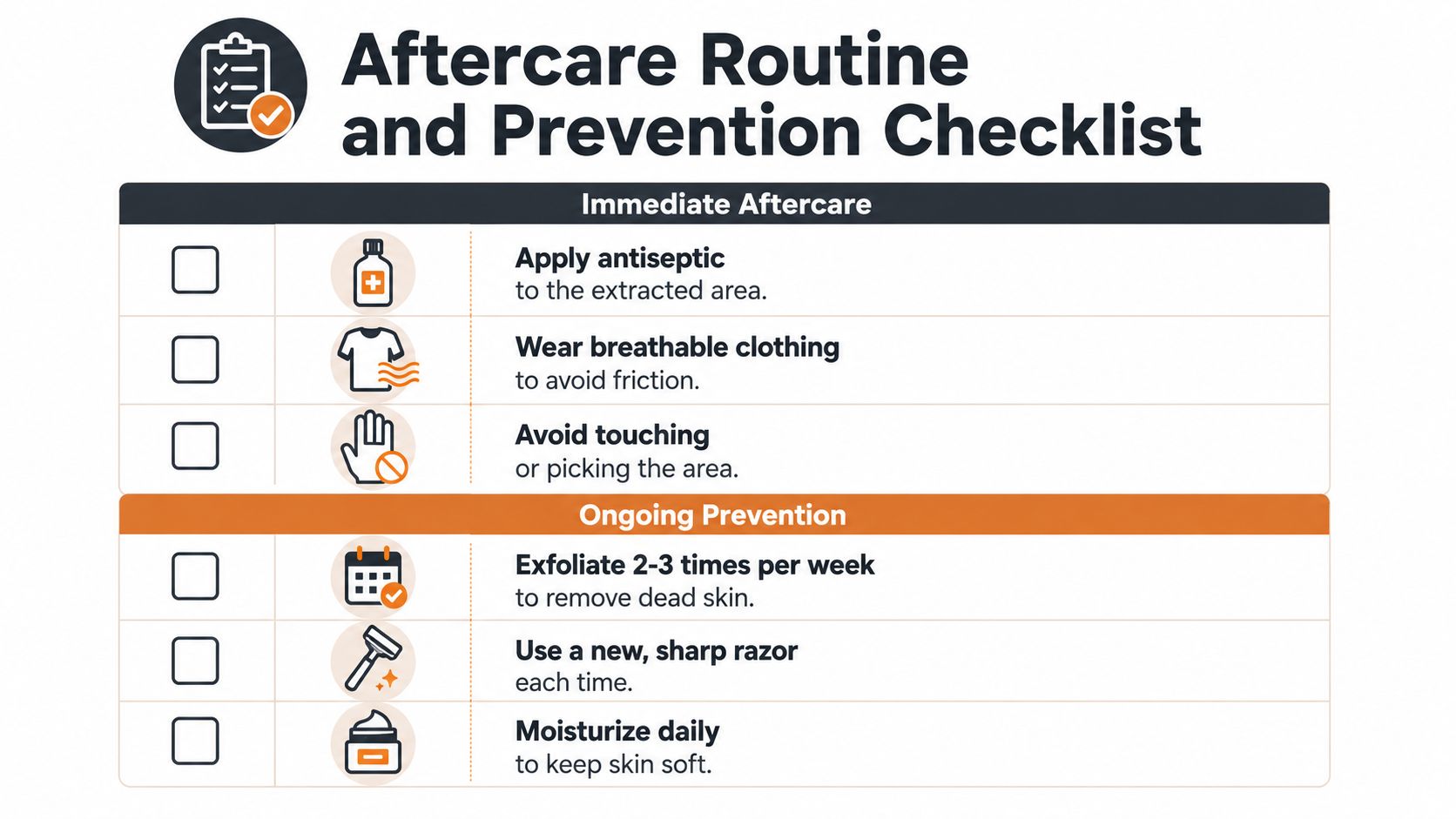
The simplest aftercare routine is the one you'll consistently repeat. Once the bump is released or settles on its own, keep the area clean, avoid friction, and don't rush back into close shaving. Breathable clothing matters more than people think, because rubbing against a fresh follicle restarts the irritation.
A routine that holds up in real life
For the first 24 to 48 hours, treat the skin gently. Use an antiseptic if you've extracted a hair, avoid touching or picking, and skip tight clothing that creates friction. After that calm-skin window, keep up a steady rhythm of gentle exfoliation a few times a week, plus a moisturiser that doesn't clog the follicle.
If your skin tolerates it, build in a chemical exfoliant instead of relying on harsh scrubs. That's the kind of approach Skin Perfection on sensitive care discusses well, because sensitive skin usually needs consistency, not force Skin Perfection on sensitive care. Use a fresh, sharp razor when you do shave, prep with warm water, and keep the pressure light.
Habits to drop completely
- Picking: It raises the risk of infection and dark marks.
- Dry shaving: It cuts too aggressively and increases re-entry.
- Heavy occlusive products right after shaving: They can trap heat and friction over a freshly irritated follicle.
- Repeated close shaving over the same spot: It keeps restarting the cycle.
If bumps return more than monthly or leave dark marks, stop repeating the same routine and move to a clinic review. Omega Lasers supplies laser and multi-technology platforms for aesthetic practices, and its hair-removal systems are designed for clinics that want a structured, long-term approach to recurrent ingrowns. If you're ready to move from patching the problem to treating the cause, visit Omega Lasers and speak to a team that works with hair-removal solutions built for real-world skin concerns.