



A high frequency wand is a staple device in aesthetics, using a gentle, low-level electrical current to tackle common skin concerns. It works by passing this current through a glass electrode filled with gas. When applied near the skin, this process generates enriched oxygen molecules that have powerful antibacterial and skin-rejuvenating properties. It's a go-to tool for professionals managing acne, calming inflammation, and kick-starting cellular renewal.
How The High Frequency Wand Actually Works
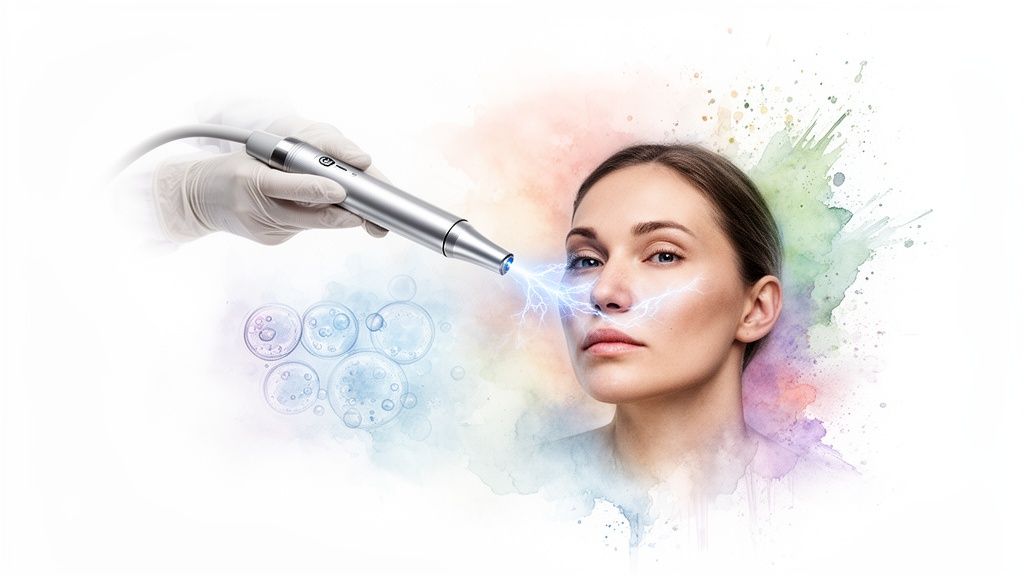
Think of it as a controlled, miniature lightning storm that purifies and energises the skin right at the surface. That’s the core of what a high frequency wand does. It’s an essential tool for any serious aesthetic professional because it creates a unique germicidal reaction directly on the skin.
As the gentle electrical current passes through the glass electrode, it interacts with the oxygen in the air between the wand and the skin. This energises the gas inside the electrode (usually argon or neon) and creates a small amount of enriched oxygen, or ozone. This ozone has a powerful germicidal effect, making it incredibly effective for getting breakouts under control.
Purifying and Clarifying the Skin
The number one reason most clinics have a high frequency wand is for its undeniable antibacterial action. The enriched oxygen it produces neutralises surface bacteria, including the stubborn Cutibacterium acnes (what we used to call P. acnes) that’s behind so many inflammatory breakouts.
You can think of this as hitting a reset button on the client's skin. It creates a cleaner, more sterile environment—the perfect canvas for any subsequent treatments or product application.
This is exactly why the high frequency wand is a cornerstone of professional acne facials. In a clinical setting, it helps to:
- Reduce active blemishes: By targeting the bacteria at its source, the wand calms inflammation and helps active pimples heal much faster.
- Prevent future breakouts: Used regularly, it helps keep bacterial populations down, making the skin far less prone to new flare-ups.
- Enhance post-extraction healing: Applying the wand after extractions is a critical step. It helps to sterilise the area and dramatically reduces the risk of infection or post-treatment inflammation.
Stimulating Cellular Renewal and Circulation
Beyond just zapping bacteria, the high frequency wand delivers some serious rejuvenating benefits. The oscillating current creates a mild thermal effect deep within the skin, which gently and safely warms the tissue. This subtle warmth has a significant, positive impact on the skin’s underlying functions.
First, this warming action boosts circulation, bringing more oxygen-rich blood and vital nutrients to the skin's surface. Better blood flow is non-negotiable for healthy cell repair. It also encourages lymphatic drainage, which helps flush away toxins and reduce puffiness, leading to a more sculpted and less congested look.
Second, the electrical stimulation gives the skin cells a jolt of energy. When skin cells have more energy, they can get back to work doing what they’re supposed to do—like producing collagen and elastin—more efficiently. Over time, this contributes to a firmer, plumper, and more youthful-looking complexion. The result isn't just clearer skin; it's skin that looks and feels healthier, more vibrant, and more resilient, all without harsh side effects or downtime.
The Science Behind High Frequency Results

To really master the high frequency wand, you need to understand what’s happening beyond that satisfying glow. The results aren't just from the electrical current itself, but from what that current creates in the tiny gap between the electrode and the skin.
Think of the glass electrode as a sealed tube filled with an inert gas, usually argon or neon. When you switch the device on, a safe, oscillating current passes through, energising the gas. As you bring the electrode close to the client's skin, that energy jumps the gap, ionising the air in between.
This process creates what’s known as Cold Atmospheric Pressure Plasma (CAPP). It’s far more than a simple spark; CAPP is a highly reactive, ionised gas that sets off a cascade of powerful effects on the skin.
The Power of Enriched Oxygen
The most immediate benefit you'll notice—and smell—is the germicidal action. That clean, distinct scent during treatment? That’s ozone. The CAPP field converts oxygen (O₂) in the air into its more reactive form, ozone (O₃), also known as enriched oxygen.
Ozone is a natural powerhouse for neutralising pathogens on the skin's surface. For aestheticians, its main target is Cutibacterium acnes, the bacterium that plays a major role in causing inflammatory acne.
- Bacterial Cell Disruption: Ozone works by oxidising the outer membrane of bacterial cells. This causes them to break down and die off without damaging the surrounding healthy skin tissue.
- Reduced Inflammation: By eliminating the bacterial source of irritation, the treatment quickly calms the redness and swelling associated with active breakouts.
This is exactly why high frequency has become a go-to for professional acne protocols. It purifies the skin on a microscopic level, creating an environment where new breakouts can't thrive and existing ones heal much faster.
Activating the Skin's Healing Response
Beyond just zapping bacteria, the high frequency current also triggers the skin's own repair mechanisms in two important ways.
First, there’s a subtle thermal effect. The oscillating current creates a gentle, soothing warmth in the dermis. This mild heat is fantastic for boosting local blood circulation, which brings more oxygen and nutrients to your skin cells. At the same time, it enhances lymphatic drainage to help flush out toxins and reduce puffiness.
Second, the plasma field generates other helpful reactive molecules. Research shows that the CAPP created by modern wands contains not just ozone but also other key players like nitric oxide (NO). These species have significant antimicrobial and healing properties that are particularly beneficial for acne-prone and ageing skin.
Key Takeaway: The production of nitric oxide (NO) is a game-changer. It acts as a cellular messenger that helps regulate inflammation, stimulate wound healing, and improve microcirculation. This contributes massively to the overall rejuvenation and health of the skin.
Understanding this science takes you from simply performing a treatment to truly being an expert. It allows you to confidently explain to your clients why it works so well for everything from acne to fine lines. It’s not just an electrical facial; it’s a sophisticated tool that delivers beneficial, reactive molecules right where they’re needed most. This mechanism is what sets it apart from other energy-based treatments.
If you're interested in how other energy-based devices rejuvenate the skin, you might want to read up on the mechanisms of LED light therapy.
Choosing the Right Electrode for Every Treatment
Think of your high frequency electrodes less like accessories and more like a set of specialist tools. Each glass attachment is engineered for a specific job, and knowing which one to pick is what separates a basic facial from a results-driven treatment.
The shape of the electrode isn't arbitrary; it dictates how and where the current reaches the skin. This is where you move from just doing a high frequency facial to truly designing a solution for your client’s skin. Whether you need to zap a stubborn pimple or give the entire face a regenerative boost, there’s an electrode for that.
The Workhorse: The Mushroom Electrode
For broad, sweeping applications across large areas, the Mushroom Electrode is your go-to. Its wide, flat surface is perfect for gliding smoothly over the cheeks, forehead, jawline, and even the décolleté.
It’s the ideal tool for:
- A general circulatory boost: The diffuse current gently warms the tissue, increasing blood flow and bringing a fresh supply of oxygen to the skin. It’s fantastic for waking up dull, tired complexions.
- Calming post-extraction redness: After performing extractions, a few minutes with the mushroom electrode helps to quickly soothe inflammation and reduce that tell-tale blotchiness.
- Better product penetration: Use it over a suitable conductive gel or serum. The current helps to push those active ingredients deeper into the epidermis where they can actually work.
Consider the mushroom electrode the foundation of most high frequency treatments. It’s perfect for starting a session or for a calming finishing touch.
Precision Tools for Targeted Concerns
While the mushroom is great for covering ground, real artistry comes from using the smaller, specialised electrodes to tackle specific problems and tricky facial contours.
Using the right electrode is like a surgeon choosing the right scalpel. The spot electrode offers a level of precision for acne that the mushroom simply cannot match, concentrating the germicidal effect exactly where it's needed most.
Here’s a quick guide to some of the most common high frequency electrodes and what they’re used for in a clinical setting.
| Electrode Type | Primary Use | Target Areas | Key Benefit |
|---|---|---|---|
| Mushroom Electrode | General rejuvenation, product penetration | Cheeks, forehead, neck, décolleté | Broad, even current distribution for overall skin health |
| Spot Electrode | Acne "sparking," blemish treatment | Individual pimples, pustules, cystic lesions | Concentrates germicidal ozone to kill bacteria and speed healing |
| Spoon Electrode | Contouring, reducing puffiness | Under-eye area, nasolabial folds, around the nose | Ergonomic shape hugs curves for targeted stimulation |
| Comb Electrode | Scalp stimulation, hair follicle health | Scalp, hairline | Delivers current through hair to invigorate the scalp and improve circulation |
Let’s break down how these precision tools work in practice.
The Spot Electrode (or point electrode) is your secret weapon against breakouts. Its fine tip allows you to “spark” an individual blemish by holding the electrode a few millimetres from the skin. This focuses a highly concentrated dose of bacteria-killing ozone directly onto the lesion, drying it out and reducing inflammation almost immediately. It’s incredibly effective for treating active pustules.
Next, the Spoon Electrode is perfectly shaped to fit into the contours of the face that other electrodes miss. Think of the area around the nostrils, the nasolabial folds, and the delicate under-eye area. Its curved surface is excellent for stimulating lymphatic drainage to reduce puffiness and improve circulation in these hard-to-reach spots.
Finally, the Comb Electrode is purpose-built for the scalp. The glass “teeth” slide easily through the hair, ensuring the stimulating current makes direct contact with the scalp. This helps to invigorate sluggish hair follicles, improve circulation, and create a healthier environment to address concerns like excess oil or dandruff.
Mastering Professional Treatment Protocols
Anyone can turn on a high frequency wand, but getting consistent, impressive results for your clients is another story. That comes down to mastering your protocols. A skilled therapist knows that you can’t use a one-size-fits-all approach for acne, anti-ageing, and post-extraction healing.
Each client concern needs its own game plan. It starts with a solid consultation and contraindication check, followed by choosing the right electrode and the right technique. Nailing these protocols is what separates a standard facial from a truly corrective treatment that clients will come back for.
Direct vs Indirect High Frequency
Your first decision is always your application method. In a professional setting, you’ll be using one of two core techniques: direct high frequency or indirect high frequency. Each has a very different job to do.
Direct High Frequency is the method you’ll use most often. Just as it sounds, the electrode makes direct contact with the client’s skin. Its powerful germicidal and drying effects make it the go-to for controlling oily and acne-prone skin. There are two ways to apply it:
- Gliding: For this, you’ll move the electrode in slow, circular motions across the skin, usually over a thin layer of dry gauze. This is great for an all-over purifying and stimulating effect.
- Sparking: Here, you hold the electrode tip 1-3 mm away from a blemish. This creates a tiny, targeted spark of oxygen that zaps individual pustules and dramatically speeds up their healing time.
Indirect High Frequency, sometimes called a Viennese Massage, is all about stimulation and hydration. In this technique, the client holds the saturator electrode, and you perform a facial massage. The current actually flows through the client’s body and is drawn to your fingertips, creating a pleasant, energising warmth. It’s perfect for mature, dry, or dehydrated skin because it revs up circulation and product absorption without the intense germicidal effect of the direct method.
Protocol for Acneic and Oily Skin
When you’re tackling acne or excess sebum, direct high frequency is your best friend. Your goal is to kill bacteria, calm down inflammation, and stop future breakouts in their tracks.
- Preparation: Start with a perfectly clean, dry face. To help the electrode glide smoothly and add an extra layer of comfort, place a single layer of dry cotton gauze over the area you’re treating.
- Electrode Selection: Grab the violet argon gas electrode. Use the mushroom head for large, flat areas like the cheeks and forehead, and keep the spot electrode handy for targeting individual pimples.
- Application: With the mushroom electrode, glide over the gauze using circular movements for about 3-5 minutes. Afterwards, remove the gauze. Now, switch to the spot electrode and “spark” any active pustules for 5-10 seconds each. Be careful not to overdo it—no more than 3-4 sparks on a single blemish.
- Completion: Finish with a calming serum and a suitable moisturiser. High frequency makes the skin more receptive, so now is the perfect time to apply your high-performance active ingredients.
This diagram makes choosing your electrode simple.

As you can see, the choice between the mushroom, spot, or contour electrode comes down to the size and shape of the area you need to treat. It’s that straightforward.
Protocol for Anti-Ageing and Skin Rejuvenation
When your client’s goal is better skin tone, smoother texture, and a healthy glow, you can use either direct or indirect methods. Neon gas electrodes are fantastic here, as they are brilliant for boosting circulation.
The indirect high frequency method is a standout for anti-ageing treatments. It creates a gentle warmth that wakes up the skin, boosts cellular energy, and makes the tissue much more receptive to nourishing serums and creams.
For a powerful anti-ageing protocol using the indirect method:
- Preparation: After cleansing, apply your chosen massage cream or a conductive gel to the skin.
- Application: Give the client the saturator electrode to hold. Now, perform your facial massage for 5-8 minutes. Your touch completes the circuit, creating that gentle warming and stimulating effect.
- Finishing: Gently remove the massage medium. Follow up with your best anti-ageing serums and a moisturiser to seal in all the benefits.
By getting comfortable with these core protocols, you can easily and confidently add high frequency treatments to your service menu. For therapists looking to expand their device expertise even further, consider professional laser machine training to broaden your skills and your clinic’s offerings.
Client Safety and Device Care: Your Top Priorities
In any professional clinic, nothing is more important than your client’s safety and the hygiene of your equipment. Knowing how to get great results with a high frequency wand is only half the battle; using it safely is the other, more critical half.
This section covers the essential risk management and best practices you need to master. Getting this right protects your clients, upholds your professional reputation, and makes sure your device has a long, profitable life in your clinic.
Absolute Contraindications: When Not to Treat
Some medical conditions and high frequency currents simply don’t mix. It’s your professional duty to screen every single client before you even think about switching the machine on. Never perform a high frequency treatment on anyone with the following conditions:
- Pacemakers or Other Implanted Electrical Devices: The current can interfere with the function of these life-sustaining devices. This is a complete no-go.
- Pregnancy: The effects of electrical currents on a developing foetus are unknown, making this an absolute contraindication. It’s not worth the risk.
- Epilepsy or Seizure Disorders: The electrical stimulation and the light from the wand could potentially trigger a seizure.
- Active Cancer: Do not use the wand over any known cancerous lesions or on clients currently undergoing cancer treatment.
- Serious Heart Conditions: Avoid treatment due to the risk of the current interfering with heart rhythm.
- Metal Implants in the Treatment Area: This includes metal plates, pins, or screws. Do not use the wand directly over these areas, as the metal can conduct the current in an unpredictable way.
It’s crucial to understand the ‘why’ behind these rules. For instance, the oscillating current in a high frequency wand generates an electromagnetic field. This field can disrupt the delicate circuitry of a pacemaker, which is why it’s an absolute contraindication.
Conditions That Call for Caution
Some skin conditions aren’t a hard “no,” but they do require you to slow down and use your professional judgement. If you have any doubt, always start with a patch test on the lowest setting.
Proceed with extreme caution if your client has:
- Extensive Dental Work: Metal fillings, braces, or retainers can cause an unpleasant metallic taste or a zapping sensation. Stay away from the mouth area and keep the intensity low.
- Rosacea or Highly Sensitive Skin: While indirect high frequency can be calming, direct application—especially sparking—can easily trigger a flare-up. Always use the lowest possible setting and watch the skin’s reaction like a hawk.
- Broken Capillaries (Telangiectasia): Avoid using direct high frequency over these areas. The heat generated can make them appear worse.
Cleaning and Sterilising Your Electrodes
Proper hygiene is non-negotiable. It protects your clients from cross-contamination and ensures your electrodes last. Electrodes must be cleaned and sterilised after every single use.
Here’s a simple, effective protocol to follow:
- Detach and Wipe: Once the treatment is finished, switch off and unplug the device. Gently pull the glass electrode out of the wand.
- Initial Clean: Wipe down the entire glass portion with a soft cloth dampened with soap and water. This removes any product residue or skin cells.
- Disinfect: Fully submerge the glass part of the electrode in a hospital-grade disinfectant or a 70% isopropyl alcohol solution. Always check the disinfectant manufacturer’s guidelines for contact time—it’s usually about 10 minutes.
- Rinse and Dry: After disinfection, rinse the electrode well with clean water to remove any chemical residue. Dry it completely with a fresh, lint-free cloth before putting it away.
Never let the metal base of the electrode touch liquid. It will corrode the component and destroy the electrode. A well-cared-for set of electrodes is fundamental to providing safe and professional treatments.
Integrating High Frequency for Better ROI
For any clinic owner focused on profitability, a high frequency wand is more than just another tool—it’s a smart business asset. It’s one thing to have the device, but understanding how to weave it into your service menu, market it properly, and calculate its financial return is what really unlocks its value. This device isn’t just versatile in its treatments; it’s a powerhouse for your business strategy.
Its appeal is rooted in a fascinating history. The technology dates all the way back to 1892, when Nikola Tesla first invented the Tesla Coil. At the 1893 World’s Colombian Exposition, he famously passed high-frequency currents through his own body to light up lamps, demonstrating its safety. That moment paved the way for over a century of use in aesthetics. You can learn more about its journey by exploring the evolution of high-frequency technology.
Strategic Marketing and Service Packaging
Selling high frequency treatments is all about solving your clients’ most urgent skin problems. Your marketing needs to be direct, benefit-driven, and speak to specific pain points.
Here are three profitable ways to package and sell high frequency services in your clinic:
-
The “Zap and Go” Acne Facial: Market this as a quick, potent treatment for clients dealing with stubborn or sudden breakouts. It’s the perfect express service for busy professionals or teens who need a fast-acting solution.
-
The Post-Extraction Essential Add-On: Position this as a non-negotiable step after any facial with extractions. Make it clear that it drastically reduces post-treatment redness and prevents new breakouts, ensuring clients leave with calm, happy skin. This is an easy upsell.
-
The Premium Anti-Ageing Component: Integrate indirect high frequency into your top-tier anti-ageing facials. You can market it as a technique that supercharges circulation and boosts the absorption of your expensive serums, justifying a higher price point for the entire service.
By creating these distinct packages, you cater to different client needs and budgets, turning one simple device into multiple revenue streams.
Analysing the Return on Investment
From a business standpoint, the high frequency wand is one of the safest bets you can make. Its return on investment (ROI) is incredibly high because the formula is simple: low running costs meet high-profit margins.
The beauty of the high frequency wand is its minimal consumable cost. Unlike treatments needing expensive, single-use cartridges or specific serums, your only real ongoing expenses are electricity and the odd replacement glass electrode.
Let’s break down the numbers:
-
Low Initial Cost: Professional-grade high frequency machines are far more affordable to purchase than other aesthetic equipment, like advanced laser platforms. If you’re curious about the investment needed for other technologies, our guide on how laser hair removal works and the required equipment is a great read.
-
Minimal Consumables: Your primary consumable is gauze, which costs next to nothing. This means almost the entire service fee drops straight to your bottom line.
-
High Per-Treatment Profit: Whether you offer it as a R200 add-on or a R500 standalone treatment, the profit margin is huge. Just a few treatments a week can quickly pay off the initial cost of the device.
By integrating this device properly, you’re not just getting better results for your clients—you’re significantly boosting your clinic’s financial health. It’s a small investment that delivers reliable, consistent returns.
Frequently Asked Questions
Getting the most out of your high frequency wand means knowing exactly when—and how—to use it. Here are the answers to the questions we hear most often from aesthetic professionals, designed to give you confidence in your clinical practice.
Can I Use a High Frequency Wand on Sensitive Skin or Rosacea?
Yes, but it requires a very careful and specific approach. You absolutely must use the lowest intensity setting.
For sensitive or rosacea-prone skin, the best practice is indirect high frequency. This is where the client holds the saturator electrode, allowing a gentle, stimulating effect without any aggressive sparking directly on the skin. Always perform a patch test first to see how the skin will react.
Crucially, never use a high frequency wand during an active rosacea flare-up or directly on broken capillaries. The thermal effect can make them look worse.
How Soon Will My Clients See Results?
This really depends on what you’re treating. For acne, the results can be surprisingly fast. Using the “sparking” method on a single blemish can often reduce both inflammation and redness within 24 hours.
For anti-ageing goals like improving skin texture or softening fine lines, the results build over time. You’ll want to recommend a series of 4-6 weekly treatments to see a significant, lasting difference as you gradually stimulate collagen production and cell turnover.
What Is the Difference Between Argon and Neon Gas Wands?
The type of inert gas sealed inside the glass electrode dictates its colour and, more importantly, its primary job in a treatment. Knowing the difference helps you tailor every session for the best possible outcome.
Argon (Violet) Gas: Think of this as your go-to for acne and oily skin types. The violet light is known for its germicidal and purifying properties, making it incredibly effective at neutralising the bacteria that cause breakouts.
Neon (Orange) Gas: This one is better suited for anti-ageing treatments, dry, or dehydrated skin. The orange glow helps to boost circulation, encourage cellular renewal, and improve the skin’s ability to absorb products, giving it a healthier, more vital appearance.
At Omega Lasers, we believe in empowering aesthetic professionals with technology that delivers visible, repeatable results. Our devices are engineered to elevate your practice and ensure a strong return on investment. Explore our advanced aesthetic platforms at https://omegalasers.co.