




You’re probably looking at a familiar gap in your service menu. Clients want acne support, post-extraction calming, a visible skin-freshening step, and a treatment that doesn’t demand major downtime or a large footprint in the room. At the same time, you can’t afford to buy another machine that sounds good in a supplier demo but ends up living on a trolley in the corner.
A high frequency facial machine sits in that exact decision zone. It’s often underestimated because it looks simple, but in practice it can become a reliable treatment enhancer, a smart add-on, and a useful bridge between basic facials and more advanced modalities. The caveat is just as important as the upside. You need to understand what it does, where the evidence is strong, where it is thin, and how to position it inside a compliant South African clinic.
For clinic owners, this isn’t only a skin treatment question. It’s an operations question, a training question, and a profitability question. If your therapists use it inconsistently, oversell it, or confuse it with deeper energy-based technologies, you’ll create poor expectations and unnecessary risk. If you integrate it properly, it can support outcomes, client retention, and treatment upgrades without overcomplicating your workflow.
Table of Contents
- Understanding High Frequency Technology and Its Mechanism
- Clinical Applications and Proven Benefits for Modern Aesthetics
- Navigating Safety and Regulatory Standards in South Africa
- Evaluating High Frequency Machine Features for Your Clinic
- Integrating High Frequency Treatments for Profitability and ROI
- Frequently Asked Questions About High Frequency Facials
Understanding High Frequency Technology and Its Mechanism
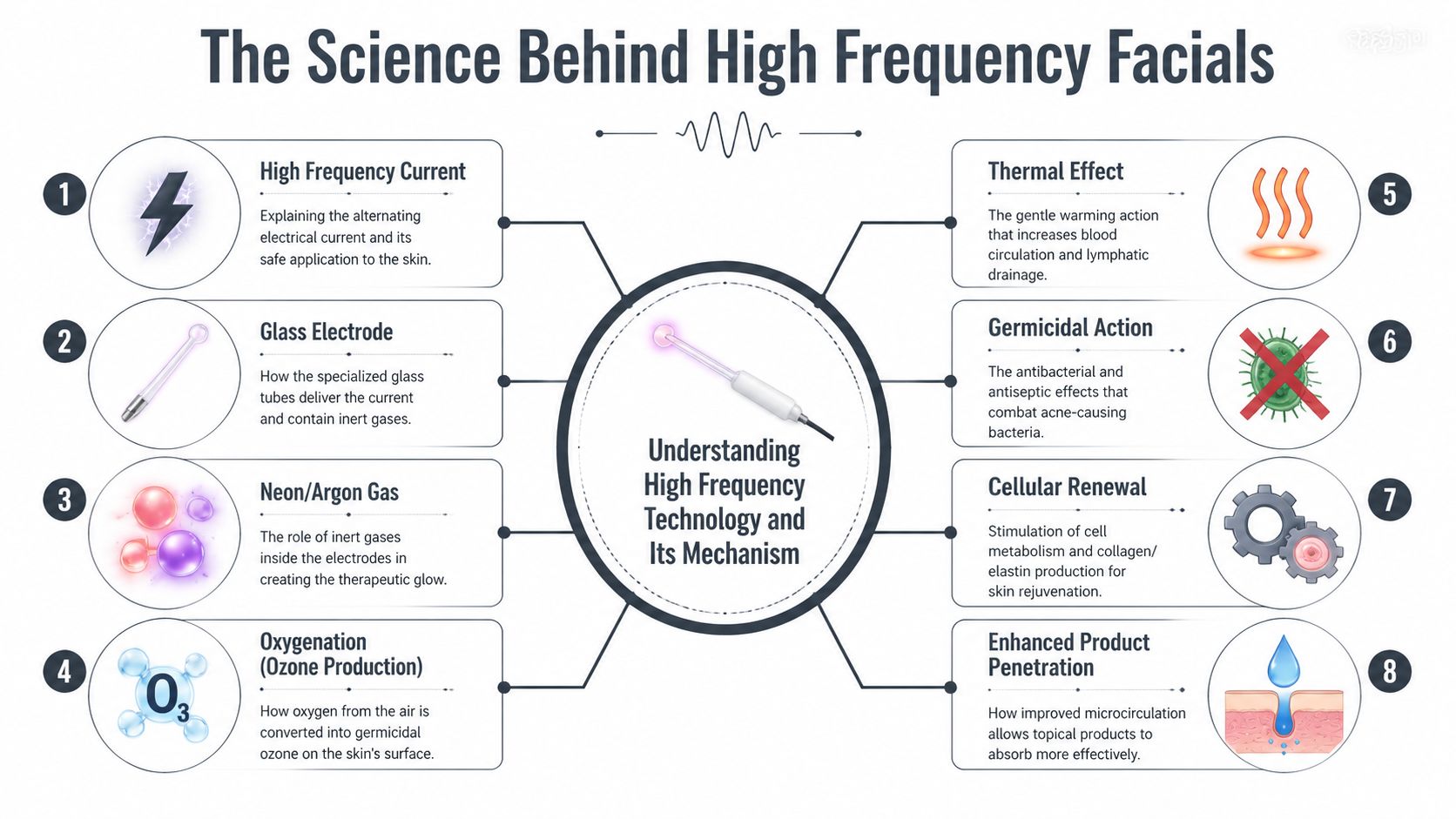
A high frequency facial machine is easiest to understand when you stop thinking of it as a “magic wand” and start thinking of it as a controlled electrical delivery system. The machine passes an alternating current through a glass electrode filled with inert gas. That interaction is what creates the visible glow and the treatment effect on the skin.
High-frequency facial machines operate at frequencies from 100,000 to 2,500,000 Hz, and the current passes through glass electrodes filled with inert gas. On skin contact, that gas is ignited and produces unstable oxygen, or ozone, with germicidal action that can kill P. acnes and reduce post-extraction infection risk by up to 99%, according to the professional high frequency machine manual.
What the current is actually doing
The term Tesla current gets used often, but many therapists never get a practical explanation. In treatment terms, the current oscillates so rapidly that it creates a mild surface effect rather than the sort of stimulation that would cause muscle contraction. That matters, because it helps explain why clients usually experience the treatment as active but not aggressive.
Think of it as a tiny, controlled electrical field at the skin’s surface. The electrode doesn’t “scrub” the skin and it doesn’t work like radiofrequency. Its role is to transmit a specific kind of current that supports a bactericidal effect on the surface and a mild thermal action in the superficial tissue.
Practical rule: If your therapist can’t explain the difference between superficial high frequency action and deeper tissue technologies in one clear sentence, the client consultation needs work.
Why the electrode glows and why that matters
The glass electrode is not just packaging. It’s part of the treatment mechanism. Inside the tube is inert gas, commonly neon or argon, and when the current energises that gas, you get the characteristic glow. In practice, therapists often associate different electrode colours with different treatment goals, especially when working across acne-prone, congested, or more mature skin presentations.
Electrode shape matters just as much as gas type. A mushroom electrode gives broad coverage over cheeks, forehead, and jawline. A smaller pointed or sparking electrode lets you localise treatment over active lesions or post-extraction areas. A comb electrode is used on the scalp when you’re incorporating high frequency into hair and scalp protocols. If you want a visual reference for the basic device format, professional high frequency wand systems generally show the standard handpiece-and-electrode setup clearly.
What clients usually notice during treatment
Most clients notice three things. They feel a mild tingling sensation, they see the glow from the electrode, and they often detect the distinct ozone smell. That smell isn’t a gimmick. It’s part of the mechanism practitioners commonly associate with the bactericidal surface action.
The thermal effect is subtle. You’re not trying to create deep heating or intense tissue tightening. You’re aiming for controlled, superficial stimulation that fits into a facial workflow without turning the treatment into a high-risk energy procedure.
For that reason, technique matters more than force. Good therapists keep the movement consistent, choose the correct electrode, and avoid treating the machine like a “more is more” device. The machine works best when it’s used with intention, not when intensity is pushed just because the client wants to feel something dramatic.
Clinical Applications and Proven Benefits for Modern Aesthetics
The best use of a high frequency facial machine is not “everything for everyone”. In clinic, it performs best when you match it to the right indication and place it properly in the treatment sequence. Used that way, it becomes a strong support modality rather than an overpromised headline treatment.

Where it performs best in clinic
For most clinics, the most defensible indication is acne-prone and congested skin, especially after extractions. That’s where the bactericidal logic is clear and where therapists can show clients an obvious place for the treatment in the facial sequence. It also works well as a finishing step when you want to support skin calmness after manual work.
The second strong use is general skin revitalisation. Some clinics include it in anti-ageing facials because the superficial thermal action and circulation support can improve the overall look of the skin. That doesn’t make it a substitute for technologies aimed at deeper remodelling. It makes it a useful supporting step in a layered facial programme.
A third use appears in scalp protocols. The comb electrode gives therapists a way to include high frequency in scalp-focused services, particularly when the clinic wants a non-invasive add-on that fits into broader hair and wellness treatment menus.
- Acne support: Most practical after cleansing and extractions, especially where bacterial load and post-extraction hygiene matter.
- Texture and radiance support: Helpful in facials aimed at refreshing dull-looking skin.
- Scalp add-on services: Works best when presented as one part of a broader scalp or haircare protocol, not as a stand-alone miracle treatment.
How to set realistic expectations
For many clinics, trust is either built or lost depending on the evidence. There is a notable gap in peer-reviewed studies documenting sustained clinical outcomes beyond the initial phase, and a single in vitro study showed bacterial reduction without establishing clinical protocols for treatment frequency or long-term skin health in humans, as outlined in this review of high frequency evidence gaps.
That means you shouldn’t position high frequency as a fully evidence-set long-term correction tool for every concern. You can position it as a useful professional treatment step with credible short-term clinical logic, especially in acne and post-extraction workflows.
Good positioning sounds like this: “This treatment supports clearer, calmer skin and fits especially well after extractions.”
Poor positioning sounds like this: “This will permanently solve your acne and wrinkles.”
When to combine it with other modalities
High frequency is often most valuable when it improves the flow of another service. A deep cleanse facial is the obvious example. Extractions create a clear reason for the treatment. The client understands why you’re using it, and the therapist isn’t forcing the modality into the protocol.
It also pairs naturally with light-based skin services when you want a broader non-invasive treatment menu. Clinics that already offer LED lamp therapy for skin programmes often find high frequency useful as a separate step for selected acne and recovery-focused clients. The key is to keep the role of each modality distinct in the consultation.
What doesn’t work is lazy bundling. If every facial suddenly includes high frequency with no clinical rationale, clients start seeing it as theatre rather than treatment. Build the recommendation around the skin presentation, not around the fact that you own the machine.
Navigating Safety and Regulatory Standards in South Africa
In South African practice, safety around a high frequency facial machine isn’t just about whether the client feels comfortable. It’s about whether your clinic can justify the treatment method, operator competence, equipment quality, and documentation if something goes wrong. That becomes more important because this category has been blurred by consumer devices.
Why home use has muddied the waters
The market is crowded with portable high frequency wands sold directly to consumers. That creates confusion for clients and, in some cases, for therapists. The professional problem is clear. Consumer-grade availability has created uncertainty around liability and safety, while professional content often fails to define the training, certification, and wattage thresholds that separate safe clinic use from risky home use, according to this discussion of high frequency treatment safety confusion.
If your clinic treats high frequency as “basic” because home users can buy a wand online, you lower your own standard. Professional use demands better screening, better technique, cleaner protocols, and better record-keeping than a consumer setup ever will.
Your practical clinic safety checklist
The exact long-term contraindication framework isn’t well standardised in the evidence base, so clinics need a conservative screening culture. In practice, your protocol should include treatment exclusion or senior review where the client presents with relevant medical, implant, skin barrier, or sensitivity concerns.
Use a checklist addressing the basics every time:
- Medical device screening: Ask about pacemakers and implanted electrical devices before the treatment is even booked.
- Pregnancy review: If your clinic policy excludes energy-based facial modalities during pregnancy, apply it consistently and document it.
- Metal and jewellery control: Remove facial jewellery in the treatment area and assess any relevant implanted metal concerns according to your clinic policy.
- Skin condition check: Delay treatment on compromised, highly reactive, or visibly irritated skin until the presentation is properly assessed.
- Eye protection and positioning: Keep the treatment controlled around the orbital area and train staff not to improvise.
- Patch awareness: When a client is reactive, cautious exposure and conservative settings are better than bravado.
The risk with high frequency usually comes from casual use, not from disciplined use.
Compliance as a business asset
Clinic owners sometimes treat compliance as overhead. That’s the wrong frame. In this category, compliance is part of your market positioning. Clients don’t always understand frequency ranges or electrode chemistry, but they do understand whether your clinic sounds organised, clinically grounded, and professionally insured.
Choose equipment that aligns with recognised regulatory and quality standards, and insist on documented training from the supplier. Build SOPs that define who may operate the machine, how settings are selected, how the electrodes are sanitised, and when the treatment must be deferred.
That discipline does two things. It protects the client, and it protects your business from becoming dependent on individual therapist habit. A compliant clinic isn’t just safer. It’s more scalable.
Evaluating High Frequency Machine Features for Your Clinic
Buying a high frequency facial machine should be a procurement decision, not an impulse add-on. The machine itself matters, but the service ecosystem around it often determines whether the device becomes productive or forgotten.
The hardware details that matter
Start with intensity control. You want a machine that lets the therapist work conservatively on more reactive presentations and adjust appropriately for treatment area and skin tolerance. A vague on-off style interface limits your clinical flexibility.
Look closely at electrode quality and fit. Poorly made glass electrodes break more easily, fit loosely, or deliver an inconsistent treatment experience. That causes frustration in-room and replacement costs later. A professional unit should also make electrode changes straightforward. If your team avoids using a device because setup feels fussy, utilisation drops.
Then check ergonomics and footprint. A bulky system can still work well, but it must make sense for your room layout. Mobile therapists and smaller treatment rooms need a machine that moves easily, stores cleanly, and doesn’t turn every setup into a cable-management exercise.
High Frequency Electrode Guide
| Electrode Type | Primary Use | Best For |
|---|---|---|
| Mushroom | Broad facial coverage | Cheeks, forehead, chin, general facial work |
| Point or spark electrode | Localised treatment | Individual blemishes and focused post-extraction areas |
| Comb | Scalp application | Scalp-focused services and hair-related protocols |
| Spoon | Smaller contour areas | Curved or narrower facial zones |
The supplier matters as much as the machine
Two machines can look similar on paper and perform very differently in real business conditions. One arrives with training, replacement access, service support, and clear treatment guidance. The other arrives in a box.
When you compare suppliers, ask direct questions:
Who trains your team?
If training is generic, rushed, or missing, expect inconsistent treatment delivery.What does the warranty cover?
A headline warranty sounds good, but you need clarity on handpieces, electrodes, labour, and turnaround.Can you get consumables or replacements quickly?
If a broken electrode sidelines treatments for weeks, your machine is not operationally reliable.Is there clinical documentation?
Protocol support, consent guidance, and aftercare help therapists work consistently.
Buy the support structure, not just the box.
A final buyer’s point. Don’t confuse a high frequency facial machine with technologies designed for deeper tightening or more intensive remodelling. It should earn its place because it improves selected facial workflows, not because someone sold it as a substitute for every other device category. Clinics that buy with that clarity tend to use the machine far more effectively.
Integrating High Frequency Treatments for Profitability and ROI
A machine becomes profitable when it is easy to book, easy to explain, and easy for therapists to deliver consistently. That’s where many clinics go wrong. They either treat high frequency as too minor to matter, or they package it so vaguely that nobody knows when to recommend it.
Where the revenue usually comes from
In most clinics, high frequency earns best in three ways. First, as a post-extraction add-on. Second, as part of an acne-focused facial package. Third, as a support step inside broader skin programmes where clients return regularly.
The operational argument is stronger when the machine is used after extractions. Professional high-frequency machines operating at 60,000 to 200,000 Hz can increase blood flow by 20 to 40 percent and improve acne clearance by 25 to 35 percent when used post-extraction, and in high-volume Pretoria spas this setup has supported 8 to 10 clients per hour, a 2x faster ROI, and a 40% increase in repeat bookings, according to professional system performance data for high frequency facials.
Those numbers don’t mean every clinic will replicate the same outcome. They do show why the machine tends to perform best when it is attached to repeatable, workflow-friendly services instead of being sold as a standalone novelty.
A workflow that keeps the treatment bookable
The clinics that monetise high frequency well usually keep the protocol simple and repeatable. A common structure looks like this:
- Consultation and skin review: Confirm indication, rule out obvious safety concerns, and explain what the treatment step is for.
- Cleanse and prep: Use it inside a facial that already has a clear treatment identity.
- Extractions where indicated: This is often where the machine earns its place most clearly.
- High frequency application: Apply with the correct electrode and controlled technique.
- Finish with calming or corrective products: Build the aftercare logic into the protocol, not as an afterthought.
This is also where add-on logic matters. If the client is already on a skin correction pathway, you can position high frequency as one part of that plan rather than an isolated upsell. For clinics that offer procedures across multiple skin concerns, combining the consultation pathway with services such as professional microneedling systems can help define when high frequency is the right superficial support step and when another modality is the better primary treatment.
How to think about ROI without guessing
You don’t need invented spreadsheets to evaluate this device. You need a simple business model based on your clinic’s actual operations.
Use these questions:
How many extraction-based facials do you already perform each week?
If the answer is “very few”, the machine may need stronger standalone positioning.Can your therapists explain the treatment in one sentence?
If they can’t, conversion will stay weak.Will you sell it as an add-on, an included protocol step, or both?
Each approach changes utilisation and margin differently.Do clients on acne programmes already rebook?
If yes, high frequency may strengthen a pathway that already works.Can every therapist deliver the same protocol?
Inconsistent technique kills retention faster than a mediocre machine.
A practical clinic doesn’t buy this device hoping it will rescue weak treatment demand. It uses the machine to improve services that are already needed and already bookable. That’s the difference between a gadget and an asset.
Frequently Asked Questions About High Frequency Facials
| Question | Answer |
|---|---|
| What does a high frequency facial feel like? | Most clients describe it as a mild tingling or buzzing sensation. Some also notice the ozone smell during treatment. It shouldn’t feel harsh or uncontrolled. |
| Is it best used as a stand-alone treatment? | It can be, but many clinics get better practical value when they use it inside acne, congestion, or post-extraction facial protocols. |
| Does it replace deeper rejuvenation technologies? | No. It works at a more superficial level and should be positioned differently from modalities used for deeper tissue remodelling. |
| Which clients are usually the best fit? | Clients with acne-prone, congested, or dull-looking skin are common candidates. Final suitability should always depend on your consultation and safety screening. |
| How long should a clinic continue a course before reviewing progress? | Review should be based on your clinic protocol, the client’s response, and clear photographic or charted observations. Long-term evidence-based interval standards are still limited, so your review system matters. |
| Can junior therapists perform it? | Only if your clinic has trained them properly, signed them off on protocol, and limited them to approved use parameters. “Simple machine” is not the same as “no training needed”. |
| What aftercare should clients follow? | Keep aftercare straightforward. Support the skin barrier, avoid unnecessary irritation, and reinforce any acne or homecare plan already prescribed by the clinic. |
| Is the treatment enough on its own for chronic acne? | Usually, no responsible practitioner should promise that. It’s better seen as one tool within a broader acne management plan. |
The biggest FAQ issue isn’t usually the machine. It’s expectation control. Clients often hear “electrical facial” and assume the result will be dramatic after one session. Staff need language that keeps the promise honest.
A useful consultation answer is simple: this treatment is most valuable when it’s matched to the right indication and used consistently inside a sensible skin plan. That answer protects trust and improves rebooking quality.
If you’re choosing a supplier, don’t just compare the unit. Compare the training standard, the compliance support, the warranty terms, the after-sales response, and whether the company understands how clinics make the machine profitable. That part often matters more than the handpiece.
If you want a compliant, business-focused path into device-led skin services, Omega Lasers is worth evaluating. They supply FDA-approved, CE-certified, SAHPRA-licensed aesthetic systems and back them with training, technical support, marketing support, and business development guidance, which is exactly what most clinics need to turn a machine into a dependable revenue stream rather than another underused purchase.