



You're probably seeing the same pattern many clinic owners are seeing. Clients ask for non-surgical tightening, they want visible change around the eyes or mouth, and they don't want the downtime or cost profile of surgery. At the same time, your team can't afford a treatment that creates more complaints, more aftercare calls, and more risk than profit.
That's where fibroblast plasma treatment gets interesting, and where many clinics get it wrong.
Used well, it can sit in a premium position on your menu. Used badly, it becomes a consent problem, a pigmentation problem, and a reputation problem. In South Africa, that distinction matters even more because skin-type diversity changes your risk profile, and because cheap, unverified devices still circulate in the market.
Table of Contents
- Understanding Fibroblast Plasma Treatment and Its Mechanism
- Ideal Candidates and Critical Contraindications
- The Complete Fibroblast Treatment Protocol
- Navigating Risks Complications and Safety Regulations
- Fibroblast Plasma vs Other Skin Rejuvenation Methods
- Adding Fibroblast Plasma to Your Clinic Business Model
- Is Fibroblast Plasma Treatment Right for Your Practice
Understanding Fibroblast Plasma Treatment and Its Mechanism
A patient walks in asking for a non-surgical eyelid lift. Your practitioner says yes too quickly, your consent process is vague, and the device is treated like a simple beauty tool. That is how a profitable treatment becomes a complaints problem. Clinic owners need a sharper understanding than "it tightens skin."
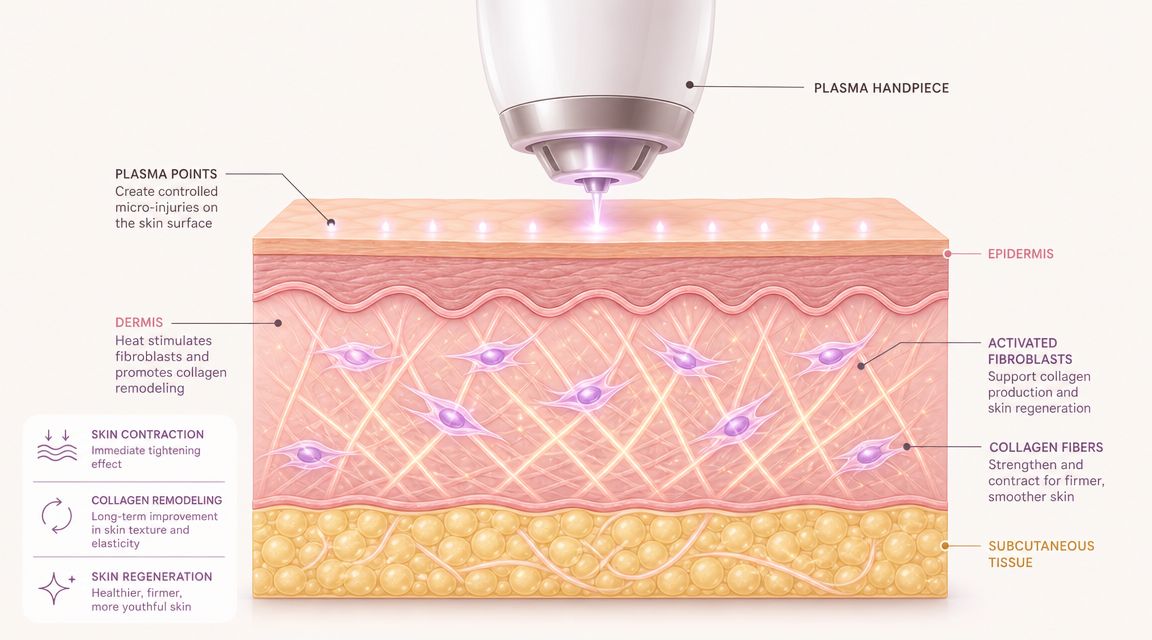
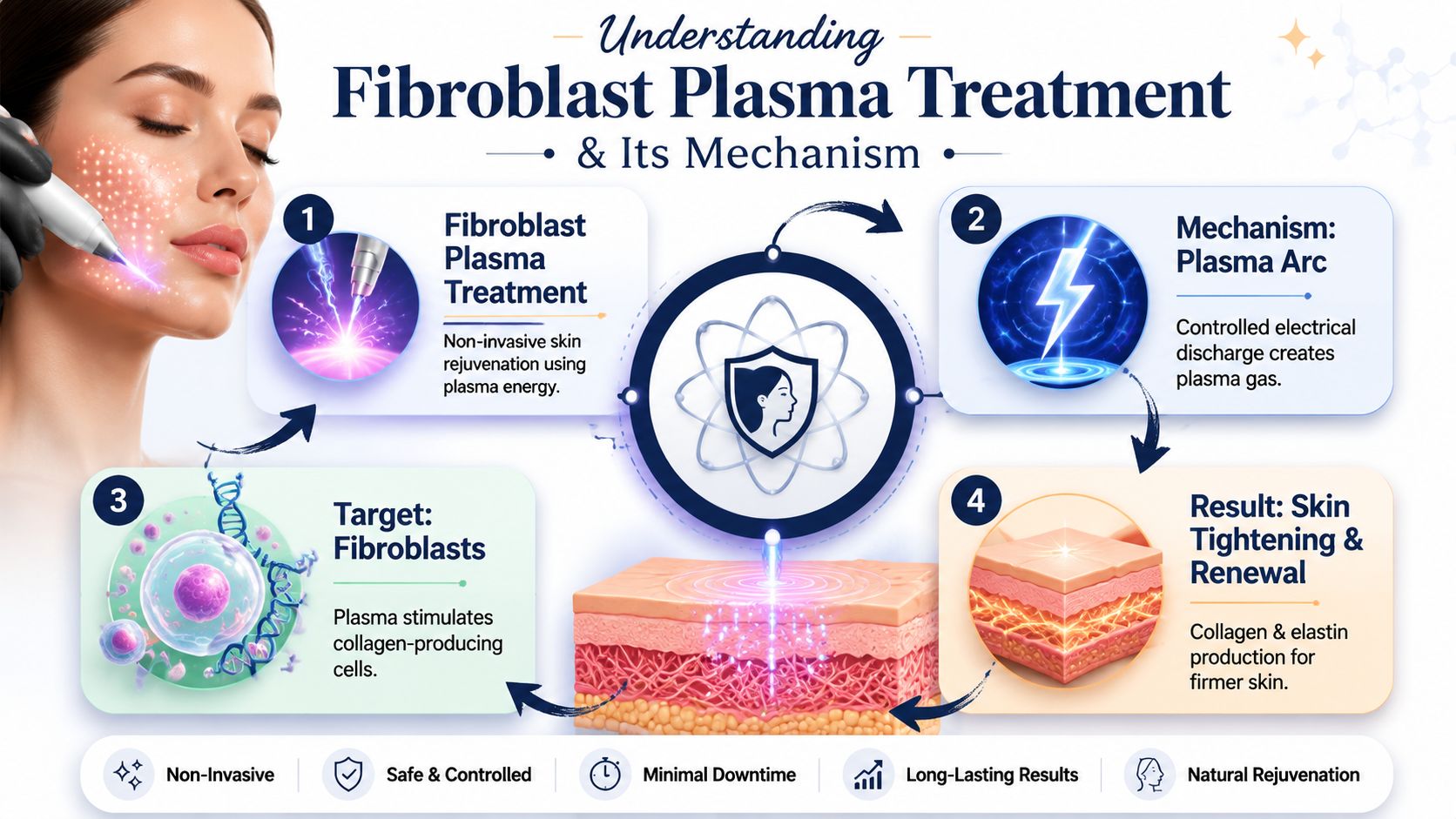
Fibroblast plasma treatment uses a pen-style device to create a small electrical arc just above the skin. That arc ionises the air between the tip and the skin surface, producing controlled thermal injury at specific points. The intended effect is superficial tissue sublimation, followed by contraction and wound healing that can stimulate fibroblast activity and collagen remodelling.
What the fibroblast is doing
Fibroblasts are connective-tissue cells involved in producing collagen and other structural components that affect skin strength and repair. In practice, the treatment result comes less from the visible carbon dots and more from the healing response that follows them. If your team explains only the sparks and not the wound-healing cascade, patients will expect an instant lift and judge the treatment too early.
Heat causes tissue contraction. Then inflammation, repair, and remodelling shape the final cosmetic result over the following weeks. That is why good outcomes depend on depth control, dot spacing, treatment area selection, and aftercare compliance, not just on owning a plasma pen.
Published reports have described improvement in wrinkling and overall facial appearance after fibroblast treatment. The useful takeaway for a clinic is simpler. Results can be meaningful in selected cases, but they are operator-dependent and far less forgiving than many owners assume.
Practical rule: Position fibroblast plasma treatment as a controlled thermal injury procedure designed for selective tissue contraction and remodelling over time.
Why this matters for positioning in a clinic
From a business standpoint, fibroblast is not a general solution for facial ageing. It works best as a targeted option for localised laxity and etched lines in carefully chosen areas. If your clinic sells it as a substitute for surgery, fillers, or full-face resurfacing, refund pressure and dissatisfaction usually follow.
It also sits in a different operational category from many other aesthetic treatments. Precision matters more. Training standards need to be tighter. In South African practice, that means owners should pay close attention to scope of practice, device quality, consent language, photographic documentation, and complications planning before adding it to the menu.
Patient conversations should also distinguish fibroblast from resurfacing systems such as fractional CO2 laser treatment for skin resurfacing. Plasma is commonly chosen for focal contraction in smaller zones and a different recovery pattern. It does not replace every resurfacing or tightening modality, and it should not be marketed that way.
Used well, fibroblast can fill a profitable gap between injectables and surgical referral. Used carelessly, it creates avoidable risk, especially in skin types and treatment areas where thermal injury can leave a longer business problem than the original aesthetic concern.
Ideal Candidates and Critical Contraindications
A client walks in asking for a non-surgical eyelid lift, wants treatment before a wedding, has a history of dark marks after acne, and tells your receptionist she “heals well.” That is not a quick yes. That is a proper assessment, because candidate selection is where fibroblast becomes either a strong premium service or a liability.
The best candidates usually have localised laxity, fine etched lines, or small areas where controlled surface contraction can improve the result. Upper eyelid hooding in mild cases, peri-oral lines, selected neck creasing, and some superficial scar presentations can fit well. Diffuse ageing, heavy tissue descent, major volume loss, and patients chasing a surgical outcome do not.
The candidate who usually does well
Good outcomes start with the right expectation set. The patient needs to accept visible crusting, social downtime, staged collagen remodelling, and the fact that improvement is often gradual rather than dramatic overnight.
The strongest candidate also has stable skin, a reliable healing history, and enough patience to follow aftercare exactly. In clinic terms, that means they arrive prepared, understand sun avoidance, and do not treat post-care as optional. Those details affect your results as much as your handpiece control.
Practical fit matters too. A patient who wants focal improvement in a defined area is usually a better fibroblast candidate than someone who needs lifting, resurfacing, pigment correction, and volume restoration across the whole face. That second patient often needs a different treatment plan or a referral.
The patient you should screen out early
Fibroblast is one of the treatments where poor exclusions cost money fast. Complaints, prolonged follow-up, pigment complications, and refund pressure usually begin with a weak consultation, not a weak machine.
Screen carefully for:
- Unrealistic expectations: Patients expecting surgical-grade lifting from one session are poor candidates.
- Poor downtime tolerance: If they cannot manage visible carbon crusts and social recovery, delay treatment or choose another modality.
- Unreliable aftercare compliance: Poor cleansing, picking, early exercise, heat exposure, and sun exposure increase complication risk.
- Abnormal healing history: Prior keloids, hypertrophic scarring, prolonged post-inflammatory pigment change, or delayed healing should trigger caution or exclusion.
- Active skin or systemic issues: Active infection, dermatitis in the treatment zone, uncontrolled diabetes, immune compromise, pregnancy, and recent isotretinoin use all require strict screening and, in many clinics, deferral.
- Recent tanning or high UV exposure: This raises pigment risk and weakens your margin for safe treatment.
Fitzpatrick typing is required in South Africa
South African clinics treat a wide range of skin tones. That changes how fibroblast should be assessed, priced, consented, and in some cases declined.
Fitzpatrick IV to VI patients can still be candidates, but not by default. The pigment risk is higher, especially in patients with a history of post-inflammatory hyperpigmentation, melasma, frictional darkening, or strong sun exposure patterns. In these cases, the consultation needs to go beyond a generic warning. Protocol changes should be built in from the start.
For higher Fitzpatrick types, that can mean choosing smaller test areas first, reducing energy, increasing the spacing between treatment points, avoiding aggressive density patterns, and requiring a pre-treatment tyrosinase inhibitor for two to four weeks where appropriate. Strict photoprotection is part of the protocol, not an afterthought. Good numbing also matters because overtreatment often starts when the patient is uncomfortable and the operator speeds up. Clinics that stock a professional topical anaesthetic should train staff on correct use of numbing cream for fibroblast procedures before treating higher-risk cases.
The business point is straightforward. A conservative plan in the right skin type is profitable. A pigment complication in the wrong patient can consume chair time, staff time, and trust for months.
Area selection matters as much as patient selection
Not every treatment zone carries the same risk. Thin, localised areas with clear boundaries are usually easier to treat predictably than broad zones where overlap, heat build-up, and inconsistent healing become more likely. This is one reason disciplined clinics start with focused indications and expand only after operators show consistent results.
If you are building this service in a South African practice, your safest growth strategy is simple. Start narrow. Screen hard. Document thoroughly. Decline the cases that look profitable on paper but carry a high chance of pigment trouble, poor healing, or dissatisfaction. That is how you protect outcomes and keep fibroblast commercially viable.
The Complete Fibroblast Treatment Protocol
Protocol discipline is what separates a professional service from an expensive skin injury. Fibroblast plasma treatment isn't difficult because it's mysterious. It's difficult because every weak step compounds the next one.
Before the procedure
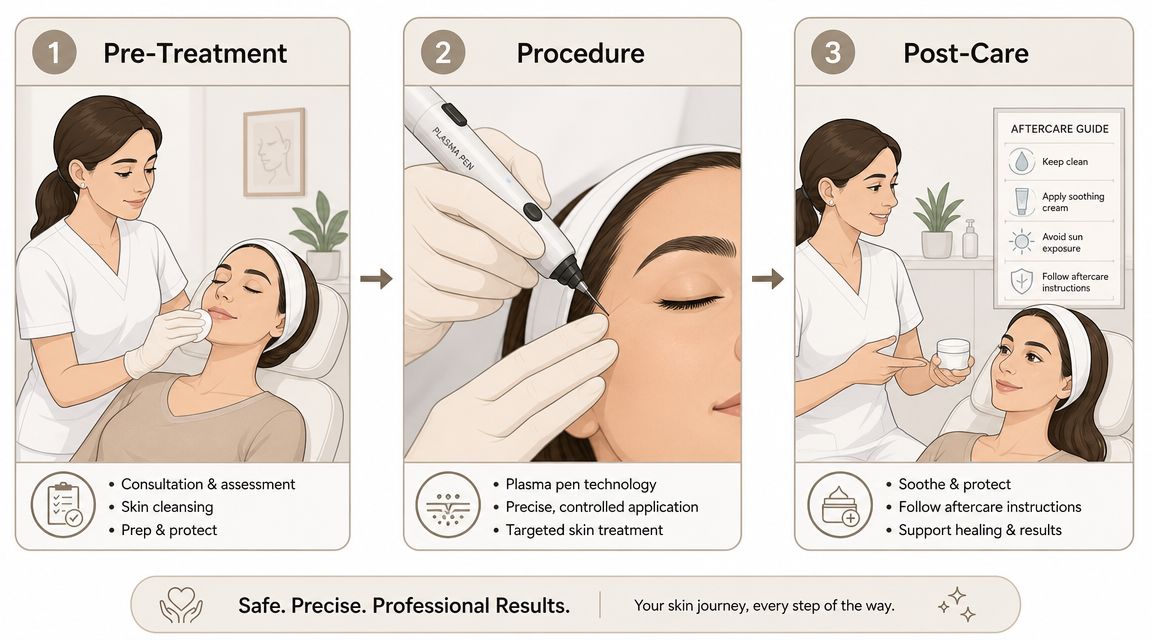
Start with documentation, skin assessment, treatment photography, and consent that reflects the true experience. The consent conversation should include visible crusting, social downtime, the possibility of pigment change, and the fact that collagen-driven results continue to evolve rather than appearing fully on day one.
Preparation should also be practical:
- Cleanse thoroughly: Remove skincare residue, oils, and any surface contaminants.
- Mark treatment boundaries carefully: Precision matters more than speed with plasma.
- Use appropriate topical numbing: If you're using a topical anaesthetic, choose a professional-grade option and apply it according to protocol. Clinics that already stock products such as Super Numb numbing cream still need to train staff on timing, removal, and skin reassessment before treatment begins.
- Reconfirm contraindications on the day: Don't rely only on the original consultation form.
During treatment
Application technique is where operator quality becomes visible. The handpiece must be controlled, spacing must be deliberate, and area selection must stay within your competence. Over-treatment is not a sign of thoroughness. It's a common cause of poor healing and regret.
Most clinics use a patterned approach rather than random application. The goal is uniform controlled injury, not chasing every visible line with unnecessary density. Periorbital work, perioral lines, and neck skin all demand different restraint levels because skin thickness and risk vary.
Treat the area in front of you, not the marketing photo in your head.
Aftercare and healing management
Aftercare is part of the treatment, not a handout at reception. If staff can't explain the healing stages clearly, clients will panic during normal recovery and ignore you during abnormal recovery.
Your team should give simple written instructions that cover:
- Cleansing: Keep the area clean and avoid unnecessary friction.
- Crust care: Don't pick, scrub, or prematurely remove carbon crusts.
- Sun management: Strict photoprotection is essential, especially in pigment-prone skin.
- Product restraint: Keep active skincare out until the skin barrier is ready.
- Follow-up timing: Review healing early enough to catch problems before they escalate.
The healing window commonly runs for several days, but the visible endpoint is not the biological endpoint. Full collagen-driven results continue developing for up to 12 weeks, and some sources suggest improvement can continue for as long as 12 months, as noted in this treatment timing guide. If you don't explain that clearly, clients judge the treatment too early and clinics undersell or oversell the result.
Navigating Risks Complications and Safety Regulations
The biggest mistake in fibroblast plasma treatment is pretending it belongs in the same low-risk mental category as light facial treatments. It doesn't.
This procedure can go wrong in ways that are clinically significant and commercially damaging. Burns, infection, scarring, delayed healing, and pigmentary change are not fringe events you mention to satisfy paperwork. They're the reason your training, device selection, and treatment boundaries must be tighter than average.
The regulatory warning signs matter
The language from regulators and medical summaries should make every clinic owner slow down. The FDA has not cleared plasma fibroblast therapy for aesthetic procedures and has documented serious adverse events including second- and third-degree burns, infection, scarring, and nerve damage. Health Canada also does not authorise plasma pens for cosmetic use because safety and effectiveness have not been adequately evaluated, as reported in this review of plasma fibroblast risks and regulatory concerns.
That doesn't mean every treatment is unsafe. It means you cannot market or operate this service casually.
Where clinics create avoidable complications
Complications usually come from predictable failures:
- Poor device verification: Cheap, unverified pens create uncertainty before the first treatment starts.
- Weak operator training: A certificate without competency assessment isn't enough.
- Bad area selection: Treating unsuitable areas or unsuitable skin types leads to predictable trouble.
- Inadequate consent: Clients who don't understand downtime and risk are more likely to complain, panic, or breach aftercare.
- No adverse-event plan: If your team doesn't know what to escalate and when, delays make outcomes worse.
A safety-first clinic has a written escalation pathway, not just confidence.
What a serious safety framework looks like
A practical framework should include structured consultation, patch-test logic where appropriate, strict hygiene, standardised photography, and written aftercare with follow-up checkpoints. The treatment room should also have clear rules on handpiece handling, skin preparation, and stop criteria if skin response appears excessive.
The safest fibroblast practice isn't the clinic that treats the most patients. It's the clinic that excludes aggressively, documents carefully, and knows when not to fire the pen.
From a business standpoint, safety isn't a separate department. It is the business model. A single avoidable complication can consume staff time, erode trust, and cancel the profit from multiple otherwise successful treatments.
Fibroblast Plasma vs Other Skin Rejuvenation Methods
Adding fibroblast plasma treatment to a clinic only makes sense if you know exactly where it sits against your other rejuvenation options. Not every tightening concern should be channelled toward plasma, and not every client benefits from the same risk-reward trade-off.
The strategic difference
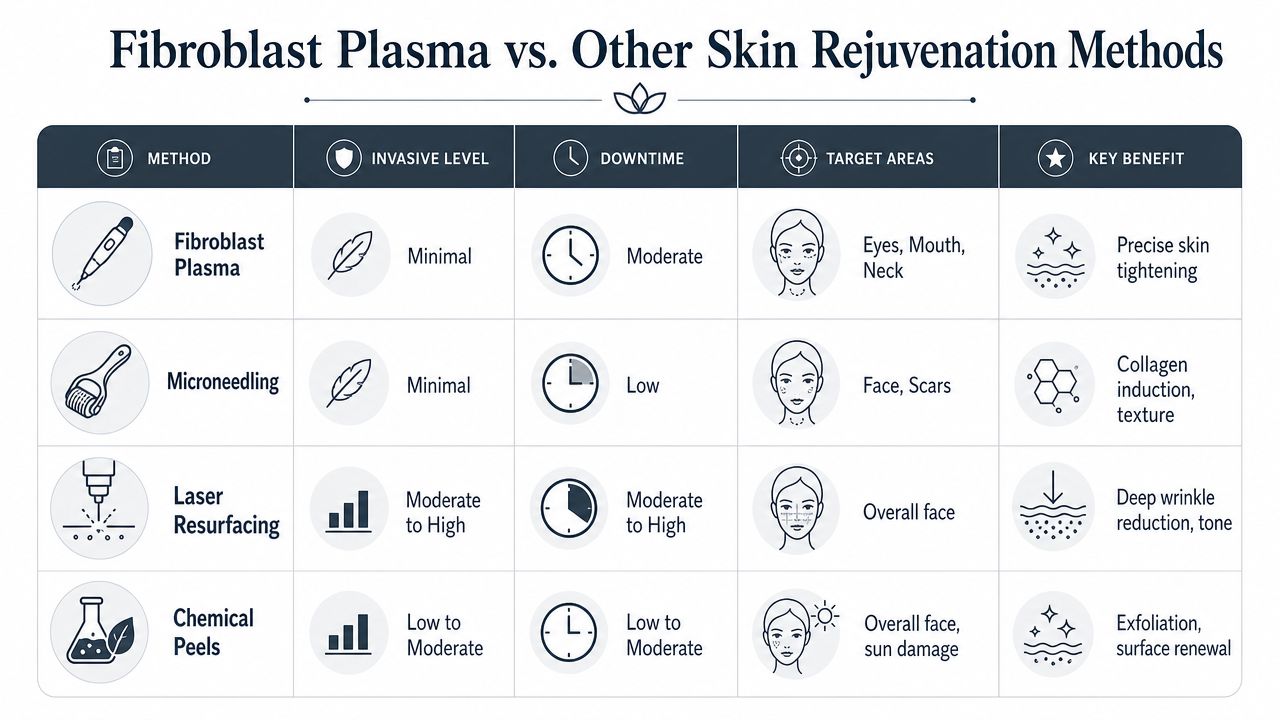
Fibroblast plasma treatment is usually selected when the clinic wants precise tissue contraction in smaller or more targeted areas. That makes it attractive for selected eyelid, perioral, and localised laxity concerns.
By contrast, radiofrequency-based tightening is often positioned as the safer choice for darker skin tones because it carries a lower risk of post-inflammatory hyperpigmentation, while plasma carries more downtime and radiofrequency generally requires more sessions with maintenance, according to this comparison discussing darker skin and treatment trade-offs. In the ZA market, that point isn't academic. It directly affects who you treat and how you package your services.
Fibroblast Plasma vs. Other Modalities
| Modality | Mechanism | Downtime | Best For | PIH Risk (Darker Skin) |
|---|---|---|---|---|
| Fibroblast Plasma | Controlled plasma arc creating micro-injury and contraction | Moderate | Localised tightening and selected fine-line concerns | Higher |
| Radiofrequency-based tightening | Heat-driven dermal stimulation | Lower to moderate | Clients wanting a gentler option with repeat sessions | Lower |
| Laser resurfacing | Light-based controlled resurfacing | Variable | Texture, tone, and broader resurfacing goals | Depends on device, settings, and skin type |
| Chemical peels | Chemical exfoliation and controlled skin renewal | Low to moderate | Surface pigment and texture goals | Variable, requires careful selection |
What works and what doesn't
Fibroblast works best when the clinic uses it as a precision treatment, not as a universal answer to ageing. It tends to disappoint when clinics oversell it for diffuse laxity, heavy tissue, or clients who really need a different modality.
Radiofrequency often wins on safety profile and patient comfort in darker skin. Plasma may still appeal when a client accepts downtime and the indication is highly targeted. Laser or peel-based approaches may make more sense when the primary complaint is surface quality, pigment, or broader textural change rather than contraction alone.
A strong consultation doesn't ask, “Can I sell this treatment?” It asks, “Which modality gives this client the safest route to the most believable result?”
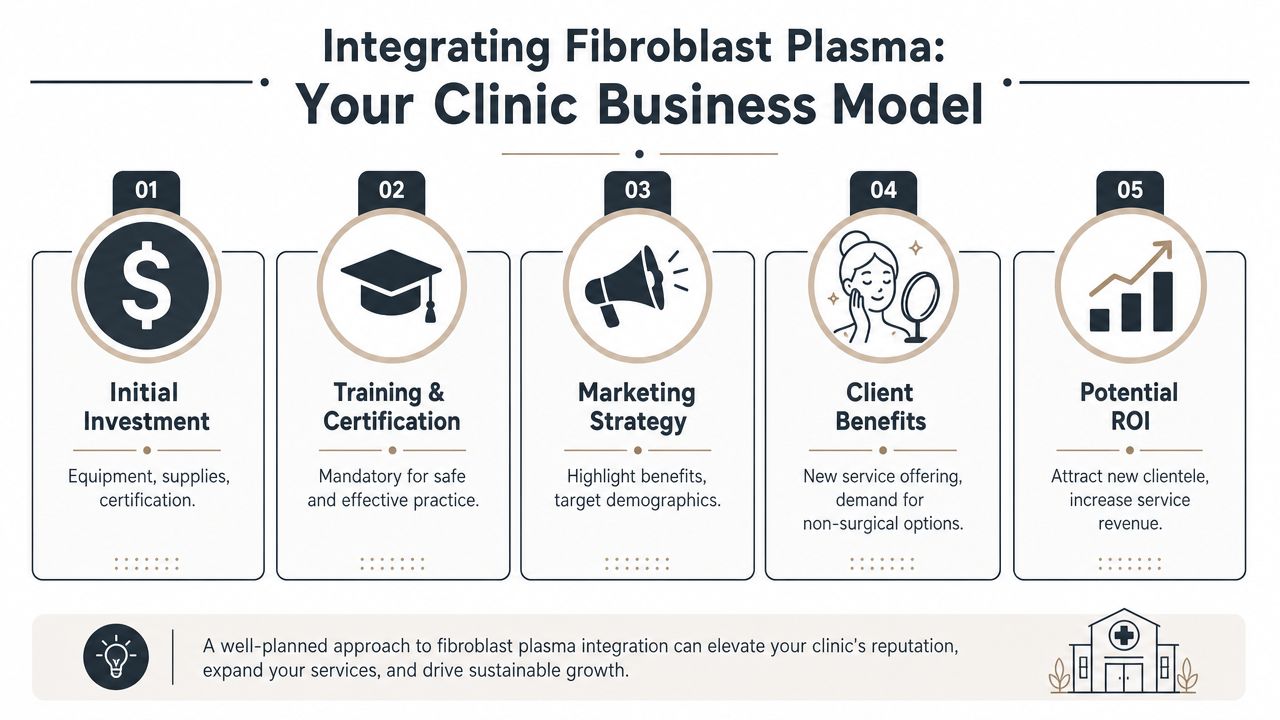
Adding Fibroblast Plasma to Your Clinic Business Model
If you buy a plasma device and expect profit to appear automatically, you'll probably be disappointed. Fibroblast plasma treatment only performs well as a business line when the operation around it is just as organised as the clinical delivery.
Buy the right device, or don't buy one at all
The cheapest device is usually the most expensive lesson. Device verification, documentation, servicing support, and operator guidance matter more here than they do in many lower-risk beauty treatments.
For clinic owners in South Africa, the baseline standard should be simple. Choose equipment with credible regulatory standing and clear support structures. If the seller can't provide proper documentation, training pathways, and traceability, you're not buying a treatment system. You're buying liability.
Training creates the margin
Plasma is not a “watch one video and start treating” service. It needs competency-based training, protocol standardisation, and supervision until your practitioners can recognise when not to treat. That protects outcomes, but it also protects revenue. Fewer complications mean fewer unpaid reviews, fewer emergency follow-ups, and fewer refund conversations.
The strongest fibroblast businesses usually build around five operational pillars:
- Selection discipline: Choose cases conservatively at launch.
- Team calibration: Use one protocol, one photography standard, and one consent format.
- Aftercare systems: Make follow-up part of the package, not an afterthought.
- Service positioning: Sell precision tightening, not miracle correction.
- Digital presentation: Show realistic candidacy and real healing stages online.
Marketing the service without creating future complaints
Most fibroblast marketing fails because it promises too much and explains too little. Your website, consultation forms, and before-and-after content should prepare the client for the true experience, especially downtime, area limitations, and skin-type suitability.
Even though it's outside aesthetics, the conversion principle is similar to what you see in specialised healthcare sites such as Wise Web website design for dentists. High-trust treatment pages work when they answer the patient's real questions clearly, not when they rely on hype. The same rule applies to fibroblast plasma treatment pages in aesthetic clinics.
How to think about return on investment
Don't build your forecast around headline treatment pricing alone. Build it around total delivery cost and operational friction. Include consumables, training time, review appointments, photography, admin handling, and the opportunity cost of treating unsuitable patients.
If you're pricing or packaging other advanced services, it helps to look at how clinics think about skin laser treatment cost in relation to treatment complexity, safety, and practitioner skill. Fibroblast should be priced and positioned with the same logic. It's a premium procedure when delivered properly, not a discount add-on.
The clinics that earn well from fibroblast are usually the ones that say “no” often, document everything, and charge in line with the expertise required.
Is Fibroblast Plasma Treatment Right for Your Practice
Fibroblast plasma treatment can be a strong addition to a clinic, but only for practices that are willing to run it with discipline. It suits teams that already think carefully about consent, skin typing, complication management, and long-view patient outcomes.
It is not a universal skin-tightening solution. It is not the safest choice for every skin type. It is not a treatment you add because clients asked for it on social media. The clinics that do well with it understand its narrow strengths. Precise contraction, selected indications, and premium positioning.
If your practice wants broad skin rejuvenation across a diverse patient base, another modality may fit better. If your practice wants a targeted non-surgical option and your team is prepared to train seriously, screen carefully, and manage aftercare tightly, fibroblast plasma treatment can earn its place.
The decision comes down to operational maturity. Good device standards, real training, conservative patient selection, and honest marketing are what make this treatment viable. Without those, the risk-to-reward ratio shifts quickly in the wrong direction.
If you're evaluating whether fibroblast plasma treatment fits your clinic, Omega Lasers can help you assess the bigger picture, from compliant device strategy and training support to treatment profitability and long-term clinic growth.