



A client sits across from you and gently pulls the skin at her jawline towards her ear. She wants a firmer appearance, but she doesn't want surgery, extended recovery, or a treatment that leaves her unable to work. Your team can explain the benefits of a skin tightening laser, but the important questions quickly become more practical. Which technology suits her laxity? How many sessions should you recommend? What results are realistic, and is the device properly compliant for use in South Africa?
A confident answer requires more than knowing that energy heats the skin. Clinic owners need to understand the biology of collagen remodelling, the differences between wavelengths and related technologies, the effect of treatment dose, and the screening factors that influence outcomes. They also need a service model that fits local pricing, patient expectations, staff training, and SAHPRA requirements.
Table of Contents
- Introduction to Skin Tightening Lasers for Modern Clinics
- How Skin Tightening Lasers Work Inside the Skin
- Types of Skin Tightening Lasers and Related Technologies
- Who Is a Good Candidate and Who Should Wait
- What to Expect Before During and After Treatment
- Safety Compliance and Choosing a Device in South Africa
- Building a Profitable Skin Tightening Service With Confidence
Introduction to Skin Tightening Lasers for Modern Clinics
Non-surgical tightening has become a familiar request in aesthetic clinics. Clients often arrive with early laxity around the cheeks, jawline, neck, abdomen, or arms and ask for something that looks natural rather than dramatic. They're usually not asking for a surgical lift. They want skin that appears firmer, smoother, and better supported, with a treatment plan that fits their daily lives.
That demand has helped move skin tightening beyond a niche spa offering. A South African clinic directory currently lists 27 verified laser skin tightening clinics and 79 patient reviews, while published treatment prices start at about R494 nationally. Gauteng listings range from roughly R200 to R750 per session, showing that consumers compare both treatment location and cost before committing to a course of care.
The market also includes major urban hubs such as Johannesburg, Cape Town, Durban, and Gauteng submarkets. Those locations give clinics an opportunity to build recurring treatment plans and position tightening alongside complementary rejuvenation services, provided the service is clinically appropriate and consistently delivered.
Practical rule: A profitable tightening service starts with a clear clinical explanation. The device comes second.
This guide follows that logic. It begins with what happens inside the dermis, then compares laser wavelengths with radiofrequency and infrared approaches. It moves into candidacy, treatment planning, aftercare, compliance, and procurement. The aim is to help owners and aesthetic teams explain the treatment without overpromising, choose equipment with greater confidence, and build a repeatable service around the needs of South African clients.
For clinics developing a broader rejuvenation menu, skin rejuvenation treatment options can also help frame tightening as part of a wider treatment pathway rather than an isolated procedure.
How Skin Tightening Lasers Work Inside the Skin
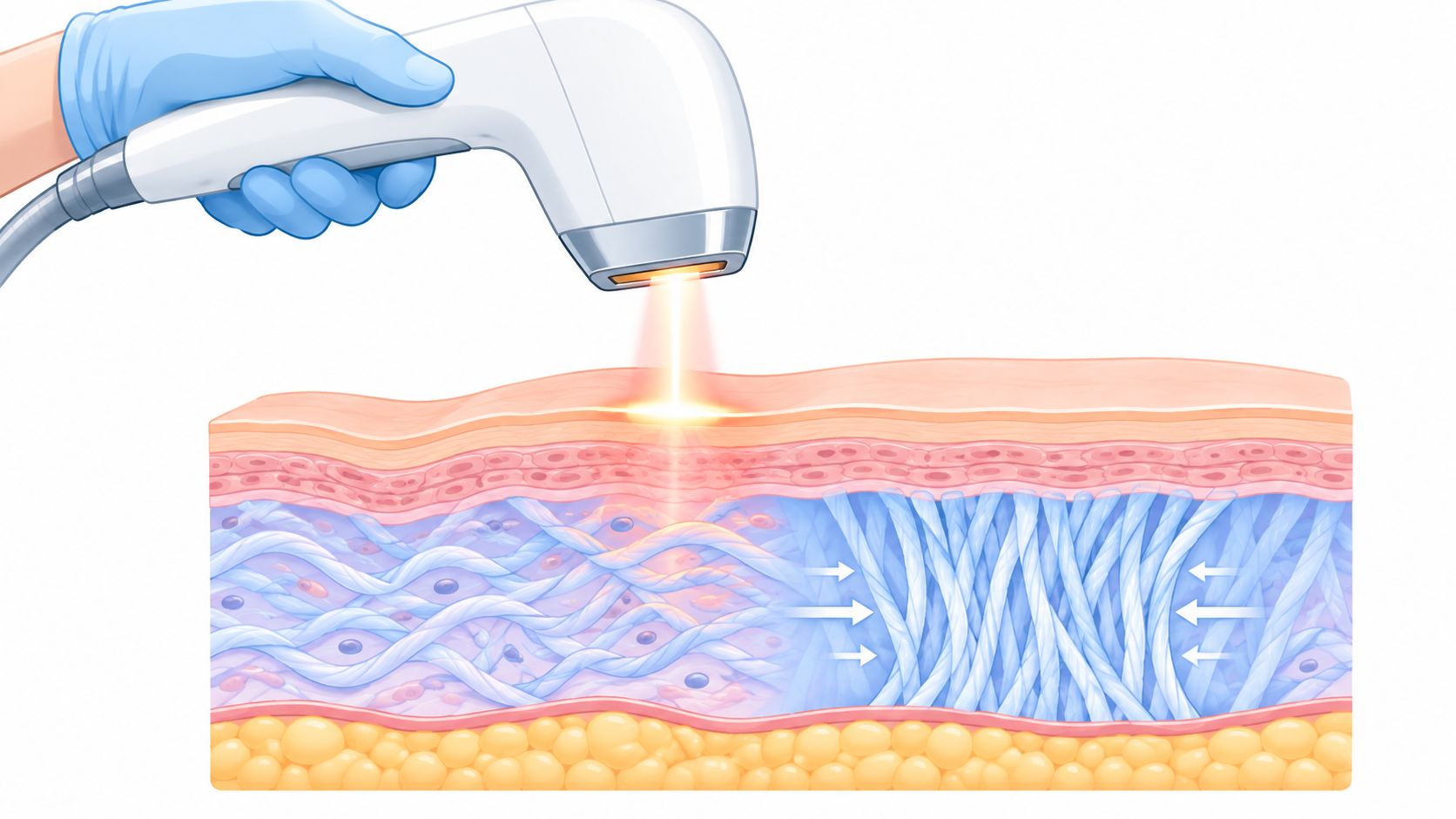
A skin tightening laser works by delivering controlled energy into tissue. The device converts light into heat at a selected depth, and the practitioner's job is to create enough thermal stimulation to encourage remodelling without causing unnecessary injury.
The easiest analogy is carefully warming a collagen structure, rather than burning it. Like shrink-wrapping, controlled heat can cause existing collagen fibres to contract subtly. That immediate response may create a small early tightening effect, but it isn't the main reason clients continue to improve after treatment.
The biological sequence
The longer-term response follows a clear chain:
- Energy reaches the target tissue. The wavelength, pulse characteristics, spot size, and technique influence where heat accumulates.
- The dermis warms. The practitioner aims for a controlled thermal response, not indiscriminate heating of the surface.
- Fibroblasts become active. These dermal cells help produce structural components, including collagen.
- Neocollagenesis begins. The body creates new collagen as part of the repair and remodelling response.
- The matrix reorganises. Collagen fibres can become denser and more orderly, supporting a firmer appearance over time.
The strongest mechanistic evidence is that non-invasive energy can increase dermal collagen synthesis and content, rather than merely producing temporary contraction. In a split-face study, continuous non-invasive radiofrequency produced a 7.9% increase in dermal collagen content and a 34.7% increase in collagen synthesis, with visible tightening on photographs (radiofrequency collagen study).
Why results take time
A client may notice warmth, mild swelling, or an early sense of firmness, but those sensations aren't proof that new collagen has already formed. Neocollagenesis is a biological process. The skin needs time to build and reorganise the matrix, which is why a treatment course usually makes more sense than a one-off appointment.
Research on a 1,444-nm Nd:YAG laser found increased dermal thickness over the 3-month treatment period, along with denser and more parallel collagen fibres and higher fibroblast proliferation, elastin, and mucopolysaccharide levels than controls (Nd:YAG skin remodelling research).
The practical message for a new clinic owner is simple. Don't sell a single moment of heat as the result. Sell a controlled process that supports gradual structural change, then document that change with consistent photography, measured expectations, and a suitable maintenance plan.
Types of Skin Tightening Lasers and Related Technologies
Not all tightening devices create the same thermal pattern. A wavelength determines how light interacts with tissue, while the fluence, pulse delivery, coverage, and operator technique determine the dose received by the treatment area. A clinic shouldn't choose a device solely because its headline energy sounds powerful.
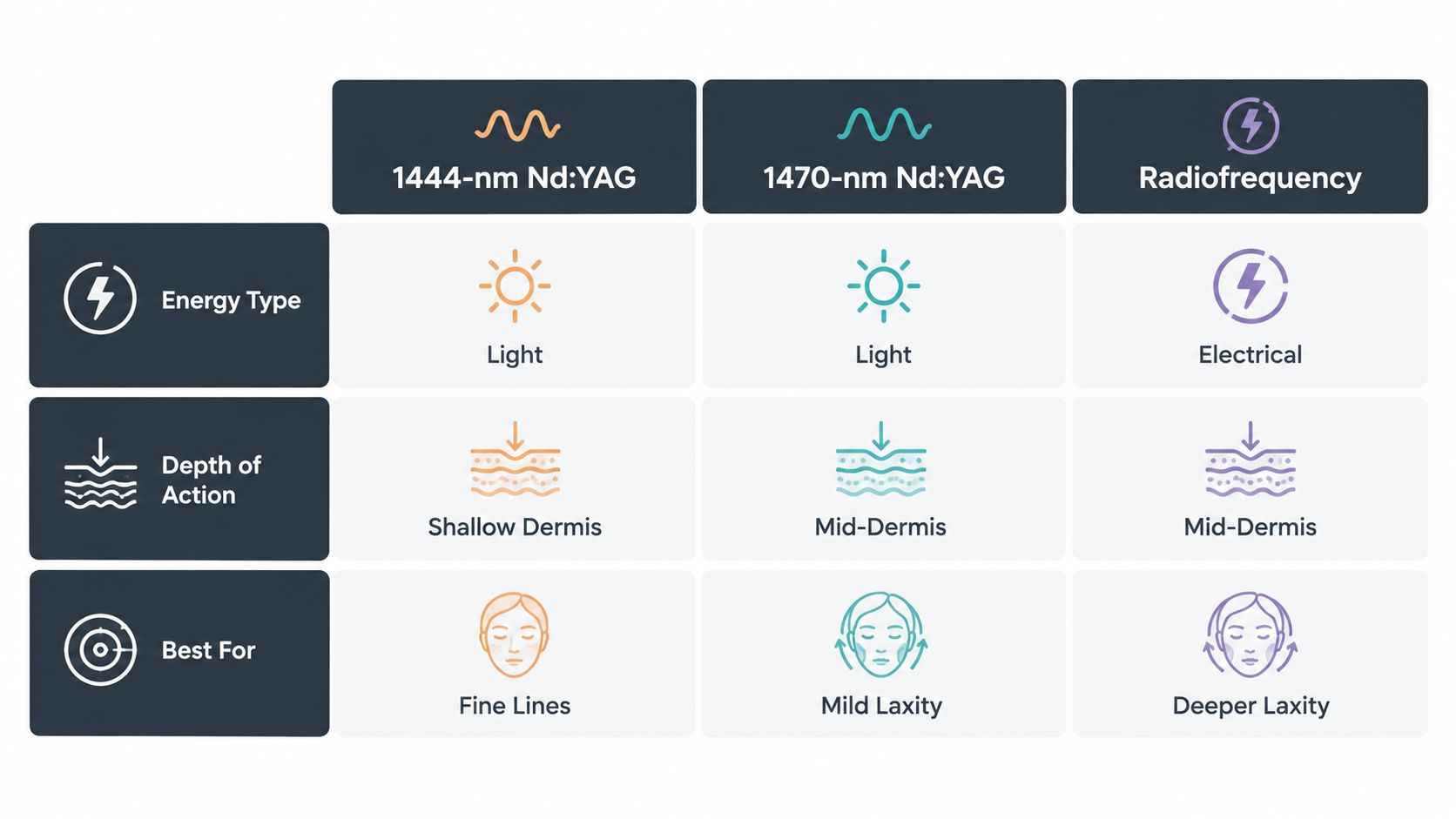
The 1,444-nm Nd:YAG approach has been associated with dermal architectural changes, including increased thickness and denser, more parallel collagen fibres. It can suit protocols where the practitioner wants controlled dermal stimulation with attention to surface comfort and treatment precision.
A 1,470-nm laser offers another wavelength-specific route. A newer pilot study of subdermal 1,470-nm laser irradiation found that 5 J/cm² and 20 J/cm² significantly increased dermal thickness and collagen deposition. The 20 J/cm² setting produced dense, organised collagen bundles consistent with neocollagenesis (1470-nm laser study).
Dose matters as much as wavelength
Higher energy isn't automatically better. The same pilot findings suggest that moderate energies may provide useful tightening while avoiding the diminishing returns associated with higher fluences. In practice, treatment decisions should account for the client's tissue characteristics, area, sensitivity, skin response, and the device's validated operating parameters.
Radiofrequency uses electrical energy rather than optical wavelength. It can still produce the thermal stimulus associated with fibroblast activity and collagen remodelling, but the delivery mechanism, tissue interaction, handpiece design, and monitoring requirements differ from a laser platform.
Infrared tightening occupies another related category. South African clinic networks list Nd:YAG and infrared skin-tightening treatments alongside broader rejuvenation services, including SkinTyte or near-infrared offerings in Cape Town and Johannesburg. This history indicates that tightening has become a mainstream adjunct to facial rejuvenation rather than an experimental service.
A multi-technology platform can therefore make commercial sense when it supports complementary goals such as tightening, resurfacing, and rejuvenation. It shouldn't replace sound assessment. The practitioner still has to match depth, energy delivery, treatment area, and client expectation to the protocol.
Clinics considering combination approaches can review Morpheus8 treatment information when assessing how deeper collagen-focused modalities might fit within a broader rejuvenation menu.
Who Is a Good Candidate and Who Should Wait
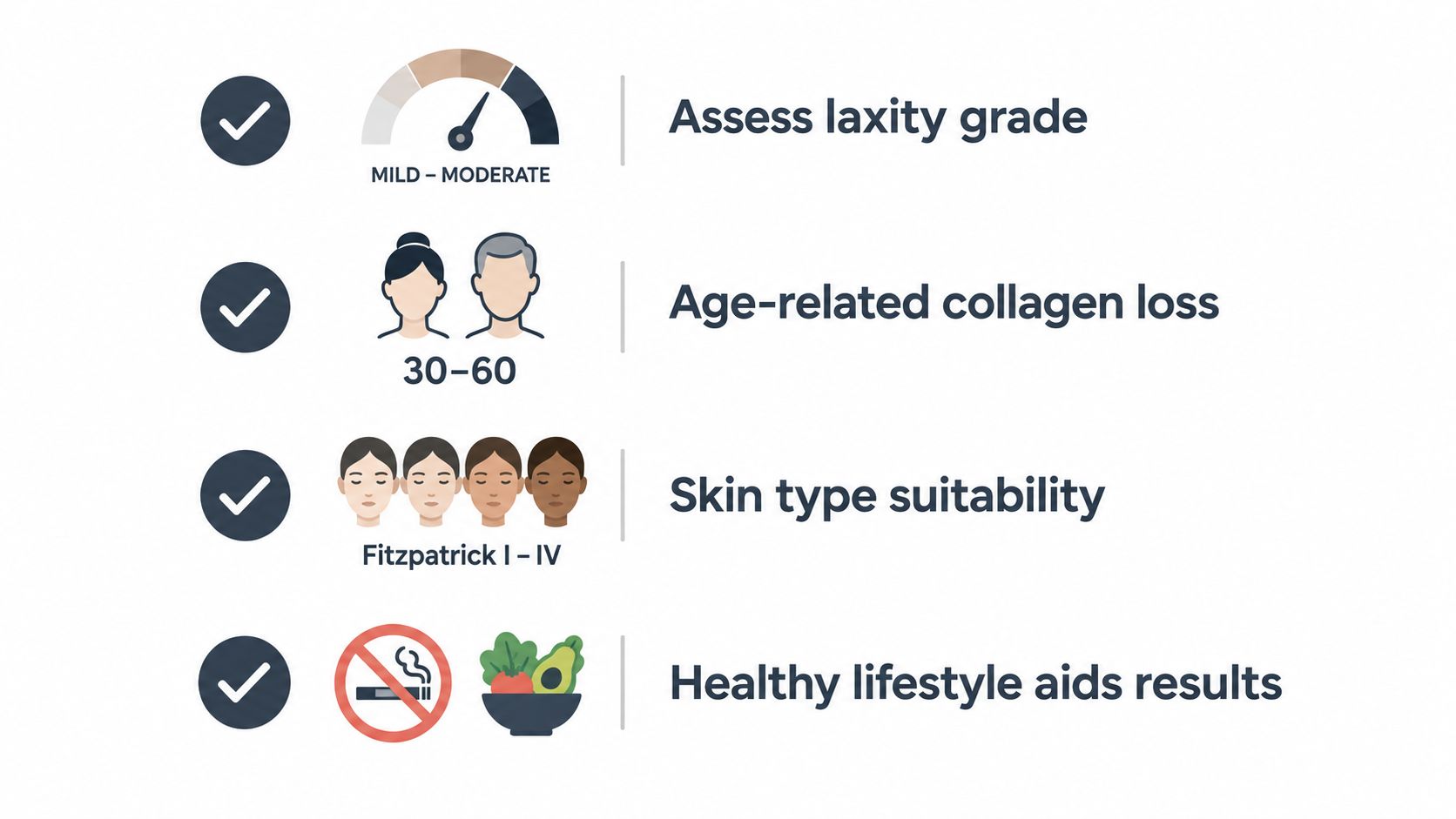
Good candidate selection protects both the client and the clinic. A skin tightening laser generally suits people with mild to moderate laxity, early loss of firmness, fine lines, or a desire for gradual improvement without surgery. It's less suitable when the client expects a surgical level of lifting from a non-surgical treatment.
Start by assessing the tissue, not the client's age alone. Look at laxity at rest and during movement, skin thickness, texture, volume changes, and whether the concern is primarily loose skin or loss of underlying structure. A client may point to the jawline, but the visible issue could involve several factors that energy-based tightening won't address by itself.
A practical consultation screen
Ask questions that reveal both suitability and expectations:
- What change do you want to see? Clarify whether the client wants firmness, texture improvement, contour change, or a major lift.
- How quickly do you expect the result? Explain that collagen remodelling develops progressively.
- What treatments have you had recently? Record previous energy treatments, injectables, peels, surgery, and active skin conditions.
- How does your skin usually heal? Discuss sensitivity, pigmentation responses, scarring history, and any relevant medical concerns.
- Can you follow the treatment plan? Inconsistent attendance makes it harder to assess a course properly.
- Are you prepared for maintenance? Skin continues to age, so an initial plan and later review should be presented as separate stages.
Healthy habits can support the overall result, but they won't turn an unsuitable indication into a suitable one. Smoking, poor nutrition, active inflammation, uncontrolled medical conditions, or an inability to follow aftercare may justify postponement or medical review.
When to pause
A clinic should defer treatment when the diagnosis is uncertain, the skin barrier is compromised, the client has an active infection or inflammation in the treatment area, or the requested outcome clearly requires another intervention. Medical clearance may be appropriate where health history, medication, healing, or pigment risk raises concern.
Use photographs taken under consistent lighting and positioning. Explain that images show trends, not guarantees. A responsible consultation may end with treatment, a modified plan, a referral, or a decision to wait.
What to Expect Before During and After Treatment
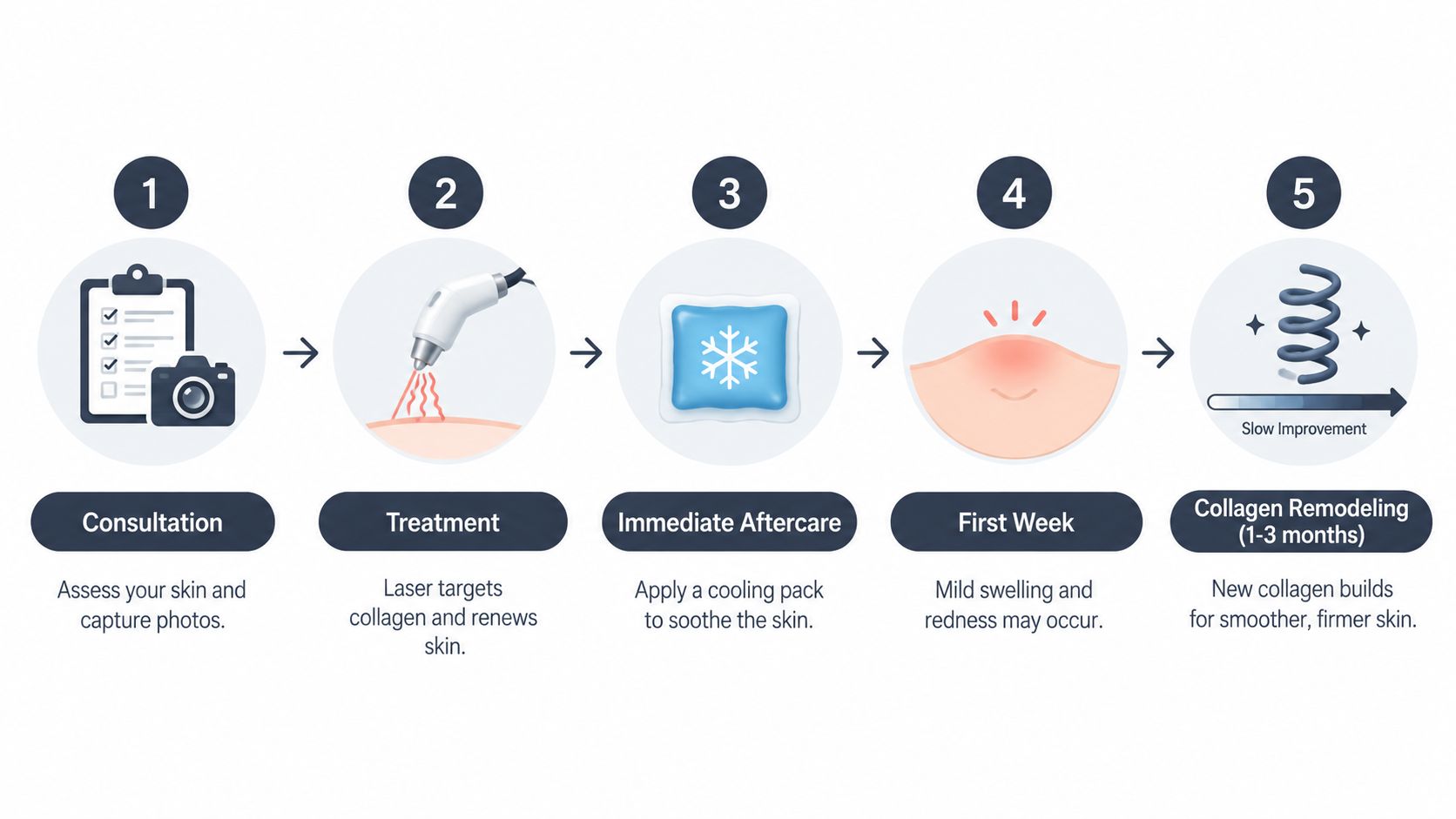
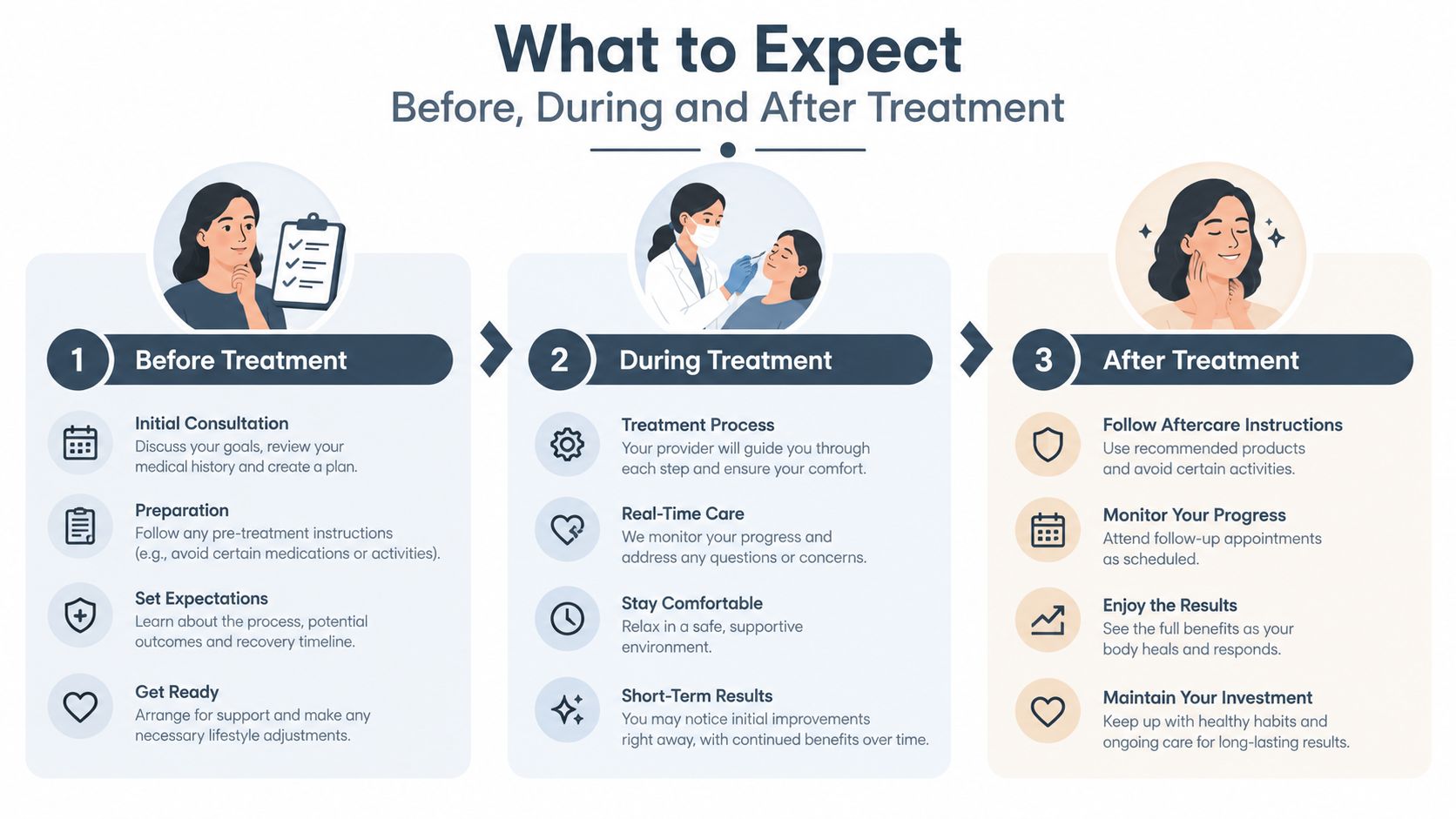
A reliable client journey begins before the handpiece touches the skin. During consultation, record the client's goals, medical history, previous procedures, relevant skin responses, and the areas to be treated. Take standardised photographs and explain the likely pace of change, possible temporary reactions, aftercare, and the point at which the plan will be reviewed.
Treatment preparation depends on the device and protocol. The practitioner should follow the manufacturer's instructions, check the skin, remove products that interfere with treatment, and confirm protective measures. Never let a generic appointment script replace a device-specific protocol.
During the appointment
Clients commonly describe energy-based tightening as warmth, but sensation varies with the technology, treatment area, settings, and individual tolerance. The practitioner should communicate throughout the appointment and monitor the skin rather than chasing heat as a badge of treatment quality.
The aim is controlled, even delivery. A professional protocol defines the treatment area, passes, endpoint, cooling approach, documentation, and escalation process if the skin response becomes unexpected. This repeatability matters because a clinic can't evaluate outcomes properly if every appointment uses a different technique.
Aftercare and the remodelling window
Mild redness, warmth, swelling, or tenderness may occur, depending on the modality and intensity. Give written aftercare instructions, explain which reactions are expected, and tell the client when to contact the clinic. The practitioner should also document the immediate response and schedule an appropriate review.
South African clinic guidance commonly packages laser and light rejuvenation as 6–8 treatments, followed by maintenance at a 6–12 month interval after completion (South African course and maintenance guidance). That schedule fits the biology of gradual dermal remodelling. It shouldn't be presented as an automatic prescription, because the right course depends on the device, indication, response, and clinical assessment.
Price and duration also vary by technique and area. South African listings show session prices beginning around R494 to R590, while another local listing gives a treatment duration of 30 minutes to two hours, depending on the method and area.
The appointment ends when the client leaves, but the biological treatment continues as the dermis remodels.
Use review photographs and client feedback to decide whether to continue, adjust, maintain, or stop. This makes the course clinical rather than automatic.
Safety Compliance and Choosing a Device in South Africa
Device selection in South Africa has two separate tests. First, the system must be appropriate for the treatment objective and the clinic's operating model. Second, the clinic must be able to use it lawfully, safely, and with properly trained staff.
South Africa's radiation-control framework regulates Class 3b and Class 4 laser systems. SAHPRA's published guidance covers use-licence applications and the safe use of these classes, while a 2025/26 SAHPRA communication addresses regulatory requirements for licence applications involving the importation, manufacturing, and use of laser systems (South African laser regulations).
The compliance questions to ask
Before paying a deposit, ask the supplier to provide clear documentation for:
- Device registration: Confirm the relevant SAHPRA status and whether the exact model is covered.
- Use licensing: Establish what the clinic must apply for before treatment begins.
- Laser Safety Officer: Verify how the responsible Laser Safety Officer will be appointed and supported.
- Device class: Confirm whether the system is Class 3b, Class 4, or another category.
- Operator training: Request documented training that covers settings, indications, contraindications, maintenance, and incident response.
- Safety controls: Check protective eyewear, room controls, signage, servicing, calibration, and recordkeeping.
- Supplier support: Clarify who handles technical issues, compliance questions, warranty work, and refresher training.
Independent South African guidance states that Class 3 and Class 4 devices must be registered with SAHPRA, a Laser Safety Officer must be appointed, and treatments should take place in a clinical setting. It also distinguishes IPL and LED devices from these stricter laser rules (laser safety guidance for South African practices).
That distinction doesn't mean IPL or LED can be purchased without due diligence. It means owners must identify the actual device category and its obligations instead of assuming every light-based system follows the same framework.
A supplier should be able to explain its regulatory documentation without evasive language. Clinics can also review laser safety and compliance guidance before procurement, then keep copies of all relevant documents in an organised compliance file.
Building a Profitable Skin Tightening Service With Confidence
A profitable service isn't created by buying the most powerful device. It comes from aligning mechanism, candidacy, protocol, compliance, pricing, and follow-up.
The South African market offers practical signs of commercial relevance. Verified listings cover clinics across the country, urban demand is visible in Johannesburg, Cape Town, Durban, and Gauteng, and published prices show clear consumer sensitivity, with national listings starting at about R494 per session. Those figures don't guarantee profitability. They give owners a starting point for local competitor-safe benchmarking, package design, consumables, staffing, room time, training, maintenance, and follow-up.
Before launch, build a simple decision sheet:
- Clinical fit: Which laxity profiles can your team assess and treat confidently?
- Protocol quality: Can practitioners reproduce the same safe process across appointments?
- Compliance: Are registration, licensing, safety roles, and records organised?
- Commercial model: Will you sell an appropriate course, explain maintenance, and track revenue per treatment hour?
- Support: Does the supplier provide training, technical help, marketing guidance, and business development support?
- Patient communication: Can your team explain gradual collagen remodelling without promising an instant lift?
Administrative support can also improve the client journey. Clinics exploring healthcare-focused virtual assistance may find Simbie AI's healthcare virtual assistant useful for handling routine enquiries and helping teams protect time for consultations and treatment.
Omega Lasers offers medical-aesthetic laser and multi-technology platforms, along with training, technical support, marketing support, business development guidance, and after-sales assistance. Evaluate the company's systems against your clinical scope, compliance needs, staffing model, and financial plan before committing.
If you're ready to assess a compliant skin tightening platform, speak with Omega Lasers about device suitability, practitioner training, treatment protocols, and clinic support. Visit Omega Lasers to explore the available technology and plan a service that clients can understand and your team can deliver consistently.