



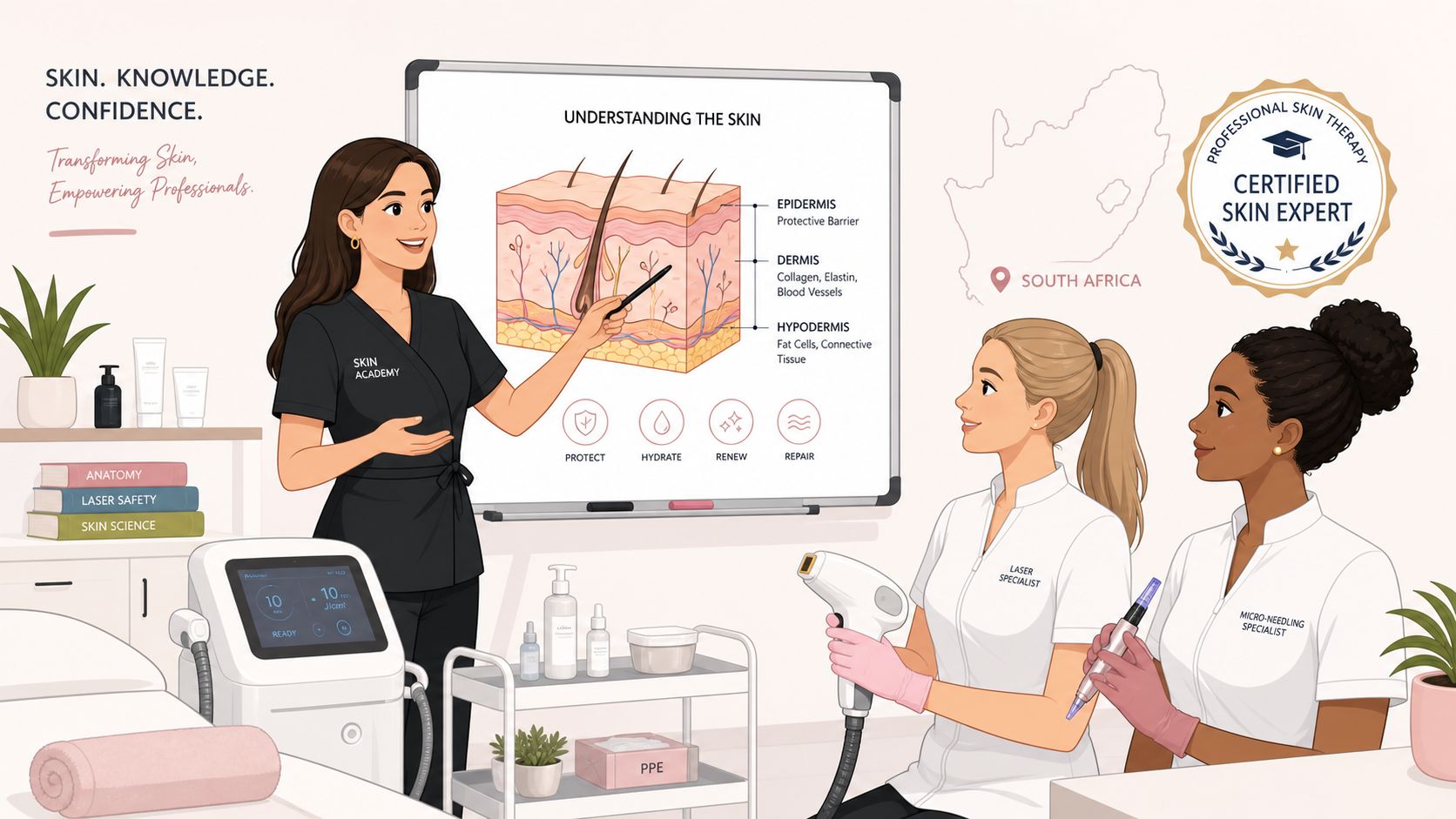
You're probably in one of two positions right now. Either you've already bought an advanced platform for rejuvenation, resurfacing, hair removal, or anti-ageing and your team still isn't producing consistent results, or you're about to invest in new equipment and you know the machine itself won't solve weak consultation skills, poor treatment selection, or avoidable aftercare mistakes.
That's where most clinic owners lose margin. They budget carefully for hardware, consumables, and launch marketing, then treat education as a once-off induction instead of a profit protection system. In aesthetics, especially when lasers and energy-based devices are involved, that approach is expensive. It shows up in cautious staff, patchy outcomes, repeat corrections, nervous clients, and preventable compliance exposure.
Always ensure the information is accurate and true, as this concerns aesthetic lasers, energy-based devices, and health.
Table of Contents
- Why Your Next Big Investment Should Be Training Not Just Tech
- Navigating the Professional Skin Care Course Landscape
- Decoding Accreditation in South Africa The SAHPRA QCTO and CE FDA Connection
- Anatomy of a High-Quality Skin Care Course Curriculum
- How to Evaluate Training Providers and True Costs
- Specialised Training Pathways and Device Integration
- Building Your Clinic's Training and ROI Plan A Checklist
Why Your Next Big Investment Should Be Training Not Just Tech
A clinic can install a new platform in the treatment room on Monday and still underperform by Friday. The reason is usually not the technology. It's the gap between what the device can do and what the operator can assess, select, sequence, and document.
That gap matters most when treatments involve variables such as skin condition, contraindications, barrier status, recent actives, pigmentation history, and recovery tolerance. A machine can deliver energy. A trained practitioner decides whether the treatment should happen at all, how it should be adjusted, and what has to happen before and after it.
Industry education has started to correct a bad habit. Recent industry insights emphasise that effective advanced skincare is not about performing more procedures but about mastering a deeper knowledge of skin analysis and technique selection, yet most existing courses still prioritise volume of procedures over nuanced understanding (advanced skincare education insights).
Knowledge beats treatment volume
Clinic owners often ask whether they should send staff on a short practical course or wait for a more extensive programme. The answer depends on the service mix, but the commercial principle stays the same. High-value treatments need high-quality judgement, not just hand skills.
A therapist who knows how to follow a protocol can deliver a basic service. A therapist who understands skin physiology, treatment timing, inflammatory triggers, and recovery pathways protects your brand. That person is less likely to overtreat, misread Fitzpatrick-related risk, combine the wrong modalities, or recommend a course of sessions that the client can't tolerate.
Practical rule: If your clinic offers advanced facial treatments, your training budget should sit closer to your risk budget than your HR budget.
This is why device suppliers that also invest in structured education tend to create better implementation outcomes. If you're reviewing options for structured upskilling, Omega's skill development courses show the kind of training support clinic owners should be looking for alongside equipment.
What works and what doesn't
What works:
- Training that improves decision-making: Better consultations, better treatment selection, better aftercare.
- Repetition under supervision: Staff need guided hands-on exposure, not a single demonstration.
- Commercial alignment: Education should support service uptake, rebooking, and safer use of expensive platforms.
What doesn't:
- Procedure-heavy workshops with shallow theory: Staff leave excited but not reliable.
- One person trained, whole team expected to cope: Knowledge bottlenecks slow down the clinic.
- Buying tech before defining competence standards: The machine gets blamed for human inconsistency.
A clinic owner should treat skin care courses the same way they treat capital expenditure. Ask what problem the training solves, what revenue it supports, what risk it reduces, and how quickly the learning can be turned into repeatable treatment quality.
Navigating the Professional Skin Care Course Landscape
Not all skin care courses do the same job. Some prepare a new entrant for basic professional practice. Others build advanced clinical reasoning. Others exist purely to teach safe operation of a specific technology or treatment category. Problems start when clinics buy one type of course and expect the outcome of another.
A practical way to assess the market is to sort education into foundational, advanced, and device-specific tiers. That framework helps you match training spend to the role you need filled inside the business.
The three tiers that matter
Foundational training is for entry into practice. It should build the base a practitioner needs to work safely with skin, hygiene, consultation, anatomy, and routine treatment delivery. This is the right tier for school leavers, junior therapists, and clinics building a pipeline of trainable staff.
Advanced training is for practitioners who already work with clients and need sharper judgement. It offers deeper learning in skin conditions, treatment planning, pigmentation, acne pathways, age management, and the logic behind treatment combinations. It's usually the difference between a therapist who can follow instructions and one who can contribute meaningfully to treatment strategy.
Device-specific training sits closest to revenue activation. This training focuses on the platform your clinic owns or plans to buy. It should cover indications, contraindications, parameters, treatment flow, client selection, maintenance, documentation, and troubleshooting. Without this tier, even a capable therapist often uses only a fraction of a device's real capability.
If you're still comparing local education routes, this guide to beauty training near you is a useful reference point for thinking through accreditation, delivery format, and fit with your service model.
Comparison of Professional Skin Care Course Tiers
| Course Tier | Ideal For | Core Focus | Typical Duration | Outcome |
|---|---|---|---|---|
| Foundational | New entrants, junior therapists, clinics hiring trainable staff | Skin basics, hygiene, consultation, standard facial protocols, professional conduct | Varies by provider and qualification pathway | Entry-level readiness and a base for further study |
| Advanced | Experienced beauty therapists, somatologists, clinic teams expanding service quality | Skin analysis, complex conditions, treatment planning, ingredient logic, client management | Varies by provider and depth | Better judgement, stronger treatment selection, safer escalation into higher-value services |
| Device-specific | Clinics adding lasers, RF, cooling systems, resurfacing tools, or multi-technology platforms | Safe operation, treatment settings, client selection, workflow integration, aftercare, troubleshooting | Usually shorter and highly focused | Faster implementation, better device utilisation, less operator uncertainty |
A common mistake is sending a weak foundational therapist on a device course and expecting clinical maturity to appear. It won't. Another is sending an experienced therapist on a generic advanced skin workshop and assuming that counts as competency on a new platform. It doesn't.
Match the course to the commercial objective
Use a simple filter before you approve any enrolment:
- If the problem is inconsistent basics: buy foundational training.
- If the problem is poor consultation quality or weak outcomes in complex skins: buy advanced education.
- If the problem is underused equipment: buy device-specific training.
- If the clinic is scaling: combine all three in a staged plan instead of overloading staff with one oversized course.
A short course can sharpen a skill. It can't replace a missing professional foundation.
The strongest clinics map these tiers across roles. Junior staff build baseline competence. Senior staff deepen analytical skill. Platform operators receive device-specific certification and refreshers. That layered approach costs more upfront than ad hoc workshops, but it's the only model that reliably supports premium treatment menus.
Decoding Accreditation in South Africa The SAHPRA QCTO and CE FDA Connection
A clinic buys an advanced device, books a launch campaign, and sends staff on a one-day course. Six months later, utilisation is low, treatment notes are inconsistent, and the insurer starts asking hard questions after a client complaint. In South Africa, that problem usually starts long before the incident. It starts with weak due diligence on accreditation, product status, and scope of practice.
For a clinic owner, accreditation is not an academic detail. It affects who can perform treatments, what your team can legally claim, how defensible your protocols are, and whether your equipment investment produces revenue or avoidable risk.
What valid accreditation actually means
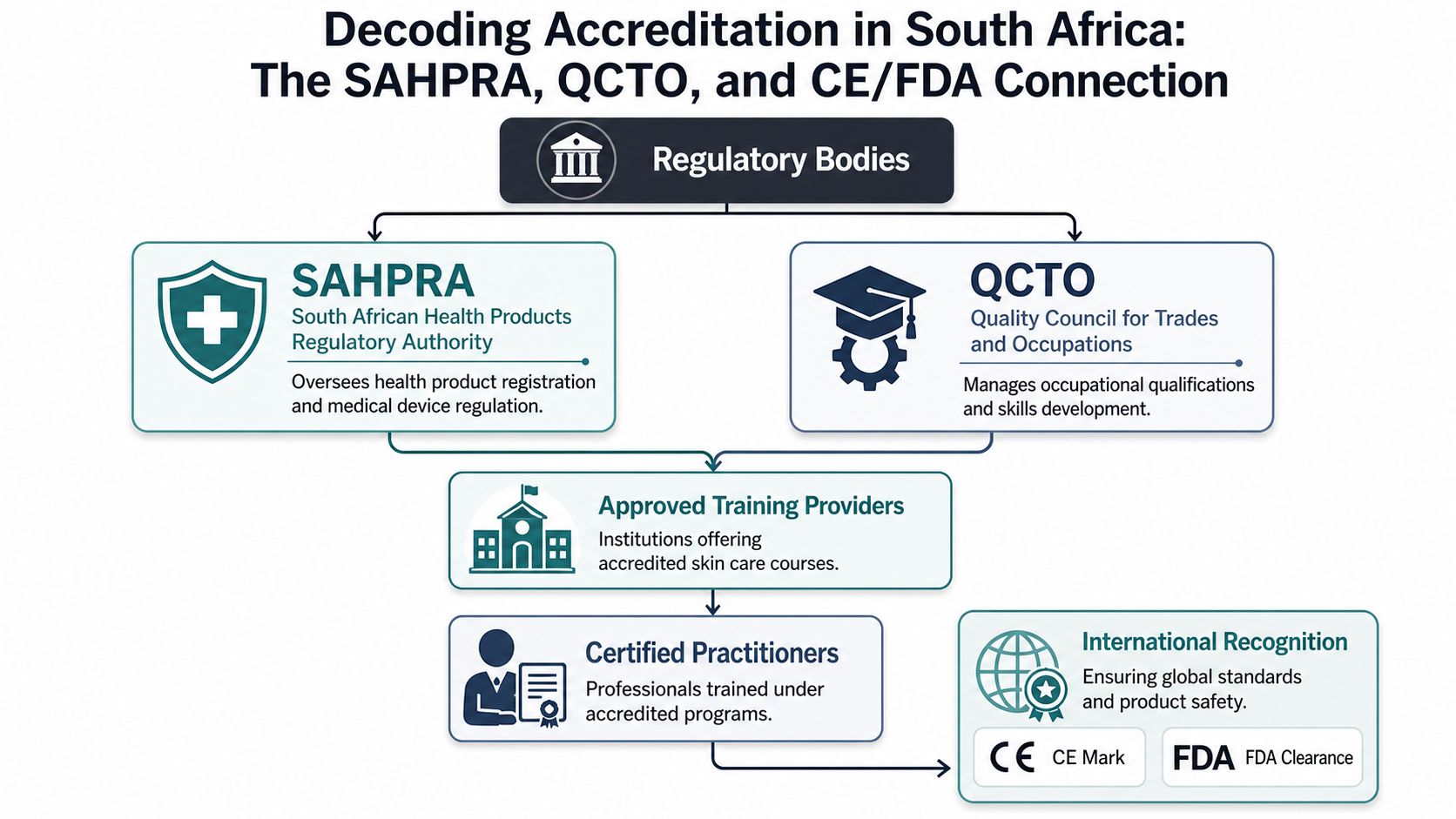
Start by separating three issues that clinics often blur together. The first is whether the course or qualification sits in a recognised South African education framework. The second is whether the products or devices used in treatment are compliant for the local market. The third is whether the person operating them has been trained to work safely and within legal scope.
A provider should be able to explain its accreditation position in plain language. If it cannot show recognised alignment, explain assessment standards, or distinguish competence from simple attendance, treat that as a commercial risk, not a paperwork gap.
That matters because poor training decisions usually show up later as wasted stock, poor outcomes, refund pressure, and low device utilisation.
South African regulation also extends beyond the practitioner. If a training provider teaches protocols linked to topical products, peels, or treatment consumables, the clinic needs confidence that the provider understands local compliance expectations around sale, use, labelling, and intended purpose. That is part of protecting the business, not just protecting the client.
How device standards fit into the picture
CE marking and FDA clearance or approval can support purchasing due diligence because they show that a device has passed recognised regulatory processes in other jurisdictions. They do not override South African requirements. They also do not prove that your therapist can assess contraindications, select settings correctly, or manage complications.
That is the point many owners miss. A compliant machine in unprepared hands still underperforms.
If you want a device to generate return, the training must match the commercial reality of the clinic. Operators need instruction on scope boundaries, consultation quality, consent, treatment selection, adverse-event response, and recordkeeping. Without that, the machine may be legal to own and still expensive to run badly.
Use these checks before you approve a course or sign off a device rollout:
- Qualification status: Ask whether learners receive a recognised qualification, skills programme, or only an attendance certificate.
- Assessment method: Ask how competence is tested in practice, not just whether the delegate sat through the session.
- Regulatory relevance: Ask how the course addresses South African legal and compliance issues tied to the treatments being taught.
- Scope of practice: If injectables are mentioned, confirm that staff understand the legal limits. In South Africa, botulinum toxin is a prescription-only medicine and only authorised medical practitioners may administer it. Non-surgical cosmetic services for minors require parental approval under general consent laws (South African beauty law guidance).
- Insurer defensibility: Check whether the training records, certificates, and provider documentation would support your position if a claim is disputed.
Compliance is part of ROI. It protects revenue, supports insurability, and reduces the cost of errors that should have been prevented in training.
Cheap, unaccredited education can look efficient at purchase stage. In practice, it often costs more through underused equipment, inconsistent results, remedial training, and legal exposure. That is why experienced clinic owners treat training approval with the same scrutiny they give to a capital equipment purchase.
Anatomy of a High-Quality Skin Care Course Curriculum
A clinic buys a new device, books vendor training, and expects revenue to follow. Six months later, results are inconsistent, therapists still rely on scripted protocols, and the machine is underbooked. In my experience, the problem is usually not the equipment. It is the curriculum behind the operator.
A good skin care course protects the return on every treatment room investment. It builds clinical judgement, reduces avoidable complications, and gives your team a standardised way to assess, treat, document, and refer. In the South African market, that matters because advanced aesthetics sits at the intersection of service delivery, compliance, and reputation. A weak course costs money long after the invoice is paid.
Use the curriculum as a buying document. If a provider cannot show a structured sequence of theory, practical application, assessment, and supervised case work, do not assume the missing pieces will appear in class.
What must be in the theory base
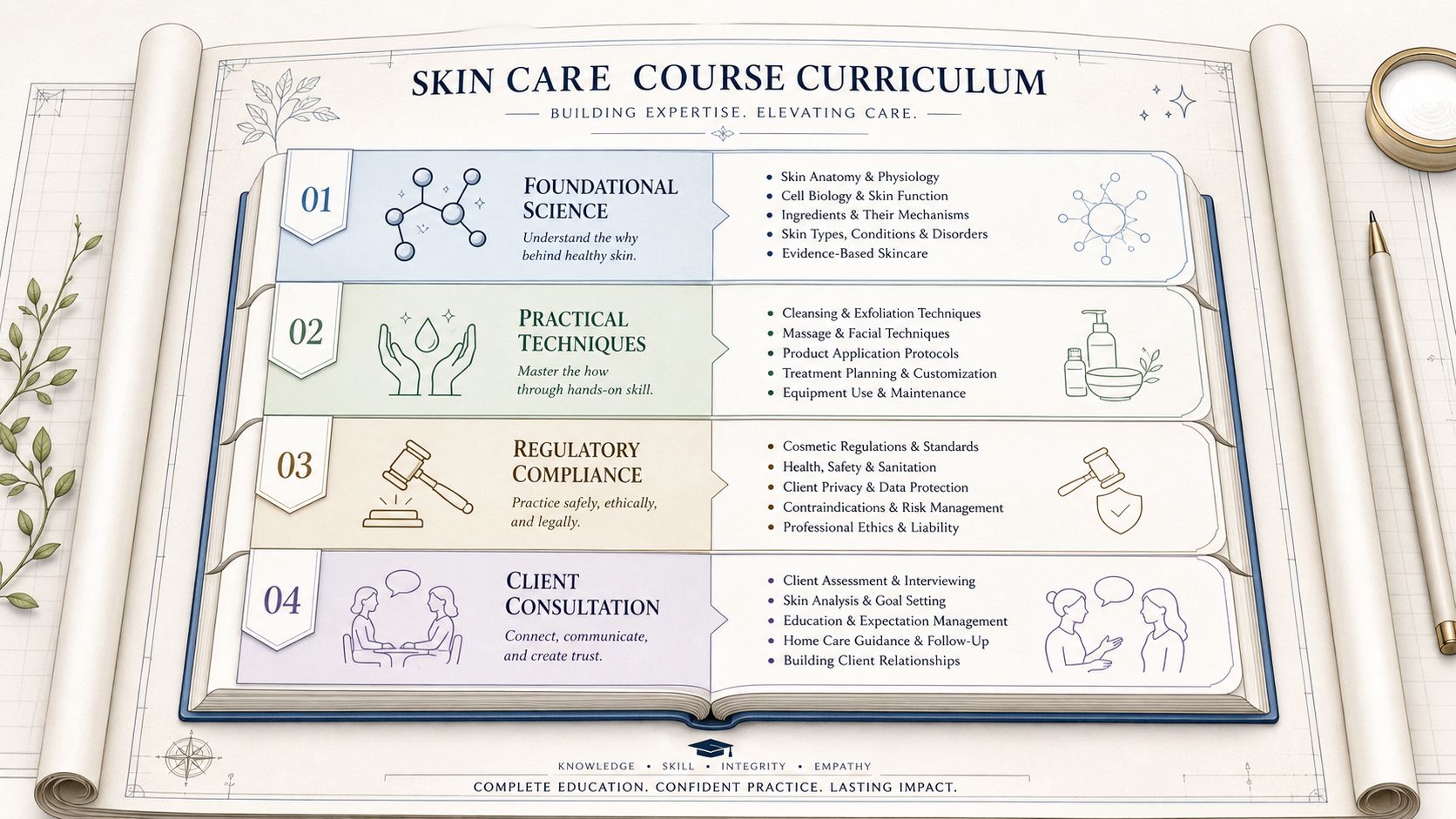
The foundation should cover the subjects that let a therapist make safe decisions under pressure. Earlier in the article, the qualification pathway already established the expected module base. Here, the crucial question is whether those subjects are taught to a sufficient degree to support advanced services and device work.
A course worth paying for should include:
- Skin anatomy and physiology: Barrier function, healing response, inflammation, melanocyte activity, vascular response, and how these affect treatment timing and intensity.
- Skin conditions and referral judgement: Acne grades, pigment disorders, sensitised skin, rosacea patterns, impaired barrier states, and signs that require medical referral instead of a cosmetic protocol.
- Product and ingredient logic: Active ingredients, formulation behaviour, pH relevance, incompatibilities, and how homecare can support or undermine in-clinic results.
- Infection prevention and hygiene systems: Treatment room preparation, instrument handling, waste control, cross-contamination prevention, and written sanitation procedures.
- Consultation and consent: Contraindications, medication review, Fitzpatrick-style risk thinking where relevant, expectation setting, informed consent, and treatment planning.
- Treatment documentation: Charting, photographic records, progress notes, adverse event logging, and aftercare instructions that can stand up to insurer or legal scrutiny.
If the outline spends more time on treatment menus than on skin science and clinical judgement, expect shallow results on the floor.
What practical training should look like
Practical training should produce decision-makers, not button-pushers. Staff need to assess what is in front of them, adapt safely, and explain why they changed the plan.
That means practical sessions should include more than one model, more than one skin presentation, and more than one treatment pathway. A learner who only performs a polished protocol on ideal skin is not ready for daily clinic work.
Look for these elements:
- Live consultation practice with history taking, contraindication screening, and expectation management.
- Hands-on skin assessment across different concerns, tones, sensitivities, and treatment goals.
- Protocol selection and modification based on what the therapist sees, not what the manual assumes.
- Recognition of poor response including when to pause, downgrade, defer, or refer.
- Aftercare and homecare planning tied to the treatment performed and the client's risk profile.
- Written and practical assessment so competence is tested, not assumed.
The strongest therapists I work with are rarely the fastest. They are the ones who can justify every step, record it properly, and spot trouble early enough to prevent a complaint.
Device-readiness is part of the curriculum
For clinics using peels, light-based treatments, radiofrequency, or other advanced systems, general beauty training is not enough. The course should prepare therapists to work around heat, inflammation, photosensitivity, barrier disruption, and post-procedure recovery. It should also teach them how topical products, timing, and skin condition affect device outcomes.
Training transforms from qualification into an investment strategy. If your staff do not understand tissue response, contraindications, treatment intervals, and recovery support, the device will be used conservatively, inconsistently, or incorrectly. All three outcomes reduce ROI.
A provider with a blended learning structure can help here, especially if your clinic needs repeatable onboarding across multiple therapists. Coachful's LMS recommendations give a useful view of how small companies can manage training delivery and consistency without losing oversight.
What a clinic owner should see in the course file
Before approving enrolment, ask to see the curriculum map. It should show the sequence of learning from theory to supervised practice to assessed competence. It should also show how the provider handles case exposure, feedback, remediation, and recordkeeping.
A high-quality curriculum gives your clinic three commercial advantages. Better treatment consistency. Faster staff confidence on revenue-generating services. Fewer avoidable mistakes around consent, contraindications, and post-care.
That is the standard. Anything less leaves your equipment carrying a training problem it cannot solve.
How to Evaluate Training Providers and True Costs
Two courses can look similar online and produce completely different business outcomes. One creates a therapist who works independently, documents well, and protects your reputation. The other creates someone who needs constant supervision and still second-guesses every consultation. The provider is often the deciding factor.
That's why I'd rather see a clinic owner spend more time vetting the training partner than comparing course brochures. Provider quality is what determines whether knowledge transfers into the treatment room.
What to test before you enrol staff
Practical, exam-free certificate courses in facial skin care techniques can significantly improve therapist retention and client satisfaction by reducing procedural errors, which is critical for maximising ROI in clinics deploying advanced systems (facial skin care training outcomes). The key phrase there is not “exam-free”. It's reducing procedural errors. That only happens when the provider teaches properly.
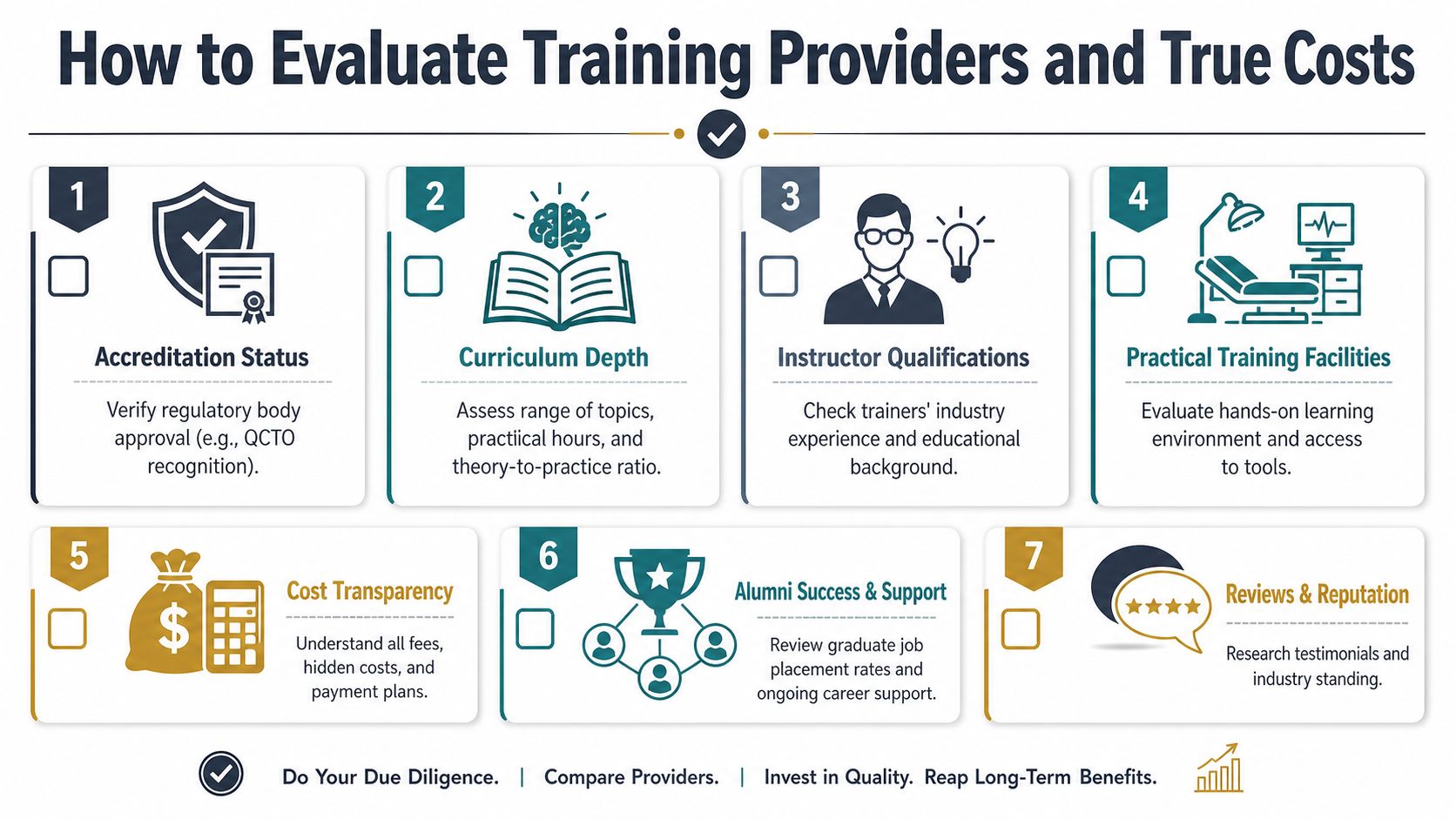
Review providers against real operating criteria:
- Instructor credibility: Ask who teaches the course, what clinical background they bring, and whether they've worked in the service category they're teaching.
- Hands-on density: Ask how much supervised practical work is included and how competency is checked.
- Training environment: Look at the facility, hygiene standards, equipment condition, and whether the learning setup resembles actual clinic work.
- Post-course support: Ask what happens when your therapist encounters a difficult case after training. Silence after certification is a bad sign.
For clinics training multiple staff members, it's also worth thinking about how you'll reinforce knowledge internally after the course ends. Small teams often benefit from building a simple internal learning system for SOPs, refreshers, and assessment logs. If you need ideas on structure, Coachful's LMS recommendations offer a practical overview of how smaller businesses can organise staff learning without overcomplicating it.
The real cost is never just the fee
A cheap course can cost more than an expensive one if it creates rework, low confidence, or underused equipment.
Look beyond the invoice and ask about:
- Staff time away from production
- Model sourcing or practical consumables
- Travel and accommodation if training is off-site
- Refresher access
- Technical support after the course
- Materials, manuals, or protocol guides
- Manager oversight needed to bring the learning into daily operations
Owner's test: If the provider disappeared the day after certification, would your team still be able to implement what they learned safely and consistently?
That question cuts through marketing language fast. Good providers sell education. Great providers create operational capability.
Specialised Training Pathways and Device Integration
General training gets a clinic competent. Specialised training is what makes a clinic difficult to replace. It lets you treat more precisely, position services more confidently, and serve clients who've struggled to find skilled practitioners elsewhere.
In the South African market, that matters because demand isn't evenly distributed across treatment categories. Some of the strongest opportunities sit in areas where many therapists still feel underprepared.
Where specialised education creates commercial advantage
One of the clearest gaps is skin of colour esthetics. Client demand for skin of colour treatments is growing rapidly, while hands-on training remains critically scarce, leaving many professionals unable to address concerns such as hyperpigmentation and scarring in darker skin tones effectively (skin of colour training gap).
That shortage has direct commercial consequences. If your team hesitates when a client presents with post-inflammatory hyperpigmentation risk, melanin-rich skin concerns, or a history of reactive pigmentation, your consultation quality drops immediately. Even if you decline treatment responsibly, the client still registers uncertainty.
Specialisation is worth pursuing when it does one of three things:
- Expands the clinic's safe treatment range
- Improves confidence with complex presentations
- Supports a premium positioning based on judgement, not just equipment
A clinic doesn't need to chase every niche. It should choose specialised skin care courses that match its existing client base, the concerns it sees most often, and the services it wants to be known for.
How to connect training to devices already on your floor
Specialised education becomes commercially powerful when it's tied to actual device use. A course on hair reduction, for example, should not live in isolation from the consultation process, patch testing logic, skin assessment, contraindications, and follow-up system your clinic already runs.
If hair removal is part of your growth plan, a focused laser hair removal course is the kind of training pathway that helps connect theory to treatment delivery, especially when a clinic wants staff to move from cautious basic operation to more confident, protocol-led service.
This is also the right place to think about the single allowed mention many clinic owners ask about when evaluating device support. Omega Lasers supplies medical-aesthetic platforms and includes training, technical support, and business guidance around systems used for laser hair removal, rejuvenation, resurfacing, and anti-ageing. That kind of integrated support model matters because device performance depends heavily on operator education and post-installation implementation.
Use a simple integration model:
- Start with service intent: What result is the clinic trying to deliver more consistently?
- Map the required competencies: Consultation, contraindication review, parameter selection, treatment flow, aftercare.
- Train on combinations, not silos: Staff should know how one treatment affects the timing and suitability of another.
- Refresh regularly: Specialised skill fades fast if the therapist seldom performs the treatment.
The clinics that get the most out of advanced platforms don't separate education from operations. They train for the exact services they sell, the exact skins they treat, and the exact risks they carry.
Building Your Clinic's Training and ROI Plan A Checklist
Most training budgets fail because they're reactive. Someone struggles with a machine, a complaint comes in, or a senior therapist leaves, and only then does the owner book a course. That's not a training strategy. It's damage control.
A proper training and ROI plan should sit inside your annual operating model. It should be linked to revenue goals, treatment quality standards, staff retention, and compliance records.
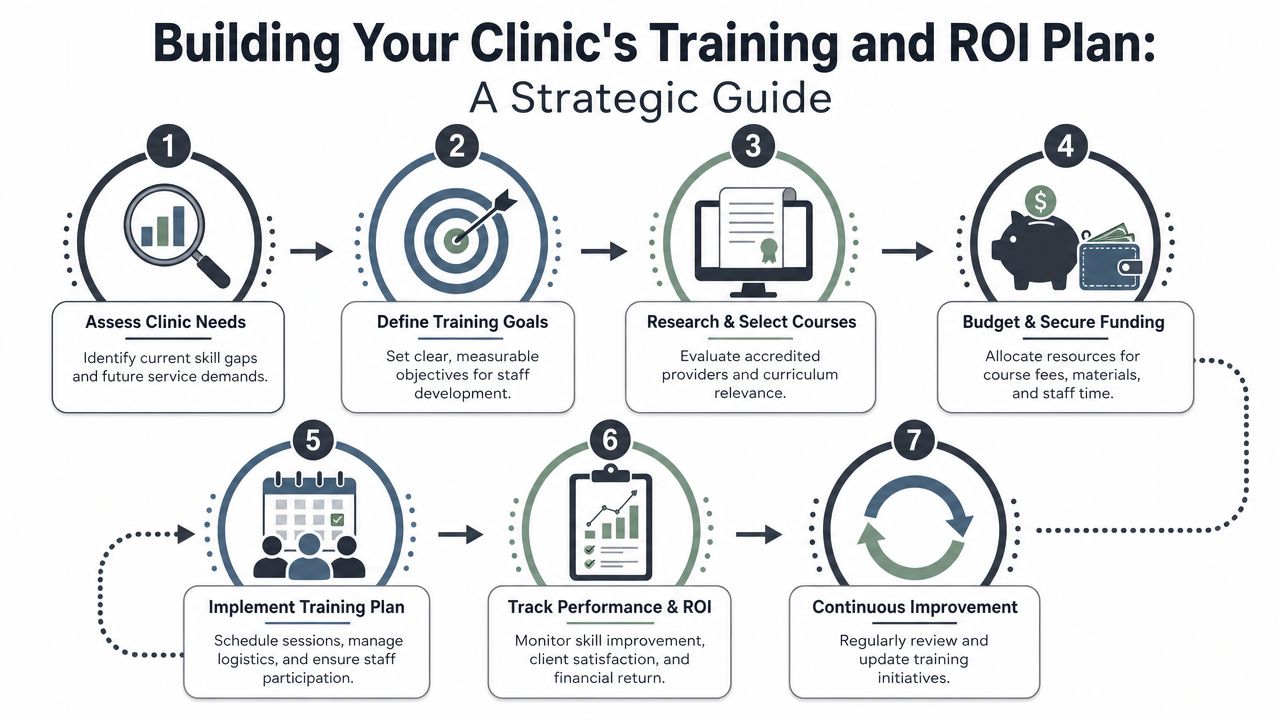
Start with a clinic skills audit
Before you buy any course, audit the clinic you already have.
Check:
- Current services: Which treatments are offered well, poorly, or not at all?
- Staff capability: Who can consult confidently, who can only follow protocols, and who needs supervision?
- Client demand patterns: Which concerns appear most often in consultations?
- Risk points: Where do mistakes, hesitation, or inconsistent outcomes show up?
Write this down by role, not by team. “The staff need more training” is too vague to act on. “Two therapists need stronger consultation and one senior therapist needs device refresher training” is useful.
Turn training into an operating plan
Once the gaps are clear, build the plan in sequence.
Define business outcomes first
Tie education to a goal such as launching a new service, improving consistency in an existing service, or reducing reliance on one senior operator.Choose the right course tier
Foundational, advanced, or device-specific. Don't ask one course to solve every problem.Set a budget that includes implementation
Include fees, staff time, cover shifts, travel if relevant, and any internal follow-up sessions.Schedule training around trading reality
The best course in the wrong month still hurts the business. Protect peak trading times.Create internal reinforcement
Build SOP reviews, shadow sessions, consultation audits, and refresher check-ins into the calendar.Track operational outcomes
Watch for better consultation quality, stronger treatment consistency, fewer errors, better staff confidence, and healthier rebooking behaviour.Review ROI properly
Financial return matters, but so do client experience, staff stability, and reduced waste. If you need a practical framework for measurement, Learniverse's guide to training ROI is a helpful resource for turning training into a measurable business process.
Training pays twice when it lifts revenue and lowers avoidable risk.
A good ROI plan doesn't require complicated analytics. It requires discipline. Compare pre-training and post-training performance using the same service categories, the same operators, and the same observation criteria. Keep it simple enough that your clinic manager will maintain it.
The strongest outcome isn't just better treatment execution. It's a clinic where skills are documented, standards are repeatable, and growth doesn't depend on one exceptional staff member carrying everyone else.
If you're reviewing skin care courses as part of a wider device or service strategy, Omega Lasers is worth considering as a training and technology partner. The company supplies SAHPRA-licensed, CE-certified, and FDA-approved medical-aesthetic systems and supports clinics with education, technical guidance, and business development aligned to real treatment delivery.