




You are probably at the point where the standard salon catalogue no longer helps. You have enough demand to expand. Clients are asking for hair removal, pigmentation work, resurfacing, or stronger skin programmes. Yet when you search for salon equipment for sale, most results are still chairs, basins, trolleys, and reception desks.
That is not where major business risk sits.
For a South African clinic owner, the biggest capital decision is rarely the furniture. It is the move into regulated medical-aesthetic equipment. That decision affects compliance, treatment outcomes, staff confidence, pricing power, downtime, and how quickly the machine starts paying for itself.
Cheap listings make this harder, not easier. They flatten everything into “equipment” and treat a laser platform like it belongs in the same buying category as a shampoo unit. It does not. A treatment device carries legal obligations, clinical consequences, and a very different return profile.
Investing in Growth Beyond the Salon Chair
Many owners reach the same crossroads. The salon is stable. The client base is loyal. Basic facials, waxing, and retail still matter, but growth is starting to stall because clients now want visible results, not just maintenance treatments.
That shift is already happening in South Africa. The South African salon sector has expanded significantly post-2020, and many salons reported upgrading equipment in the past two years to meet demand for advanced treatments. In the same market context, SAHPRA-backed regulatory approvals helped drive a 25% year-on-year adoption of licensed multi-wavelength lasers in aesthetic clinics by 2024 (Grand View Research salon furniture market report).
Those numbers matter because they change the buying question.
It is no longer, “Should I add advanced treatments?”
It is, “Which technology can I add without damaging cash flow, exposing the business to compliance problems, or disappointing clients?”
Why furniture logic fails here
You can recover from buying the wrong trolley. You cannot recover as easily from buying the wrong laser.
A poor device decision creates problems in several directions at once:
- Clinical risk: inconsistent results, unhappy clients, repeat complaints
- Operational risk: breakdowns, treatment delays, staff avoiding the machine
- Financial risk: repayments continue even while the device sits unused
- Regulatory risk: missing paperwork or improper licensing can put the whole business under pressure
That is why advanced aesthetic equipment should be evaluated as a profit system, not as a product listing.
What a strong investment looks like
A worthwhile equipment purchase should do three things at once:
- Expand your service mix into treatments clients already ask for
- Improve throughput so your room earns more in the same trading hours
- Protect the clinic through proper compliance, training, and support
A good machine does not only perform in the demo room. It performs on a fully booked Saturday with a junior therapist, a waiting client, and no room for downtime.
If you are tracking where the local market is moving, this overview of aesthetic device trends in South Africa is useful because it reflects the commercial reality many clinics are now facing. The winners are not the owners who buy the cheapest unit. They are the owners who buy a device that fits their treatment demand, licence requirements, team capability, and pricing model.
Decoding Device Categories for Your Clinic
The easiest way to understand advanced salon equipment is to stop thinking about it as one market.
A laser hair removal platform and a hydrodermabrasion unit do not solve the same problem. One is a specialist tool. The other may be a broader entry point into skincare revenue. If you buy without separating categories, you usually overbuy, underbuy, or buy a machine your client base is not ready for.

Think specialist car versus versatile SUV
Some devices are the equivalent of a performance car. They do one thing very well and clients come specifically for that outcome.
Others are closer to an SUV. They cover more use cases, help you serve a wider client mix, and can be easier to integrate when you are still building treatment demand.
Both can work. The wrong choice is buying a specialist machine when your market needs versatility, or buying a broad platform when your business needs one anchor treatment with strong repeat demand.
Laser hair removal systems
This category is for clinics that want a high-demand treatment with a strong repeat treatment cycle.
SAHPRA-licensed multi-wavelength laser systems like EM Pulse achieve significant hair reduction after several sessions, using four wavelengths to treat diverse skin types, and they can reduce treatment times compared with single-wavelength devices. That matters in South Africa because a multicultural client base requires flexibility across different skin types.
What “good” looks like in practice:
- Consistent settings across skin types
- Patient comfort that does not undermine rebooking
- Treatment speed that supports schedule efficiency
- Clear operator training and treatment protocols
If your clinic already sees regular waxing, threading, or IPL enquiries, a proper laser platform can replace lower-value work with a service that produces stronger visible outcomes.
Hydrodermabrasion and non-invasive skincare systems
This is often the smarter first move for salons with a strong facial client base.
A hydrodermabrasion machine suits clinics that want to improve skin service quality without jumping immediately into a more complex energy-based category. It also helps therapists sell programmes rather than isolated single treatments.
A platform like HydroLuxe hydrodermabrasion equipment fits this category. The commercial appeal is straightforward. It supports exfoliation, extraction, and infusion in one workflow, which makes the treatment easier to package into acne, congestion, dullness, and pigmentation-focused plans.
Multi-modality platforms
These are for owners who want one machine to support several treatment pathways.
The upside is obvious. You can widen your menu without filling every room with a different machine. The downside is also obvious. If the team is not properly trained, a multi-function platform can become a machine that “does everything” but is used for almost nothing.
This category works best when you already know:
- which services your clients ask for most often
- which room will house the device
- who will operate it consistently
- how you will price and bundle the treatments
A simple category comparison
| Device category | Best fit | Commercial strength | Main caution |
|---|---|---|---|
| Laser hair removal platform | Clinics with strong demand for repeat hair removal treatments | Repeat bookings and strong service positioning | Needs strict compliance and operator confidence |
| Hydrodermabrasion system | Salons expanding skincare services | Easy to package into programmes and add-ons | Can be underpriced if sold as a basic facial |
| Multi-modality platform | Clinics building a broader treatment menu | Flexible service development | Requires disciplined training and implementation |
Buy for your next two years of demand, not for the excitement of the showroom demo.
Navigating Safety and Regulatory Approvals in South Africa
In South Africa, compliance is not paperwork for its own sake. It is business protection.
Aesthetic device buyers often hear a confusing mix of terms such as SAHPRA licensed, CE certified, and FDA approved. Owners then make one of two mistakes. They either assume all imported machines are roughly equivalent, or they rely on a supplier’s sales language without checking what documentation exists.
That is where expensive trouble starts.

What the approvals mean
SAHPRA matters because it governs whether the device is legally suitable for use in the South African market.
CE certification indicates conformity with relevant European requirements.
FDA approval or clearance signals that the device has met the applicable United States regulatory pathway.
A serious supplier should be able to explain these plainly, provide the supporting documents, and show how the machine is positioned for lawful use in your clinic environment.
Why this matters more than price
The market is full of “cheap” aesthetic machines that look convincing in photos. They often promise broad treatment capability, quick delivery, and attractive margins. But if the compliance trail is weak, the risk transfers straight to the salon owner.
That risk is not theoretical. A 2025 SAHPRA report noted that many unlicensed laser imports were seized in South Africa in the prior year, and salons can face significant fines or shutdowns for using unverified equipment. The same market gap is visible in demand. 68% of salons are expanding into lasers, while 40% cite compliance confusion as a barrier (AGS Salon Equipment products page reference).
The clinic owner usually pays for that confusion in one of three ways:
- Lost revenue: the machine cannot be used as expected
- Reputational damage: clients question safety when treatments go wrong
- Administrative stress: documents, servicing, and registration details do not line up
Questions every buyer should ask before paying a deposit
Do not ask, “Is it approved?” Ask for specifics.
- Request the SAHPRA position clearly: Which model is licensed for use in South Africa?
- Ask for the exact compliance documents: Not screenshots. Not marketing brochures.
- Confirm the intended use: Hair removal, resurfacing, pigmentation, or another indication
- Check training requirements: Who may operate the device and under what supervision?
- Clarify service support: Who repairs it locally if a fault appears?
If a seller gets vague when you ask for regulatory documents, stop the conversation there.
Compliance also affects client trust
Clients may not know every acronym, but they understand risk.
When your front desk and practitioners can explain that the clinic uses properly licensed, documented equipment, the treatment immediately feels more credible. That supports consultations, package sales, and referrals. When the machine came from a bargain listing with weak paperwork, staff tend to avoid firm claims, and clients sense the hesitation.
The safest buying decision is usually the one with the clearest paper trail, the clearest service structure, and the clearest treatment limits.
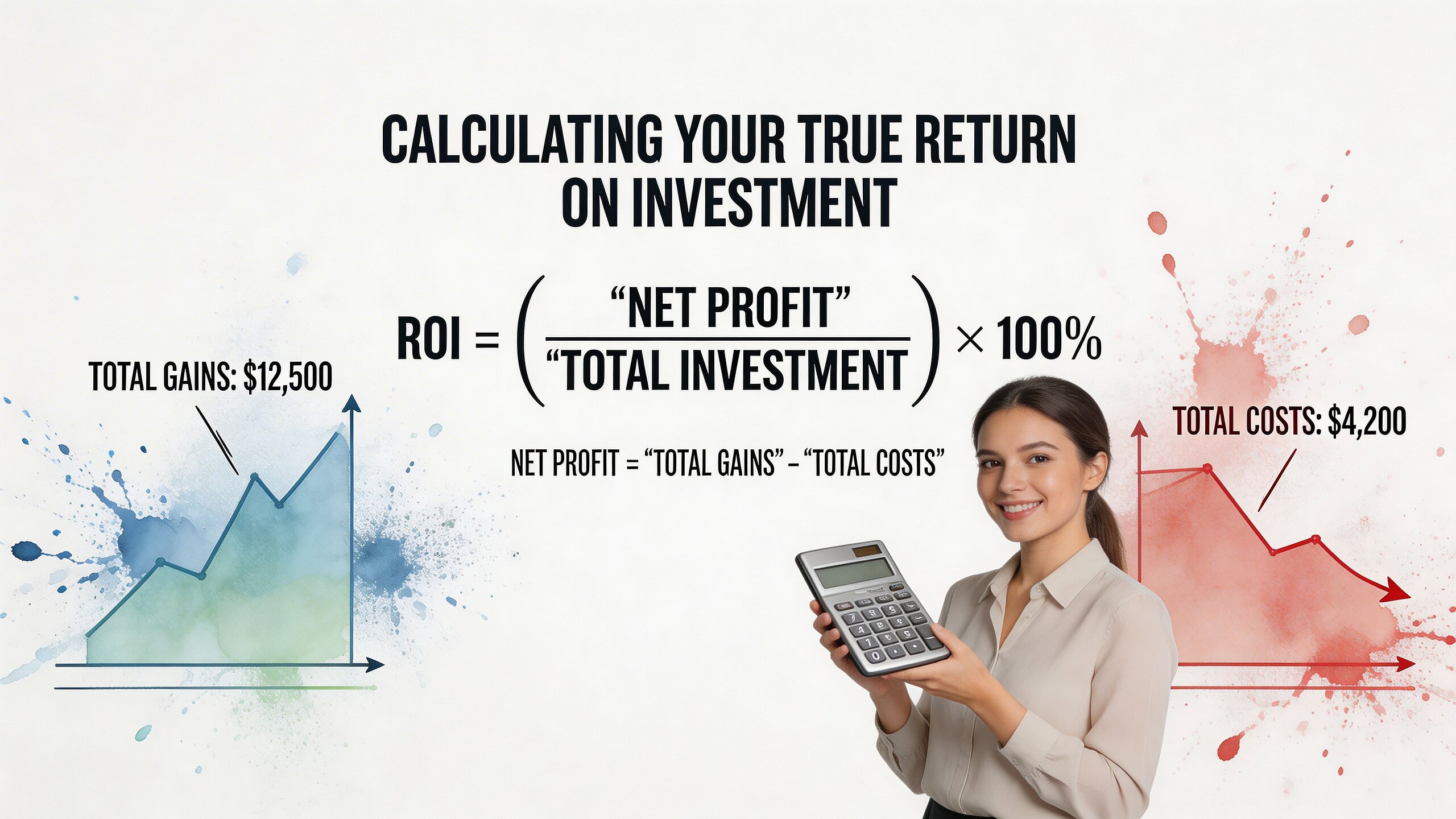
Calculating Your True Return on Investment
The purchase price is the easiest number to compare, and the least useful one.
A clinic does not earn from a machine because it was cheap. It earns because the device stays operational, produces outcomes clients will pay for, moves through appointments efficiently, and supports repeat bookings.
That is true ROI. It is the gap between a machine that looks affordable on day one and one that produces dependable profit over time.
The financing pressure is real
Many owners get cornered into bad purchases under such pressure. Amid significant inflation, many Gauteng salons struggle with equipment financing, which creates pressure to choose the lowest entry price. But the same market data shows that high-quality laser systems can yield strong ROI in a relatively short period, while a 2025 Beauty Guild SA survey found a 72% failure rate for non-FDA/CE devices due to breakdowns (Salon City sale and clearance reference).
That is the true split in the market.
One group buys by sticker price.
The other group buys by working profit.
The variables that drive ROI
A proper ROI model for salon equipment for sale should include at least these factors.
- Treatment speed: Faster treatment times create more bookable capacity in the same room.
- Rebooking strength: Some services naturally support a treatment course, which improves forward-booking.
- Consumables and maintenance: Low upfront pricing can hide expensive service interruptions later.
- Training time: If the team needs excessive hand-holding, your launch slows down.
- Downtime risk: A machine that fails often destroys utilisation.
- Price integrity: Stronger results support premium pricing more easily than weak outcomes do.
A basic spreadsheet is enough if you build it accurately.
Compare two machines the right way
Instead of asking only, “What does it cost?”, compare like this:
| ROI factor | Low-price machine | Higher-quality machine |
|---|---|---|
| Initial outlay | Lower | Higher |
| Compliance confidence | Often unclear | Usually clearer |
| Treatment consistency | Variable | More predictable |
| Breakdown risk | Higher if build quality is weak | Lower if support and parts are established |
| Staff adoption | Slower when performance is unreliable | Faster when protocols are clear |
| Revenue stability | Harder to forecast | Easier to forecast |
This is why cheap devices often become expensive assets. The owner spends less upfront, then loses money in cancellations, repairs, staff frustration, and poor retention.
A practical way to model break-even
Use your own numbers for pricing and room utilisation, but think in this order:
- How many treatments per week can one room realistically handle?
- How many of those bookings are once-off versus programme based?
- How long does each treatment take, including consultation and reset time?
- What happens if the machine is unavailable for several days?
- Can your team confidently recommend the treatment without overselling it?
If those answers are weak, the “cheap” purchase is not cheap.
For clinics exploring the revenue side more closely, this guide on diode laser ROI for South African aesthetic professionals is a useful reference point because it frames earnings around utilisation and treatment demand, not just the invoice amount.
The best capital purchase is not the machine with the lowest repayment. It is the machine with the lowest chance of sitting idle.
Evaluating the Partnership Beyond the Purchase
A treatment platform is only partly a hardware decision. The rest of the value sits in the relationship behind it.
Many suppliers fail at this stage. They close the sale, deliver the crate, do a basic handover, and disappear. The clinic then discovers that no one knows how to handle awkward skin presentations, no one responds quickly when the machine faults, and no one helps the team turn the treatment into a profitable service line.
That is not a supply relationship. It is a transfer of risk.
Training determines whether the device earns
A machine can be technically sound and still underperform in a clinic if the team lacks confidence.
Therapists need more than button training. They need treatment logic, contraindication awareness, consultation structure, and enough repetition to work safely without hesitation. When training is weak, two things happen. Practitioners become conservative to the point of under-treating, or they avoid offering the service altogether.
Warranty and support are operational tools
Owners often treat warranty language as fine print. It should be a buying priority.
A 2-year warranty and structured training support matter because uptime matters. In non-invasive skincare specifically, that support is tied directly to revenue opportunity. HydroLuxe hydrodermabrasion platforms backed by Omega’s 2-year warranty and training hub ensure high operator proficiency post-certification, which is highly relevant in a market where a significant portion of services in major South African spas are non-invasive skincare treatments.
That is not just a technical detail. It tells you what a useful partnership looks like: a machine, a training pathway, and a support model designed to keep the treatment room active.
The four partnership pillars
A supplier becomes valuable when these pillars are clear.
Clinical education
Your team should leave training able to consult, treat, and troubleshoot basic issues confidently. If education feels rushed, the launch will drag.
Technical support
Ask how support works on a normal weekday, not just in a sales meeting. Who answers? How fast? Is there local help?
Warranty clarity
What exactly is covered, for how long, and under what conditions? A vague warranty is often worth less than it appears.
Preventative maintenance
Good suppliers help you avoid faults, not only react to them. That preserves treatment schedules and protects the life of the machine.
Buy from the company you want answering the phone when your Saturday bookings depend on one device.
Why this matters over the long term
The stronger the supplier relationship, the easier it is to keep standards high as the clinic grows.
That includes onboarding new staff, refining protocols, updating treatment menus, and handling technical questions before they become client complaints. Over time, the support structure around the machine often matters just as much as the machine itself.
Your Ultimate Vendor Selection Checklist
By the time you start requesting quotes, the most useful move is to switch from “shopping mode” to “due diligence mode”.
A polished brochure tells you almost nothing. A serious conversation with a vendor should leave you with clear answers, real documents, and a realistic view of how the machine will work inside your clinic.

Ask these questions before you sign anything
Compliance and legality
- Is this device licensed for use in South Africa? Ask for the exact regulatory documentation.
- What certifications apply to this specific model? Do not accept generic claims about the manufacturer.
- What treatments is the device intended for? The approved use matters.
Clinical performance
- What outcomes should I realistically expect? You want honest treatment expectations, not inflated promises.
- Which skin types and indications does it handle well? This matters in the local market.
- What does a proper treatment course look like? If the seller cannot explain the pathway, they may not understand the device clinically.
Commercial fit
- Who is the ideal client for this machine in my clinic?
- What does it replace, improve, or add to my current menu?
- Will this support package sales, memberships, or repeat bookings?
Support and implementation
- What training is included for my team?
- How is after-sales support handled if the machine faults?
- What does the warranty cover in practical terms?
Red flags worth taking seriously
Some warning signs are obvious. Others are easy to miss when the price is attractive.
- Missing documents: If paperwork arrives late, partially, or in screenshot form, be cautious.
- Oversimplified claims: “Works on everyone” and “does everything” are not credible explanations.
- No local support path: A machine without a service plan can become dead capital.
- Pressure selling: A rushed discount often hides a weak support model.
- Unclear consumables or servicing terms: Hidden running costs ruin forecasting.
What a good vendor conversation feels like
A strong vendor usually sounds measured, not flashy.
They explain treatment boundaries. They talk clearly about training. They answer operational questions without irritation. They are comfortable discussing maintenance, downtime, and clinician suitability because they expect serious buyers to ask.
That is the tone you want around any advanced salon equipment for sale decision.
Integrating and Marketing Your New Investment
A clinic does not become more profitable when the machine arrives. It becomes more profitable when the machine is integrated properly and clients book it consistently.
That sounds obvious, but many launches fail because owners focus intensely on the purchase and barely prepare for the first month of use. The result is a good device introduced through a weak process.
Integration starts before delivery
The practical work should begin before the unit reaches the clinic.
Prepare the room. Confirm power requirements and treatment flow. Decide who owns the service line internally. Build consent forms, consultation scripts, aftercare guidance, and pricing logic before the first client is booked.
A clean launch usually depends on four operational choices:
- Choose the primary operator early: one accountable person drives adoption faster than “everyone will learn it”
- Set treatment eligibility rules: define who is suitable and who must be referred or deferred
- Build launch offers carefully: protect price integrity rather than discounting heavily
- Track utilisation weekly: monitor whether the device is being used
Staff confidence drives bookings
Clients respond to certainty.
If your front desk cannot explain the treatment clearly, and your practitioner sounds hesitant in consultation, uptake slows. When the team understands who the treatment is for, what results are realistic, and how to position it in a programme, bookings rise more naturally.
This is also why post-sale support matters. Training should not stop after initial installation. Teams need reinforcement as real client questions appear.
Marketing closes the loop
A machine only produces ROI if demand reaches it.
That means your launch should include visible messaging across consultation conversations, existing client databases, social content, in-clinic displays, and treatment planning. Strong vendors help here by providing usable assets and practical business guidance, not just technical manuals.
Support such as a clinic finder or treatment marketing tools can be especially helpful for newer operators who are clinically capable but still building public awareness. It shortens the gap between installation and active revenue generation.
Think service line, not standalone machine
The clinics that do this well rarely sell the device. They sell the outcome and the plan around it.
Hair removal becomes a structured treatment journey. Skin rejuvenation becomes a programme with review points, homecare alignment, and follow-up. Hydro-focused facials become part of a recurring skin maintenance pathway rather than a once-off luxury spend.
That shift changes everything. It improves consultation quality, increases treatment commitment, and gives the investment room to perform over time.
The smartest equipment decisions are rarely the loudest ones. They are the purchases built on compliance, realistic financial planning, team readiness, and support that continues after installation. In South Africa’s aesthetic market, that combination is what turns a machine into a durable growth asset.
If you are comparing advanced salon equipment for sale and want a supplier that works within South African compliance requirements, Omega Lasers is worth reviewing for its range of FDA-approved, CE-certified, and SAHPRA-licensed aesthetic platforms, along with training, technical support, marketing support, and a 2-year manufacturer warranty.