



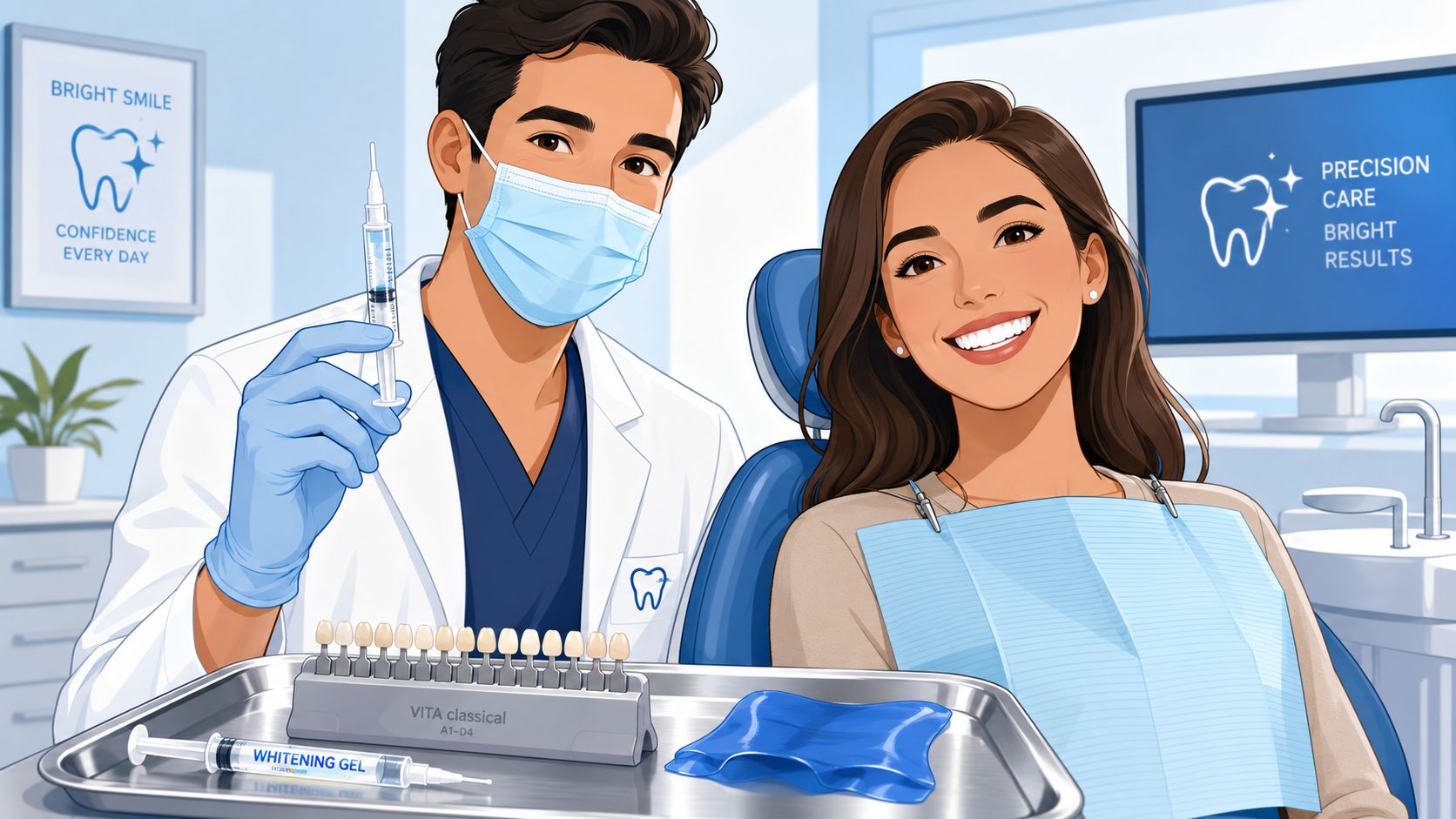
A clinic owner often reaches the same point with whitening. Clients keep asking for it, the front desk keeps hearing “Do you do teeth whitening?”, and the team can see the revenue opportunity. Then the doubts start. Which teeth bleaching gel is worth using? Who should perform it? What happens when a patient already has crowns or veneers? And how do you add it without creating complaints, regulatory exposure, or chair-time inefficiency?
Those concerns are valid. Teeth bleaching sits at the intersection of aesthetics, chemistry, consent, oral screening, and reputation management. If you treat it like a simple add-on, it can create more problems than profit. If you build it properly, it can become a disciplined, well-run service that strengthens your treatment mix and gives clients another reason to stay with your practice.
Certifique-se sempre de que a informação é precisa e verdadeira, uma vez que se trata de lasers estéticos, dispositivos baseados em energia e saúde.
Índice
- Integrating Teeth Bleaching Into Your Aesthetic Practice
- Choosing the Right Bleaching Gel Formulation and Concentration
- Mastering Patient Assessment and Pre-Treatment Protocols
- The Professional In-Clinic Application Workflow
- Managing Safety Protocols and Common Adverse Effects
- Navigating Regulatory Compliance and Documentation
- Optimising Aftercare and Integrating Bleaching into Your Business
Integrating Teeth Bleaching Into Your Aesthetic Practice
Many clinics already have the right client base for whitening before they realise it. The patient who books skin rejuvenation before a wedding, the client maintaining injectables, the professional who wants a cleaner on-camera appearance. They're already buying confidence-based treatments. Teeth bleaching often sits one service line away from what they're asking for.
The hesitation usually isn't demand. It's operational confidence. Owners worry about scope, safety, complaints, and whether the team can deliver consistent results without disrupting higher-value appointments. That's the right instinct. Whitening should never be bolted onto the menu just because clients ask for it.
A better approach is to treat it as a clinical workflow and business system. That means patient screening, documented consent, clear contraindication rules, a narrow product selection, and a scripted aftercare pathway. It also means deciding where whitening fits in the calendar, who performs each part of the protocol, and how the service is positioned alongside your existing aesthetic treatments.
Regra prática: If your whitening service can't be described from enquiry to follow-up in one written protocol, it isn't ready to scale.
Clinics that handle this well don't rely on hype. They build a small, repeatable service line that feels organised from the first call. The front desk knows how to pre-qualify. The clinician knows when to defer. The patient knows what the gel can and can't do. That clarity protects margins because it reduces remakes, refunds, and avoidable dissatisfaction.
The commercial side matters too. Whitening is visible, conversational, and highly photographable when done within ethical boundaries. If you're refining service positioning, this guide for professional service providers is useful for thinking about how treatment pages, local demand, and conversion intent fit together without turning your clinic into a discount brand.
Choosing the Right Bleaching Gel Formulation and Concentration
The biggest purchasing mistake clinics make is buying on marketing language instead of chemistry. If you don't understand what the active ingredient is doing, you can't predict speed, sensitivity profile, or suitability for your treatment model.
Understanding the chemistry that drives results
Hydrogen peroxide (HP) is the direct oxidising agent. It acts quickly, which is why it's commonly selected for in-clinic protocols where controlled application time matters.
Carbamide peroxide (CP) breaks down to release hydrogen peroxide over time. That slower release profile often makes it more suitable where a gentler, longer contact approach is preferred.

The practical point is simple. A 10% CP gel is not the same thing as a 10% HP gel. They behave differently in the mouth, they release active peroxide differently, and they create different expectations around chairside timing and comfort.
A South African clinical anchor matters here. A South African Dental Journal study on 6% hydrogen peroxide bleaching confirmed that 6% hydrogen peroxide gel achieved a colour change of at least 5 ΔE units, and that change remained stable at a 9-month follow-up. In the same study context, the 6% formulation also showed ΔE changes higher than 5 across three appointments with a total contact time of 72 minutes in a split-mouth analysis, supporting its use for in-office whitening while keeping concentration conservative.
That matters commercially as much as clinically. Lower concentration doesn't automatically mean weak treatment. In the right protocol, it can mean effective whitening with a better tolerance profile.
Hydrogen Peroxide vs. Carbamide Peroxide At a Glance
| Characteristic | Hydrogen Peroxide (HP) | Carbamide Peroxide (CP) |
|---|---|---|
| Mecanismo | Direct oxidation | Breaks down to HP |
| Application | In-office | At-home or take-home |
| Concentration | 6-40% | 10-44% |
| Sensitivity | Mais alto | Inferior |
How to choose formulation by treatment model
For a clinic-run appointment, choose based on control, not just speed.
- Choose HP when timing matters: In-office sessions need a product that performs within a defined appointment window and responds predictably to isolation and monitoring.
- Choose CP when gentleness and extended release matter: This is more compatible with take-home style protocols where the treatment is spread out rather than compressed into a chairside session.
- Choose lower concentration when your brand is built on comfort and compliance: A protocol that patients complete is more valuable than an aggressive one that creates complaints.
One useful discipline is to limit your formulary. Most clinics don't need a shelf full of bleaching gels. They need one in-clinic option, one maintenance pathway, and one written decision framework for sensitivity-prone patients.
Aesthetic businesses that already run device-led treatments often understand this principle from other modalities. You don't improve outcomes by adding random consumables. You improve them by standardising what works. That same logic applies when choosing a gel for ultrasound treatments, and it applies just as strongly to teeth bleaching gel selection.
A bleaching protocol should be easy to train, easy to audit, and hard to misuse.
Mastering Patient Assessment and Pre-Treatment Protocols
Most whitening complaints start before the gel is ever loaded. The problem is usually poor screening, unclear expectations, or failure to identify a mismatch risk that should have been discussed in the consult.
The consultation must uncover mismatch risk early
One of the most overlooked issues in whitening is existing restorative work. Many patients assume the bleaching gel will lighten everything equally. It won't. Restorations don't whiten the same way natural tooth structure does, and that creates the exact aesthetic mismatch that triggers disappointment.
A clinical review discussing bleaching and restorative materials highlights the issue sharply. Bleaching gels do not whiten restorations, and recent South African clinical reviews cited there note that 37% of patients seeking whitening had restorations, while only 12% were informed of the colour mismatch risk prior to treatment.
That gap is more than an educational problem. It's a business problem. If the patient leaves with brighter natural teeth and an unchanged crown edge in the smile zone, they won't remember the chemistry lesson. They'll remember that the result looked uneven.
If a patient has visible restorative work, whitening is partly a treatment and partly a planning conversation.
What to assess before booking treatment
The pre-treatment phase should feel structured and deliberate. Not rushed, not sales-led, and not delegated to someone who can't spot risks.
A strong assessment usually includes:
- Oral health screening: Look for obvious issues that make treatment unsuitable or that require dental review first. Whitening should never be used to cosmetically bypass disease.
- Stain pattern analysis: Separate likely extrinsic staining from deeper colour concerns. This helps you judge whether the patient is a realistic responder.
- Restoration mapping: Identify crowns, veneers, composite edges, large anterior restorations, and any previously treated areas in the smile line.
- Baseline shade recording: Take consistent photos and chart the pre-treatment shade under controlled lighting.
- Expectation testing: Ask what “whiter” means to them. Some patients want freshness. Others want an ultra-bright social-media result that may not align with a conservative protocol.
The consent discussion should also cover what bleaching does not do. It doesn't repair shape, close spacing, correct translucency, or change the colour of existing non-natural materials. When patients understand that before treatment, you protect trust and reduce post-procedure friction.
Clinically, this stage is where professionalism shows. Any clinic can apply gel. Fewer clinics are disciplined enough to pause treatment when the case selection is wrong.
The Professional In-Clinic Application Workflow
A good whitening appointment should feel calm, controlled, and repeatable. The patient shouldn't be guessing what's happening, and the operator shouldn't be improvising. Protocol discipline is what separates a clinic-grade service from a cosmetic shortcut.

Chairside setup and isolation
The appointment starts before the syringe does. Confirm the consent, review the treatment plan, and make sure the patient hasn't arrived with a different expectation from the one documented at consultation. Then record the baseline shade and photograph the case properly. If your before image is inconsistent, your result review will be inconsistent too.
The treatment field must be organised for visibility and soft tissue protection. Retract cleanly. Keep the teeth dry enough for controlled placement. Apply a gingival barrier carefully and inspect it before any active gel goes on. Poor isolation is one of the fastest ways to turn a straightforward procedure into an avoidable complication.
From an operator's perspective, neat barrier placement does more than protect tissue. It creates confidence. The patient can see that the procedure is being handled with precision, not speed for its own sake.
Application control and endpoint judgement
Once isolation is secure, apply the teeth bleaching gel evenly across the intended tooth surfaces. Avoid heavy, sloppy loading. Excess product doesn't make the protocol more advanced. It just makes leakage more likely and cleanup less controlled.
A disciplined operator watches three things throughout the application window:
- Coverage quality: The gel layer should be even enough to support a consistent cosmetic outcome.
- Patient feedback: If the patient reports a sudden sharp sensation, stop and reassess rather than pushing through.
- Tissue integrity: Check that the barrier remains intact and that no material is migrating onto soft tissue.
Some clinics use light activation as part of their whitening protocol. Used selectively, it can complement the chemistry. It isn't a substitute for poor case selection, and it doesn't rescue a badly isolated field. Where a protocol includes light, use it within manufacturer guidance and only when the operator understands its role in that specific system.
The best in-clinic whitening results usually look uneventful while they're happening. That's a sign the protocol is under control.
After the final cycle, remove the gel thoroughly, rinse carefully, and inspect the soft tissues before dismissing the patient. Then reassess the shade, review the result with realistic language, and document what was used, how long it was used for, and how the patient tolerated the procedure.
The workflow only works if the whole team understands their part in it. Reception should know the prep instructions. Clinical staff should know the escalation pathway if sensitivity appears during treatment. Management should know how long the appointment takes in real life, not just on paper. That's how a whitening service stays profitable without becoming chaotic.
Managing Safety Protocols and Common Adverse Effects
If you treat sensitivity as an occasional inconvenience, you'll lose control of your whitening service. It's the main adverse effect patients talk about, the main reason some hesitate to book, and one of the clearest examples of why concentration choice matters.
Sensitivity is a protocol issue, not a surprise
A summary of whitening sensitivity data reports that tooth sensitivity is the most common side effect of bleaching and can affect up to 78% of patients. The same source notes a direct correlation between peroxide concentration and sensitivity, and that 13.8% of participants in one trial withdrew from treatment because of sensitivity.
Those numbers should change how clinics think about whitening. Sensitivity isn't a side note for the consent form. It affects treatment completion, patient confidence, and whether the patient tells others the service was worth it.

How clinics reduce preventable reactions
A safety-led protocol usually looks more conservative than a sales-led one, and that's exactly why it performs better over time.
- Screen properly before treatment: A rushed consult produces rushed outcomes. If a patient already reports sensitivity, document it and adjust expectations before proceeding.
- Use concentration strategically: Higher peroxide levels may look attractive on a product sheet, but they also raise the risk profile. That trade-off needs to be justified, not assumed.
- Protect soft tissue meticulously: Gingival irritation and chemical injury often come down to isolation failure rather than some mysterious product issue.
- Control treatment time: Leaving gel in place longer than protocol doesn't prove thoroughness. It proves poor discipline.
- Give the patient a management plan: Tell them what mild post-treatment sensitivity may feel like, when it should settle, and when they should contact the clinic.
Not every adverse event is dramatic. Some are small but damaging to the patient experience, such as patchy whitening from uneven application or transient irritation from a barrier gap. These still matter because they change how the patient judges your clinical standard.
Patients usually tolerate temporary discomfort far better than they tolerate feeling uninformed.
If your team is hearing the same complaint repeatedly, the fix usually isn't better scripting. It's better protocol design. Review the gel concentration, chairside timing, isolation quality, and patient selection criteria. In whitening, safety and satisfaction are tightly linked.
Navigating Regulatory Compliance and Documentation
South African clinics need their own legally appropriate framework, but internal standards should still be built against strict professional benchmarks. That's how you reduce ambiguity in a service category where consumer kits, beauty marketing, and regulated dental practice often get blurred together.
Use strict standards as your internal baseline
The UK and EU provide a useful benchmark for how seriously whitening is treated in regulated environments. The legal position is clear. In those jurisdictions, supplying teeth whitening gels containing 0.1% to 6% hydrogen peroxide directly to consumers without the first cycle being performed by a dental practitioner is a criminal offence, de acordo com o General Dental Council position statement on tooth whitening.
Separate reporting has also shown that illegal whitening kits in the UK market have contained concentrations as high as 53%, which illustrates why clinics should be extremely cautious about informal supply channels and unverified products.
That doesn't mean copying another jurisdiction wholesale. It means using professional supervision, controlled product sourcing, and written internal restrictions as your own baseline. If your clinic cannot verify what's in the gel, who is authorised to use it, and under what documented conditions it's used, the service is not under proper governance.
What your records should capture every time
Documentation should be practical, not bloated. A good whitening record answers the questions that matter if a patient calls back unhappy or if your clinic needs to show that the procedure was responsibly delivered.
Your file should capture:
- Suitability assessment: The oral and restorative findings relevant to treatment selection.
- Consent content: That the patient was informed about likely outcomes, limitations, and common adverse effects.
- Product traceability: Exact gel used, concentration, batch details where applicable, and application notes.
- Procedure record: Duration, number of cycles, whether any adjunctive activation was used, and how the patient responded.
- Aftercare advice: What the patient was told verbally and what they received in writing.
If your team needs a broader framework for defensible notes, this resource on clinical record keeping is a useful prompt for tightening documentation habits across treatment categories.
Good consent doesn't just protect the clinic. It improves compliance because patients understand the limits of the procedure before they start. That reduces the mismatch between what was promised, what was heard, and what was delivered.
Optimising Aftercare and Integrating Bleaching into Your Business
The whitening result isn't secured when the gel comes off. It's secured when the patient leaves understanding how to protect the outcome and when your clinic has already built the maintenance pathway into the service model.

Aftercare that protects the result
Aftercare needs to be simple enough to follow and specific enough to matter. Vague advice gets ignored.
A solid post-treatment handover usually includes:
- Diet guidance: Advise the patient to avoid strongly staining foods and drinks immediately after treatment and to choose lighter-coloured options during the early post-treatment period.
- Oral care instructions: Recommend gentle brushing habits and any desensitising or fluoride-based support you routinely use within your protocol.
- Behaviour reminders: Smoking, heavy coffee intake, and poor maintenance habits shorten the cosmetic life of the result.
- Review timing: Tell the patient when to report unusual symptoms and when a planned reassessment or maintenance visit makes sense.
Give this in writing. Patients rarely remember every verbal instruction after a cosmetic appointment, especially if they're focused on looking at the result.
The best aftercare sheet reads like a practical checklist, not a lecture.
Turning a clinical service into a reliable revenue line
Teeth bleaching becomes commercially useful when it is systematised, not when it is discounted. Pricing should reflect consumables, staff time, room time, consultation time, photographic documentation, and follow-up. If you underprice whitening to “get people in”, you often attract the least compliant patient while training the market to treat the service as a commodity.
Packaging works best when it is logical. A pre-event aesthetic package, a smile-refresh maintenance pathway, or a consultation-led add-on after another confidence-driven treatment can all work well if the sequencing makes sense clinically. The whitening service should feel like part of a coherent patient journey, not an impulse purchase at reception.
Operationally, train the whole team around three moments:
- Enquiry handling so the patient is screened before they're booked.
- Consult conversion so expectations are aligned before chair time is reserved.
- Maintenance recall so the service produces ongoing value rather than a one-off spike.
If you're evaluating how treatment pricing is positioned in the market, this breakdown of how much teeth whitening costs is useful for framing value rather than racing to the lowest fee.
A profitable whitening service is usually a calm one. Fewer surprises. Better screening. Cleaner records. Clearer aftercare. That's what protects both the patient experience and the margin.
If you're building an aesthetic practice that values safe protocols, strong systems, and profitable service integration, Lasers Omega is worth exploring. The company supports clinics with advanced medical-aesthetic technology, training, and business guidance designed to help teams grow with confidence while maintaining high clinical standards.