



Choosing a cosmetology school is a capital decision. Treat it like one.
The wrong programme leaves you with a certificate and weak earning power. The right one puts you on a faster path into high-value services such as advanced skincare, aesthetic devices, laser-assisted treatments, medical aesthetics support, and eventually clinic ownership. That is the standard you should use when comparing schools for cosmetology.
Cosmetology is no longer limited to salon-floor basics. Clients now expect visible results, safe treatment protocols, proper consultation, and practitioners who can work confidently with technology. Schools that still focus too heavily on legacy beauty training are producing graduates for yesterday's market, not the one hiring now.
In South Africa, that gap matters even more.
If a school cannot show strong practical training in treatment safety, device handling, client assessment, recordkeeping, and business fundamentals, move on. You need education that makes you employable in a clinic, credible in front of clients, and prepared to build a profitable service menu. Accuracy matters because aesthetic lasers, energy-based devices, and skin treatments carry real operational and safety consequences.
If you are choosing between schools for cosmetology in 2026, ignore generic rankings. Prioritise specialisation, supervised hands-on practice, and training that leads to better margins and stronger job readiness. Long-term return comes from skills the market pays more for.
Índice
- 1. Comprehensive Laser Safety and Device Operation Certification
- 2. Advanced Skincare Rejuvenation and Anti-Aging Specialization
- 3. Hair Removal Mastery and Multi-Wavelength Technology Training
- 4. Medical Aesthetics and Clinical Integration Programs
- 5. Hybrid Beauty Therapy and Aesthetic Technology Programs
- 6. Aesthetic Technology Entrepreneurship and Clinic Launch Programs
- 7. Continuing Education and Advanced Certification Pathways
- 8. Mobile Beauty Therapy and Home-Based Practice Training
- 9. Dermatology-Integrated and Physician-Supervised Training
- 10. Digital and Hybrid Learning Platforms for Aesthetic Technology Certification
- 10-Program Comparison: Aesthetic & Cosmetology Certifications
- Your Next Step From Applicant to Aesthetic Professional
1. Comprehensive Laser Safety and Device Operation Certification
The fastest way to separate average schools for cosmetology from strategic ones is simple. Check whether laser safety and device operation sit inside the core learning path or whether they're treated like an afterthought.
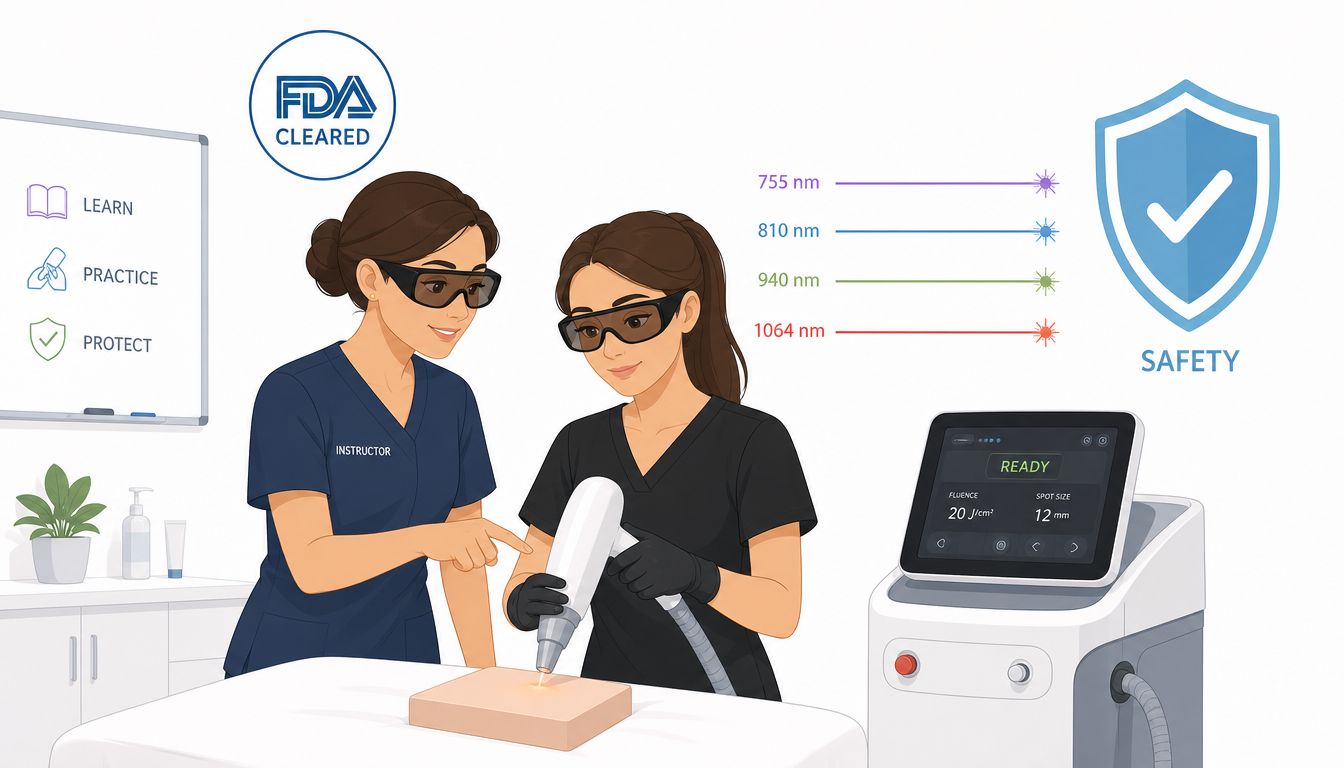
A serious programme teaches more than button pressing. Students should learn laser physics, contraindications, skin assessment, patch testing, treatment planning, cooling methods, incident prevention, and accurate post-care instructions. If a school uses platforms such as EM Pulse, HydroLuxe, Derma Pro, or SkinSkan Pro in supervised practicum, you're looking at a much stronger training environment than a theory-heavy classroom.
What strong laser training includes
South African students need to be strict on compliance. In the ZA market, a cosmetology qualification must be registered with SAQA registration number 80646 to meet local and international treatment standards. If the school can't show you that alignment, move on.
Use these filters when you evaluate a programme:
- Platform-specific teaching: Ask whether training covers named systems rather than generic “laser exposure”.
- Safety-first assessment: Students must learn when not to treat, not just how to treat.
- Credibilidade do instrutor: Trainers should have active treatment-room experience with aesthetic devices.
- Ongoing updates: Good schools refresh protocols when new handpieces, settings, or clinical guidance change.
Regra prática: Never choose a laser course that can't explain how students are assessed for safety competence before touching clients.
A graduate who understands device operation properly can move into salons, medical aesthetics environments, and supervised clinical settings with far more confidence. That confidence reduces risk, improves client trust, and protects your reputation from the first treatment onward.
2. Advanced Skincare Rejuvenation and Anti-Aging Specialization
If your goal is higher-value treatment work, advanced skincare should be near the top of your shortlist. Basic facials won't carry your career nearly as far as training that combines skin analysis, resurfacing logic, anti-ageing protocols, and non-invasive device selection.
The strongest schools for cosmetology build rejuvenation training around real treatment decisions. Students need to assess the skin properly, identify contraindications, choose the right modality, document response, and manage expectations over a treatment series. A good practical environment might combine SkinSkan Pro for consultation support, HydroLuxe for multi-step facial workflows, and Derma Pro for more advanced rejuvenation or resurfacing applications under supervision.
What to demand from the curriculum
Don't settle for a syllabus that treats skin as a beauty topic only. The best anti-ageing programmes teach a more disciplined approach.
- Clinical skin assessment: Students should learn structured consultation, photo documentation, and treatment reasoning.
- Adverse response management: Redness, sensitivity, poor candidate selection, and aftercare mistakes must be covered in detail.
- Repeatable treatment planning: Good results come from consistency, not one-off demonstrations.
- Mentorship exposure: Programmes linked to experienced aesthetic doctors or senior practitioners usually produce better treatment judgement.
Some schools market “advanced skincare” when they really mean upgraded facial technique. That's not enough. In modern aesthetics, you need to understand how energy-based treatments fit into broader skin health planning, especially when clients expect visible improvement and safe progression over time.
This route suits students who want to work in premium salons, skin studios, rejuvenation clinics, or multidisciplinary practices where consultation quality matters as much as technical execution.
3. Hair Removal Mastery and Multi-Wavelength Technology Training
Hair removal remains one of the clearest commercial pathways in aesthetics. It's repeat-service driven, easy for clients to understand, and highly dependent on operator skill. That's why schools for cosmetology that offer serious multi-wavelength hair removal training deserve attention.
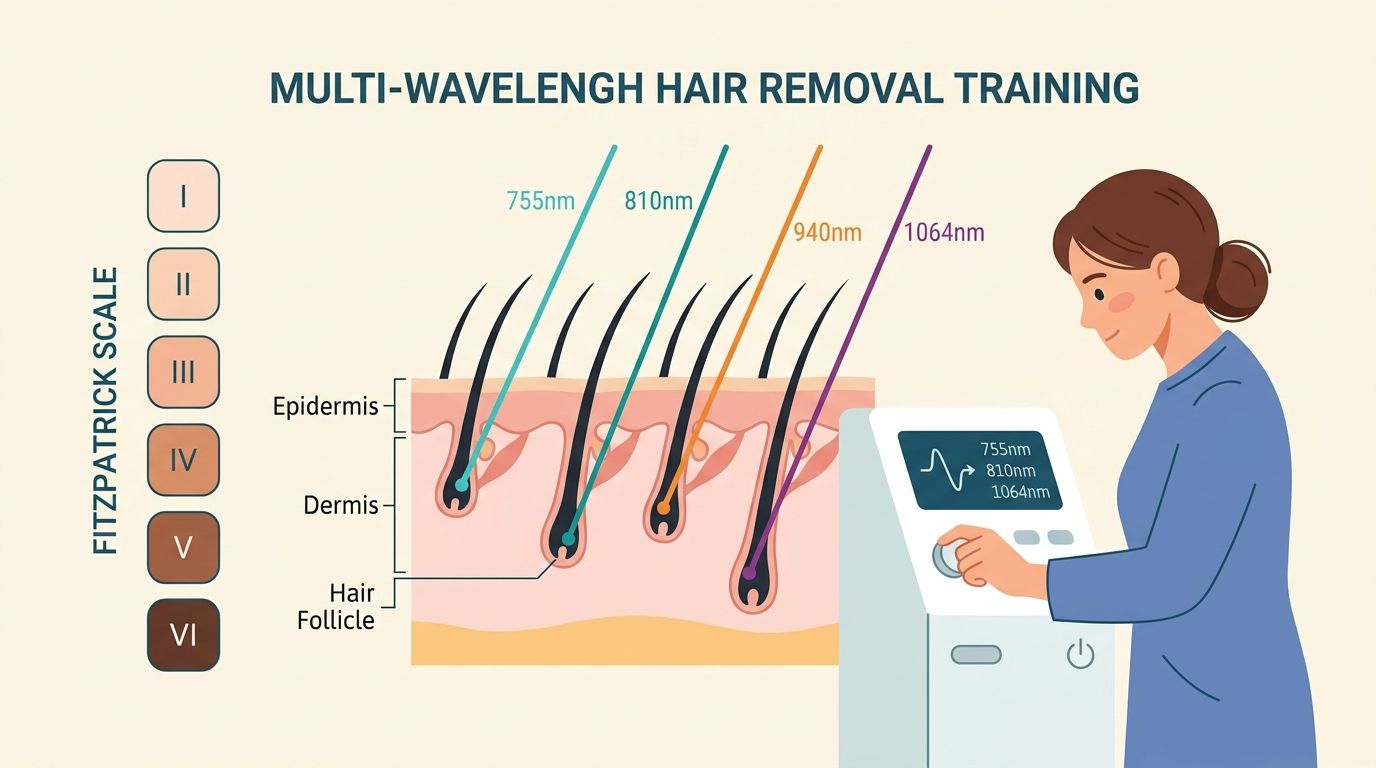
Good training doesn't stop at machine settings. Students should learn hair growth cycles, client consultation, skin phototypes, patch testing, treatment intervals, parameter adjustment, and comfort management. If a school trains on four-wavelength systems such as EM Pulse, that's a strong sign it understands real-world diversity in skin and hair profiles.
The practical standard
The curriculum gap in South Africa is real. South African cosmetology syllabi from the past 12 months show less than 15% inclusion of FDA, CE, or SAHPRA-approved laser systems training, while a 2025 SA Beauty Industry Survey reported that 68% of salon owners demand technicians certified in multi-wavelength hair removal and facial resurfacing. That mismatch is exactly why specialised hair removal education provides a significant career advantage.
For students who want to go deep in this category, look at master laser hair removal training built around practical system use.
Strong hair removal technicians don't guess. They read the skin, read the hair, then choose settings with intent.
The best schools also teach the business side. Hair removal books best when consultation scripts are clear, treatment plans are explained properly, and clients understand why consistency matters. If you're thinking like a future clinic owner, this specialisation gives you both a service skill and a predictable revenue engine.
4. Medical Aesthetics and Clinical Integration Programs
Some students shouldn't choose a standard beauty school pathway at all. If you want to work in a clinic, medical spa, or supervised treatment environment, you need training that reflects those standards from the start.
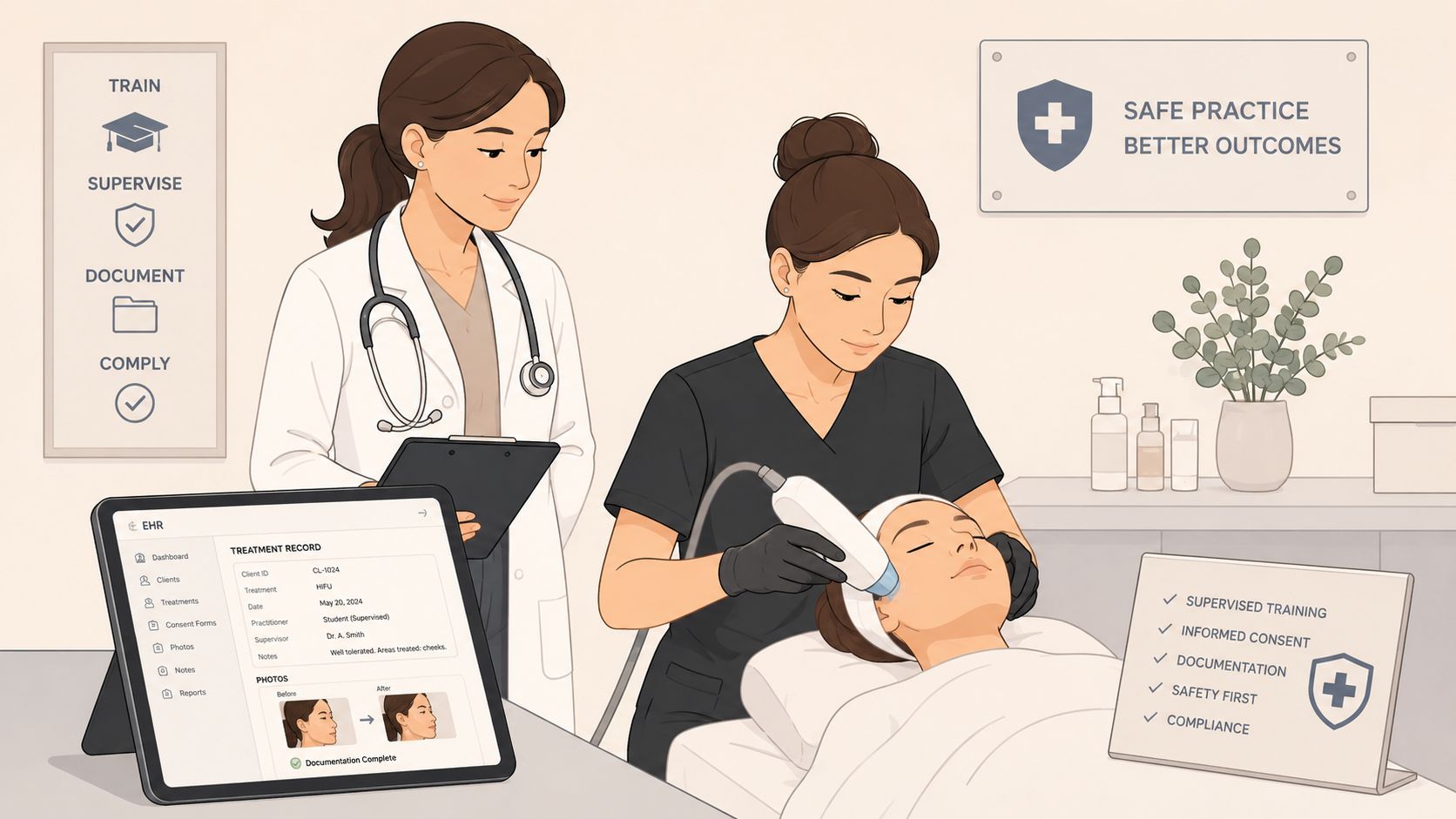
Medical aesthetics and clinical integration programmes bring structure that many conventional schools for cosmetology lack. Students learn consent, documentation, treatment notes, hygiene discipline, escalation protocols, and how to work inside a medically influenced workflow. In better programmes, supervision comes from professionals who understand not only aesthetics, but also risk management and proper patient handling.
Where this route pays off
This path suits people who want more than salon placement. It's especially valuable if you're aiming for:
- Dermatology-linked work: Skin-focused environments need disciplined assessment and reporting habits.
- Medical spa roles: Staff must follow tighter protocols around consultation, device use, and aftercare.
- Team-based clinics: You'll need to communicate clearly with doctors, nurses, and senior therapists.
- Regulated service delivery: Clinical settings expect consistency, traceability, and professional judgement.
Before enrolling, ask who supervises students, what documentation system they use, and whether trainees learn to recognise when a case sits outside their scope. Those details matter more than glossy branding.
A school that mirrors the workflow of a functioning clinic will make you easier to hire and easier to trust. For clinic owners, recruiting from this kind of programme reduces onboarding time because the graduate already understands professional standards.
5. Hybrid Beauty Therapy and Aesthetic Technology Programs
Hybrid training is one of the smartest routes in modern aesthetics. It produces practitioners who can perform traditional services well, then layer in profitable device-led treatments without starting over later.
Clients rarely buy in categories; they book based on outcomes, convenience, trust, and the quality of the overall experience. A therapist who can move from consultation to skincare planning, facial delivery, laser treatment preparation, and aftercare education becomes far more valuable than someone limited to one service lane.
The smartest hybrid model
The best schools for cosmetology in this category balance beauty fundamentals with technology exposure. Students should leave competent in core client care, but also comfortable using systems such as HydroLuxe, Derma Pro, and SkinSkan Pro where the curriculum allows.
If you're comparing local options, review beauty therapy courses in Cape Town that combine traditional and advanced training pathways.
A credible hybrid programme should show strength in these areas:
- Balanced practical training: Hands-on work in both manual and device-based services.
- Service integration: Students learn how treatments support each other instead of operating as isolated menu items.
- Client journey design: Consultation, treatment room manner, aftercare, and rebooking all need attention.
- Instructor breadth: Teachers must understand both beauty therapy and aesthetic technology.
Programmes like this work well for graduates entering wellness spas, premium salons, skin studios, and mixed-service clinics. They also create a strong base for later specialisation. If you aren't yet sure whether you want to focus on lasers, skin, or clinic work, hybrid training keeps your options open without diluting your employability.
6. Aesthetic Technology Entrepreneurship and Clinic Launch Programs
If you plan to own a salon, open a skin studio, or launch an aesthetic clinic, your education must include business judgement. Technical skill alone won't protect cash flow, staffing decisions, equipment selection, or retention strategy.
Entrepreneurship-focused schools for cosmetology stand apart. The strongest programmes teach service mix design, treatment menu logic, client journey planning, branding, operations, and equipment evaluation. Students should learn how to compare device categories, check support structures, review warranty terms, and build around treatments with repeat demand rather than one-time curiosity.
What future owners must learn
South Africa's beauty talent pipeline is active. The global cosmetology and beauty schools market is valued at USD 9.61 billion in 2026 and is projected to reach USD 14.65 billion by 2035, growing at a CAGR of 4.8%, with over 62% of students enrolling in cosmetology and hairstyling certification courses. That means more trained professionals will enter the field. Owners who build smart service models will have the advantage.
A good clinic launch pathway should include:
- Equipment finance literacy: Understand payment structures, support terms, and maintenance implications through financing options for aesthetic equipment.
- Demand generation: Learn practical strategies for salon growth so a new treatment room doesn't sit idle.
- Vendor evaluation: Strong owners choose partners that support training, marketing, and technical uptime.
- Retention planning: The best businesses are built on rebooking, cross-selling, and consistent treatment outcomes.
Owner mindset: Choose education that teaches you how to buy equipment profitably, not just how to operate it.
If you know you want to run the business, not just work in it, this educational path gives you the most practical return.
7. Continuing Education and Advanced Certification Pathways
Initial qualification gets you into the industry. Continuing education determines how far you go.
Established therapists, salon teams, and clinic staff should treat advanced certification as a growth tool, not a formality. New modalities, better consultation standards, updated safety protocols, and device-specific techniques all affect how well you perform in the treatment room. A practitioner who keeps learning stays commercially relevant.
How to choose worthwhile upskilling
Not all post-qualification training is equal. The best advanced pathways are specific, practical, and tied to real services you can add or improve immediately.
Use this filter when assessing a course:
- Device relevance: Choose training that matches the systems you use or plan to buy.
- Clinical application: The course should improve consultations, settings decisions, and treatment consistency.
- Mentorship access: You want instructor feedback, not just recorded slides.
- Employer value: Training should help you expand treatment scope or improve service quality in a visible way.
The broader education sector gives a useful benchmark here. Cosmetology schools report an average graduation rate of 76% and an average job placement rate exceeding 71%. Those figures show the base pathway works. Continuing education is what turns a qualified graduate into a sought-after specialist.
If you're mapping a longer career ladder, it also helps to review adjacent professional development options, including hair classes for stylists looking to expand technical capability. The strongest professionals don't stop at licence level. They stack skills deliberately.
8. Mobile Beauty Therapy and Home-Based Practice Training
Mobile and home-based practice can be a smart entry point, but only if training matches the realities of working outside a formal clinic. Many schools for cosmetology ignore this model completely. That's a mistake, because independent therapists need different operational discipline.
A mobile practitioner has to think about transport, setup, hygiene, consent, portable equipment reliability, and client screening in spaces they don't control. Home-based operators face similar issues, plus zoning, privacy, scheduling, stock storage, and a stronger need for professional presentation. Training should prepare students for those details before they accept paying clients.
What makes mobile training credible
The best programmes in this category focus on service selection and safety. Students should learn which treatments travel well, which don't, how to manage setup efficiently, and how to maintain standards in non-clinical environments.
Look for teaching that covers:
- Portable system choice: Equipment must suit transport and repeated setup without compromising treatment quality.
- Environment assessment: Students need to know when a room is inappropriate for treatment.
- Documentation habits: Consent, aftercare, and treatment notes still matter outside a clinic.
- Solo business workflow: Scheduling, deposits, stock control, and supplier relationships keep a mobile model viable.
This route works well for beauty therapists building a client base before moving into a fixed site. It also suits practitioners serving clients who prioritise convenience. The key is to choose training that treats mobile work as a professional service model, not a side hustle with lower standards.
9. Dermatology-Integrated and Physician-Supervised Training
Some of the best schools for cosmetology don't look like traditional beauty schools at all. They sit closer to dermatology practice, physician supervision, and skin-focused case management.
That structure changes the quality of training. Students see how treatment choices connect to skin condition, medical history, contraindications, and referral judgement. They also learn how to communicate inside a higher-accountability environment where assumptions can create risk.
Who should choose this path
This route makes sense if you want a long-term role in medical aesthetics, dermatologist-linked practice, or advanced skin treatment environments. It's especially strong for students who enjoy consultation depth, disciplined protocols, and more complex skin presentations.
A serious programme should offer:
- Supervised clinical exposure: Students need real oversight from practitioners with aesthetic and skin expertise.
- Case-based learning: Complex scenarios sharpen judgement far better than simple demonstrations.
- Scope awareness: Graduates must know when to treat, when to defer, and when to refer.
- Disciplina de documentação: Strong records protect both the client and the practitioner.
The employment stakes are high in South Africa. A 2024 Department of Higher Education report indicated that only 42% of cosmetology graduates in KZN and Gauteng find formal employment within their first year, while South African content often lacks clear post-graduation outcome data. Programmes tied to stronger clinical ecosystems can help graduates position themselves more effectively in a competitive market.
For clinic owners, hiring from physician-supervised training environments often means less remediation and faster confidence in client-facing work.
10. Digital and Hybrid Learning Platforms for Aesthetic Technology Certification
Online learning works well for theory. It fails when schools try to replace practical training with video alone.
That's the standard you should apply to digital and hybrid schools for cosmetology. Theory modules can handle laser safety concepts, consultation frameworks, contraindications, anatomy basics, and protocol revision. Practical competence still requires in-person supervision, live correction, and repeated hands-on exposure with real equipment.
Where online learning works and where it fails
A good hybrid model separates knowledge delivery from skill validation. It uses digital learning for flexibility, then moves students into partner clinics, supervised bootcamps, or structured practical blocks for device handling and treatment execution.
When reviewing a hybrid programme, check these points:
- Practicum quality: In-person assessment must be substantial and properly supervised.
- Instructor accessibility: Live Q&A and feedback matter more than polished recordings.
- Technology updates: Course content should keep pace with current device workflows.
- Credential credibility: Employers need to recognise the training as practical, not just theoretical.
For busy adults, clinic teams, and students outside major cities, this model can be highly effective. It also scales well for businesses onboarding multiple staff members. If a provider uses a strong digital framework with the essential video platform features needed for structured training delivery, hybrid education becomes far more useful.
The mistake is choosing convenience over competence. In aesthetics, no certificate can compensate for weak practical judgement. Learn theory online if it helps. Prove your skill in person.
10-Program Comparison: Aesthetic & Cosmetology Certifications
Pick the programme that gets you paid for the work you want to do. A broad beauty qualification can open doors, but specialist training in lasers, medical aesthetics, and device-based skincare usually produces faster placement, stronger pricing power, and a clearer growth path.
Use this comparison like an investment filter. Focus on hands-on exposure, treatment-room credibility, and whether the certification matches the services your target employer or clinic will sell.
| Program | 🔄 Implementation Complexity | ⚡ Resource Requirements | ⭐ Expected Outcomes | 📊 Ideal Use Cases | 💡 Key Advantages / Tips |
|---|---|---|---|---|---|
| Laser Safety and Device Operation Certification | Medium to High. Structured practical safety training and device protocols | High. Approved laser systems, supervised lab time | High. Graduates are safer, more employable, and treatment-room ready | Clinics hiring junior laser technicians, schools building job-ready talent | Choose training with strong practical hours, clear safety standards, and regulatory alignment |
| Advanced Skincare Rejuvenation and Anti-Aging Specialization | High. Multi-modality treatment planning and clinical skin assessment | High. Energy-based platforms and clinical support resources | High. Graduates can deliver premium corrective and anti-aging services | Medical spas and higher-end practices expanding result-driven skincare | Prioritise programmes with measurable treatment planning, before-and-after case review, and experienced mentors |
| Hair Removal Mastery and Multi-Wavelength Technology Training | Medium to High. Parameter setting, skin response analysis, and physics knowledge | High. Multi-wavelength systems and varied skin-type practice | Very High. Stronger consistency across phototypes and treatment goals | High-volume hair removal clinics serving a broad client base | Demand supervised practice on different skin tones and strict patch-testing protocols |
| Medical Aesthetics and Clinical Integration Programs | Very High. Clinical supervision, records, treatment protocols, and compliance depth | Very High. Clinic access, physician oversight, advanced devices | Very High. Graduates fit more easily into medically aligned settings | Medical spas, physician practices, and clinical aesthetic environments | Confirm medical oversight, real patient exposure, and training on complex treatment decisions |
| Hybrid Beauty Therapy and Aesthetic Technology Programs | Medium. Mix of traditional beauty services and device-based treatment skills | Medium. Standard beauty tools plus aesthetic device modules | High. Versatile graduates who can work across service menus | Boutique spas and wellness businesses offering both manual and tech-led treatments | Best for students who want flexibility, but only if the device track is clearly defined |
| Aesthetic Technology Entrepreneurship and Clinic Launch Programs | High. Technical education combined with operations and business planning | Medium. Financial tools, mentoring, and operating models | High. Graduates can assess equipment purchases and build viable service offers | Future clinic owners, managers, and investors focused on ROI | Choose programmes that teach pricing, utilisation, client retention, and capital planning, not just treatments |
| Continuing Education and Advanced Certification Pathways | Low to Medium. Short, focused upskilling modules | Low to Medium. Modular courses and recognised CE structure | Medium to High. Faster skill expansion and sharper service positioning | Working practitioners adding new treatments or improving existing ones | Best for experienced professionals who already have a solid practical base |
| Mobile Beauty Therapy and Home-Based Practice Training | Medium. Scheduling, travel, setup, sanitation, and off-site safety procedures | Low to Medium. Portable devices, transport, insurance, booking systems | Medium. Flexible solo income with practical limits on volume | Mobile providers and home-based operators building an independent client book | Strong fit for low-overhead models, but only if local rules, insurance, and device portability are handled properly |
| Dermatology-Integrated and Physician-Supervised Training | Very High. Medical skin knowledge, diagnostics awareness, and supervised protocols | Very High. Physician mentors and clinic or hospital resources | Very High. Strong clinical credibility and deeper treatment judgement | Dermatology clinics and therapeutic skin treatment settings | Confirm physician qualifications and direct exposure to complex skin cases |
| Digital and Hybrid Learning Platforms for Aesthetic Technology Certification | Low to Medium. Online theory supported by required practical assessment | Low. Digital delivery plus partner-site practical training | Medium. Theory can be strong, but practical quality depends on execution | Remote learners and working adults who need schedule flexibility | Only worth choosing if in-person assessment is substantial and instructors are actively involved |
One pattern stands out. Programmes tied to revenue-driving specialisations usually outperform broad, generalist training on career ROI. Laser safety, hair removal technology, anti-aging devices, and medically integrated aesthetics map more directly to premium services and modern clinic demand.
That does not make general cosmetology useless. It makes it a starting point. If your goal is stronger earnings, faster employment, or a clinic model with higher-margin treatments, specialist certification is the smarter move.
Your Next Step From Applicant to Aesthetic Professional
Choose your training like you would choose a business investment. The wrong cosmetology school costs time, weakens your earning power, and leaves you with skills that do not match what clinics and clients pay for.
Start with the outcome. If you want to work in a treatment room quickly, pick a programme with heavy hands-on practice and current device training. If you want to build or run a clinic, choose education that covers treatment protocols, machine selection, pricing, client retention, and service profitability. If you want to work closer to the medical side of aesthetics, select clinically supervised training with clear exposure to advanced skin work.
General cosmetology still has value. It just should not be your final plan if your income goals depend on higher-ticket services. The stronger return usually comes from specialist training in areas such as laser treatments, hair removal technology, skin rejuvenation, and medically aligned aesthetics. Those skills fit modern aesthetic demand far better than a broad certificate on its own.
Build a shortlist based on programme type, then interrogate each provider. Is the qualification aligned with the South African market? Does the school train on relevant device categories, or only theory? Are instructors still treating clients, supervising procedures, or working with current protocols? Can the school show where graduates work?
Training hours matter less than training quality. One external benchmark often cited in beauty education shows that esthetics and cosmetology pathways can differ significantly in required hours and licensing structure across jurisdictions, which is a useful reminder that duration alone proves very little. What matters is whether those hours produce treatment confidence, safe technique, and commercial readiness.
For South African applicants, institutional standards deserve close attention. Do not settle for a school that hides its accreditation status, practical assessment process, or instructor background. You want trainers who understand client outcomes, device safety, consultation flow, and the practicalities of revenue-generating services. Classroom notes are not enough.
Visit the campus if possible. Join a virtual open day if not. Ask to see the machines, not just the brochure. Ask how many supervised practical sessions you will complete, who signs off your competence, and what support exists after graduation.
Then make the decision that gives you an edge in the market. Pick the programme that builds skill with in-demand treatments, strengthens your credibility, and puts you in position to earn more.
If you want a training path built around modern aesthetic demand, Lasers Omega is worth serious attention. Beyond supplying FDA approved, CE certified, and SAHPRA licensed systems such as EM Pulse, HydroLuxe, Derma Pro, SkinSkan Pro, and Tetra Cool, Omega supports salons, clinics, and independent practitioners with education, technical support, marketing guidance, and business development. For prospective students, clinic owners, and beauty therapists who want more than a certificate, Omega offers a direct route into device-led skills that improve treatment quality, client retention, and long-term return on investment.