



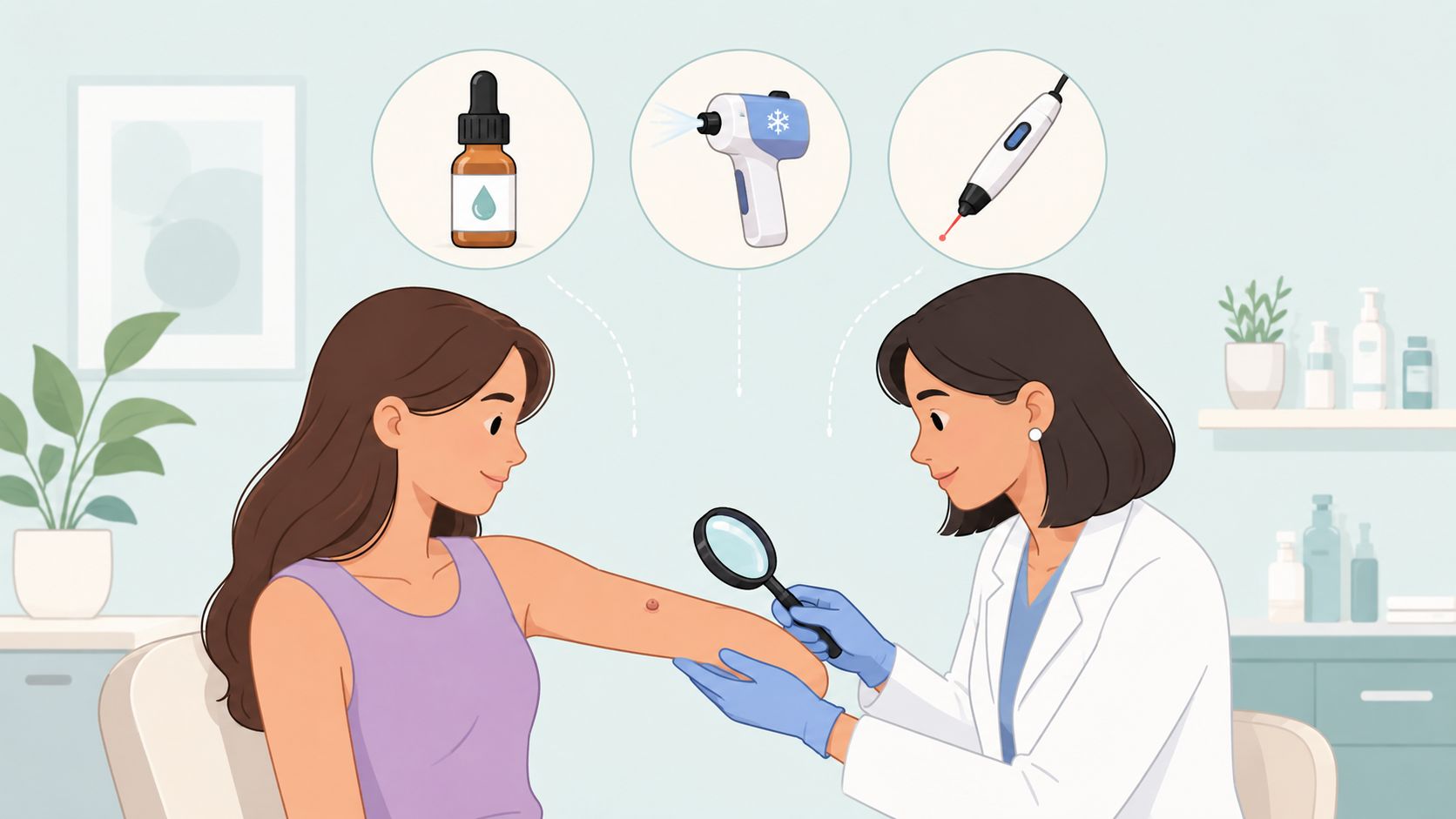
Most skin tag removal products fail for the simplest reason, they try to turn a medical judgment into a retail shortcut. Skin tags are common benign lesions, which is why demand stays steady, but the same topic also has a clear regulatory boundary, the FDA has said it has not approved any prescription or over-the-counter drugs for treating skin tags ClinicalTrials.gov. That split explains why the market breaks into topical products, cryotherapy-style devices, and professional procedures, and it is why clinics need to act as safety gatekeepers, not just sellers of cosmetic fixes.
The commercial side is real. Analysts have valued the category in the billions and expect continued growth, with topical solutions leading the market and retail or homecare channels remaining strong DataHorizzon Research. For South African clinics, that does not mean competing with every shelf product. It means offering the safer path when patients want a quick cosmetic result but do not want burns, scarring, or a missed lesion that should have been assessed first.
Índice
- The Clinical and Commercial Context of Skin Tag Treatments
- Categories of Skin Tag Removal Products and Treatments
- The Safety Gap in Over-the-Counter Skin Tag Products
- When a Skin Tag Is Not a Skin Tag, Red Flags and Misdiagnosis Risks
- Clinical Evidence for Professional Cryogenic and Laser Removal Methods
- Building a Skin Tag Removal Service in Your Clinic
- What Skin Tag Removal Means for the Future of Your Practice
- Frequently Asked Questions About Skin Tag Removal
The Clinical and Commercial Context of Skin Tag Treatments
The first question clinic teams should ask is straightforward, which approach fits a benign lesion that is common, visible, and often in a friction-prone site? Skin tags, or acrochordons, are benign fibrovascular growths that often appear on the neck, underarms, eyelids, and groin, and they're associated with higher prevalence in people with obesity e type 2 diabetes NCBI Bookshelf. That matters because the category is shaped by cosmetic concern, irritation, and convenience, not by a single pharmaceutical pathway.
The regulatory reality shapes the whole market. The FDA position that no prescription or OTC drug is approved for skin tags pushes the category into three practical lanes, topical caustic products, cryotherapy-style home devices, and professional procedures. In practice, that split is useful for clinics because it tells you what patients are already seeing online before they walk in. They are not comparing one approved medicine with another, they are comparing convenience, speed, and the hope of a low-cost fix.
Why the market keeps growing anyway
The growth profile is easy to understand from a clinical perspective. If nearly half of adults are likely to have these lesions at some point, then even a small share of those people deciding to remove one or more skin tags creates a meaningful service line in urban aesthetic practices. That demand is not abstract. It shows up as clients asking for something quick, low downtime, and discreet.
Regra prática: If a treatment category is popular but unapproved, the clinic must become the place where the product story stops and the clinical decision begins.
That is the business opportunity in South Africa. Consumers want a tidy answer, but the market has no single dominant regulated medication category. Clinics that understand that gap can position removal as a consult-led service, not a shelf purchase.
| Métrica | Detail |
|---|---|
| Condition type | Benign skin lesion |
| Common locations | Neck, underarms, eyelids, groin |
| Market shape | Split across topical, cryotherapy-style, and professional procedures |
| Clinical relevance | Steady demand from cosmetic and friction-related concerns |
| Regulatory reality | No FDA-approved prescription or OTC drug for skin tags |
O que isto significa na prática
The commercial upside is real, but so is the risk of treating the wrong lesion or using the wrong method in the wrong site. Skin tag removal is simple only after the lesion has been identified correctly and the patient has been told what the product can and cannot do. A consult-led model gives clinics room to screen for atypical features, explain trade-offs, and avoid turning a minor procedure into an avoidable complication.
That is also where compliance and reputation intersect. If a clinic offers skin tag treatment, the workflow should include consent, documentation, and a clear adverse-event path, because even apparently minor removals can create bleeding, irritation, pigment change, or delayed healing. A practical internal process, including notificação de eventos adversos, helps keep the service safe as volume grows.
Categories of Skin Tag Removal Products and Treatments
The category looks broad from the outside, but in clinic terms it breaks into a few practical groups. Start with topical caustic products. These are usually sold for home use, and their appeal is obvious, they feel private, simple, and inexpensive. That simplicity is marketing, not medicine. If the active ingredient spreads onto healthy tissue, the outcome can be injury rather than controlled lesion removal.
Cryotherapy-style devices sit in the middle of the market. Some are consumer products, some are closer to professional tools, and the difference is not cosmetic. It comes down to control, precision, and repeatability. A freeze that is not controlled by contact, intensity, and timing leaves the clinician guessing about what tissue was treated.
What clinics generally rely on instead
Professional practice usually relies on liquid nitrogen cryotherapy, cauterisation, ligation, or excision PMC review. The reason is straightforward. These methods let the clinician control depth of destruction e haemostasis, which matters more in pigmented skin and in friction-prone sites where surrounding tissue can be damaged easily.
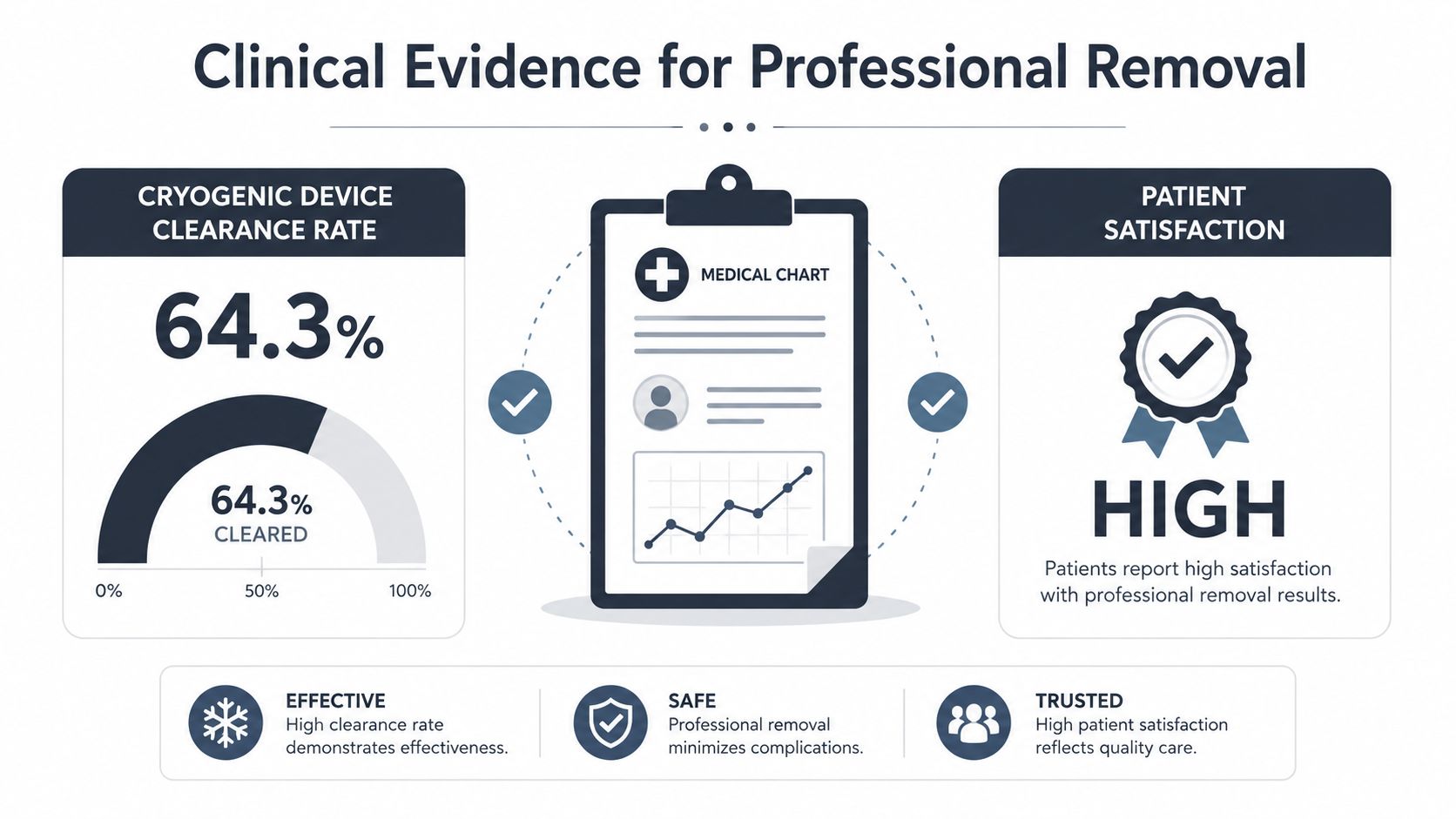
A cryogenic device evaluated in a prospective randomised trial cleared 64.3% of treated tags completely, with half of those cleared after a single application, versus 7.1% for the comparator device, using up to three treatments spaced 15 days apart PMC trial. That does not make cryotherapy magical, it shows that protocol consistency matters.
Professional-grade tools also sit inside a wider aesthetic workflow. A clinic that already delivers non-surgical cosmetic treatments can often add skin tag removal to an existing consult, provided the lesion is confirmed first and aftercare is explained clearly. If a practice wants a broader device discussion later, the internal resource at Tratamentos com laser YAG is useful for understanding how energy-based services are usually framed inside a clinic portfolio.
If the device cannot deliver a controlled result twice in a row, it does not belong in a patient-facing removal pathway.
| Categoria | Método | Utilização típica | Nível de risco |
|---|---|---|---|
| Topical caustics | Chemical application | Home use | Mais alto |
| Consumer cryotherapy | Freeze-based application | Home or retail use | De moderado a elevado |
| Physician-led cryotherapy | Controlled freezing | Clinic use | Lower when properly selected |
| Electrocautery or excision | Thermal or surgical removal | Clinic use | Lower with trained operator |
The Safety Gap in Over-the-Counter Skin Tag Products
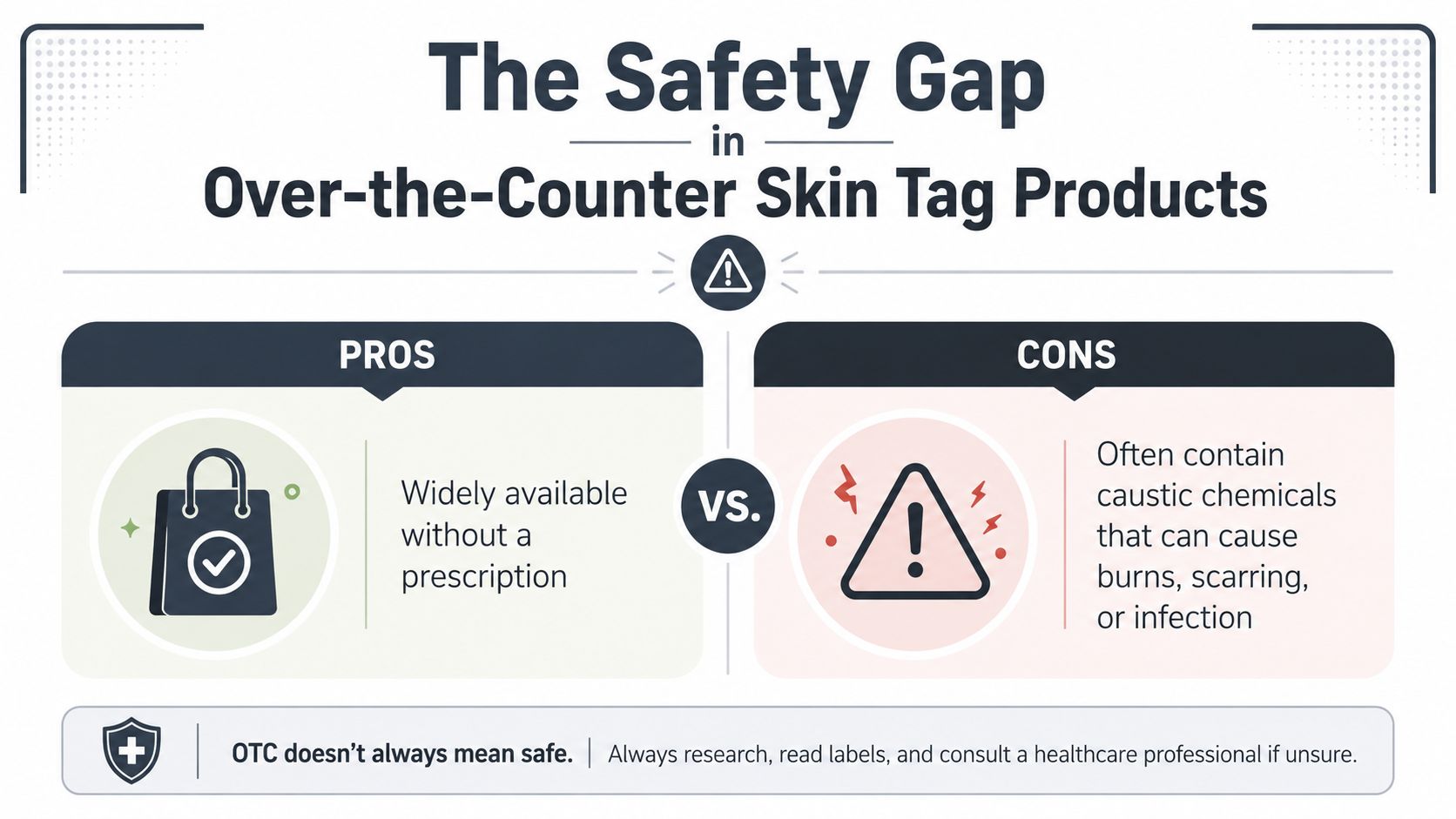
The main problem with over-the-counter skin tag removal products is control. Many unapproved topical removers are chemically caustic, so the outcome depends on active ingredient exposure, concentration, and application precision. If the product spreads beyond the tag, it can injure surrounding tissue and cause burns ou deeper tissue damage instead of a clean detachment.
That risk is not theoretical. Reputable medical sources warn that OTC removal products can cause infection, bleeding, scarring, chemical burns, and skin ulcers, and the FDA has warned that products marketed to remove skin tags are not approved and may injure consumers AARP summary of FDA warning. In clinic, that changes how the question “Can I just buy something online?” should be answered. The response should be clinical, direct, and specific about injury risk.
Why the market still sells these products
Consumer demand stays high because convenience sells. Convenience does not remove the need for control. South African dermatology services generally favour physician-led methods because they can manage controlled tissue destruction e haemostasis rather than relying on a home kit to behave predictably.
For practice owners, the commercial lesson is simple. If a patient has already used an unapproved product and now has irritation, the clinic is no longer competing with a product, it is managing an adverse event. A clear reporting pathway helps with that, and the internal process resource at notificação de eventos adversos fits naturally into clinic governance when home products go wrong.
Clinical caution: A product that cannot be placed precisely on a tiny, movable lesion is a poor choice for eyelids, groin folds, or any site where skin is thin or friction is constant.
A safer offer is not a stronger caustic formula. It is a proper assessment, the right removal method, and documented aftercare. That is what patients need, even if they do not ask for it first.
If your practice already offers non-surgical cosmetic treatments, skin tag removal fits best when the lesion is confirmed first and aftercare is explained clearly. The service works because it solves a common complaint without turning a simple lesion into a self-treatment problem.
When a Skin Tag Is Not a Skin Tag, Red Flags and Misdiagnosis Risks
The most expensive mistake in this category is treating a look-alike as if it were a skin tag. A true acrochordon is usually soft, benign, and attached by a narrow stalk, but other lesions can mimic that appearance. Reputable dermatology guidance warns against home treatment when the lesion is darkly pigmented, rapidly changing, painful, crusted, bleeding without irritation, or unusually large Goodman Dermatology summary. If the diagnosis is uncertain, removal should stop there.
Patient behaviour and clinic discipline often diverge. Patients tend to see a small growth and assume it's harmless. Clinicians know that colour, surface texture, attachment pattern, and surrounding skin changes all matter. A lesion near the eye deserves a different threshold than one on the torso, and a growth in a sensitive site should never be approached casually.
What to say before anyone reaches for a product
A quick screening conversation should cover shape, colour, change over time, and bleeding history. It should also ask whether the lesion is in an area where self-treatment is risky, especially the eyelid ou genital region. The review at clinical skin tone guide is a useful reminder that pigment-aware assessment belongs in everyday aesthetic work, not just in specialist dermatology.
Referral threshold: If the clinician can't confidently name the lesion, the patient should not be told to freeze it, clip it, or chemically treat it at home.
The body areas most prone to friction, like the neck and underarms, are also the sites where people are most likely to self-treat because they seem familiar. That's exactly why clinics should build a habit of confirming diagnosis first. The cost of being wrong is not just delayed healing, it's the possibility of missing a lesion that needed a different pathway from the start.
Clinical Evidence for Professional Cryogenic and Laser Removal Methods
Professional removal works because the operator controls the variables. The lesion is assessed, the technique is chosen, the application is precise, and aftercare is documented. The cryogenic trial already noted showed controlled clearance with a meaningful share of lesions resolving after one application. That result matters less as a marketing figure and more as evidence that a set protocol performs better than improvised treatment.
Cryotherapy is only one part of the picture. Thermal approaches, including electrocautery, and selective laser-based workflows can be used when the clinician wants predictable destruction with minimal collateral injury. Practices that already deliver non-surgical cosmetic treatments often fit skin tag removal into the same consult pattern, diagnosis first, then a method matched to lesion size, location, and skin response. For a focused example of an energy-based approach, Tratamentos com laser YAG belong in the same conversation when the aim is controlled tissue removal with limited disruption.
A practical clinic workflow that holds up
Start with diagnosis confirmation. Then choose the technique that matches the lesion and the area. After treatment, give simple wound care instructions and record the method used, because repeat visits are easier to manage when the first treatment is clearly documented.
Professional removal also benefits from operator skill. A precise result depends on how consistently the device is applied and whether the team understands tissue response. The same discipline applies to adjacent energy-based workflows, where post-treatment care and barrier support affect the overall patient experience.
A clean result comes from controlled depth, not from aggressive settings.
The difference between professional systems and OTC products is not glamour. It is reproducibility. Patients feel that difference in comfort, healing, and confidence.
Building a Skin Tag Removal Service in Your Clinic
A skin tag service earns its place in a clinic when the practice already sees cosmetic patients, friction-related lesions, or people asking for small procedures without downtime. The strongest case is simple. One consultation leads to a clear diagnosis, same-day treatment when appropriate, and a short aftercare plan that the team can repeat without confusion. That does not require a large menu. It requires discipline.
The service also works best when the clinic knows where the boundary sits. A diagnosis-first workflow protects patients from being treated for the wrong lesion, and it keeps the practice from turning a minor cosmetic request into an avoidable complication. Clear triage, careful consent, and a documented plan matter more than marketing language.
Device selection should be grounded in compliance and clinical fit. For South African practices, Aprovação da FDA, certificação CE e licenciamento da SAHPRA are useful markers that the platform has been cleared with safety in mind. The equipment still has to suit the service model and the people using it. Omega Lasers is one example of a company in this space that supplies Aprovado pela FDA, com certificação CE e licenciado pela SAHPRA platforms, alongside training and support, although the device still has to match the specific needs of the clinic.
What has to happen before launch
Staff training should cover lesion recognition, consent, device setup, aftercare, and escalation criteria. The team needs to know when to stop, when to refer, and when a lesion does not fit a benign skin tag pattern. Documentation must be tight enough that any adverse reaction can be traced back to the method used, because that is what supports both clinical review and practice protection. Pricing should reflect the service's real value, consult time, procedure time, and aftercare, not just the minutes spent removing the lesion.
- Evaluate clinical need: Review how many patients already ask about small lesion removal and where those lesions usually appear.
- Assess equipment and training: Match the device to the staff's competence, not the other way around.
- Build protocols and pricing: Standardise consent, aftercare, follow-up, and documentation before the first patient is booked.
A practical launch also includes the recovery materials that sit behind the procedure itself. If the clinic plans to support patients after treatment, it should have the right skin-barrier repair products ready for aftercare guidance and routine use, rather than improvising advice case by case.
Your marketing does not need to be loud. It needs to be accurate. Promote the service as supervised removal of benign lesions, not as a shortcut around diagnosis. That distinction protects the practice, and it tends to attract better-fit patients.
Regra operacional: If the service cannot be explained clearly at reception, it is not ready for sale.
The most profitable version of this service is the one that avoids complications and repeat confusion. That is what keeps a simple procedure from turning into a liability.
What Skin Tag Removal Means for the Future of Your Practice
Skin tag removal is a trust builder with commercial upside. Patients want fast answers for small, visible lesions, and the broader category continues to grow as clinics and consumers look for practical ways to handle these concerns DataHorizzon Research. For practices, that means demand will keep coming. The question is whether the patient gets a counter product first or a clinician who can confirm the diagnosis and treat it safely.
The profitable path is usually the one that looks ordinary from the outside. Examine the lesion, explain the risks, choose the right removal method, and document the result carefully. That approach reduces avoidable complaints and makes return visits more likely, because patients remember when a small concern was handled cleanly and without confusion.
A clinic that handles benign lesions well often earns more than a procedure fee. It builds confidence. That confidence supports the next consult, the next referral, and the next discussion about low-downtime aesthetic care.
Frequently Asked Questions About Skin Tag Removal
Is skin tag removal covered by medical aid in South Africa?
Coverage depends on whether the removal is treated as medical or cosmetic, and that decision usually follows the patient's benefit rules rather than the appearance of the lesion alone. Clinics should state this clearly before treatment, then record the clinical reason for removal whenever it applies.
How many sessions are usually needed?
Some lesions clear after one professional treatment. Others need repeat sessions, especially with cryotherapy-based methods when the tag is stubborn or sits in a difficult area.
What does recovery look like?
Most patients get mild irritation, local pinkness, or short-term sensitivity after professional removal. Healing is usually simpler when the area is kept clean and protected from friction.
Why not just sell home-use products?
Because the main risk is misdiagnosis and injury. OTC products can burn skin, scar, infect, or ulcerate tissue, and they are not a substitute for diagnosis.