




You've probably seen this happen in your clinic already. A patient finishes a treatment cycle, the results are real, but the “before” image lives on one staff member's phone, the “after” shot was taken under different lighting, and the only content fit for Instagram is a rushed selfie at reception.
That isn't a photography problem. It's an infrastructure problem.
A serious photo booth buy for an aesthetic practice isn't about entertainment. It's about building a repeatable system for clinical documentation, consented marketing content, brand presentation, and lead capture. Clinics already evaluate lasers this way. They look at workflow, compliance, support, return, and whether the device helps them grow revenue without creating chaos. A photo booth should be judged by the same standard.
Certifique-se sempre de que a informação é precisa e verdadeira, uma vez que se trata de lasers estéticos, dispositivos baseados em energia e saúde.
Índice
- Why Your Clinic Needs More Than Just a Camera
- Open-Air vs Mirror vs Enclosed Booths
- Essential Features Beyond the Flash
- Calculating Your Photo Booth ROI
- Vetting Vendors and Technical Specifications
- Navigating Legal and Privacy Considerations
- Your Step-by-Step Acquisition Checklist
Why Your Clinic Needs More Than Just a Camera
Most clinics don't have a results problem. They have a consistency problem. Great treatments get delivered, but the images used to prove those outcomes are uneven, badly framed, or impossible to repurpose across social, consultation follow-up, website galleries, and internal case tracking.
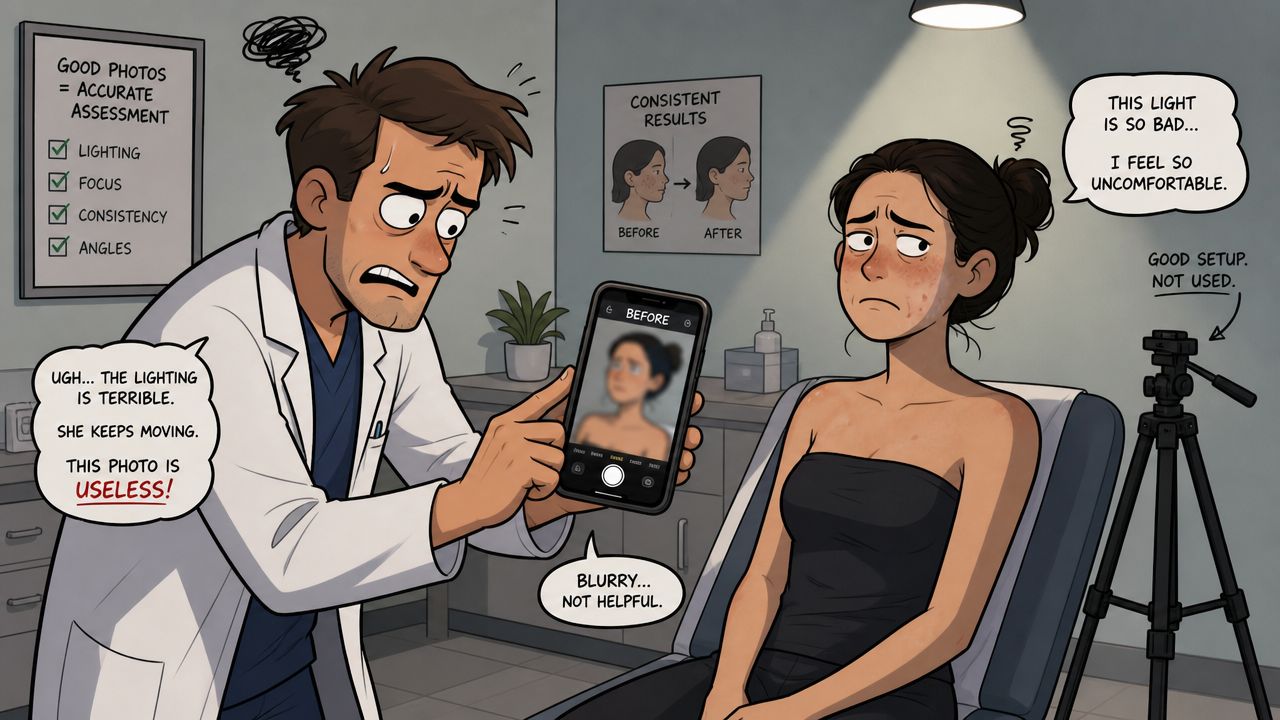
A proper photo booth buy changes that. It gives the clinic a fixed environment for lighting, positioning, output format, and branding. Staff stop improvising. Patients get a cleaner experience. Management gets usable assets instead of a folder full of mixed-quality images.
The real issue is repeatability
If you run consultations, treatment plans, package sales, or review appointments, you already know how much trust visual proof creates. The problem is that handheld photography depends too heavily on who took the image, where they stood, and whether they remembered to frame the same angle again.
That's why a booth belongs in the same category as other revenue infrastructure. It supports the sales process, the patient journey, and your public brand.
Regra prática: If a tool improves both documentation quality and content production, it deserves commercial scrutiny, not casual buying.
There's also a market gap in South Africa. Hire-focused listings don't address ROI calculation and regulatory compliance for mobile aesthetic photo services, even though mobile aesthetic technicians and newly certified beauty therapists need guidance on how photo documentation fits into regulated treatment workflows. That gap matters because clinics aren't buying for a birthday party. They're buying for evidence, trust, and growth.
Why clinics should think like marketers and operators
The strongest clinics don't treat content as an afterthought. They build systems around it. A booth can produce before-and-after documentation, branded reveal moments, patient education visuals, and shareable assets for campaigns. It can also reduce the friction of asking staff to “grab a quick photo” between treatments.
A booth also helps practices that want to professionalise their marketing without making every shoot dependent on an external photographer. The output becomes organised, on-brand, and easier to deploy across your channels.
If your team is already trying to improve clinic content, patient education, and visual case presentation, a structured marketing content creation workflow for aesthetic businesses is a far better model than ad hoc phone photography.
Open-Air vs Mirror vs Enclosed Booths
Clinic buyers often make the wrong first decision. They focus on novelty instead of fit. In an aesthetic setting, the right booth type depends on privacy, footprint, lighting control, and how premium the setup feels inside the practice.

How each format performs in a clinic
Open-air booths are the most flexible. They work well in reception areas, launch events, and clinics that want group photos, branded backdrops, or occasional promotional use. The downside is obvious. Patients have less privacy, and ambient light can interfere with consistency.
Mirror booths are strong for front-of-house presentation. They look polished and invite engagement. In a clinic, that can work for branded moments, treatment launches, or patient milestones. But they're not always the best choice for strict clinical photography, where standard angles and controlled setup matter more than interaction.
Enclosed booths offer the strongest privacy. That matters when patients feel exposed, especially during skin, body, or progress documentation. The trade-off is that enclosed units can feel bulky, take more space, and reduce flexibility if you want to use the same setup for marketing activations in open clinic areas.
Open format suits visibility. Enclosed format suits discretion. Mirror format suits experience-led branding.
A broad guide to choosing event photo booths can be useful for understanding the base formats, but clinics need to apply a different filter. You're not choosing for dance floors or wedding guest flow. You're choosing for treatment credibility, patient comfort, and operational control.
A practical comparison for treatment spaces
| Booth Type | Ideal para | Space Requirement | Professionalism |
|---|---|---|---|
| Open-Air | Reception marketing, launch days, group content | Flexible, but needs a defined backdrop area | Can look premium if styled well, but less private |
| Mirror | High-end front-of-house brand experience | Moderate footprint | Strong visual appeal and polished presentation |
| Enclosed | Private documentation and sensitive patient use | Largest dedicated footprint | Feels discreet and controlled |
Two questions usually settle the choice fast.
First, where will the booth live most of the time? If the answer is a consultation corridor or compact treatment area, a large enclosed unit may become a burden. Second, what job matters most? If your priority is disciplined before-and-after capture, privacy usually beats novelty.
For many aesthetic practices, the best decision isn't the most theatrical unit. It's the one staff will use properly every day.
Essential Features Beyond the Flash
A clinic shouldn't buy on appearance alone. The software layer and workflow features decide whether the booth becomes a revenue asset or expensive furniture.
What separates a clinic asset from a gadget
The first requirement is consistent image output. That means controlled lighting, repeatable framing, and simple staff operation. If the system takes too long to launch, recalibrate, or explain to patients, it won't survive a busy day.
The second requirement is branding control. Every patient-facing output should be customisable. If the clinic can't apply its logo, colour direction, or treatment campaign messaging, the booth won't pull its weight as a marketing tool.
The third requirement is data capture with consent discipline. If you want to collect contact details for follow-up campaigns, consultation reminders, or launch invitations, the process must be transparent and POPIA-aware. Clinics need clear consent flows, not casual list building.
Features that actually support revenue
Here's what tends to work in practice:
- Branded output templates: Every image, print, or digital share should reinforce the clinic identity.
- Simple patient journey prompts: The interface should guide the user without staff hovering over every step.
- Fast digital delivery: If patients can receive assets quickly, the clinic has a better chance of immediate sharing.
- Structured file handling: Teams need images sorted in a way that supports retrieval, review, and approved use.
- Reliable print capability: For some clinics, printed treatment reminders or branded keepsakes still add value.
In South Africa, the financial baseline matters. Photo booth hire for a 3 to 4 hour event averages between R4,795 and R7,595. That's useful because it forces the purchase decision into commercial terms. If your practice keeps paying for occasional hired setups, there comes a point where owning a properly specified unit makes more sense than repeated short-term spend.
For clinics producing social video from still assets, short-form workflow matters too. Teams experimenting with motion-style edits can borrow ideas from consumer content processes such as editing Live Photos for TikTok, then adapt those lessons into compliant, consented clinic marketing.
A feature only matters if staff use it repeatedly and management can tie it back to workflow, visibility, or booked treatments.
Don't get distracted by novelty functions that look clever in a demo but add nothing to documentation quality, list growth, or patient trust. Clinics need fewer gimmicks and tighter operations.
Calculating Your Photo Booth ROI
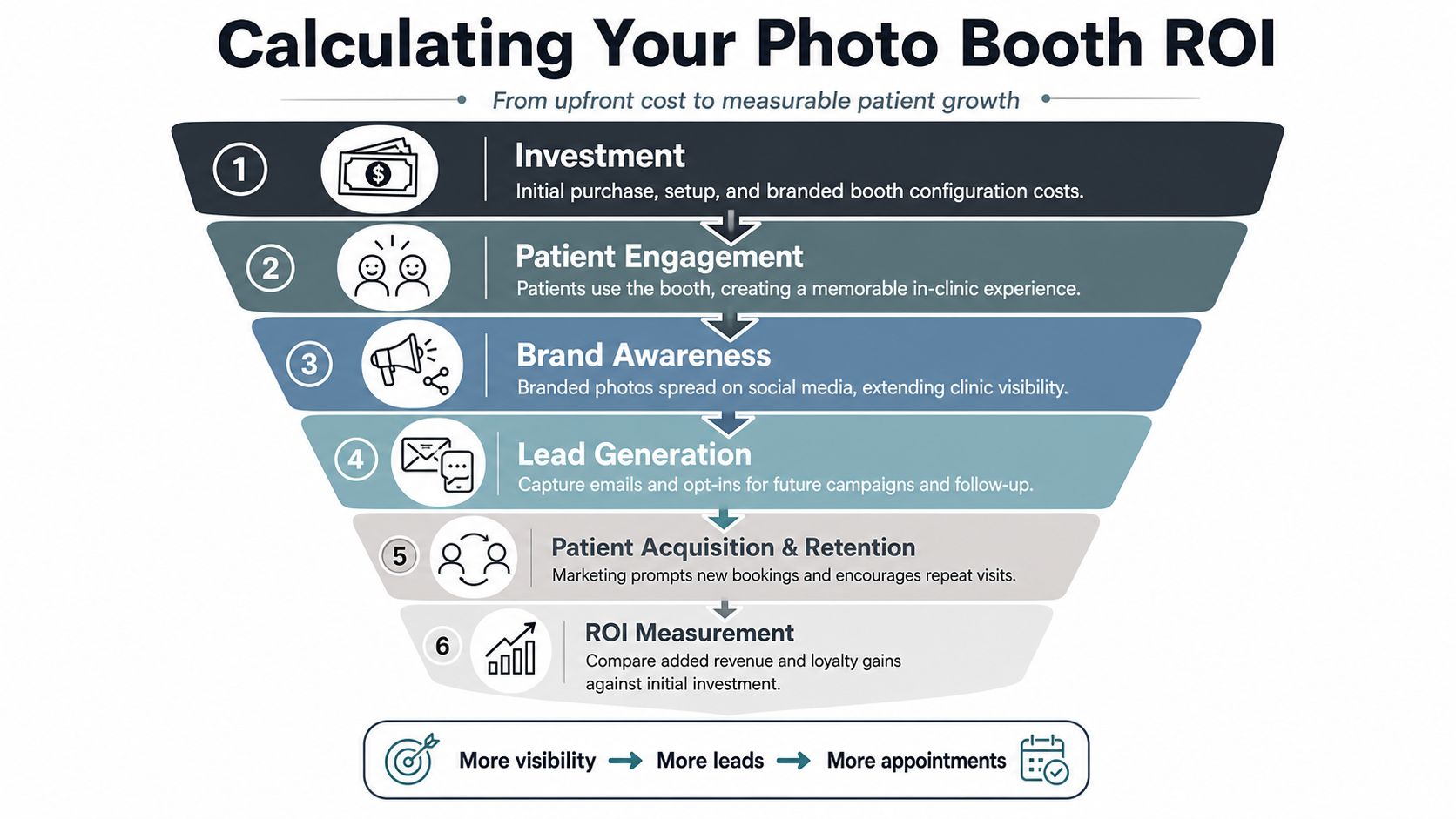
The financial case for a photo booth buy should be built the same way you evaluate any other non-core but growth-linked equipment purchase. Start with one question. Does the booth help generate revenue, reduce outsourced spend, or improve conversion enough to justify ownership?
The simplest ROI logic
The cleanest model is:
Return = revenue influenced + costs avoided – ownership and operating costs
Revenue influenced can include consultation bookings from campaigns, higher treatment acceptance because before-and-after proof is stronger, repeat visits driven by better follow-up marketing, and event-day lead capture. Costs avoided can include repeated hire fees, ad hoc content shoot spend, or staff time wasted fixing poor visual assets.
There's a useful commercial reference point outside South Africa. In the US, one photo booth booked for eight events per month at an average rate of $600 generates $57,600 annually, with profit margins often exceeding 60 to 70%. A clinic in ZA shouldn't copy that model directly, but it can adapt the logic. The point is simple. A booth isn't automatically a cost centre. In the right operating model, it can be a productive asset.
De onde vem, na verdade, o retorno
The strongest clinic use cases usually sit in four buckets:
Before-and-after credibility
Better image consistency improves consultations and package sales.Content production
One structured setup can generate usable campaign assets far more reliably than spontaneous phone photography.Lead capture at activations
If the clinic hosts launch days, open days, or partnership events, the booth can support permission-based follow-up.Retention moments
Milestone photography after treatment cycles can create a stronger sense of progress and completion.
A useful mindset shift comes from other commercial categories. Businesses often justify security purchases by looking beyond direct prevention and into wider operational return. That same broader investment lens is well explained in this article on commercial CCTV ROI from Securitec Security. The category is different, but the decision logic is familiar. Buy assets that support both protection and performance.
If the booth only takes photos, it's a cost. If it improves conversions, captures consented leads, and replaces repeat hire spend, it starts acting like a profit tool.
Vetting Vendors and Technical Specifications
Most buying mistakes happen after the demo. The images look decent, the unit seems easy enough, and the salesperson talks about custom branding. Then the clinic discovers the support is thin, the software is unstable, and staff training was never properly included.

What to ask the supplier before you sign
A booth supplier isn't just shipping hardware. They're becoming part of your operating chain. That means you need answers on support, education, replacement timelines, software updates, and what happens when the booth fails before a major clinic activation.
There's a clear information gap in the local market. Buyers often can't compare long-term profitability because there's no data on 2-year manufacturer warranty implications, education hub access, or marketing support structures. For clinic managers opening or scaling a practice, that's a serious weakness. Equipment without support becomes a staff morale problem very quickly.
Use this checklist when you vet a supplier:
- Support response: Ask who handles faults, how support is delivered, and what happens if the booth fails during business hours.
- Profundidade de formação: Your staff shouldn't need to guess how to run templates, exports, consent steps, or patient-facing flows.
- Update policy: Find out whether software improvements are included or become a surprise expense later.
- Warranty clarity: Don't accept vague wording. Ask what's covered, what's excluded, and how claims are processed.
A strong after-sales framework matters just as much in a booth purchase as it does in any high-value clinic equipment category. That's why clinic owners should look closely at what good after-sales service in aesthetic technology looks like before committing to any supplier relationship.
Specs that matter in day-to-day use
A booth spec sheet can get noisy fast. Strip it back to operational essentials.
| Área | O que verificar | Porque é importante |
|---|---|---|
| Camera | Image sharpness and consistency | Poor output weakens both records and marketing |
| Lighting | Even illumination across skin and facial contours | Inconsistent light makes comparisons less credible |
| Software | Branding, capture flow, export handling | Workflow quality decides daily usability |
| Printing | Output speed and finish quality | Important if prints are part of the patient experience |
| Footprint | Setup size and movement ease | Space friction kills adoption |
The biggest trap is buying for the demo room instead of your real clinic. A unit can look impressive in a showroom and become awkward in a treatment-led environment. Buy for workflow, not theatre.
Navigating Legal and Privacy Considerations
A clinic can't treat patient photography like general event photography. The moment images connect to treatment outcomes, identity, or contact details, the handling standard rises.
Marketing consent and clinical records are not the same thing
One consent doesn't cover every use. A patient may agree to photography for treatment documentation but refuse social media use. Another may accept internal case tracking but not paid advertising. Staff need that distinction built into the process, not left to memory.
If the booth collects names, mobile numbers, or email addresses, that process should align with POPIA expectations around transparency, purpose, and permission. The cleanest operating model is simple language, explicit choices, and secure handling. Clinics should also make it easy for patients to understand what is being stored and why.
Good clinics don't bundle every permission into one vague form. They separate treatment documentation from marketing use and act accordingly.
A more detailed clinic-wide approach to image handling, records, and trust starts with strong normas de confidencialidade do doente, especially where visual evidence and personal data intersect.
Know the line between booth compliance and device regulation
This point matters because clinic owners often blur categories. A photo booth is not a medical device. It doesn't sit in the same compliance pathway as an aesthetic laser platform.
That distinction is explicit. The term “photo booth buy” is a semantic mismatch for medical-aesthetic device procurement because photo booths are digital event kiosks and have no regulatory overlap with SAHPRA, CE, or FDA pathways required for laser devices in ZA clinics. In other words, don't assume a booth needs the same regulatory file as a treatment device. But also don't assume that means it can be used carelessly. Privacy, consent, and record handling still apply.
The safest stance is disciplined separation. Treat the booth as an operational and marketing system. Treat actual treatment devices according to the stricter medical framework they require.
Your Step-by-Step Acquisition Checklist
A smart photo booth buy doesn't start with product browsing. It starts with commercial intent. If the clinic can't define the job the booth needs to do, the purchase usually drifts into aesthetics, novelty, and wasted budget.
A clean buying process for clinic owners
Use this order.
Define the primary outcome
Decide whether the booth is mainly for before-and-after documentation, reception marketing, launch activations, or mixed use. One clear priority makes the shortlist tighter.Assess your patient environment
Look at privacy expectations, room layout, lighting conditions, and how premium the setup needs to feel inside your brand.Choose the right format
Open-air, mirror, and enclosed units all solve different problems. Match the format to how the clinic operates, not to what looks impressive online.Filter for essential features
Focus on branding control, dependable image quality, consent-aware data capture, file organisation, and usability for staff under pressure.Interrogate support before price
A lower purchase price can become expensive if the supplier offers weak onboarding, vague warranty handling, or poor technical backup.Build your ROI case in writing
Map where the return should come from. That may be stronger consultation visuals, reduced repeat hire spend, better content output, or lead capture from clinic campaigns.Plan workflow before delivery
Decide who operates it, where files go, how consent is stored, and when the booth is used in the patient journey.
The clinics that get value from these systems don't treat them like décor. They embed them into consultation flow, treatment milestones, content planning, and patient communication.
A booth can be a gimmick. It can also be a disciplined business asset. The difference comes down to how you buy, how you deploy, and whether your team uses it with the same seriousness applied to any other growth-critical clinic investment.
If you're evaluating growth-focused clinic equipment and want a partner that understands ROI, compliance, training, and long-term support, explore Lasers Omega. The right supplier doesn't just deliver a machine. They help you build a more profitable practice.