




A client has already formed an opinion about your clinic before the first pulse is delivered. They notice the reception desk, the cleanliness of the room, the way the trolley is organised, and the practitioner’s hands. In a premium aesthetic setting, gloves aren’t a throwaway detail. They’re part of the treatment standard the client can see.
That matters even more in South African clinics where teams often work fast, move between consults and procedures, and handle expensive laser handpieces in warm rooms that can challenge grip and comfort. If your glove choice is wrong, it shows up in small failures. Slippage on a handpiece, loss of tactile feel during skin assessment, rushed glove changes, torn fingertips, or a client questioning whether your protocols are as polished as your branding.
Black nitrile gloves have become the default in many high-end treatment rooms for good reason. But “black nitrile” on the box doesn’t automatically mean the glove is right for laser work, compliant for clinic use, or cost-effective across a busy month. Thickness, grip, cuff design, standards, and glove-change habits all affect performance.
Índice
- The Professional Standard Why Details Like Gloves Matter
- The Clinical Advantage of Black Nitrile Gloves
- Decoding Glove Specifications for Peak Performance
- Navigating Compliance and Certification in South Africa
- Mastering Glove Use for Flawless Infection Control
- A Smart Procurement and Stocking Strategy for Your Clinic
- Conclusion Elevating Your Practice with Deliberate Choices
The Professional Standard Why Details Like Gloves Matter
A client comes in for laser hair removal. The room is calm, the machine is clean, the paperwork is ready, and the practitioner reaches for a fresh pair of black gloves. That simple moment does a lot of work. It signals hygiene, control, and a clinic that pays attention.
In practice, clients rarely know glove specifications, but they do read visual cues. Black gloves look deliberate. They photograph well in branded content, they hide treatment stains better than lighter colours, and they support a premium clinical image without looking theatrical. In treatments involving pre-cleanses, gels, marker residue, or minor pinpoint bleeding, that visual control matters.
I’ve found that clients also connect glove changes with professionalism. If a practitioner removes gloves after touching a trolley, computer, phone, or drawer and then puts on a clean pair before touching the client again, the client notices. They may not comment on it, but it builds confidence.
Clean technique isn’t only about infection control. It’s also about being visibly disciplined in front of the client.
The same principle applies to every consumable in the room. If you’re applying pre-treatment products such as topical numbing cream for aesthetic procedures, your PPE has to support both safe handling and a polished client experience. Cheap, shiny, poorly fitting gloves undermine that immediately.
Black nitrile gloves sit at the intersection of brand, safety, and daily workflow. In a serious clinic, they’re not an accessory. They’re part of the treatment standard.
The Clinical Advantage of Black Nitrile Gloves
Black nitrile gloves became widely recognised after their introduction in the mid-1990s as a durable, latex-free option, and their professional appearance, stain-hiding ability, and chemical resistance helped them gain traction in tattooing and hairdressing before high-end aesthetic clinics adopted them. The broader nitrile glove market is projected to grow at 5.7% from 2023 to 2030, with black variants continuing to gain market share, according to Cetrix’s overview of the rise of black nitrile gloves.
Why black works in treatment rooms
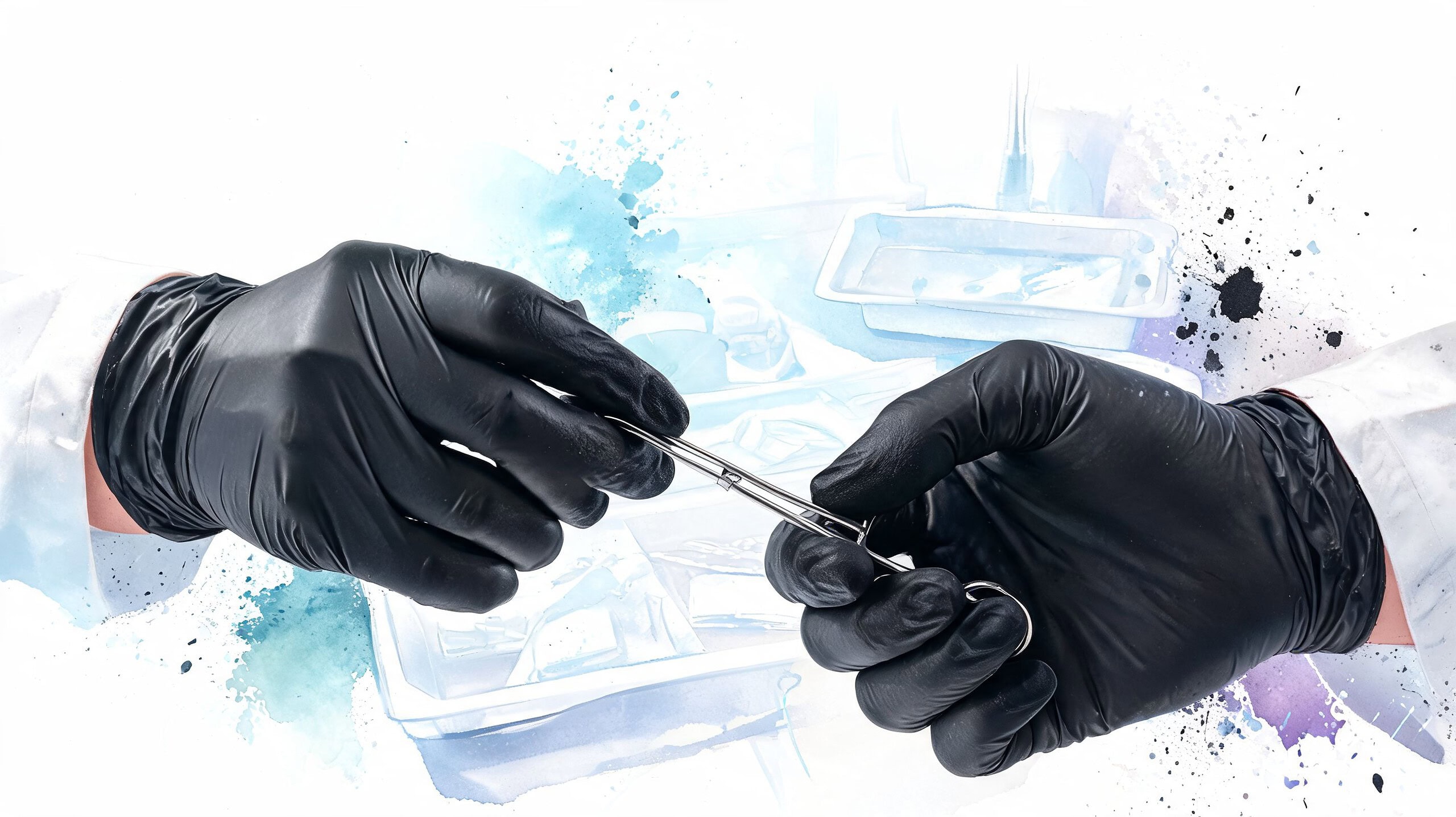
Black gloves do something lighter gloves don’t. They create visual contrast against skin, treatment markers, gauze, and device surfaces. During laser work, that contrast can make hand positioning look cleaner and more precise, which supports both operator confidence and client perception.
They also hide stains better. In aesthetics, that’s useful when you’re dealing with tinted products, carbon residue, blood spotting, post-extraction debris, or dark gels. A glove that looks messy halfway through a procedure makes the whole treatment feel messier, even when your protocol is sound.
There’s a psychological factor too. Black gloves have become associated with specialist environments where image and precision matter. That doesn’t replace competence, but it does reinforce it.
Why nitrile beats latex and vinyl for clinic work
Material matters more than colour. Black nitrile gloves are made from a synthetic material developed to offer strong chemical resistance and to suit people with latex allergies. That latex-free composition is one of the strongest reasons they’ve become a clinical favourite.
For aesthetic clinics, the practical advantages are straightforward:
- Latex-free protection: This reduces allergy concerns for both staff and clients.
- Better durability: Nitrile is known for stronger resilience and puncture resistance than vinyl, poly, or latex alternatives.
- Chemical resistance: Black nitrile gloves are suited to handling oils, solvents, acids, cleansers, antiseptics, and similar treatment-room substances.
- Professional appearance: The black finish keeps hands looking cleaner during procedures where visible residue would otherwise stand out.
Black nitrile gloves are also used across chemical manufacturing, laboratories, veterinary settings, tattooing, meat processing, and automotive work, which tells you something important. They aren’t popular because they look good. They’re popular because they hold up under messy, high-contact conditions.
What works and what doesn’t
What works is a well-fitted black nitrile glove that maintains feel, doesn’t go slippery too quickly, and doesn’t distract the practitioner. What doesn’t work is choosing black gloves purely for branding while ignoring fit, finish, and material quality.
A glove can look premium and still perform badly. The common problems are easy to recognise:
| Questão | What it causes in clinic |
|---|---|
| Poor fit | Finger fatigue, reduced control, more tearing |
| Weak cuff | Irritation during repeated donning and removal |
| Smooth finish only | Slippage on gel-coated or sanitised surfaces |
| Thin low-quality material | False economy through tears and repeat use |
The best nitrile gloves black clinics use don’t draw attention to themselves. They let the practitioner work accurately, then come off cleanly.
That’s the standard to buy for.
Decoding Glove Specifications for Peak Performance
A laser room in Durban or Johannesburg gets busy fast. The handpiece is warm, the practitioner has already cleaned down twice, conductive gel is on the trolley, and the room temperature is climbing. If the glove spec is wrong, control drops before the machine becomes the problem.
That is why the box details matter. In an aesthetic clinic, glove choice affects trigger feel, skin stretch, grip security, change frequency, and treatment flow. For advanced laser platforms, especially larger handpieces used over long sessions, the wrong glove creates friction in the operator’s hand and inconsistency on the client’s skin.
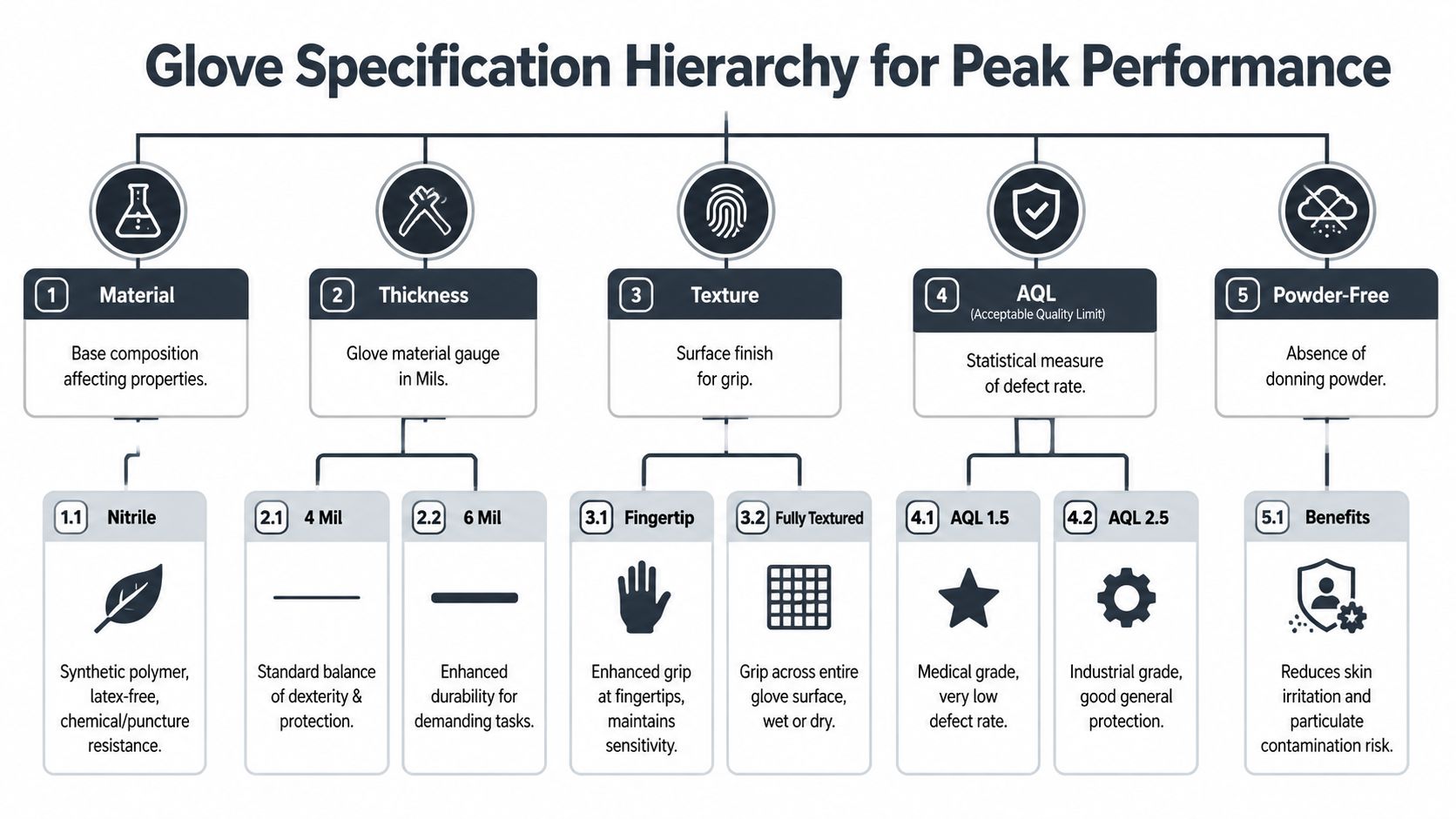
Industrial black nitrile gloves commonly sit in the 4 to 6 mil range, or 0.10 to 0.15 mm. That range is widely used because it gives a workable balance between barrier performance and finger control for repetitive clinical tasks, as outlined by PowerPak’s black nitrile glove specification guide.
Thickness affects control
Thickness is the first trade-off to get right. More material usually improves wear life, but it also reduces tactile feedback. In laser and IPL work, that loss shows up in small movements. You feel it when rotating a wrist to keep the handpiece flush, when stretching curved treatment areas, and when checking skin response between passes.
For most aesthetic rooms, the practical middle ground is still 4 to 6 mil. Thinner gloves can feel excellent for short procedures and detailed work around smaller treatment zones, but they are more likely to fail under repeated wiping, gel contact, and fast turnover. Heavier gloves last longer, yet they can make the handpiece feel bulkier than it is, which matters during long sessions on legs, backs, or full-face treatments.
Some manufacturers list separate palm and finger measurements. That is useful because fingertip thickness often decides how much trigger feedback you retain, while palm thickness influences durability and comfort during prolonged gripping. In practice, I would rather see a clinic use a consistent mid-range glove that staff can work confidently in all day than chase the thickest option on the assumption that more material always means better protection.
Use this as a practical guide:
- Around 4 mil: Better fingertip feel, better for short laser sessions, detailed skin work, and practitioners who rely heavily on tactile feedback.
- Around 5 mil: Usually the best compromise for mixed treatment lists, decent durability, and handpiece control that still feels natural.
- Around 6 mil: Better for high-volume rooms, frequent wipe-downs, and teams that regularly split gloves at the fingertips or cuff.
- Above the useful range for your task: More grip effort, more hand fatigue, and less precise control over angle and pressure.
In South African clinics, that trade-off is operational, not theoretical. If a practitioner has to grip harder to stabilise a large handpiece through a humid afternoon list, fatigue arrives earlier. Once that happens, technique starts to drift.
Material performance under treatment-room exposure
Gloves do not fail only during treatment. They often start degrading during prep. Skin cleansers, antiseptics, conductive gels, numbing product residue, cooling media, and repeated surface disinfection all add wear before the first laser pulse.
Black nitrile is made from Nitrile Butadiene Rubber (NBR). Clinics choose it because it stands up well to oils, solvents, and common cleaning agents used in treatment rooms, and because it avoids the latex allergy concerns associated with natural rubber. Those are baseline advantages, but product quality still varies. Two black nitrile gloves can look similar on the shelf and perform very differently after an hour of real clinical use.
What matters in practice is whether the glove keeps its structure and feel after repeated contact with routine products. If the material softens, goes tacky, or starts to lose shape, the practitioner notices it immediately in the hand. That affects tray handling, applicator control, packaging grip, and confidence when repositioning a live handpiece.
In clinic terms, chemical resistance supports three operational outcomes:
Stable barrier performance during prep
The glove needs to tolerate cleansers, antiseptics, gels, and post-care products without breaking down early.Predictable handling throughout the procedure
If the surface feel changes halfway through treatment, precision changes with it.Fewer reactive glove changes
Planned glove changes protect workflow. Unplanned changes interrupt it.
Grip and ergonomics in laser work
Grip is usually underbought. Procurement teams often compare colour, carton price, and broad grade claims, then ignore fingertip texture, cuff design, and fit consistency across batches. In an aesthetic clinic, those details affect daily performance more than the marketing language on the box.
For laser work, textured fingertips matter because treatment rooms are not dry, static environments. Hands warm up. Alcohol-based products are in constant use. Gel, vapour, and humidity change surface feel. A glove with no meaningful texture can become slick on the outside, while a poor internal finish allows the hand to move inside the glove as perspiration builds. Both problems reduce control.
A beaded cuff also earns its place. It helps the glove stay seated during repeated donning and removal, and it reduces the irritation that comes from a cuff rolling or tearing during a packed list. That matters in ZA clinics where staff may change gloves repeatedly between room prep, photography, consultation contact, treatment setup, and procedure phases.
The ergonomics point is often missed. Handpiece design, glove fit, and operator fatigue are linked. A glove that is slightly too loose in the fingers makes staff grip harder. A glove that is too thick dulls trigger response. A glove with weak texture forces extra pressure through the thumb and index finger to maintain stability. Over a full day, that means more fatigue and less consistent delivery.
I see the best results when clinics standardise around three checks:
- Fit that locks the fingertips in place without compression
- Texture that still grips after sanitiser and gel exposure
- A cuff that survives repeated glove changes without fraying
That last point matters more than many clinic owners expect. In South African aesthetic practice, glove changes are not limited to obvious contamination events. Staff should also change gloves after handling non-sterile surfaces during setup, after photography or admin interruptions, after cleaning residue builds up on the fingertips, and between treatment phases where grip quality has dropped enough to affect control. If the glove cannot handle those repeated changes, the cheaper carton often becomes the expensive one.
For advanced laser platforms, the best-performing black nitrile glove is usually not the cheapest and not the heaviest. It is the one that gives consistent fingertip feedback, maintains grip in warm rooms, and holds up through the actual change pattern of a busy clinic day.
Navigating Compliance and Certification in South Africa
A laser room is a poor place to discover that a glove carton was bought on colour and price alone. In a South African aesthetic clinic, glove selection has to stand up to two tests at once. It must support precise handpiece control, and it must hold up under scrutiny if there is an exposure incident, a staff injury report, or a supplier dispute.
For that reason, I treat glove-box checks the same way I treat laser platform checks. If the labelling is vague, the product is not ready for clinical use. Black nitrile may be the professional standard in aesthetics, but only when the specification is clear and traceable.
What to look for on the box
Start with the product identity. The box should state nitrile clearly, not a loose term like "synthetic gloves" that leaves too much open to interpretation. It should also identify the intended use. A glove sold for general cleaning or retail tasks is not automatically suitable for client-facing procedures that involve prep solutions, repeated glove changes, and fine motor control around expensive handpieces.
Then check the technical and traceability details:
- Material stated clearly: Nitrile should be named directly.
- Standards claims shown on the packaging: If ASTM claims are made, they should be printed clearly and match the supplier documents.
- Intended use or grade identified: You need to know whether the glove is positioned for clinical barrier use or only for light industrial tasks.
- Batch and manufacturer traceability: Lot numbers and manufacturer details must be easy to find.
- Importer or supplier support: A credible supplier can provide a datasheet, declaration information, and answers to technical questions without evasive sales language.
Those checks sound basic. They prevent a lot of avoidable problems.
Why certification details affect treatment quality
In aesthetics, compliance is tied to performance. If a glove tears easily at the cuff, sheds grip after exposure to cleanser, or varies in sizing from one batch to the next, that becomes an operational issue long before it becomes a legal one. Staff start adjusting technique to compensate. Hand fatigue increases. Trigger control gets less consistent on long treatment days.
That matters even more with advanced laser platforms. Staff are already managing handpiece angle, foot pedal timing, client movement, plume control, and eye protection in the same treatment window. Gloves that fit badly or lack clear specification add another variable that the clinic did not need. Clinics should apply the same discipline to consumables that they apply to laser safety glasses for aesthetic procedures. Both are part of the control system around the treatment, not minor accessories.
A practical South African compliance filter
Junior staff often assume any black glove looks clinical enough. Procurement teams sometimes make the same mistake when stock is tight and a cheaper substitute appears. That approach causes trouble in real clinics.
Use a simple rule. If the packaging and supplier documents do not let you verify what the glove is, who made it, what batch it came from, and what standards are being claimed, keep it out of the treatment room.
South African clinics already carry enough regulatory and reputational risk. Gloves are a small line item, but they sit directly inside your infection-control system and your day-to-day treatment quality. Clear labelling, traceability, and honest specification claims are how you filter out stock that creates unnecessary exposure for the business and for the operator.
Mastering Glove Use for Flawless Infection Control
Most glove failures in clinics aren’t material failures. They’re protocol failures. Staff touch a phone, then the client. They adjust a machine screen with contaminated gloves. They move from skin cleansing to post-care without a planned glove change because nobody has defined where one stage ends and the next begins.
That gap is real in South Africa. A 2023 survey of 186 South African cosmetic clinics found that only 37% had documented glove-change protocols aligned with national infection-control guidelines, while SAHPRA and ICAT expectations require glove changes between patients and when gloves are contaminated or torn, but don’t define a minimum number of changes within one procedure. That finding comes from the South African glove protocol summary.
Donning and doffing without contaminating yourself
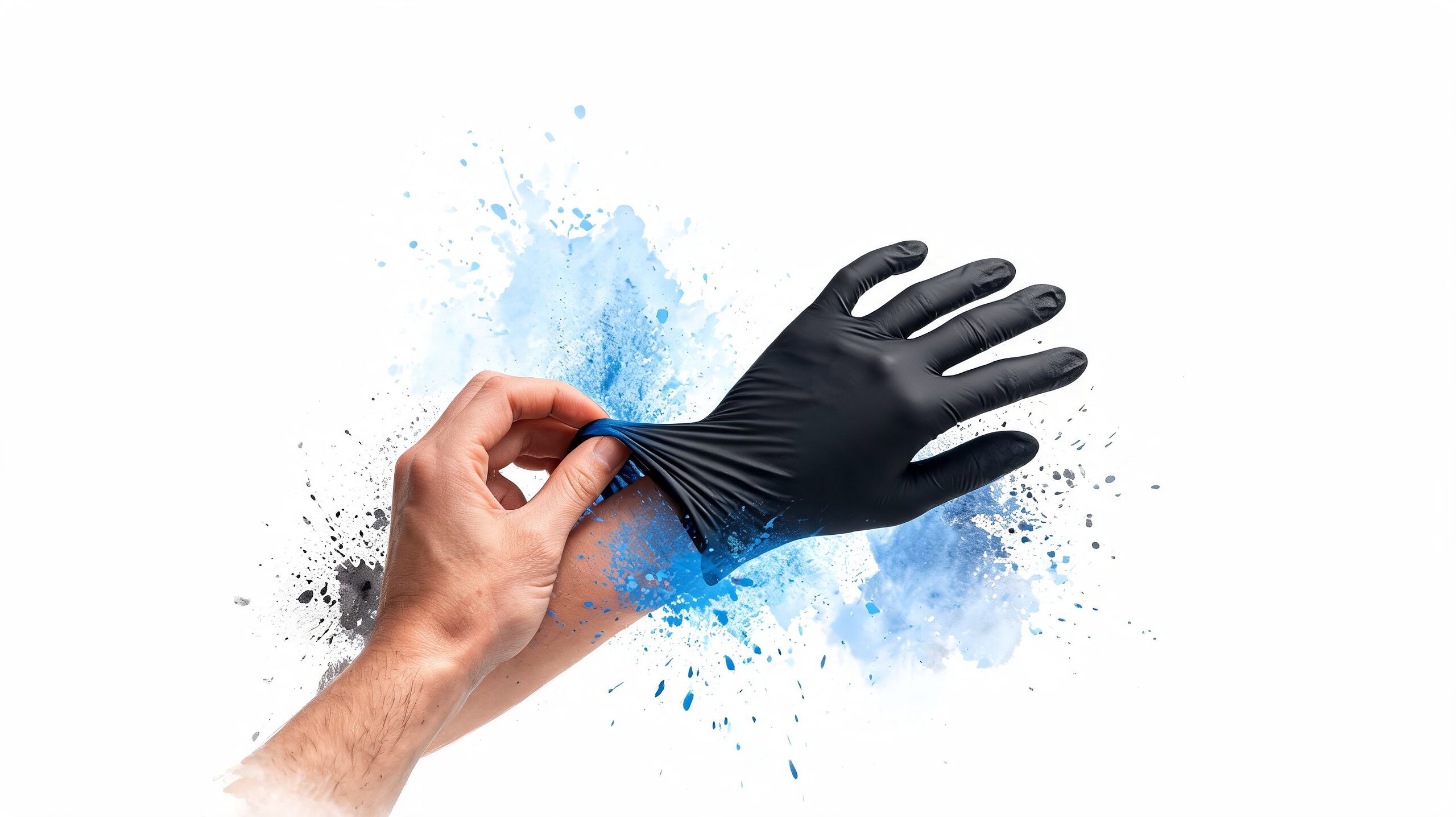
Good glove use starts before you touch the client. Hands must be clean and dry. Jewellery should be removed if it can catch or compromise the glove. Nails should be short enough not to stress the fingertips.
A clean donning sequence is simple:
Prepare the treatment space first
Open what you can, position consumables, check settings, and reduce the need to touch non-clean surfaces after gloving.Perform hand hygiene
Let hands dry properly before putting gloves on. Damp hands make donning harder and can affect comfort.Inspect the pair quickly
Look for visible tears, weak cuffs, or obvious defects before use.Touch only the glove exterior needed to don
Don’t handle drawers, pens, or your phone once gloves are on.
Removal matters just as much. Pinch the outside of one glove near the wrist, peel it away, hold it in the gloved hand, then slide ungloved fingers under the wrist edge of the remaining glove and peel it off over the first glove. Dispose immediately. Perform hand hygiene after removal.
A lot of cross-contamination happens in the “just for a second” moments. The practitioner taps a screen, answers a message, opens a drawer, or adjusts eyewear. If your team uses laser safety glasses for treatment-room eye protection, those should be set out before gloving where possible, not handled mid-procedure with contaminated gloves.
A practical glove-change protocol for aesthetic treatments
Because regulations don’t give a treatment-by-treatment glove count, clinics need a workflow rule staff can realistically follow. I recommend defining glove changes by touchpoint change, not by elapsed time.
Here’s a practical standard for common laser and aesthetic workflows:
- Start of patient contact: Put on a fresh pair after room prep and before touching the client.
- After skin cleansing if you then touch equipment controls, drawers, bottles, or paperwork: Change gloves before returning to the client.
- Before invasive or contamination-prone steps: If there’s any blood spotting, broken skin, extraction work, or contact with potentially contaminated material, use a fresh pair.
- After touching non-clean surfaces during treatment: Change immediately.
- After post-care application if you need to handle notes, payment devices, doors, or phones: Remove gloves before touching admin surfaces.
- Always between patients, and immediately if torn or visibly contaminated: Compliance is imperative.
For multi-step treatments, I train staff to think in zones of cleanliness. Prep zone. Procedure zone. Post-care zone. Once a glove crosses into a non-clean touchpoint, it shouldn’t come back to the client.
Here’s a simple clinic version you can post in a treatment room:
| Treatment moment | Glove action |
|---|---|
| Before first client contact | Fresh pair |
| After contamination or tear | Change immediately |
| After touching trolley handles, screens, phones, doors, drawers | Change before touching client again |
| Between distinct dirty and clean procedure stages | Alterar |
| End of treatment before admin tasks | Remove and perform hand hygiene |
A glove is clean only until it touches something that isn’t. Staff need a rule they can use under pressure, not a policy that sounds good in a file.
Once this is written into SOPs and demonstrated in practical training, compliance becomes much easier.
A Smart Procurement and Stocking Strategy for Your Clinic
Buying gloves box by box is how clinics overspend. Buying the cheapest case is how they create hidden losses. The right procurement strategy sits in the middle. It matches glove performance to procedure type, staff habits, and monthly usage patterns.
The market context supports a more disciplined approach. The global black nitrile gloves market was valued at USD 2,962.1 million in 2025 e prevê-se que atinja USD 6,034.6 million by 2033, growing at a 9.0% CAGR, de acordo com Data Insights Market’s black nitrile glove market report. In an expanding PPE market, clinics need purchasing systems, not impulse buying.

Buy for procedure reality, not box price
The cheapest glove isn’t the least expensive glove to use. If staff tear it during donning, double-glove because they don’t trust it, or change it more often because grip fails, your actual cost rises.
Separate your buying categories by use:
| Clinic use | What to prioritise |
|---|---|
| Routine laser hair removal | Medium thickness, grip, cuff stability, comfortable fit |
| Skin prep and product-heavy work | Chemical resistance, reliable barrier, powder-free finish |
| Short admin or non-clinical tasks | Keep these separate from treatment stock if used at all |
| Procedures with higher contamination potential | A more robust glove and stricter change discipline |
Non-sterile black nitrile gloves will suit many routine aesthetic applications. Sterile gloves belong where the procedure and your clinical judgement require a sterile field. The mistake is using one glove type for everything because it simplifies ordering. It rarely simplifies outcomes.
A second mistake is letting staff “make do” with the wrong sizes. Poor sizing creates tears, fatigue, and wasted pairs. Stock the sizes your team uses, not just the sizes your supplier had available at a discount.
How to calculate clinic usage simply
You don’t need a complicated inventory model. You need a repeatable one.
Use this formula:
average pairs used per treatment x average number of treatments per day x treatment days per week x weeks per month
Then add a practical buffer for training days, supplier delays, damaged boxes, and busier-than-usual weeks. If your clinic runs multiple operators, calculate by operator and combine the totals. Don’t estimate from memory. Pull a week of actual room usage and work from that.
For product-heavy workflows, include related consumables in the same stock review cycle. If your team uses ultrasound and treatment gel in clinic workflows, review gel and glove usage together because one often drives the other. More prep and wipe-down steps usually mean more glove changes.
Storage and disposal still matter
A premium glove can still fail if you store it badly. Keep boxes in a cool, dry, clean area away from direct sunlight and treatment-room splash zones. Don’t crush stock at the bottom of overfilled cupboards. Rotate older boxes forward so they’re used first.
For disposal, your clinic policy should separate general packaging waste from used contaminated gloves according to your waste handling process. Clinics also need to train staff that disposable gloves are single-use items. They’re not to be washed, wiped, or “saved for the next step”.
Procurement is clinical risk management in spreadsheet form. If stock is poor, protocols slip.
The clinics that run smoothly usually do one thing well. They make glove purchasing boring. That’s a compliment.
Conclusion Elevating Your Practice with Deliberate Choices
Black nitrile gloves have become the professional standard in aesthetics because they solve several problems at once. They support a cleaner visual presentation, offer a latex-free barrier, handle clinical products more reliably than weaker alternatives, and can improve control when the right thickness and texture are chosen.
But the glove itself is only part of the answer. Clinics get the full benefit when three decisions are made properly.
First, choose for performance. Thickness, grip, cuff stability, and chemical resistance affect how safely and comfortably a practitioner can work. In laser settings, those details influence handpiece control and treatment flow more than many buyers realise.
Second, choose for compliance. If you can’t verify what standards the glove meets or where it came from, it shouldn’t be used on patients. A glove box is not just packaging. It’s part of your clinic’s risk record.
Third, train for correct use. Even a good glove fails in a weak protocol. The biggest improvement many South African clinics can make isn’t changing glove colour. It’s documenting exactly when gloves must be changed during multi-step treatments and then enforcing that standard consistently.
The strongest clinics rarely rely on one impressive device or one well-designed treatment room to build their reputation. They earn trust through repeatable, disciplined choices. Fresh gloves. Clean touchpoints. Verified stock. Staff who know exactly when to remove a pair and put on the next one.
That’s what clients remember, even when they can’t name it. The treatment felt safe. The practitioner looked in control. The clinic felt organised.
Those aren’t small things. They’re the whole point.
If you’re building a clinic around high standards, every detail should support safety, consistency, and client trust. Lasers Omega supplies advanced medical-aesthetic technology backed by training, support, and certified systems for South African practices that want to operate at a professional standard from the treatment platform to the daily protocol around it.