




You've bought the device, trained the operator, opened the diary, and started promoting the treatment. Then a patient reports an unexpected reaction, and the questions arrive quickly. Who approved the protocol? Was the device registered? Was the operator authorised? Where's the patch-test record, the consent form, the maintenance history, and the incident report?
That moment exposes the meaning of industry best practices. In a South African aesthetic clinic, best practice isn't a polished policy manual sitting in a manager's office. It's a governance system that connects regulation, clinical execution, staff competence, equipment control, patient experience, and commercial decisions. Every treatment should be safe to perform, easy to audit, and credible to market.
Índice
- The Clinic Owner Who Almost Lost Everything
- What Industry Best Practices Actually Mean
- Safety and Regulatory Compliance in South Africa
- Standardised Clinical Protocols for Lasers and Multi-Modality Treatments
- Staff Training and Device Maintenance as a Revenue Lever
- Patient Experience, Consent and Outcome Tracking
- Business and Marketing Practices That Protect ROI
- Your 30/60/90-Day Best Practice Roadmap
The Clinic Owner Who Almost Lost Everything
A Midrand clinic owner added a second IPL handpiece during a busy growth period. The new attachment looked like a straightforward capacity upgrade, but the clinic didn't update its Laser Safety Officer appointment, training records, or municipal schedule.
A patient later sustained a partial-thickness burn during a treatment for a new indication. The insurer requested the file. The clinic couldn't produce a pre-treatment patch-test record, a signed informed consent form covering that indication, a servicing log for the handpiece, or a formal delegation letter for the therapist who performed the procedure.
The treatment room had its own version of events. The paperwork had another.
That gap created the exposure. A SAHPRA inquiry followed, the operating licence was suspended, and the owner faced a six-figure settlement. The failure wasn't that an adverse event occurred. Complications can occur even in well-run clinical environments. The deeper failure was that nobody could demonstrate a controlled system for deciding who could use the device, under which protocol, with what preparation, and with what follow-up.
The practical test: If your best-trained staff member left tomorrow, could another authorised person understand exactly how each treatment should be delivered and prove that it was delivered correctly?
This is the scenario many owners underestimate. A new handpiece, a new indication, a borrowed operator, or an overdue service visit can alter the risk profile without changing the clinic's marketing material. Growth makes those gaps harder to see because volume creates pressure to keep rooms occupied.
This guide exists to close that exact distance between policy and practice. The standard isn't paperwork for its own sake. It's a defensible operating system that protects patients, practitioners, owners, and the long-term value of the clinic.
What Industry Best Practices Actually Mean
For an aesthetic clinic, industry best practices are layered controls that work together. Think of a building. Building codes address structural safety, electrical codes control wiring risks, and fire codes govern evacuation and ignition hazards. Each layer has a different owner, inspection rhythm, and consequence when it fails. The building remains safe only when the layers operate together.
A clinic works the same way.
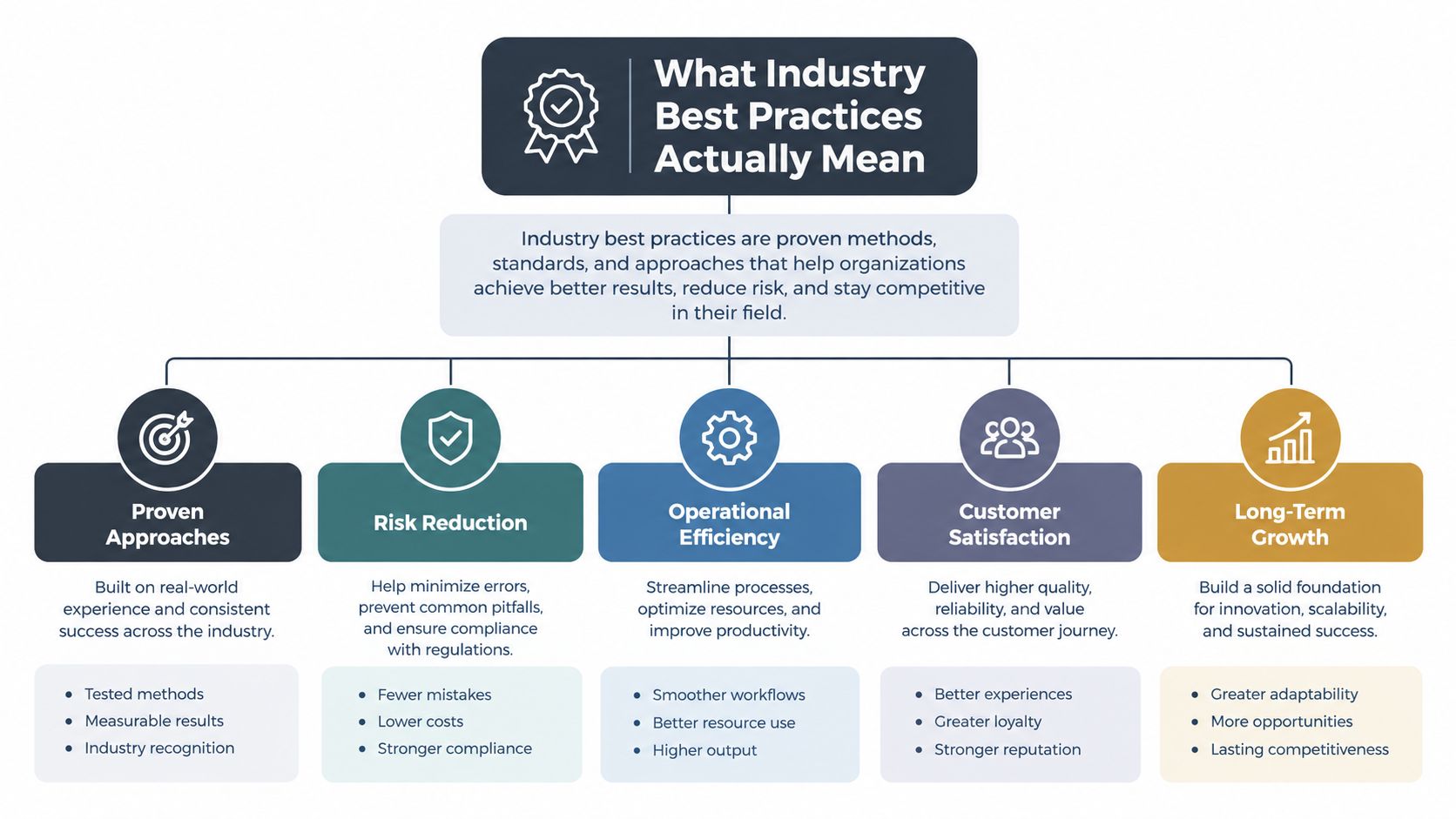
Four layers of control
Conformidade regulamentar prevents unregistered devices, unauthorised use, missing permits, and weak accountability. It answers whether the clinic is legally set up to operate.
Clinical protocols prevent inconsistent assessments, unsuitable parameter choices, poor infection control, incomplete consent, and improvised aftercare. They answer how a treatment should be delivered safely.
People and equipment prevent competence gaps, neglected servicing, access errors, and performance drift. They answer who may operate a device and whether the device remains within its intended operating condition.
Commercial operations prevent misleading claims, margin erosion, untracked rebooking, and growth that outruns the clinic's controls. They answer whether the business can expand without sacrificing standards.
Best practice means a reasonable peer clinic in the same jurisdiction would follow the process, and the clinic has documented it well enough to defend before a regulator, an insurer, or a plaintiff's attorney. A policy that nobody follows isn't a control. A training certificate without observed competence isn't proof of readiness. A consent form that doesn't match the actual indication doesn't protect the treatment pathway.
Revenue discipline belongs in the same framework. Clinics reviewing collections, claims, follow-up, and rebooking can use this practical resource on top revenue cycle management strategies to strengthen the commercial layer without separating it from clinical delivery.
The key question is always traceability: can you follow the decision from patient assessment to treatment parameters, from treatment to outcome, and from outcome to the claim made in marketing?
Safety and Regulatory Compliance in South Africa
South African compliance starts with identifying the device, the environment, and the person responsible for each decision. A clinic can't treat regulatory control as a once-off purchase check because the risk changes when it adds a platform, changes an indication, relocates equipment, or delegates treatment to another operator.
Build the compliance file around named accountability
For Class 3 and Class 4 laser devices, South African guidance requires registration with SAHPRA, appointment of a Responsável pela Segurança no Uso de Lasers, and use in a clinical environment. Independent guidance also highlights controls such as eye protection, area control, barriers or shrouds, beam stops, formal training, and documented oversight. The South African laser safety and compliance guidance provides the operational context for these controls.
The Department of Employment and Labour's occupational safety framework also matters for laser governance, particularly where Class 3B and Class 4 lasers are involved. The LSO shouldn't be a name added to a form. That person needs a defined role, access to risk assessments, authority to control the treatment area, and a process for reviewing incidents, training, maintenance, and changes to equipment.
Keep the following evidence organised:
- LSO appointment: Retain the signed appointment letter, role description, risk assessment, and review history.
- Device registration: File SAHPRA registration certificates, purchase records, serial numbers, and supplier documentation.
- Radiation control: Keep applicable provincial radiation-control approvals, permits, correspondence, and inspection records.
- Municipal permissions: Store the municipal clinic licence, health certificate, zoning approval, and fire-clearance documentation where applicable.
- Professional cover: File current indemnity cover and practitioner registration or scope documentation.
- Operating procedures: Maintain a signed, device-specific SOP for every platform, handpiece, and approved indication.
The Health Professions Council of South Africa also affects who may legally perform particular procedures. A therapist's experience doesn't automatically establish authority for every device or indication. The practice manager should confirm scope, training, supervision, delegation, and escalation requirements before putting an operator on the rota.
Create one indexed folder this week
Use a simple structure organised by regulator and operational owner. Start with SAHPRA, provincial radiation control, municipality, professional governance, LSO records, insurance, devices, and incidents. Add a register showing the document name, responsible person, issue date, expiry or review date, and storage location.
South African operators also face a practical licensing issue beyond device registration. Some beauty and health-related services may require a municipal business licence, health certificate, zoning approval, and fire clearance, as outlined in municipal licensing guidance for beauty and skincare businesses. Build those requirements into the launch plan rather than treating them as administrative cleanup.
For an operational reference on laser governance, clinics can also review laser safety compliance guidance. The useful standard is simple: an auditor should be able to identify the responsible person, the approved device, the permitted environment, and the current evidence without chasing individual staff members.
Standardised Clinical Protocols for Lasers and Multi-Modality Treatments
Compliance files establish permission and accountability. Standard operating procedures run the treatment room. Every device on the floor should have a current SOP that an authorised operator can use without relying on memory or informal advice.
At minimum, write the pathway from consultation to follow-up. Include skin assessment, Fitzpatrick typing, patch-testing rules, parameter-selection ranges, contraindications, medication and medical-history screening, treatment preparation, endpoint assessment, emergency escalation, and post-treatment care. The protocol must identify when the operator stops, who is called, and how the event is recorded.
Keep the critical documents in the room
A clinic loses control when the only copy of a protocol sits in head office. The operator needs immediate access to the device-specific consent form, laser safety checklist, calibration or servicing record, incident report template, and aftercare instructions.
Consent should match the actual treatment. A form signed for hair reduction shouldn't cover a different indication, energy level, anatomical area, or combination treatment. The patient needs a clear explanation of risks, alternatives, expected downtime, likely response, and circumstances requiring urgent contact.
Use one room-level checklist for every case:
- Confirm patient identity, indication, treatment area, and medical history.
- Check contraindications, recent sun exposure, relevant medication, and skin condition.
- Verify patch-test status where the SOP requires it.
- Confirm protective eyewear and controlled access to the room.
- Record device, handpiece, parameters, operator, and treatment endpoint.
- Give written aftercare and document the patient's understanding.
- Schedule follow-up or escalation according to the risk of the procedure.
Different modalities need different control chains. RF, IPL, microneedling, injectables, and ablative lasers shouldn't share a generic “clean room” procedure.
| Procedure Type | Infection Control | Plume / Smoke Control | Eye Protection / PPE | Consent & Documentation |
|---|---|---|---|---|
| Non-ablative laser or IPL | Hand hygiene, clean treatment surface, appropriate PPE, and device-contact decontamination | Assess whether the procedure generates airborne particles and use controls appropriate to the treatment | Wavelength-appropriate protective eyewear, controlled access, and device safety checks | Indication-specific consent, patch-test record where required, parameters, endpoint, and aftercare |
| RF | Clean or single-use patient-contact materials, hand hygiene, and post-case surface disinfection | Usually limited, but assess the specific procedure and product used | Appropriate eye protection or PPE where the protocol requires it | Record treatment area, settings, skin assessment, contraindications, and expected sensations |
| Microneedling | Single-use tips, sterile or appropriately controlled consumables, hand hygiene, and sharps disposal | Follow the product and procedure risk assessment for any aerosol or particle generation | PPE selected for contact and splash risk | Record cartridge or tip details, depth or settings, consent, skin condition, and aftercare |
| Injectables | Aseptic technique, hand hygiene, PPE, and sharps handling | Not usually a plume procedure | PPE appropriate to blood or body-fluid exposure | Product, batch information, anatomical area, consent, risks, and adverse-event instructions |
| Ablative or CO2 laser | Strict hand hygiene, PPE, surface decontamination, and controlled handling of contaminated materials | Capture minimal plume with central suction and in-line filters. Use dedicated mechanical smoke extraction with high-efficiency filtration for substantial plume | Correct wavelength protection, eye protection for patient and operator, barriers, and room control | Detailed consent, medical screening, settings, passes, endpoint, wound care, follow-up, and incident pathway |
South African infection-prevention guidance identifies hand hygiene, PPE, disinfectants, detergents, and medical-device decontamination as core controls. It specifies cleaning hands for at least 20 seconds com 70% alcohol-based hand rub when hands aren't visibly soiled, and its laser-related guidance distinguishes between minimal and substantial plume control. The source is the South African infection-control guidance for procedure environments.
A clinic can use laser safety protocols for treatment-room operations as a practical reference, but every SOP still needs to match the specific device, indication, operator scope, and premises. Standardisation doesn't remove clinical judgement. It makes that judgement visible and reviewable.
Staff Training and Device Maintenance as a Revenue Lever
Training and maintenance are often placed in the overhead column. That's a mistake. They're revenue infrastructure because they influence room utilisation, treatment consistency, repeat visits, re-treatments, complaints, and the confidence of the person conducting the consultation.
South Africa recorded 85,869 aesthetic procedures in 2023, including 48,486 non-surgical procedures e 37,383 surgical procedures, de acordo com o South African procedure data reported from the ISAPS survey. Non-surgical injectables accounted for 42,757 procedures, with botulinum toxin at 29,643 and hyaluronic acid at 12,641. Facial rejuvenation contributed 4,952 procedures, including 3,414 non-surgical skin-tightening treatments e 1,149 chemical peels, from the same source.
That demand profile makes informal training especially risky. A clinic serving repeated, visible, outcome-sensitive treatments needs more than an attendance certificate.
Turn competence into a living register
Build a matrix listing every device, handpiece, indication, operator, training date, observed competency, supervision requirement, and renewal or review date. Quarterly competency checks are more useful than a once-a-year refresher day because they test whether the operator still follows the protocol under real workflow conditions.
Maintenance needs the same discipline:
- Weekly inspection: Check handpieces, cables, cooling systems, treatment surfaces, warning labels, and visible damage.
- Monthly verification: Confirm output or performance checks according to the manufacturer's instructions and document the result.
- Service planning: Schedule manufacturer service intervals before they become emergency downtime.
- Downtime logging: Record faults, missed appointments, repeat treatments, repairs, and the return-to-service check.
The commercial connection is direct. A clean maintenance history supports service negotiations, reduces avoidable re-treatments, and gives the consultation team credible evidence when discussing reliability and expected treatment pathways.
Regra operacional: Never measure a device only by how much it earns when it works. Measure the cost of downtime, re-treatment, complaints, and lost confidence when it doesn't.
For a structured approach to capability building, clinics can review staff training and development for aesthetic device teams. The best programme combines theory, supervised delivery, adverse-event recognition, documentation, and periodic observation. Training isn't complete when the supplier leaves. It's complete when the clinic can demonstrate repeatable performance.
Patient Experience, Consent and Outcome Tracking
A patient journey should be engineered rather than improvised. The owner needs to decide who owns each touchpoint, what information is captured, and when the patient receives the next communication.
Start with the first enquiry. Assign responsibility for responding, gathering basic medical information, booking the consultation, and explaining what the consultation can and can't determine. At the pre-treatment appointment, capture medical history, medications, relevant skin factors, prior procedures, expectations, and the proposed treatment plan.
Make consent part of the clinical procedure
Consent isn't a clipboard exercise completed while the patient waits. The practitioner should explain the indication, alternatives, risks, expected downtime, likely limitations, aftercare, and escalation instructions. The patient should sign in real time after having an opportunity to ask questions, and the record should show the specific treatment discussed.
Photography needs equal discipline. Use consistent lighting, distance, background, anatomical views, and patient positioning. A dramatic angle or different light can make an outcome appear stronger or weaker than it is, which undermines trust and makes internal review difficult.
The treatment record should capture:
- Baseline: Consultation findings, photographs, skin assessment, and agreed objectives.
- Delivery: Device, handpiece, parameters, passes, endpoint, operator, and any variation from protocol.
- Cuidados pós-tratamento: Written instructions, products or restrictions discussed, and contact route for concerns.
- Revisão: Patient-reported response, clinician assessment, photographs, adverse effects, and next-step decision.
Schedule outcome reviews at 4, 8, and 12 weeks when that timing suits the treatment pathway. Those checkpoints create a usable record rather than a collection of vague impressions.
Build a quality dataset
An outcome register should capture both the patient's reported result and the clinician's assessment. Record whether the patient feels the agreed objective was met, whether side effects occurred, whether further treatment is clinically appropriate, and whether the patient would consider returning.
This register serves three purposes. It helps the clinical lead identify protocol drift, gives the practice manager a basis for improving the patient journey, and creates a defensible source for consent-driven marketing material. Before-and-after content should come from documented cases, with patient permission and appropriate privacy controls, not from a handful of unusually favourable examples.
A well-run review process also improves complaint handling. When a patient calls with a concern, staff can see what was promised, what was performed, what aftercare was given, and whether the reported response fits the expected pathway. That clarity protects the patient first, and it protects the clinic when the record is complete.
Business and Marketing Practices That Protect ROI
Aesthetic clinics compete in a category where price-led advertising can quickly weaken both margins and trust. The clinics that protect ROI connect marketing claims to clinical records, treatment capacity, consumable costs, patient satisfaction, and rebooking behaviour.
South Africa's aesthetic medicine market generated USD 223.3 million in revenue in 2024 e prevê-se que atinja USD 567.9 million by 2033, implying an 11.1% CAGR from 2025 to 2033, according to South Africa's aesthetic medicine market outlook. The same source identifies invasive procedures as the largest segment in 2024 and the projected fastest-growing type segment through the forecast period. The broader South African cosmetic surgery and procedure market generated USD 496.5 million in 2024 and is forecast to reach USD 952.1 million by 2033, also from that market outlook.
That expansion creates room for professional operators, but it also raises the cost of weak governance. A clinic shouldn't try to win every enquiry with a discount. It should make the service understandable, price it against treatment time and consumables, and explain the pathway clearly.
| Marketing Lever | Compliance or Protocol Anchor |
|---|---|
| Clear service packaging | Treatment-time assumptions, consumable inventory, device SOP, and documented indication |
| Transparent website pricing | Consultation requirements, exclusions, treatment intervals, and realistic expectations |
| Before-and-after content | Standardised photography, documented outcomes, and patient permission |
| Consent-driven follow-up | Recorded contact permission, secure patient records, and defined communication ownership |
| Referral workflow | Satisfaction review, appropriate timing, and no pressure to refer before clinical review |
| Review generation | Patient feedback captured after a meaningful outcome checkpoint |
| Educational campaigns | Claims supported by approved indications, practitioner scope, and patient-facing consent language |
Track what compounds. Rebooking tells you whether the treatment pathway makes sense to patients. Satisfaction surveys show whether the experience matched expectations. Device-level revenue review reveals whether a platform earns its space after consumables, downtime, servicing, and staffing are considered.
Marketing claims should never outrun the evidence in the patient file. If the clinic says a treatment is suitable for a particular concern, the protocol, practitioner scope, consent language, and documented outcomes should support that statement. This is how clinical discipline becomes a commercial moat. A lower-priced competitor can copy an offer, but it can't easily copy years of consistent records, trained staff, and credible outcome evidence.
Your 30/60/90-Day Best Practice Roadmap
A practice manager can implement governance without waiting for a major renovation or software project. The first priority is visibility. The second is standardisation. The third is integration with commercial decisions.
Days 1 to 30
- Confirm device status: Check that SAHPRA registration and relevant approvals are current, with serial numbers matched to the physical inventory.
- Assign safety ownership: Appoint or contract a Laser Safety Officer and complete the risk assessment.
- Audit consent: Compare forms against every indication, modality, anatomical area, and combination treatment currently offered.
- Baseline experience: Record current patient satisfaction and rebooking rates so later decisions have a starting point.
- Freeze unsupported services: Pause any treatment that lacks an approved operator, current SOP, consent pathway, or equipment record.
Days 31 to 60
Standardise the clinic's top five procedures into written SOPs. Put the working versions in the treatment rooms, then have staff demonstrate the protocols under observation.
Schedule device service and calibration, retain the evidence, and run a practical session on plume control, infection prevention, and adverse-event documentation. Review whether the room has the required eye protection, barriers, extraction, PPE, decontamination supplies, and incident forms.
Days 61 to 90
Tighten service packaging around treatment time, consumables, clinical review, and aftercare. Align marketing claims with documented outcomes, launch a review-generation workflow based on appropriate patient timing, and review ROI per device per month.
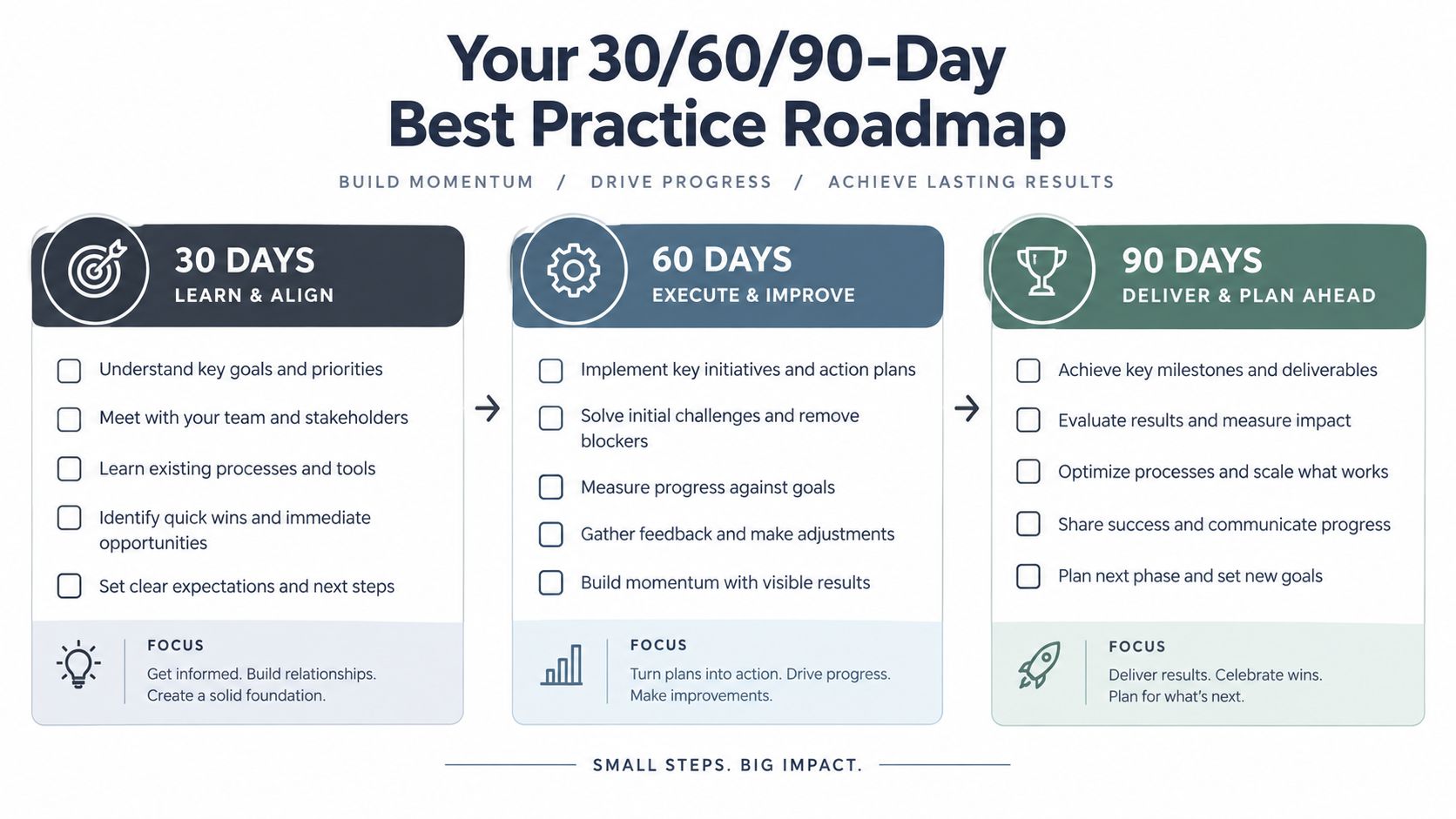
The long-term standard is demanding but clear: every treatment decision should be traceable from consent to outcome, and every marketing claim should be supportable from a patient or operational file. That's the difference between looking compliant and operating defensibly.
Omega Lasers supports aesthetic clinics with laser and multi-technology platforms, device training, technical support, marketing support, and business development guidance that can reinforce a governance-first operating model. Visit Lasers Omega to review solutions and support for building safer, more consistent, and commercially disciplined treatment services.