



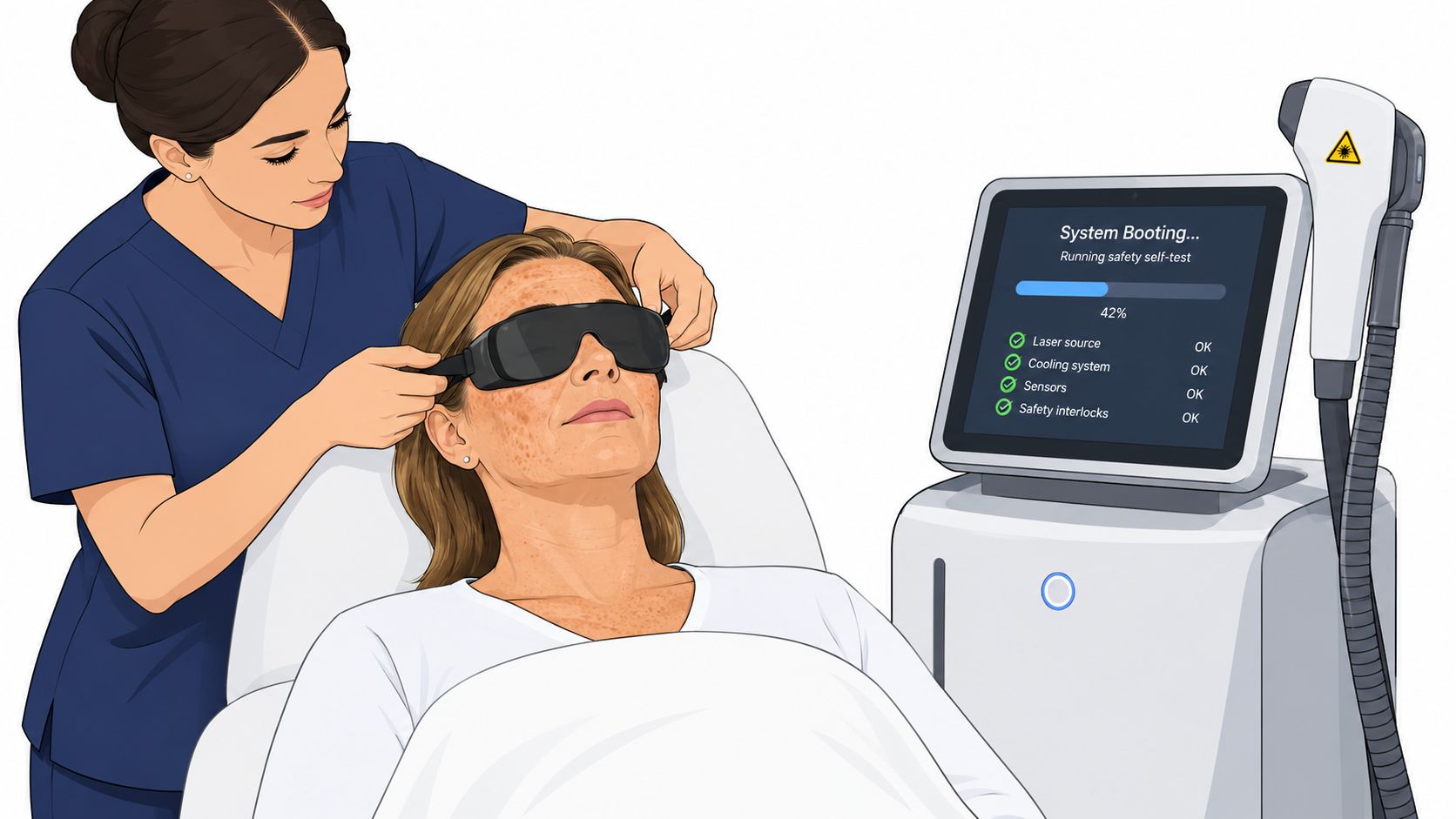
At 08:30, your first resurfacing patient is already in the treatment room. She has sun damage from years of Highveld exposure, mixed pigmentation, and realistic concerns about pain, downtime, and whether her skin will darken afterwards. Your nurse checks the wavelength-specific eyewear while the laser resurfacing machine runs its safety self-test. You're not choosing a device for a brochure anymore. You're choosing how much heat to deliver, how far down to treat, how safely to work across different skin tones, and whether the service fits your clinic's economics.
In South Africa, that decision sits inside a mature but varied market. Laser resurfacing is offered across Cape Town, Stellenbosch, Centurion, Alberton, Johannesburg, Sandton, and Soweto, with advertised prices ranging from accessible clinic-level treatments to premium specialist services. South African provider listings show both broad geographic availability and different treatment scopes, including fractional face treatments and packages covering the face, neck, and chest.
Table of Contents
- What a Laser Resurfacing Machine Actually Does
- Ablative vs Non-Ablative vs Fractional Resurfacing
- CO2, Er – YAG, and Non-Ablative Platforms Compared
- Key Technical Specs to Read Before You Buy
- Safety, Training, and Regulatory Requirements
- The Patient Journey from Priming to Post-Care
- Pricing, ROI, and Practice Integration
- Choosing the Right Machine for Your Clinic
What a Laser Resurfacing Machine Actually Does
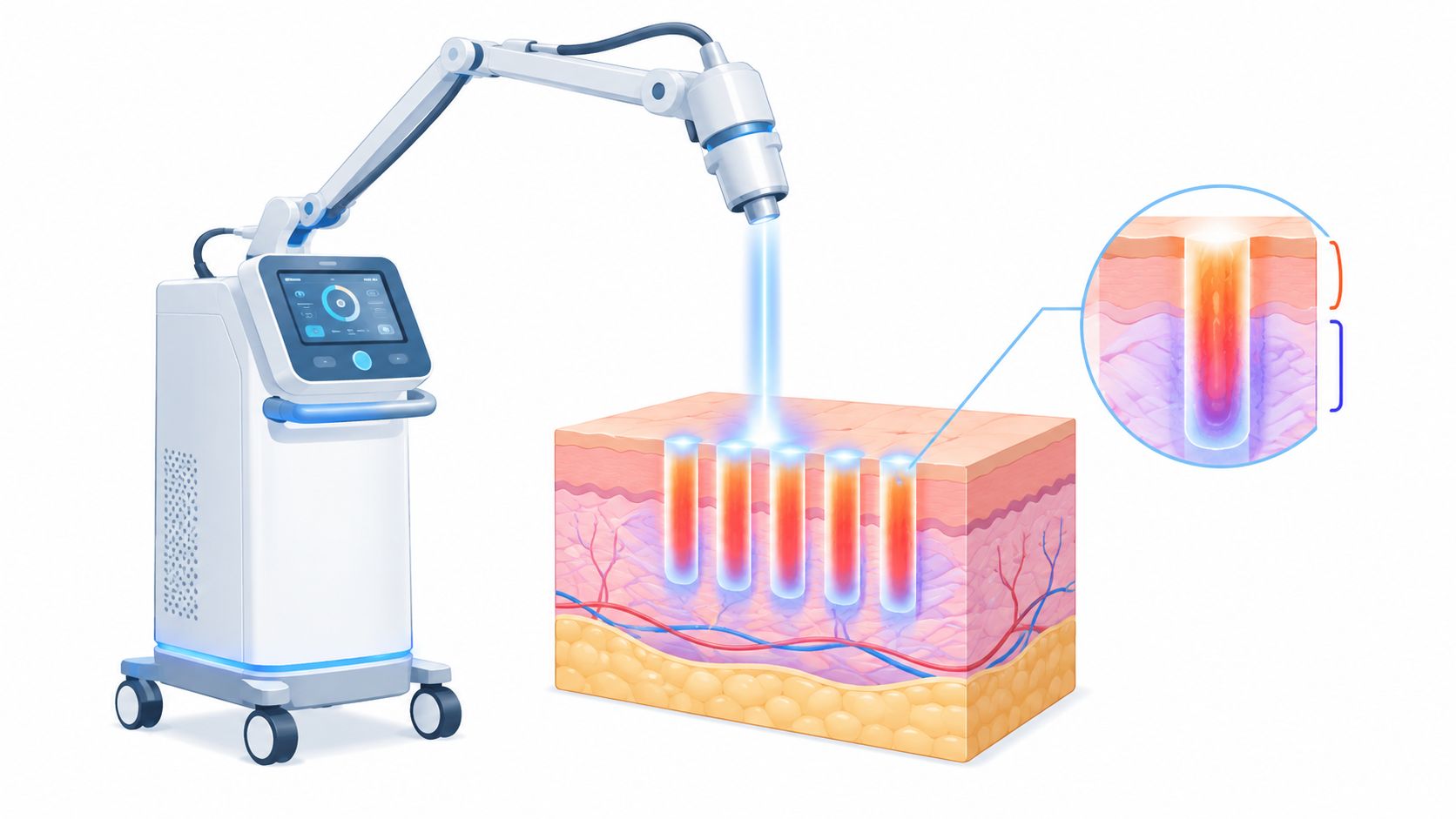
A laser resurfacing machine delivers a focused beam at a selected wavelength. Skin contains a great deal of water, so the beam is absorbed by water in the epidermis and dermis. That light becomes controlled heat, which can either vaporise columns of tissue or heat tissue without removing it.
The distinction matters. A superficial micro-injury can trigger wound healing and collagen remodelling while leaving much of the surface intact. A deeper ablative pass physically removes damaged epidermis and part of the dermis, producing a more obvious change in texture but also creating a larger healing burden.
The treatment is controlled injury
Think of the device as a way to place heat with precision. The operator selects the energy delivered by each microbeam, the spacing between treatment columns, the number of passes, and the pattern scanned across the skin. Those choices determine whether the patient experiences mild redness, peeling, raw skin, or a longer period of visible erythema.
A fractional handpiece treats small columns while leaving untreated skin between them. The spared tissue helps the surface recover more quickly. Full-field treatment removes or heats a much larger continuous area, which can provide stronger resurfacing but demands more careful wound care and patient planning.
Practical rule: Never describe “resurfacing” as though it means one fixed treatment. It can refer to a relatively light non-ablative session or a deep full-field CO2 procedure.
The operator's handpiece pattern, energy density, and stacked passes all change the result. A single pass at a conservative density isn't clinically equivalent to multiple passes over the same area. Likewise, a small treatment zone around an acne scar doesn't create the same recovery as a full-face procedure.
For a new clinic owner, the useful question isn't just whether a platform is powerful. It's how much heat it creates, where that heat sits, and what recovery it demands. The plain-language overview of skin resurfacing helps establish that foundation, but the clinical decision always comes back to depth, density, skin type, and aftercare.
Ablative vs Non-Ablative vs Fractional Resurfacing
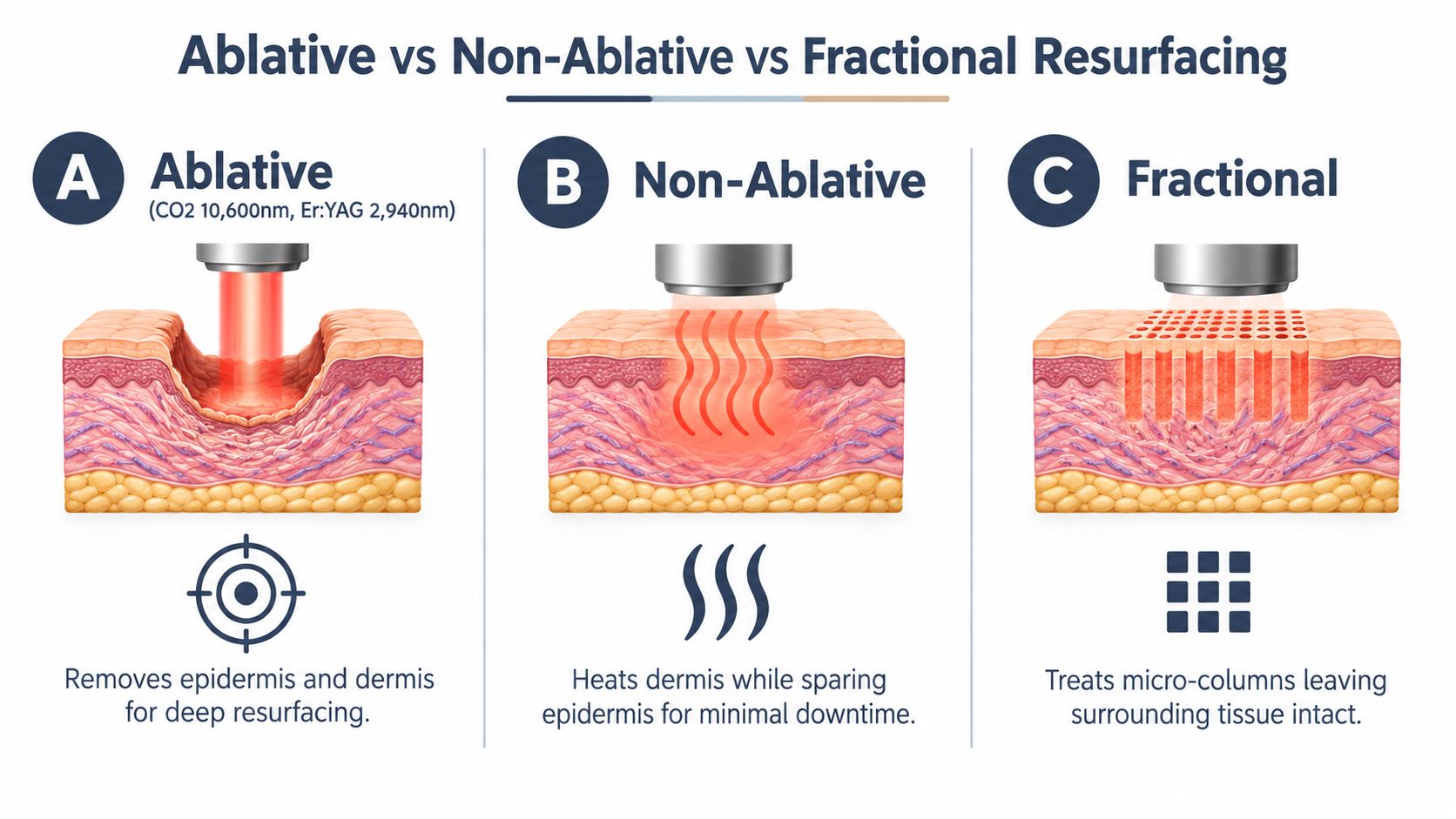
The simplest comparison is physical. Ablative treatment removes tissue. Non-ablative treatment heats tissue beneath an intact surface. Fractional treatment changes the delivery pattern, and it can be either ablative or non-ablative.
Ablative platforms commonly use CO2 or Er:YAG wavelengths that are strongly absorbed by water. In the treated zone, they remove the epidermis and may extend into the dermis. That makes them useful for pronounced texture irregularity, deeper wrinkles, and selected scars, but patients need meaningful wound care and social downtime.
Non-ablative platforms leave the epidermis intact. They heat the dermis through the surface, encouraging remodelling without creating an open wound. The trade-off is straightforward: less visible recovery usually means a more gradual result and a course of treatments, rather than one aggressive intervention.
Fractional delivery changes the risk calculation
Fractional treatment creates a grid of micro-injuries. Untreated columns remain between the treated columns, providing viable tissue that supports faster re-epithelialisation. A fractional CO2 treatment can therefore be considerably more manageable than a full-field CO2 treatment, even though both are ablative.
Fractional non-ablative treatment follows the same spatial principle without vaporising the surface. It can suit patients who want gradual texture improvement while remaining active at work, although the treatment may need to be repeated as part of a planned course.
The difficult conversation begins with skin colour. Patients with Fitzpatrick IV to VI skin have a greater risk of post-inflammatory hyperpigmentation and prolonged pigment change after aggressive ablative treatment. That doesn't make resurfacing impossible, but it does make diagnosis, priming, test spots, conservative settings, and disciplined sun avoidance central to the protocol.
South African clinic guidance also highlights the practical burden of recovery. Fractional and ablative resurfacing may involve topical preparation beforehand, raw or swollen skin afterwards, wound care, and at least one to two weeks before strenuous activity can resume, depending on treatment intensity and individual healing. Local patient guidance also stresses that “minimal downtime” means different things for different platforms and skin tones.
CO2, Er – YAG, and Non-Ablative Platforms Compared
Once you understand the delivery method, the platform families become easier to judge. Fractional CO2 is the deeper workhorse, Er:YAG is the more surface-controlled ablative option, and non-ablative platforms prioritise preservation of the epidermis.
CO2 at 10,600 nm creates deeper thermal coagulation around each ablative column. That thermal component can support strong collagen remodelling, making fractional CO2 useful for atrophic acne scars, deeper rhytides, and surgical scar revision. The cost is a higher burden of erythema, aftercare, and pigment risk, particularly when the operator stacks passes or treats densely.
Er:YAG at 2,940 nm is absorbed more efficiently by water than CO2. It can remove tissue cleanly with less residual thermal injury, which makes it attractive for precise superficial resurfacing and delicate areas. It may not create the same depth of coagulation as CO2, so a patient with deep scars may need a different strategy or a staged plan.
Non-ablative families, including erbium glass, thulium, and Nd:YAG platforms, spare the surface and work through controlled dermal heating. They're often easier to integrate into a busy clinic because patients can return to normal routines more quickly, but they may require a series and careful maintenance.
| Platform | Wavelength | Depth of injury | Pigment risk, Fitzpatrick IV-VI | Typical downtime | Best indication |
|---|---|---|---|---|---|
| Fractional CO2 | 10,600 nm | Deep fractional ablation with thermal coagulation | Highest of these options when aggressive settings are used | Meaningful peeling, erythema, and wound care | Atrophic acne scars, deeper wrinkles, scar revision |
| Er:YAG | 2,940 nm | Precise superficial to moderate ablation with less residual heat | Lower than CO2, but not risk-free | Shorter than deep CO2 in appropriate protocols | Fine texture, selected eyelid work, superficial lesions |
| Non-ablative | 1,540 nm, 1,550 nm, 1,927 nm, 1,064 nm | Dermal heating with the epidermis preserved | Generally more manageable for darker skin when correctly selected | Minimal visible downtime compared with ablative treatment | Early photoageing, pigmentation-focused protocols, maintenance |
A South African clinic network lists both CO2 fractional resurfacing and Er:YAG-based treatments for rejuvenation and scar work, supporting the practical view that these are multi-protocol platforms, not single-purpose machines. Local modality information also reflects how clinics combine device families with different treatment depths and recovery profiles.
Key Technical Specs to Read Before You Buy
A South African clinic may treat lighter and darker skin types on the same day, so a specification sheet matters only when each figure is connected to a treatment decision. Pulse energy, fluence, pulse duration, spot size, repetition rate, and scan density influence tissue response, recovery, pigment risk, and how easily an operator can repeat a protocol.
Pulse energy, measured in millijoules, is the energy delivered in one microbeam. Fluence, measured in joules per square centimetre, describes how that energy is distributed across the treated area. The same energy delivered through a smaller spot can produce a different intensity and response than it does through a larger spot. Comparing one headline energy value across machines can therefore give a misleading impression.
Read the numbers as a treatment sequence
Pulse duration determines how quickly energy enters tissue. Shorter pulses can support more immediate ablation with less time for heat to spread, while longer pulses can produce more surrounding coagulation. The useful question is not whether a manufacturer lists a short pulse. Ask how that pulse performs at the energy and scan density your clinic will use, including conservative settings for patients with greater pigment risk.
Spot size affects both precision and throughput. A smaller spot can suit focal acne scars or delicate anatomy. A larger treatment area can reduce the time needed for full-face work, which may matter when session pricing must cover staff time, room use, consumables, and follow-up. Repetition rate affects delivery speed, but faster treatment has value only when output remains stable and the operator can control overlap.
| Spec | What it means clinically | What to look for |
|---|---|---|
| Pulse energy | Energy delivered by each microbeam | A usable range for conservative and deeper protocols |
| Fluence | Energy distributed across the treatment area | Clear units, stable output, and protocol guidance |
| Pulse duration | How quickly energy is delivered | Written values for each handpiece and mode |
| Spot size | The area affected by each pulse | Multiple sizes for focal and full-face work |
| Repetition rate | How quickly pulses can be delivered | Speed that does not compromise output stability |
| Scan pattern | How columns are distributed | Adjustable density, predictable coverage, and controlled overlap |
| Cooling | How patient comfort and heat are managed | Integrated or compatible cooling with clear operating instructions |
For facial CO2 protocols, regional treatment guidance gives a practical example. It cites 100 to 125 mJ for standard facial areas and 60 to 90 mJ for thinner periorbital regions, using lower energy around the eyes to limit thermal injury. The facial treatment guidance illustrates the principle: one machine requires different settings for different anatomy.
Peak wattage rarely determines whether a platform will work well in practice. Request output stability data, calibration records, handpiece specifications, scan controls, cooling details, service arrangements, and written protocols. A machine with fewer headline figures but finer control may support safer, more repeatable treatments than a higher-powered device with limited adjustability. For a mixed-skin clinic, that control can matter more than maximum power.
Safety, Training, and Regulatory Requirements
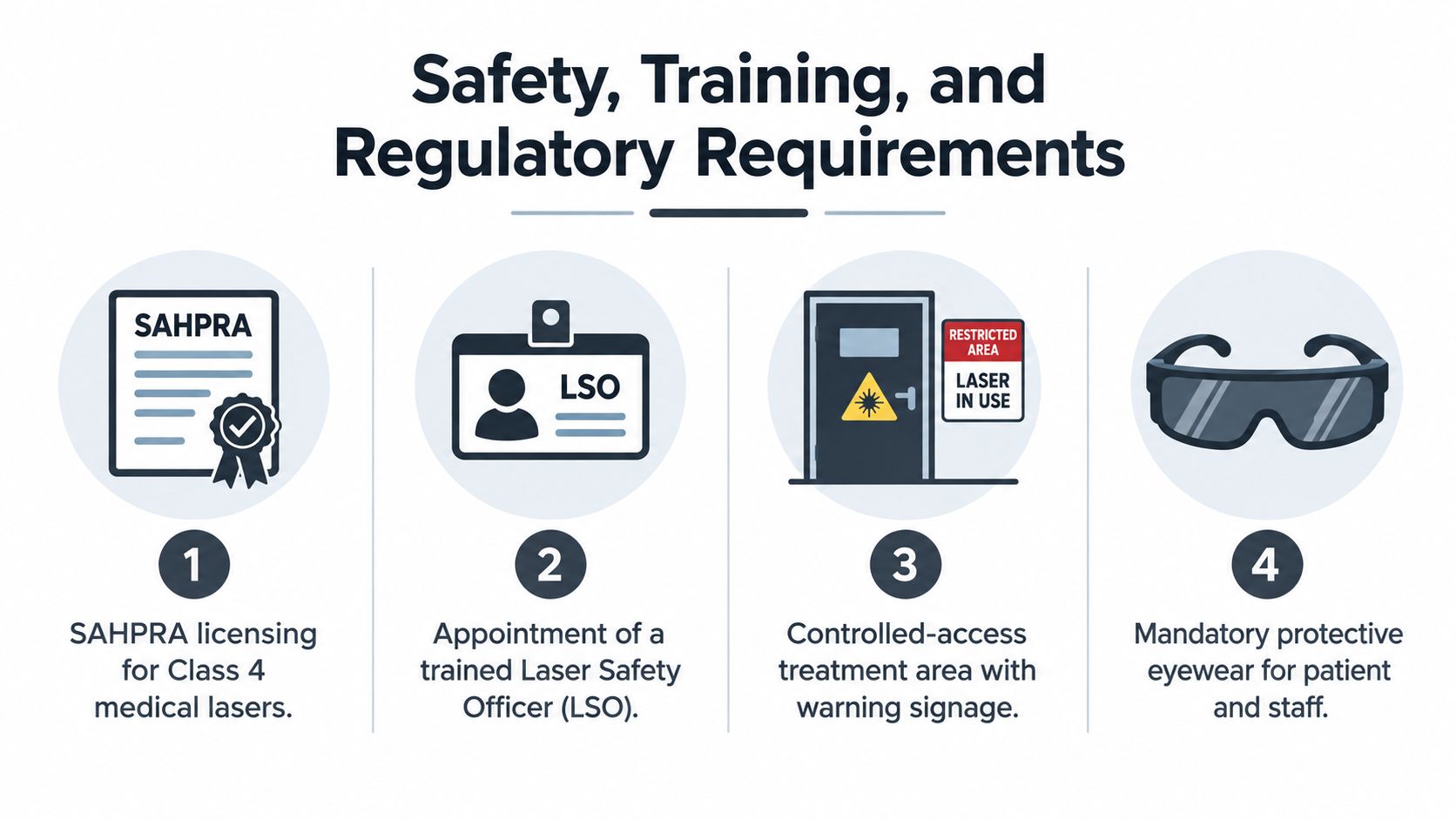
A laser resurfacing machine isn't ready for patients when it arrives at reception. In South Africa, Class 3B and Class 4 laser systems sit within dedicated safety guidance, and SAHPRA has also published a 2026 communication concerning applications for the importation, manufacture, and use of laser systems. SAHPRA's current guideline collection should be checked before procurement because licensing and requirements can change.
South African laser-safety guidance states that Class 3 and Class 4 devices must be registered with SAHPRA and that the clinic must appoint a Laser Safety Officer. It also distinguishes regulated lasers from IPL and LED devices, which are excluded from those strict laser regulations. The local safety overview provides the operational distinction clinic owners need before they compare device categories.
Build compliance into the room
Your checklist should cover more than the device registration:
- Licensing: Verify the machine's registration and confirm the clinic's licensing responsibilities before payment.
- Laser Safety Officer: Appoint a trained person with documented responsibility for access control, signage, eyewear, and incident response.
- Controlled access: Restrict the room during treatment and display appropriate warning signage.
- Protective eyewear: Use eyewear rated to the exact wavelength in use for both the patient and staff.
- Training records: Keep certificates, competency assessments, supervised treatments, and refresher documentation.
- Treatment records: Record diagnosis, skin type, wavelength, handpiece, energy, density, passes, cooling, consent, and aftercare.
- Incident files: Document adverse events, photographs, follow-up, referrals, and corrective action.
Training expectations need careful handling because South African sources describe a changing regulatory environment. One academic review reported that, at the time of publication, legislation did not regulate the supply and purchase of laser devices and no statutory regulatory board governed laser and IPL procedures. It also cites an accredited supplier-training benchmark of at least 100 hours combining theory and practical work, according to the South African Association of Health and Skincare Professionals. The academic training review is useful context, but clinic owners should still confirm current requirements with the relevant authorities, insurer, and professional advisers.
For darker skin types, add test spots, conservative starting parameters, documented pigment history, and a clear escalation pathway. Safety and compliance support can help organise the operational side, but the clinic remains responsible for competent use and patient selection.
The Patient Journey from Priming to Post-Care
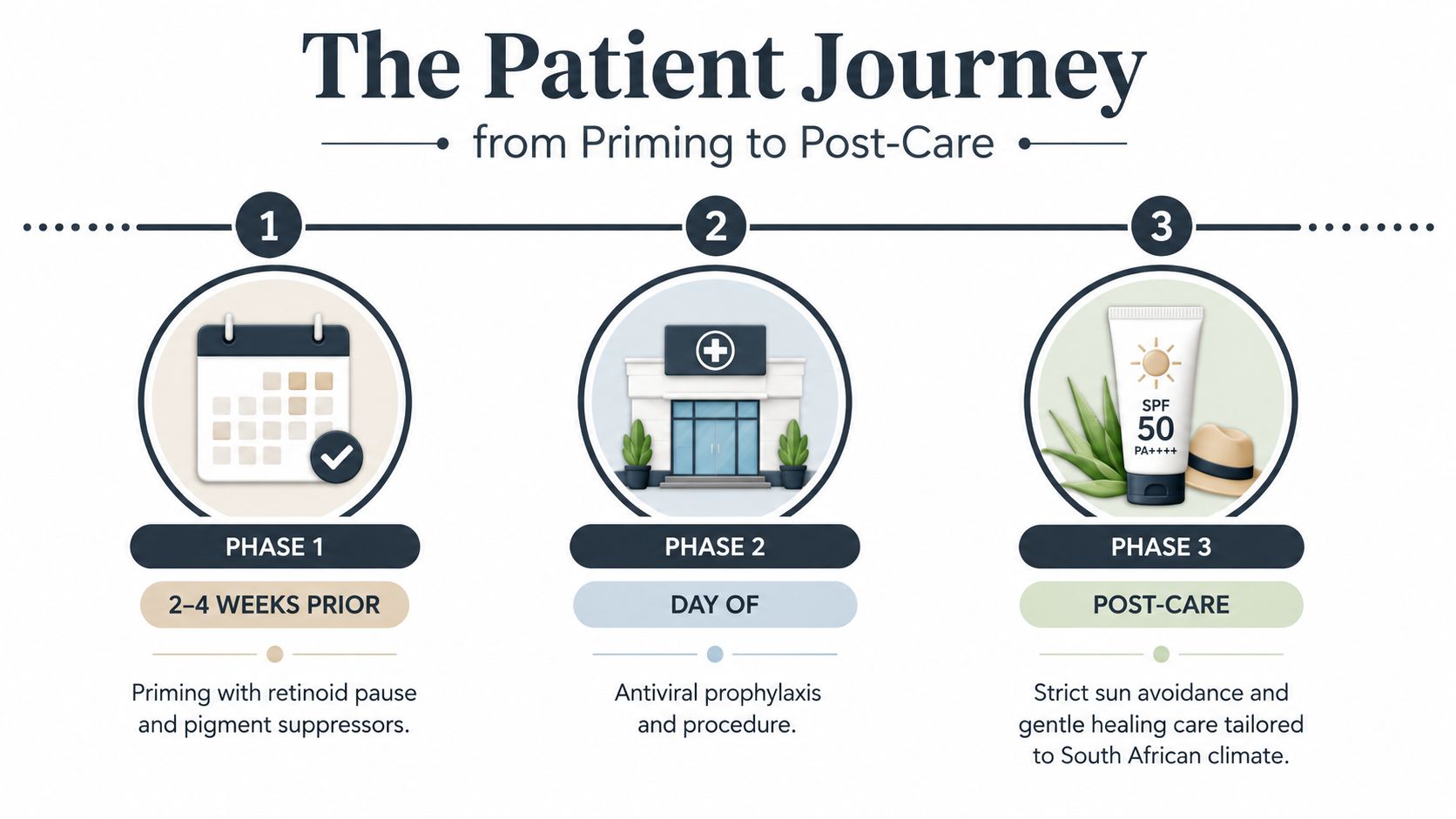
A patient with pigmentation history may arrive several weeks before treatment, because the outcome depends partly on what happens before the laser is used. During two to four weeks of preparation, the clinic may pause irritating actives, prescribe pigment-suppressing products when appropriate, arrange antiviral prophylaxis for patients prone to herpes reactivation, and reinforce daily SPF use.
That preparation reduces avoidable inflammation and gives the clinician a reliable baseline. It also sets expectations. Patients should know the planned intensity, how their skin may look afterwards, and which changes suggest a complication rather than routine healing.
What happens on treatment day
Start with photographs, medical history, medication review, skin assessment, consent, and confirmation that preparation instructions were followed. Anaesthesia depends on the modality and treatment area. Before firing, the operator should confirm the handpiece, treatment map, energy, density, pass count, and cooling method.
The machine settings are a starting plan, not a substitute for observation. Tissue response, comfort, anatomical thickness, and previous treatment can require adjustments. Cooling may improve comfort, but it cannot make an excessively aggressive protocol safe.
Recovery depends on how the platform removes or heats tissue. The first week may include redness, swelling, sensitivity, peeling, or crusting. Written instructions should cover cleansing, moisturising, sun avoidance, exercise, makeup, and when to restart active skincare. “Minimal downtime” does not mean invisible skin. After a non-ablative session, recovery may involve mild redness. Fractional ablative treatment can leave visible recovery for several days.
For a South African clinic treating mixed skin types, UV exposure and pigment response must shape the aftercare plan. The facial CO2 guidance cited earlier recommends strict sun avoidance and SPF 30 or higher for four to six weeks after treatment. Apply that advice consistently, especially when post-inflammatory hyperpigmentation is a concern.
Patient-facing advice: Contact the clinic if pain escalates, swelling worsens instead of settling, discharge appears, blisters develop, or pigment changes seem disproportionate. A suspected complication should not be managed at home.
Schedule follow-up according to treatment intensity and patient risk. Photograph recovery at agreed intervals, record the advice provided, and ask specifically about sun exposure, picking, skincare use, and infection symptoms. That record helps the clinician distinguish expected recovery from a problem requiring review.
Pricing, ROI, and Practice Integration
A laser resurfacing machine earns its place through the service model it supports, not its purchase price alone. South African listings show fees from about R550 to R5,800. A Cape Town CO2 fractional listing advertises sessions up to ZAR 4,950, while Johannesburg listings show treatments between ZAR 330 and ZAR 2,250. The Cape Town treatment listing and the broader South African pricing directory illustrate why one standard fee cannot support every clinic model.
The difference may reflect modality, treatment depth, body area, clinic positioning, or whether the appointment covers a small target or a broader package. Build the financial model around the complete appointment. Include consumables, handpiece depreciation, servicing, licensing, room preparation, staff time, follow-up, and post-care products.
| Modality | Average per-session price (ZAR) | Consumable cost per session (ZAR) | Typical sessions per course | Estimated payback window |
|---|---|---|---|---|
| Fractional CO2 | Use your local audited fee | Record supplier and clinical consumables | Set from your protocol and indication | Calculate from contribution margin and utilisation |
| Er:YAG | Use your local audited fee | Record supplier and clinical consumables | Set from your protocol and indication | Calculate from contribution margin and utilisation |
| Non-ablative | Use your local audited fee | Record supplier and clinical consumables | Set from your protocol and indication | Calculate from contribution margin and utilisation |
Leave assumptions blank until you have actual quotes and clinic data. Add staffing costs, service contracts, licence expenses, treatment duration, and expected bookings. Then test quiet weeks, cancellations, package discounts, clinician time, and the difference between a full-face session and a smaller area.
Gross revenue can make a busy machine look profitable. Contribution margin gives a clearer view of what remains after direct treatment costs. Omega Lasers' return-on-investment calculation resource can help structure that exercise, while your audited fees and operating records determine the result.
A non-ablative platform may produce steadier utilisation when patients prioritise shorter recovery. Fractional CO2 may support a higher-value service when referrals justify deeper scar work and the team can manage its clinical and administrative demands. In a mixed-skin-type South African practice, pricing must account for consultation time, informed consent, pigment-risk discussions, and the capacity to deliver the selected protocol consistently.
Choosing the Right Machine for Your Clinic
Choose the platform around your patients, not around the largest wattage figure.
A high-volume urban practice treating mostly Fitzpatrick I to III patients with acne scarring and photoageing may find a mid-power fractional CO2 the most productive workhorse. It can address deeper texture concerns, but only if the clinic has the consultation time, wound-care systems, trained operators, and patient demand to support its recovery profile.
A mixed-Fitzpatrick practice serving strong ethnic-skin demand should look closely at Er:YAG and non-ablative options. They may offer less aggressive remodelling per session, but the lower thermal burden can make them easier to integrate into a pigment-conscious treatment strategy. The clinic must still screen carefully, test when appropriate, and avoid presenting any platform as risk-free.
For a boutique medical spa focused on maintenance, early photoageing, and pigmentation-led care, a non-ablative platform can provide a more predictable appointment rhythm. It may carry lower operator-skill demands than deep ablative treatment, although competent diagnosis and parameter selection remain essential.
A practical shortlist
- Choose fractional CO2 when deeper scars and wrinkles dominate your enquiries, your clinicians can manage substantial aftercare, and your market supports premium corrective treatment.
- Choose Er:YAG when you need controlled superficial ablation, precise work, and a more moderate thermal profile.
- Choose non-ablative when your patient mix values limited visible downtime, gradual improvement, and repeat maintenance.
Before any deposit changes hands, ask for a live demonstration, request hands-on training hours in writing, inspect the service and calibration plan, and verify SAHPRA registration. Omega Lasers supplies medical-aesthetic systems and supports clinics with device training, technical assistance, business guidance, and regulatory-focused enablement. Visit Omega Lasers to discuss which resurfacing approach fits your patient mix, room setup, and commercial model.