




A lot of therapists are sitting in the same spot right now. You've finished beauty training, or you're already working in a salon, and a clinic manager wants you treating laser clients soon. On your screen are two very different options: a fast supplier course that gets you onto a machine quickly, and a longer programme that asks for more money, more time, and more discipline.
That decision matters more than many realise. Laser hair removal classes aren't just about learning button sequences on a console. They shape whether you can assess skin properly, document safely, handle adverse reactions calmly, and walk into a clinic without needing someone to rescue every consultation. Always ensure the information is accurate and true, as this concerns aesthetic lasers, energy-based devices, and health.
I've seen the same pattern repeatedly when clinics hire. The therapist who took the shortest route often knows how to start a preset but struggles when the client has recent sun exposure, a hormonal history, reactive skin, or unrealistic expectations. The therapist with stronger foundational training usually works slower in week one, but becomes dependable much faster.
Table of Contents
- Choosing the Right Laser Hair Removal Classes for Your Goals
- South African Compliance and Accreditation Basics
- Comparing Beginner, Advanced, and Manufacturer-Led Training
- What a Quality Curriculum and Hands-On Component Cover
- Evaluating Training Providers and Avoiding Short-Course Pitfalls
- Cost, ROI, and Earning Potential After Certification
- Next Steps After You Complete Your Training
Choosing the Right Laser Hair Removal Classes for Your Goals
A newly qualified beautician opens two tabs. One offers a quick, low-commitment supplier course. The other is a longer accredited programme that demands evenings, practical hours, and assessment. Her employer wants her treating next month. She wants to say yes, but she also knows clients won't care how fast she qualified if something goes wrong.
That's the decision. Speed to practice versus depth of competency. If you're choosing laser hair removal classes, start with your actual work context, not the course marketing.
Start with the three filters that matter
The first filter is your current qualification and scope. A beauty therapist, somatologist, and registered nurse don't all enter training from the same place. Your background affects how much clinical theory you still need, what an employer expects from you, and how confidently you can handle consultation and contraindication screening.
The second filter is your likely client mix. If you'll mostly treat straightforward body areas on lighter skin types in a tightly supervised clinic, your training needs differ from someone entering a mixed aesthetic practice with facial work, hormonally influenced hair growth, and a wider spread of skin presentations. Course choice should match treatment reality.
The third filter is where you want your career to go. If your goal is to rent a room and offer a small treatment menu, portability and compliance documentation matter immediately. If you want to move into clinic management or eventually open multiple treatment rooms, choose training that teaches systems, records, safety processes, and audit readiness from the start.
Practical rule: Don't pick a course because it's the shortest path to touching a device. Pick it because it matches the level of responsibility you'll carry once a paying client is in front of you.
Match training to the work you'll actually do
Your clinic's platform also shapes the decision. Some classes teach broad theory but little device familiarity. Others are strong on one machine and weak on transferable clinical judgement. Both gaps become expensive in practice.
If your plan includes building demand after qualification, clinic owners often pair staff development with focused local promotion such as benjiads salon ads, because training only pays off when the diary fills with suitable clients, not just enquiries. And if you're still weighing broader education routes before narrowing into laser, this guide to accredited cosmetology schools near me helps frame where laser training fits inside a longer career path.
Ask yourself bluntly: do you need a certificate fast, or do you need to become clinic-ready? Those aren't always the same thing.
South African Compliance and Accreditation Basics
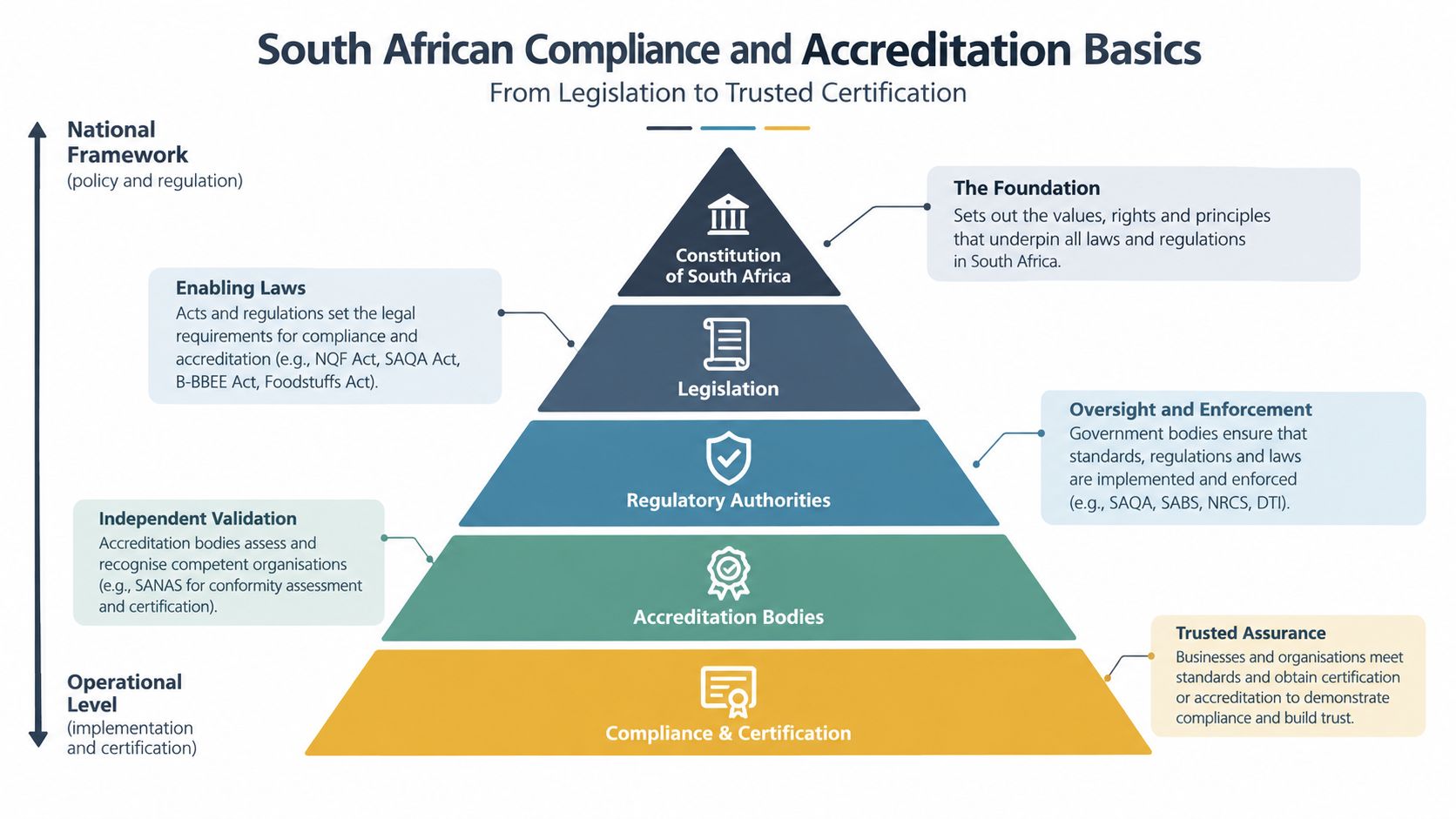
In South Africa, one of the hardest parts of choosing laser hair removal classes is that the market hasn't always made competency easy to judge. A South African academic review reported that there was no legislation governing who may perform laser treatments or what qualification is required, and no formal system ensuring operator competency for laser hair removal. The same review also noted that anyone with enough capital could purchase a laser device because supply and purchase weren't tightly controlled, which helps explain why short supplier-led courses remained common. It also stated that Class 3 and Class 4 lasers must be registered with SAHPRA and that each machine requires a designated Laser Safety Officer (South African review on regulation and laser practice).
What a reputable class must teach
A certificate by itself doesn't tell me much. I want to know whether the class covered the compliance duties that follow the device into the clinic. That includes safety controls, treatment records, informed consent, contraindication screening, and the site responsibilities attached to laser operation.
SAHPRA's guidance around Class 3B and Class 4 lasers places real weight on licensure and an adequate laser-hazard control programme, with the employer responsible for establishing and maintaining that programme for the Laser Safety Officer. Good laser hair removal classes should translate that into daily practice. Who keeps the records, who signs off protocols, what happens during an inspection, and what training evidence sits in the staff file all need clear answers.
The training-hour question clinics shouldn't ignore
A South African study from 2020 found that only 27.78% of surveyed tertiary institutions offered laser hair removal training. Among those providers, 20% offered no practical training and 50% did not include a practical examination. The same study noted that most suppliers were offering informal, non-accredited training lasting 2 to 4 days, while the South African Association of Health and Skincare Professionals recommended a minimum of 100 hours of accredited theory and practical instruction (South African study on laser training gaps and standards).
That's why I'm sceptical of ultra-short programmes. They can familiarise a therapist with a machine. They usually can't build judgement. If a provider can't show structured theory, supervised practical work, and a real assessment process, the course may help with exposure but not with defensible competency.
A clinic can't outsource responsibility to a certificate. If the operator can't explain why they chose settings, the training wasn't deep enough.
Comparing Beginner, Advanced, and Manufacturer-Led Training
Not all laser hair removal classes are trying to achieve the same outcome. Some build first-principles competency. Some refine an existing practitioner. Some train you on one platform so you can use it safely inside an already controlled clinic system. Problems start when students treat those formats as interchangeable.
How the formats differ in practice
A beginner programme suits someone who needs the foundation, not just exposure. That means skin assessment, basic laser science, consultation structure, contraindications, and repeated supervised treatments until the student stops guessing and starts reasoning.
An advanced course assumes you already know the basics. It should spend less time on introductory concepts and more time on difficult cases, hormonal factors behind persistent regrowth, darker skin presentations, and how to respond when a treatment course isn't progressing as expected.
A manufacturer-led course focuses on a specific platform. That training matters because every console, software interface, pulse structure, handpiece, and safety lockout behaves differently in use. One example is Omega Lasers training options, which outline foundation, advanced, and device-specific pathways rather than treating machine orientation as a full substitute for practitioner education.
Training Format Comparison
| Format | Typical Hours | Hands-On Time | Certificate Value |
|---|---|---|---|
| Beginner | Longer-form and structured | Supervised model work is central | Best when you need a foundation that can travel with you |
| Advanced | Additional study after foundation | Focused supervised cases | Strong for expanding judgement and case complexity |
| Manufacturer-led | Shorter and device-specific | Usually tied to one platform | Valuable for in-service competence, less portable on its own |
What works and what doesn't
What works is stacking these formats properly. Foundation first. Then platform fluency. Then advanced refinement as your client base grows more complex.
What doesn't work is taking a narrow machine course and assuming it replaces a broad clinical education. A therapist might leave knowing menu navigation, preset logic, and maintenance basics, yet still be weak on consent, adverse-event reporting, treatment planning, and expectation setting. That gap only shows itself once real clients start asking messy questions.
If your certificate mainly proves you can operate one device, it's a useful start. It is not the same as proving you can run a safe laser service.
What a Quality Curriculum and Hands-On Component Cover
Strong laser hair removal classes don't blur theory and practical work into one vague promise. They break competency into parts and assess each part properly. That matters because many treatment errors happen before the handpiece even touches skin.

Theory must build decision-making
A quality curriculum should teach laser-tissue interaction, hair growth cycles, skin response, wavelength differences, contraindications, consent, and adverse-event management. Students need to understand why one client is suitable, another needs patch testing and caution, and another should be deferred entirely.
It should also cover treatment planning by area. Facial hair behaves differently from underarms. Coarser body hair doesn't present like fine, hormonally influenced facial growth. If the class treats all hair as if it responds the same way, the teaching is too shallow.
Practical work must be supervised and recorded
Hands-on training should include live model practice across different skin presentations, proper preparation of the treatment area, conservative parameter selection, and documentation of what was done. South African research on diode-based hair reduction found that the professional laser group reported pain in 66.7% of sessions, redness in 33.3%, and inflammation in 22.2%, though no serious adverse effects were reported. The same evidence base noted better outcomes than control at follow-up, but still supports careful expectation-setting and conservative parameter use. The practical takeaways were to standardise shaving, cleaning, dry and oil-free skin prep, full protective eyewear, and cautious fluence and pulse selection to reduce inflammatory reactions (South African evidence summary on diode outcomes and treatment safety).
That's exactly why practical classes need supervision. Skin prep errors, overtreatment, and poor post-treatment monitoring often look minor to a beginner until redness lasts too long or a client phones the next day worried.
Signs the course takes competency seriously
Look for these elements in the curriculum:
- Written assessment: Students should prove they understand skin typing, contraindications, and treatment rationale.
- Observed practical assessment: An instructor should watch consultation, patch testing, prep, parameter choice, and aftercare delivery.
- Treatment documentation: Learners should record settings, area treated, skin response, and aftercare advice.
- Consultation language: Good training includes how to explain realistic results and treatment spacing clearly.
- Record systems: Strong programmes show how to organise photos, consent forms, and treatment notes. This matters even more if you later add platform-specific education through laser machine training.
The best students aren't the ones who move fastest. They're the ones who can explain every choice they made.
Evaluating Training Providers and Avoiding Short-Course Pitfalls
When I review training providers, I don't start with their social media, branding, or before-and-after gallery. I start with paperwork, structure, and assessment. A provider can look polished and still produce underprepared therapists.
Ask for evidence before you pay
A serious provider should be able to show a syllabus, learning outcomes, practical requirements, and what the certificate confirms. If they hesitate, that's a warning sign. You're not buying inspiration. You're buying a training process that should hold up when an insurer, employer, landlord, or auditor asks questions.
Request details on:
- Accreditation path: Is the programme aligned to recognised education standards or branded as “certified” by the provider?
- Practical exposure: How many supervised treatments are required before sign-off?
- Assessment method: Is there an observed practical exam or just attendance?
- Equipment quality: Are students trained on calibrated machines in a controlled environment?
- Certificate scope: Does the certificate reflect full treatment competency or only device familiarisation?
Provider Evaluation Green Flags vs Red Flags
| Indicator | Green Flag | Red Flag |
|---|---|---|
| Syllabus | Detailed modules with theory and practical hours | Vague outline with broad promises |
| Assessment | Written and observed practical assessment | Attendance-only certificate |
| Practical training | Supervised model work and documented sign-off | Demonstration-only learning |
| Compliance teaching | Consent, screening, safety, records, escalation | Focus only on machine operation |
| Certificate | Clear statement of what was assessed | Generic completion wording |
The short-course trap
Short courses have a place. They can introduce a therapist to a device, refresh an experienced operator, or support clinic onboarding. They become risky when they're sold as complete professional preparation.
I'm especially cautious when a one- or two-day course has no practical exam, no consultation assessment, and no clear post-course support. That usually means the student leaves with confidence before they've earned judgement. If you're comparing providers, a directory such as accredited training providers can help you ask sharper questions, but you still need to verify how much of the learning is supervised and assessed.
Don't be impressed by a certificate printed quickly. Be impressed by a provider willing to fail a student who isn't ready.
Cost, ROI, and Earning Potential After Certification
Course cost is often the first question. I understand why. Training is an outlay, and for many therapists it's personal money, not a clinic budget. But the smarter question is whether the course helps you generate safe, repeatable revenue without creating avoidable problems.
A longer, assessed programme usually costs more upfront than a narrow orientation course. That can feel uncomfortable when you're eager to start working. In practice, though, the cheaper option often becomes expensive if it leaves you dependent on constant supervision, unable to convert consultations confidently, or prone to treatment mistakes that disrupt retention.

Where the return actually comes from
The return on laser hair removal classes doesn't come from the certificate itself. It comes from behaviour after training.
- Better consultations: A well-trained therapist screens properly, sets realistic expectations, and filters out unsuitable bookings before they become complaints.
- Cleaner protocols: Strong records, consistent prep, and clear aftercare reduce confusion and make team handovers easier.
- Stronger retention: Clients rebook when they trust the process and feel their therapist understands the treatment plan.
- Fewer disruptions: Therapists who know when to treat conservatively tend to create fewer anxious follow-up calls and fewer in-clinic escalations.
The hidden cost of poor training
A weak course doesn't just limit revenue. It slows the whole clinic down. Senior staff end up double-checking settings, correcting notes, stepping into difficult consultations, and managing client concerns that should have been prevented.
That's why I tell clinic owners to model ROI with more than service revenue in mind. Include supervision time, treatment consistency, rebooking strength, staff confidence, consumables, insurance requirements, maintenance routines, and the business impact of adverse reactions. A therapist who becomes dependable quickly is usually the better investment, even if their training path took longer.
Next Steps After You Complete Your Training
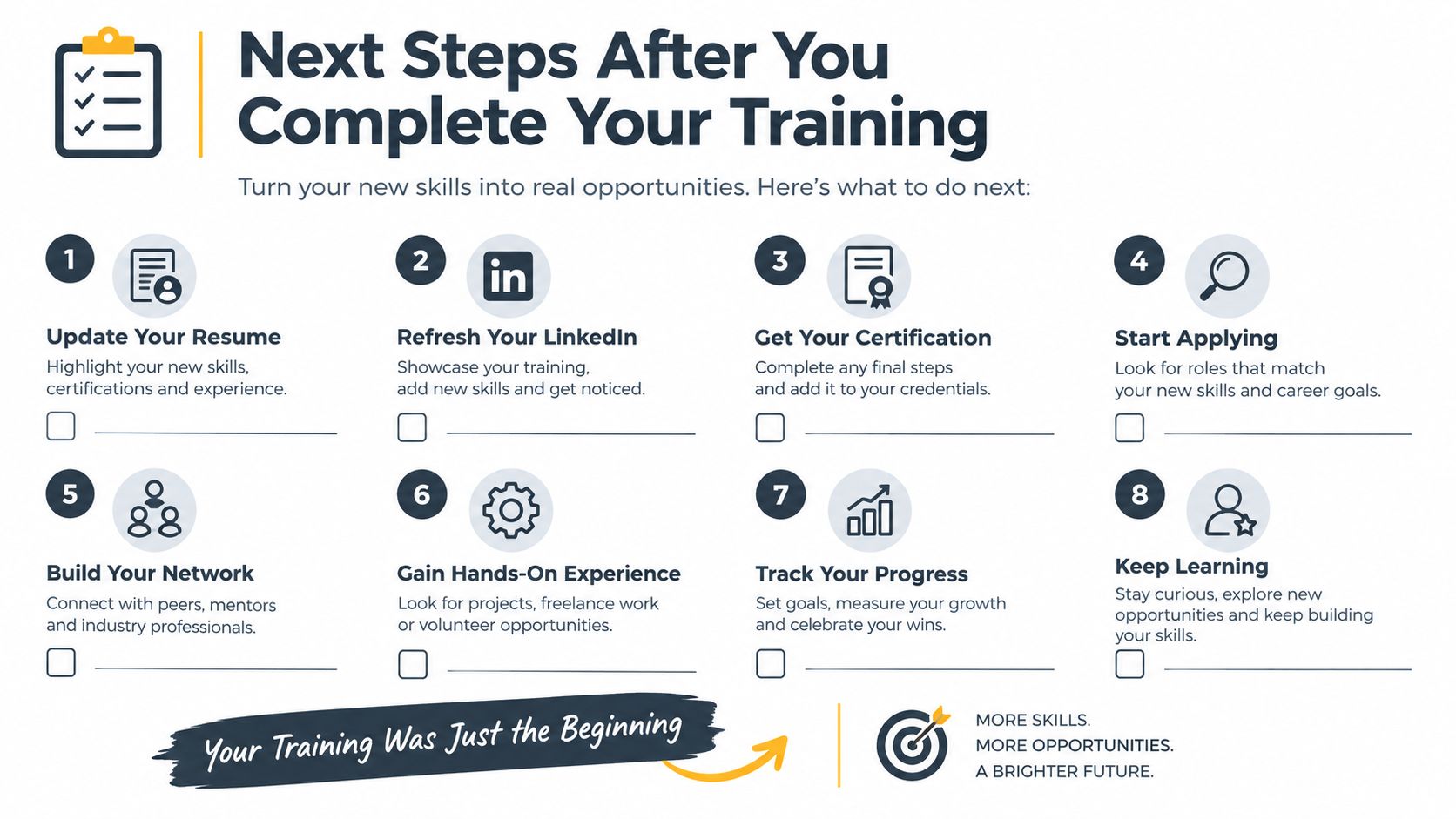
Finishing laser hair removal classes is the starting line, not the finish. The therapists who transition well into clinic work follow a sequence. They don't treat certification as proof that every gap has been closed.
Build your clinic-ready system
Start with the administrative side. SAHPRA's medical-device rules state that no medical device may be manufactured, distributed, imported, exported or sold without a valid establishment licence, and its non-ionising-radiation guidance explains that licensing exists to control electronic products that may cause injury, ill-health, or death. That gives clinics a concrete legal basis for training around safe procurement, handling, and use of aesthetic laser systems (SAHPRA medical-device rules and non-ionising-radiation guidance).
Then tighten your internal workflow:
Confirm site compliance
Make sure the clinic has the right documentation for each relevant device and a functioning safety programme.Clarify the Laser Safety Officer arrangement
Every site needs clarity on who carries that duty and how the programme is maintained in practice.Complete device-specific sign-off
Your general education doesn't replace in-service training on each platform you'll operate.
Turn training into repeatable practice
Once the paperwork is in order, your focus shifts to consistency.
- Keep a logbook: Record skin type, area treated, settings used, immediate response, and aftercare given.
- Standardise consultation flow: Fitzpatrick typing, contraindication screening, consent, and patch-test decisions should happen in the same sequence every time.
- Shadow before going fully solo: New operators learn a lot from hearing how experienced therapists explain limitations and manage anxious clients.
- Start with a lighter diary: A reduced client load gives you space to document properly and review outcomes without rushing.
- Book further education early: Advanced study and refreshers keep your judgement sharp as your case mix expands.
The safest newly certified therapist isn't the one who feels fearless. It's the one who follows the process every single time.
If you build those habits early, you become useful to a clinic very quickly. Not because you move fast, but because you become reliable under real treatment conditions.
Omega Lasers offers training support that fits this progression, including foundation learning, advanced clinical development, and device-specific education for teams adding laser services. If you want a clearer route from class selection to clinic-ready operation, visit Omega Lasers and review the training and platform options in one place.