



From Guesswork to Growth: Why Data Is Your Clinic's Most Valuable Asset
You can feel when a clinic is running on instinct. Consultations vary by practitioner. Photos are inconsistent. Follow-ups happen when someone remembers. A client says, “I'm not sure it worked,” and the team has no clean baseline, no structured feedback, and no way to separate a protocol problem from a communication problem.
That's expensive in aesthetics. It affects client safety, repeat bookings, staff confidence, and how defensible your treatment decisions are if a complaint lands on your desk. In a market where clients compare outcomes, comfort, and trust just as closely as price, gut-feel stops working very quickly.
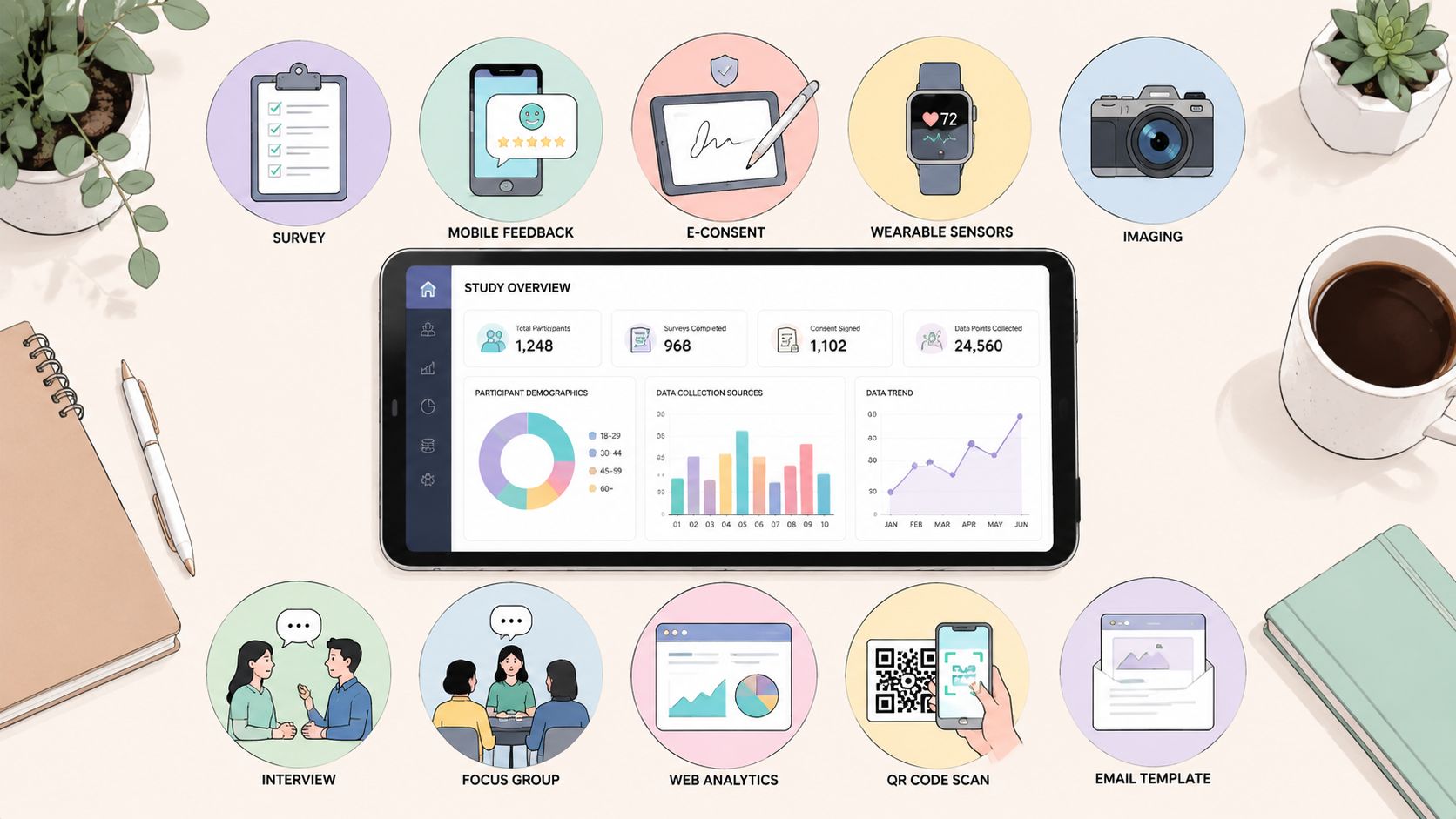
Strong clinics don't just buy advanced technology. They build reliable systems around it. That means choosing data collection methods that fit real clinic operations: intake, treatment delivery, documentation, aftercare, retention, and compliance. In South Africa, that matters even more because mixed-mode data collection has become the practical standard in wider data practice, not just pure paper or pure digital approaches, as reflected in guidance on data collection techniques.
If you need a practical starting point, these templates to collect customer data can help you standardise forms faster.
Índice
- 1. Client Treatment Outcome Photography and Documentation
- 2. Client Feedback Surveys and Post-Treatment Questionnaires
- 3. Treatment Protocol Performance Metrics and Device Analytics
- 4. Client Retention and Repeat Treatment Data Analysis
- 5. Clinical Trial and Efficacy Study Data Collection
- 6. Staff Training Competency and Knowledge Assessment Data
- 7. Client Demographic and Treatment Pattern Data Segmentation
- 8. Competitor Benchmarking and Market Intelligence Data Collection
- 9. Client Consultation and Pre-Treatment Assessment Data Recording
- 10. Adverse Event and Incident Reporting and Analysis
- Comparison of 10 Data Collection Methods
- Turn Your Data Into a Competitive Advantage
1. Client Treatment Outcome Photography and Documentation
Treatment photography is one of the fastest ways to move a clinic from opinion to proof. If you're treating hair removal, pigmentation, resurfacing, acne scarring, or anti-ageing concerns, a consistent visual record does more than support marketing. It protects the practitioner, clarifies progress for the client, and gives the clinic a usable evidence base for protocol decisions.
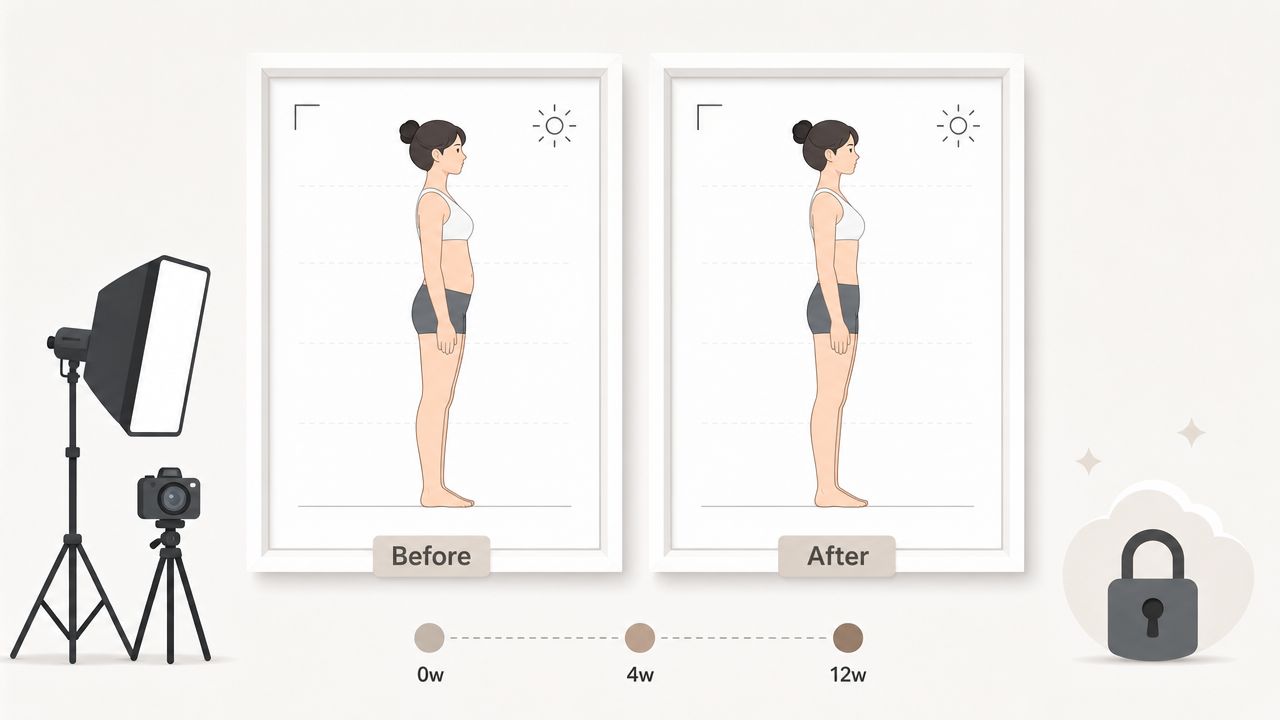
A salon using EM Pulse for hair removal and a doctor-led clinic using Derma Pro for rejuvenation both face the same problem. If angle, lighting, distance, or timing changes, the image stops being evidence and becomes decoration. That's where many clinics fail. They take photos, but they don't build a photography system.
Build a photography protocol that survives busy days
Your protocol should be boring by design. Same background, same distance markers, same camera settings, same body positioning, and the same timepoints for capture. For facial work, mark head position. For body treatments, mark stance and limb placement. For laser hair removal, document the area before the first session and again at repeat review points, not only when the result looks dramatic.
- Standardise the environment: Use one room, one backdrop, and fixed lighting where possible.
- Separate consent from marketing consent: A client may agree to clinical documentation but not public use.
- Store image sets logically: Keep treatment photos in a secure, organised system that links to the treatment date and protocol used.
Regra prática: If another staff member can't reproduce the same image setup without asking questions, the protocol isn't finished.
Aesthetic businesses often underestimate how useful this becomes in consultations. A HydroLuxe client who says her skin “feels the same” may respond differently when shown structured before-and-after documentation under consistent lighting. That changes rebooking conversations, package compliance, and complaint handling.
2. Client Feedback Surveys and Post-Treatment Questionnaires
Clients tell you things in the treatment room that never reach management. Surveys fix that, but only when they're short, timed properly, and designed for honest answers. In a laser clinic, the most useful feedback usually isn't broad praise. It's comfort, expectation alignment, downtime experience, and whether the client would repeat the treatment.
Immediate post-treatment surveys capture fresh impressions. Follow-up questionnaires capture what matters later: whether erythema settled as expected, whether the client felt prepared, whether they saw change, and whether the aftercare instructions made sense. A Tetra Cool client may feel pleased on the day but disappointed a few weeks later if expectations were poorly managed.
Keep surveys short and inclusive
South Africa's 2023/24 General Household Survey reported that 88.7% of households had internet access in some form, while 72.5% accessed the internet at home, which is why digital-only data collection can skew toward more connected groups and mixed-mode collection remains a better fit for broader reach in ZA settings, as noted in guidance on selecting the right data collection methods.
In practice, that means don't rely only on emailed forms. Offer a QR code in clinic, an SMS option for follow-up, and a staff-assisted version where needed. This matters if your clinic serves clients across different age groups, language preferences, and income bands.
- Ask fewer questions: Completion drops when clinics confuse curiosity with necessity.
- Explain why you're asking: Trust improves when clients understand how their feedback will be used.
- Allow nuance: Include optional free-text fields and opt-out choices for sensitive questions.
A good post-treatment questionnaire for Derma Pro or EM Pulse doesn't need to be complex. It needs to be repeatable, easy to answer, and useful for decisions. If staff never review the results together, even a well-designed survey becomes admin clutter.
3. Treatment Protocol Performance Metrics and Device Analytics
Most clinics track bookings better than they track treatment delivery. That's backwards. If your team can't review what settings were used, how long sessions took, whether outputs were consistent, or which protocols produce smoother recoveries, you're leaving clinical quality to memory.
This is where machine-level data matters. Device analytics let you connect what happened in the room to what happened after the room. On a hair removal platform like EM Pulse, that may include how consistently practitioners apply settings across similar cases. On a resurfacing platform, it may show whether pass count, cooling use, or session duration shifts between operators.
Use machine data to audit protocol drift
South Africa's 2022 Census was the first national census to use computer-assisted personal interviewing at scale, with Statistics South Africa reporting electronic capture rather than paper-only collection, and the operation counted approximately 62 million people using roughly 165,000 fieldworkers. That's a useful benchmark for anyone building large process-driven systems because it shows why standardised instruments, training, and real-time validation matter in modern data collection for market research and fieldwork design.
Your clinic isn't operating at national-census scale, of course. But the lesson holds. Digital capture improves consistency when the process is designed properly.
Use weekly exports from your device software and match them against outcomes, comfort reports, and repeat bookings. If one practitioner produces longer treatment times, more discomfort complaints, or weaker outcomes with the same device, you've found a training issue before it becomes a reputation issue. Clinics reviewing capital investment should also connect these records to utilisation and treatment mix, especially when assessing a repartição do ROI do laser de díodo para profissionais sul-africanos.
Machine data won't replace clinical judgement. It gives clinical judgement something solid to stand on.
4. Client Retention and Repeat Treatment Data Analysis
Retention data is where business reality shows up. Clients who come back on time usually tell you that the treatment plan made sense, the experience felt safe, and the value proposition held up after they left the clinic. Clients who drift, delay, or disappear often reveal hidden operational problems long before reviews do.
Aesthetic clinics often misread retention. They assume all non-returning clients are price-sensitive or uncommitted. Sometimes that's true. Often it isn't. The underlying issue may be poor expectation setting, inconsistent aftercare, weak recall systems, discomfort during treatment, or uncertainty about what comes next.
What repeat behaviour actually tells you
Track rebooking windows by treatment type, not as one blended clinic figure. Hair removal, skin rejuvenation, acne programmes, and maintenance facials all have different client behaviours. A client returning for a HydroLuxe skin cycle behaves differently from a client progressing through an EM Pulse package.
Useful retention analysis usually includes a few simple views:
- By treatment category: See which services create repeat behaviour naturally and which need stronger follow-up.
- By practitioner: Identify whether one operator has stronger continuity because their consultation style is better.
- By source channel: Compare referred clients, organic search clients, and social media leads for long-term value.
- By dropout point: Look for patterns after the first session, package midpoint, or post-review stage.
A medical-aesthetic practice that reviews this monthly can act faster. If resurfacing clients fail to return after consultation, your issue may be sales conversion. If they fail after treatment one, the problem may be discomfort, downtime, or results communication. Those are different problems and they need different fixes.
5. Clinical Trial and Efficacy Study Data Collection
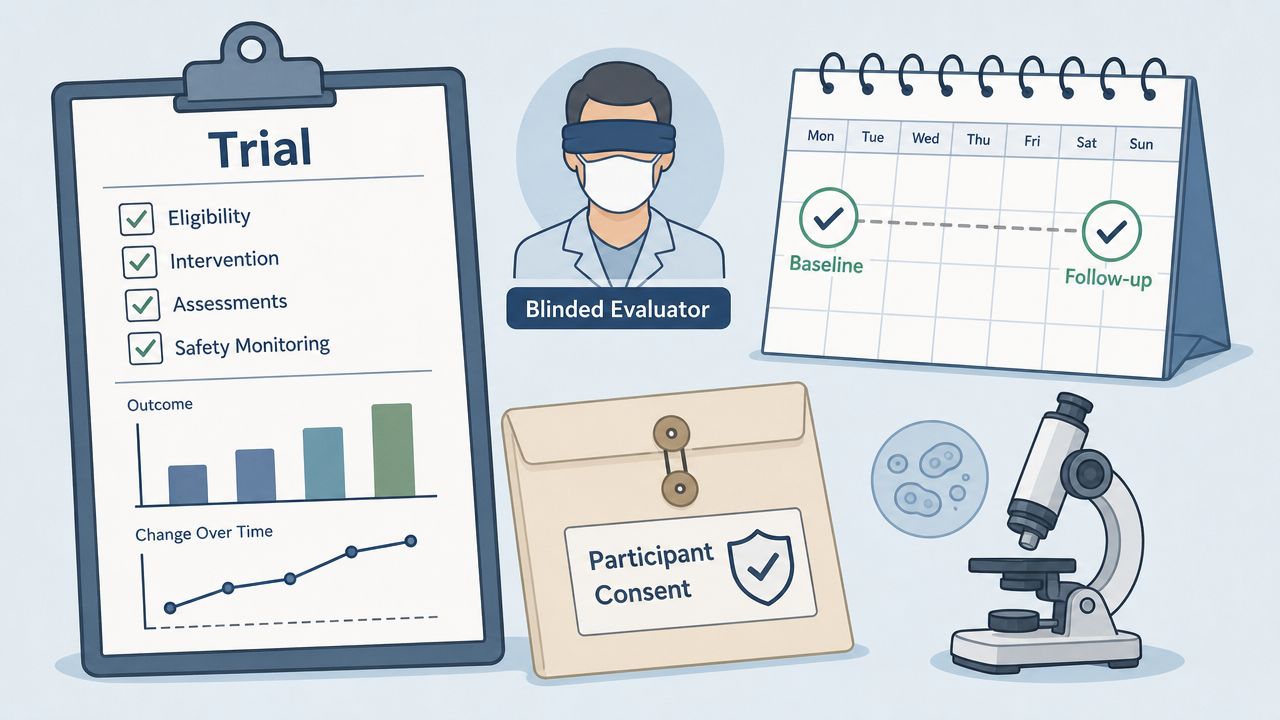
Most independent clinics won't run formal trials, but the discipline behind clinical research still matters. Structured efficacy collection teaches teams how to define outcomes before treatment starts, document adverse responses properly, and avoid making claims that the clinic can't support.
That matters in aesthetics because device marketing, practitioner enthusiasm, and client expectation can easily outrun the evidence available inside the clinic. If you're using HydroLuxe, Derma Pro, Tetra Cool, or EM Pulse, you need a clean distinction between what you know from your own records and what you merely suspect.
Research discipline improves everyday clinic work
A clinic doesn't need a formal publication plan to borrow strong habits from research practice. Predefine what success looks like for each treatment category. Use the same measurement points. Record adverse events in real time. Keep baseline photos and follow-up photos comparable. Separate practitioner opinion from documented change.
Examples are straightforward. If you're evaluating a resurfacing protocol, decide in advance whether you're measuring texture, visible redness, client comfort, downtime experience, or repeat uptake. If you're evaluating a hair removal protocol, don't rely on comments like “it seems thinner.” Record what area was treated, what settings were used, how the client described regrowth, and what the follow-up photo shows.
Better efficacy data makes your clinic quieter. Fewer arguments, fewer vague promises, fewer treatment plans built on hope.
This also helps with compliance language. Clinics get into trouble when they advertise certainty where they only have anecdote. A stronger internal evidence culture keeps your claims closer to what you can defend.
6. Staff Training Competency and Knowledge Assessment Data
A new device doesn't create a new service line. A trained operator does. Clinics that skip formal competency tracking usually discover the gap in the worst way: uneven outcomes, avoidable incidents, or senior staff constantly correcting basic mistakes that should've been caught before a practitioner treated a paying client.
Competency data should cover theory and application. Can the practitioner explain contraindications, cooling logic, skin typing, aftercare, and escalation pathways? Can they position the handpiece correctly, choose parameters sensibly, and document the session cleanly? If you're onboarding staff onto EM Pulse or Derma Pro, those aren't optional details.
Training records should predict treatment quality
South African clinics often work across mixed digital realities. Wider public health guidance notes that paper and electronic recording remain common methods, and hybrid planning can be the better answer where field reliability matters more than convenience. The same guidance also highlights missing-data challenges and the value of fewer, higher-quality questions in practical data collection for surveillance and programme settings.
That principle applies neatly to training assessments. Don't create huge forms no one completes well. Use short written checks, practical scoring rubrics, and periodic refreshers that focus on the points most likely to affect safety and consistency.
- Test critical judgement: Ask what the operator would do with a borderline candidate, not just where the power button sits.
- Observe live workflow: Watch setup, consent confirmation, treatment delivery, and record-keeping in one sequence.
- Centralise records: Keep completion dates, assessor names, and scope-of-practice notes in one place.
If you need structured onboarding support, Omega Lasers' formação em depilação a laser is one relevant pathway, and broader thinking on record-driven workforce oversight can also be informed by AuditReady perspectives on HR control.
7. Client Demographic and Treatment Pattern Data Segmentation
Segmentation helps clinics stop treating the client base like one undifferentiated crowd. Different age groups, skin types, concerns, budgets, and referral paths usually respond to different offers, booking behaviour, and follow-up messaging. If you don't segment, you'll oversimplify what clients want and which treatments fit them.
For laser and energy-based clinics, segmentation starts clinically, not just commercially. Fitzpatrick classification, treatment history, area being treated, lifestyle factors, and tolerance for downtime all shape what you recommend. A client seeking low-disruption maintenance care shouldn't be funnelled into the same communication path as a client prepared for a more intensive rejuvenation plan.
Segment for better treatment matching
This method becomes more powerful when you connect intake demographics to actual treatment behaviour. Which clients accept package recommendations? Which groups are more likely to need extra education before booking? Which concerns lead to single-session buyers and which lead to treatment plans with stronger continuity?
A practical segmentation model often includes:
- Clinical fit variables: Skin type, indication, prior treatment exposure, and contraindication profile.
- Commercial variables: Source of enquiry, package preference, maintenance behaviour, and add-on uptake.
- Communication variables: Preferred contact channel, language preference, and response to educational content.
Inclusive data design matters here. Guidance on health-equity data collection recommends explaining why demographic data is being collected, allowing opt-out choices, permitting multi-select or self-description where relevant, and involving communities in question design to improve trust and response quality in data-driven equity work.
Aesthetic clinics benefit directly from that approach. If clients feel boxed in by forms, they give poorer information. Poorer information leads to weaker treatment matching, weaker marketing, and more friction in consultation.
8. Competitor Benchmarking and Market Intelligence Data Collection
Benchmarking matters, but most clinics do it badly. They either obsess over pricing and copy whatever appears popular, or they avoid market intelligence completely and assume their local reputation is enough. Neither approach is strategic.
Good market intelligence is disciplined. You're not collecting gossip. You're tracking what clients in your area are seeing, what service language is becoming common, which treatment categories are getting more visible, and where your clinic can differentiate without making sloppy claims.
Collect market data without becoming reactive
The most useful competitor benchmarking files are simple and updated regularly. Capture treatment categories offered, visible messaging, package structure, consultation style cues, online review themes, and how clearly clinics explain safety, downtime, and candidacy.
For an aesthetic clinic owner, this reveals gaps that matter:
- Education gap: If local clinics explain treatments poorly, your consultation process can become a selling point.
- Trust gap: If public reviews mention poor communication or unclear aftercare, tighten those systems in your own clinic.
- Positioning gap: If everyone markets the same service in the same language, sharpen your niche around evidence, safety, or client experience.
A practical example: if your team notices that clients repeatedly arrive confused about how laser hair removal differs from other hair reduction services, that's market intelligence. It tells you what the wider market isn't explaining well. Build better pre-consultation education, cleaner FAQs, and stronger baseline assessments, and you'll convert better without racing to the bottom on price.
9. Client Consultation and Pre-Treatment Assessment Data Recording
The pre-treatment record is where many future arguments are either prevented or invited. When consultation notes are vague, clinics lose control of the case. They can't prove what was discussed, what was seen at baseline, what risks were flagged, or whether the chosen protocol was clinically defensible.
That's especially important with laser and energy-based treatments. Skin type, tanning status, medication use, previous procedures, wound-healing history, sensitivity, and expectation level all affect suitability. If those details live only in the practitioner's memory, your clinic is exposed.
Your baseline record is your protection
A strong consultation record combines objective findings with client-reported information. Use standardised intake forms by treatment category, then supplement them with practitioner notes that are specific enough to guide the next session. In this context, tools like a máquina de análise da pele can support more structured baseline assessment when used appropriately within a wider consultation workflow.
Bring the form design to its practical context. Staff need to complete it fast, consistently, and legibly. If a form takes too long, shortcuts appear. If it uses unclear language, contradictions creep in. Clinics can also learn from digital workflows used in healthcare form design, including examples discussed in Orbit AI for patient forms.
A practical pre-treatment dataset usually includes:
- Histórico médico e de tratamentos: Contraindications, previous interventions, and current skin or hair concerns.
- Baseline evidence: Photos, observed skin condition, treatment area notes, and any visible limitations.
- Expectation record: What the client wants, what they were told, and what the clinic recommended.
- Consent trail: Signed consent, aftercare instructions given, and any questions raised before proceeding.
When this record is done well, outcome tracking gets easier, complaints are easier to handle, and treatment planning stops drifting between appointments.
10. Adverse Event and Incident Reporting and Analysis
Every serious clinic says safety comes first. The real test is whether the clinic captures problems consistently when something goes wrong, or almost goes wrong. Adverse event reporting isn't only for major injuries. It includes unexpected skin responses, treatment intolerance, equipment faults, consent breakdowns, and near misses that reveal process weaknesses.
In aesthetics, under-reporting is common because staff worry about blame, reputation, or extra paperwork. That's a mistake. A clinic that hides small incidents usually creates larger ones later.
Make reporting easy enough that staff actually do it
The reporting form should be simple, available immediately, and clear about what must be recorded. Date, treatment, device, settings used, area treated, staff member, client-reported symptoms, observed signs, action taken, escalation path, and follow-up outcome should all be easy to capture. If it takes too long, people postpone it. Then details disappear.
Use adverse event logs to spot patterns rather than isolated drama. Are certain reactions linked to one protocol, one operator, one treatment area, one stage in the client journey, or one breakdown in aftercare communication? Those patterns are where risk reduction happens.
A near miss is data. Treat it with the same seriousness as a complaint.
Quarterly review works well for trend analysis, but urgent issues should be escalated immediately. De-identified case reviews are also useful for staff learning. They turn incidents into process improvement instead of private embarrassment, which is how a safety culture becomes real.
Comparison of 10 Data Collection Methods
| Método | 🔄 Implementation complexity | ⚡ Resource requirements | 📊 Expected outcomes | 💡 Ideal use cases | ⭐ Key advantages |
|---|---|---|---|---|---|
| Client Treatment Outcome Photography and Documentation | Medium, requires protocols, consent workflows | Moderate–High, cameras, lighting, secure storage, trained staff | High, objective visual evidence for efficacy and marketing | Before/after tracking, marketing, regulatory submissions | Provides clear clinical proof and marketing assets |
| Client Feedback Surveys and Post-Treatment Questionnaires | Low, simple to design and deploy | Low, survey tools, CRM integration, minimal staff time | Medium, satisfaction metrics and qualitative insights | Measure comfort, satisfaction, iterate service delivery quickly | Low-cost, rapid patient insight and testimonial generation |
| Treatment Protocol Performance Metrics and Device Analytics | Medium–High, device integration and analytics setup | High, connected devices, IT, data storage, analyst support | High, objective technical correlations with outcomes | Protocol optimisation, troubleshooting, predictive maintenance | Precise parameter tracking and device performance validation |
| Client Retention and Repeat Treatment Data Analysis | Medium, cohort analysis and CRM queries | Moderate, appointment systems, analytics tools, analyst time | High, business impact (LTV, ROI, churn indicators) | Revenue modelling, ROI justification, loyalty programmes | Links clinical performance to financial sustainability |
| Clinical Trial and Efficacy Study Data Collection | Very High, study design, ethics, regulatory oversight | Very High, research staff, specialised equipment, long timelines | Very High, definitive efficacy/safety evidence for claims | Regulatory approval, peer-reviewed validation, high-stakes claims | Gold-standard evidence for regulatory and scientific credibility |
| Staff Training Competency and Knowledge Assessment Data | Medium, develop rubrics and assessments | Moderate, trainers, LMS, assessment time, evaluation tools | Medium, improved safety, compliance, documented competence | Operator certification, onboarding, refresher training | Reduces risk, documents competency, supports compliance |
| Client Demographic and Treatment Pattern Data Segmentation | Medium, intake standardisation and segmentation logic | Moderate, CRM, segmentation tools, consent management | Medium–High, targeted marketing and improved matching | Personalised marketing, demand forecasting, protocol tailoring | Identifies high-value segments and informs service fit |
| Competitor Benchmarking and Market Intelligence Data Collection | Medium, ongoing monitoring and analysis processes | Low–Moderate, market tools, time, subscriptions | Medium, informs pricing/positioning and trend response | Strategic planning, pricing adjustments, product differentiation | Reveals market gaps and competitive positioning |
| Client Consultation and Pre-Treatment Assessment Data Recording | Medium, standardised forms and practitioner training | Moderate, intake systems, measurement tools, photo setup | High, safety baseline and measurable comparison point | Safety screening, treatment planning, medico-legal documentation | Establishes baseline, manages risk, supports informed consent |
| Adverse Event and Incident Reporting and Analysis | Medium–High, formal reporting and investigation protocols | Moderate–High, reporting tools, investigation resources, training | High, improves safety and regulatory compliance | Post-market surveillance, safety improvement, regulatory reporting | Detects safety patterns, enables corrective actions and compliance |
Turn Your Data Into a Competitive Advantage
Data collection isn't a side project for aesthetic clinics. It sits inside every part of the operation that affects revenue, safety, retention, and compliance. If a clinic can't document baseline risk, track treatment delivery, record outcomes properly, capture client experience, and review incidents transparently, it will struggle to grow in a controlled way. It may still attract bookings, but it won't build a durable evidence-based business.
The strongest clinics usually don't start with the most complicated systems. They start with consistency. Standardised consultation records. Proper photography. A short post-treatment survey. Device data reviewed at set intervals. Staff competency checks that are meaningful. From there, they connect the dots. They look at whether one practitioner's outcomes differ from another's, whether certain treatments create stronger repeat behaviour, whether certain client groups need different education, and whether adverse events reveal a training or protocol problem.
For South African clinics, there's another practical layer. Wider data practice in the country shows why standardisation, mixed-mode collection, and digital capture matter when you want reliable information at scale. In a clinic setting, that translates into usable forms, consistent protocols, and systems that don't collapse when the day gets busy. It also means respecting client diversity in how you ask questions, how you collect sensitive information, and how you avoid creating blind spots through poor form design.
If you're trying to improve quickly, start with two methods that create immediate operational value: treatment outcome photography and post-treatment feedback surveys. Photography gives you visual proof and better review conversations. Feedback surveys show where comfort, communication, and expectation-setting are breaking down. Once those are stable, add stronger pre-treatment assessment records, retention analysis, and adverse event reporting. Those five methods alone can change how a clinic makes decisions.
The commercial upside is real, even without turning the clinic into an analytics department. Better data helps you justify packages, improve repeat bookings, identify weaker operators early, refine aftercare, and market more responsibly because your claims stay closer to documented outcomes. The clinical upside is just as important. Better records support safer treatment selection, clearer consent, and faster intervention when something doesn't go to plan.
If your clinic is building or upgrading its treatment offering, it can help to work with suppliers that understand both technology and operational implementation. Omega Lasers is one relevant option in this space because it supplies medical-aesthetic platforms and supports clinics with training, technical support, and business guidance. The device matters, but the data system around the device matters just as much.
Data doesn't replace experience. It sharpens it. In an aesthetic clinic, that's how you move from guesswork to growth without compromising client safety.
If you're reviewing devices, training pathways, or clinic systems that support cleaner treatment data and better operational control, explore Lasers Omega to see how its platform range and clinic support resources may fit your practice.