



É provável que esteja a observar o mesmo padrão nas consultas e nos formulários de contacto. Os pacientes querem uma melhoria significativa, mas não querem cirurgia, tempo de recuperação visível nem um tratamento que pareça demasiado agressivo para uma zona tão sensível. Ao mesmo tempo, a sua clínica precisa de serviços que sejam credíveis, seguros de abordar e suficientemente eficazes para justificar o tempo de consulta, a formação do pessoal e o esforço de marketing.
É aí que rejuvenescimento vaginal por ultrassom focalizado de alta intensidade entra na conversa. Para a clínica certa, não se trata apenas de mais um item no menu de dispositivos. É um serviço que se situa na intersecção entre o bem-estar íntimo, as preocupações funcionais e a medicina estética. Quando bem executado, pode reforçar a confiança do paciente, aumentar o valor do conjunto de tratamentos e posicionar o seu consultório como um local que lida com questões delicadas com maturidade clínica, em vez de recorrer a um discurso de vendas desajeitado.
Índice
- A crescente procura por cuidados de bem-estar íntimo não invasivos
- Como a tecnologia HIFU rejuvenesce a partir do interior
- Evidências clínicas e resultados esperados para os doentes
- Protocolo de Seleção de Doentes e Consulta
- O percurso terapêutico: do protocolo aos cuidados pós-tratamento
- Como integrar com sucesso o HIFU na sua clínica
- Um investimento estratégico no futuro da sua clínica
A crescente procura por cuidados de bem-estar íntimo não invasivos
Normalmente, as pacientes não começam a conversa com as palavras “aperto vaginal”. Falam de perda de autoconfiança, alterações pós-parto, alterações na sensibilidade, pequenas perdas de urina ou uma sensação geral de que as coisas já não são como antes. Se a sua equipa souber ouvir bem, irá perceber que as necessidades relacionadas com o bem-estar íntimo surgem frequentemente de forma indireta.
Isso é importante do ponto de vista empresarial. As clínicas que abordam estas conversas de forma profissional podem abrir uma nova categoria de tratamento que muitos concorrentes evitam, não por falta de procura, mas porque não dispõem de um protocolo claro nem da linguagem adequada. Os doentes lembram-se da clínica que fez com que uma questão delicada parecesse controlável e de natureza médica, em vez de embaraçosa.
Por que razão esta categoria se adequa à clínica moderna
Os tratamentos íntimos não invasivos vão ao encontro do que muitos doentes já procuram na medicina estética:
- Pouca perturbação: As pessoas podem considerar o tratamento sem terem de planear a recuperação pós-cirúrgica.
- Melhoria privada: Trata-se de uma questão pessoal, pelo que os cuidados de saúde discretos e prestados mediante marcação têm um grande apelo.
- Relevância mais ampla: As alterações pós-parto, a flacidez dos tecidos associada à idade e as preocupações com a autoestima podem levar as pacientes a seguirem o mesmo percurso.
- Potencial inter-serviços: O mesmo paciente valoriza frequentemente o rejuvenescimento da pele, os tratamentos corporais e o planeamento do bem-estar a longo prazo.
Para os proprietários de clínicas na África do Sul, existe também uma vantagem em termos de posicionamento. Oferecer serviços de bem-estar intimistas demonstra que a sua clínica é organizada, está a par das últimas novidades clínicas e está equipada para tratar problemas que vão além das categorias óbvias relacionadas com o rosto e o corpo. Isso pode reforçar a sua reputação, tanto junto dos pacientes como dos profissionais que encaminham pacientes.
Um tratamento de alto valor não precisa de ser ostensivo para ter importância comercial. No setor do bem-estar íntimo, a discrição gera, muitas vezes, uma confiança mais forte do que a promoção agressiva.
O que torna a tecnologia HIFU interessante do ponto de vista comercial
O rejuvenescimento vaginal por ultrassom focalizado de alta intensidade funciona melhor como um serviço estratégico quando não é apresentado apenas como um tratamento de beleza. As conversas mais eficazes durante a consulta associam o apoio aos tecidos, o conforto, a confiança e uma melhoria funcional realista.
Essa distinção protege a sua marca. As clínicas enfrentam dificuldades quando exageram na promoção de tratamentos íntimos, apresentando-os como transformações instantâneas. Obtêm melhores resultados quando apresentam o HIFU como uma opção não cirúrgica para pacientes selecionados que pretendem uma remodelação gradual dos tecidos, com o mínimo de perturbação na vida quotidiana.
Como a tecnologia HIFU rejuvenesce a partir do interior
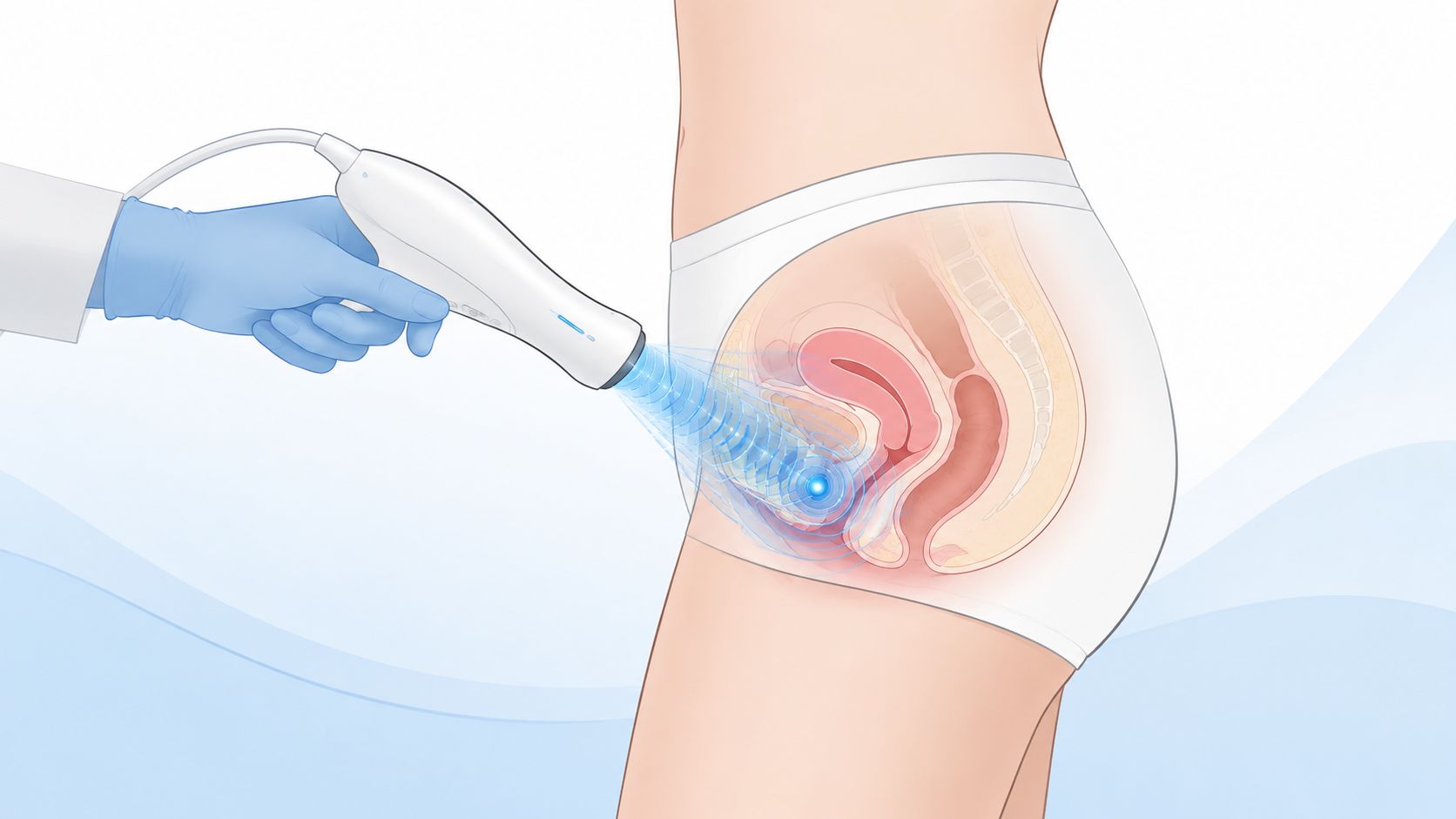
A melhor forma de explicar o HIFU é imaginar uma lupa a concentrar a luz solar. A luz não é mais intensa em todos os pontos; torna-se potente num ponto focal preciso. A energia ultrassónica funciona de forma semelhante. O dispositivo concentra a energia em profundidades específicas do tecido, criando efeitos térmicos controlados abaixo da superfície, ao mesmo tempo que deixa a camada superficial relativamente inalterada.
É por isso que esta tecnologia atrai clínicas que procuram um rejuvenescimento não cirúrgico, em vez de um rejuvenescimento superficial. Não se recorre a lesões superficiais para forçar uma resposta de cicatrização. A energia é direcionada para onde pode ocorrer a remodelação estrutural.

Por que é que a profundidade é importante?
Uma revisão técnica sobre o HIFU vulvar e vaginal refere que Transdutores de 3,0 mm e 1,5 mm são utilizados na mesma sessão de tratamento para o rejuvenescimento genital, o que reflete a necessidade prática de tratar várias profundidades dos tecidos, e não apenas uma camada. A mesma análise descreve o mecanismo como coagulação microtérmica seguido de um processo impulsionado pela cicatrização de feridas neocolagénese e remodelação da elastina, sendo que o efeito total é normalmente observado ao longo de 3 a 6 meses (análise técnica sobre o HIFU vulvar e vaginal).
Para os proprietários de clínicas, esse pormenor é importante por duas razões.
Em primeiro lugar, indica-lhe o que deve procurar numa plataforma e num protocolo. Se, numa descrição de um dispositivo, o tratamento for reduzido a uma única passagem em profundidade, acompanhada de alegações vagas sobre o aperto da pele, tenha cuidado. A resposta real dos tecidos depende da precisão da profundidade e da aplicação adequada da energia.
Em segundo lugar, melhora as suas consultas. Os doentes costumam pensar que «não cirúrgico» significa «superficial». Neste caso, a proposta de valor é precisamente o oposto. O tratamento atua em profundidade, onde as estruturas de suporte podem responder a uma estimulação térmica controlada.
Por que razão os resultados surgem gradualmente
Este não é um tratamento que se deva promover como tendo efeitos imediatos. Alguns doentes podem notar uma sensação inicial de firmeza, mas o processo mais importante é biológico, não mecânico. Após a criação dos pontos de coagulação microtérmica, o corpo inicia o processo de cicatrização. A renovação do colagénio e a remodelação da elastina determinam, então, o efeito de endurecimento a longo prazo.
Regra prática: Se o seu profissional de saúde não conseguir explicar por que razão os resultados só se fazem sentir ao longo do tempo, não conseguirá gerir as expectativas de forma suficientemente eficaz para manter um elevado nível de satisfação.
Esse calendário gradual é útil na prática. Proporciona uma base racional para revisões de acompanhamento, fotografias por fases e comunicação contínua. Ajuda também a evitar um dos maiores erros comerciais na medicina baseada na energia: prometer um resultado imediato para um tratamento que assenta na remodelação tardia dos tecidos.
Uma boa explicação para utilizar na clínica é simples. O HIFU não “estica” o tecido da mesma forma que a cirurgia. Desencadeia uma resposta de reparação a profundidades selecionadas, e a organização do tecido melhora ao longo dos meses seguintes. Esta forma de explicar é precisa, fácil de compreender e muito mais segura do que as afirmações de marketing sensacionalistas.
Evidências clínicas e resultados esperados para os doentes
Quando se adiciona uma categoria de tratamento sensível, as evidências tornam-se ainda mais importantes do que o habitual. Os doentes não perdoam promessas vagas no que diz respeito ao bem-estar íntimo. Querem saber se o tratamento é eficaz, se os efeitos secundários são controláveis e se a sua clínica está a fazer recomendações com base em resultados publicados, em vez de num entusiasmo impulsionado por tendências.
O que os dados publicados confirmam
Um estudo clínico sobre a utilização da HIFU no tratamento da incontinência urinária feminina revelou que 43% de doentes apresentaram o desaparecimento total da incontinência urinária após o tratamento. No mesmo estudo, A incontinência urinária grave diminuiu de 39% antes do tratamento para 8% após o mesmoe os casos muito graves passaram de 8% para 0%. Os autores também referiram que não se registaram eventos adversos graves, com apenas 4 doentes apresentava um corrimento vaginal ligeiro que desapareceu no espaço de uma semana (estudo clínico sobre a HIFU para a incontinência urinária feminina).
Esse estudo não significa que todas as pacientes submetidas a HIFU vaginal venham a apresentar incontinência, nem que todas as clínicas devam promover o serviço centrando-se principalmente nos sintomas funcionais. No entanto, revela algo importante para os operadores: o tratamento vaginal com HIFU pode proporcionar uma melhoria mensurável dos sintomas, com um período de recuperação curto, quando utilizado de forma adequada.
Uma revisão sistemática mais abrangente, realizada em 2024, dos estudos sobre HIFU publicados entre janeiro de 2010 e outubro de 2024 identificou 45 ensaios clínicos e estudos de coorte. O estudo concluiu que melhorias na flacidez cutânea do 18% ao 30%, com menos de 5% de doentes que referem eritema transitório, inchaço ou ligeiro desconforto (Revisão sistemática de 2024 sobre estudos relativos à HIFU). Essa análise não se refere especificamente ao aperto vaginal, mas continua a ser relevante, uma vez que aborda o perfil mais amplo de segurança e desempenho da mesma plataforma tecnológica baseada em energia.

Como transformar os dados científicos em consultas
Os doentes raramente precisam de uma palestra sobre estudos. Precisam de um resumo honesto. A versão útil para a consulta é mais ou menos assim:
- Existem dados publicados que comprovam uma melhoria mensurável: Nem todos os doentes respondem da mesma forma, mas existem dados clínicos concretos que comprovam a melhoria dos sintomas e da frouxidão.
- O perfil de segurança é favorável quando os protocolos são respeitados: Os relatórios publicados descrevem, na sua maioria, efeitos ligeiros e transitórios, em vez de complicações graves.
- Os resultados dependem da indicação e do estado inicial: Os problemas ligeiros a moderados são, normalmente, mais fáceis de resolver do que os problemas estruturais graves.
Deve também recolher cuidadosamente os seus próprios dados relativos ao tratamento. As fotografias padronizadas, os questionários sobre sintomas, os intervalos de acompanhamento e a documentação de consentimento são importantes. Uma abordagem disciplinada quadro de métodos de recolha de dados para clínicas ajuda-o a avaliar os resultados de forma adequada, em vez de se basear na memória ou em impressões pontuais.
Evidências sólidas fazem com que o tratamento seja incluído no seu menu. Uma boa documentação faz com que ele permaneça lá.
Protocolo de Seleção de Doentes e Consulta
As melhores práticas de HIFU não se baseiam em tratar todas as pessoas que solicitam o tratamento. Baseiam-se em dizer «sim» ao doente certo, «não» ao doente errado e «ainda não» ao doente que precisa primeiro de uma avaliação mais aprofundada.
Quem costuma ser uma boa opção
Na prática, as candidatas adequadas incluem frequentemente mulheres que referem flacidez interna, alterações pós-parto, preocupações relacionadas com o suporte dos tecidos decorrentes da idade ou sintomas funcionais ligeiros que pretendem que sejam avaliados de forma conservadora antes de considerarem opções mais invasivas. Normalmente, procuram privacidade, um tempo de recuperação reduzido e um plano de tratamento que pareça mais clínico do que meramente cosmético.
Uma boa candidata também compreende que se trata de um tratamento de remodelação. Ela não procura um resultado cirúrgico num procedimento não cirúrgico. Essa mentalidade é tão importante quanto a anatomia.
O que verificar antes do tratamento
A sua consulta deve avaliar tanto as indicações como os riscos. Mantenha a conversa bem estruturada.
- Questões locais em destaque: Adiar o tratamento caso haja infeção, irritação inexplicável ou sintomas vaginais que não tenham sido resolvidos e que exijam avaliação médica.
- Estado da gravidez: Não trate pacientes grávidas ou que possam estar grávidas.
- Grau de gravidade do prolapso ou da disfunção do pavimento pélvico: As questões estruturais complexas requerem, normalmente, uma avaliação especializada, em vez de uma promessa de reforço baseada apenas em critérios energéticos.
- Contexto médico geral: Analise as questões relacionadas com a cicatrização, os procedimentos recentes e se o doente já se submeteu a tratamentos íntimos anteriores que possam alterar a resposta dos tecidos.
É também aqui que se revela a maturidade do profissional. Não deixe que o constrangimento encurte a consulta. Quanto mais delicada for a indicação, mais rigorosa terá de ser a sua avaliação.
Definição de expectativas que protege a sua reputação
A maior parte da insatisfação deve-se a uma má abordagem, e não a uma tecnologia deficiente. Um doente que espera uma melhoria subtil e progressiva pode ficar satisfeito com um resultado que um doente mal orientado consideraria decepcionante.
Utilizar uma linguagem como esta:
| Ponto de consulta | Formulação mais adequada |
|---|---|
| Sobre o momento certo | A melhoria ocorre gradualmente, não de uma só vez. |
| Sobre os objetivos | O objetivo é dar apoio e firmeza, não uma alteração ao nível de uma cirurgia. |
| Sobre o conforto | A maioria dos doentes tolera bem o tratamento, mas a tolerância varia. |
| Sobre os resultados | A indicação correta é mais importante do que o entusiasmo. |
Se um paciente quiser certezas, perfeição ou uma garantia, suspenda a marcação. Os pacientes de bem-estar íntimo precisam de confiança, mas também precisam de realismo.
Um protocolo de consulta bem definido melhora muito mais do que apenas a segurança clínica. Reduz a pressão relacionada com reembolsos, protege a reputação online e ajuda a sua equipa a falar a uma só voz.
O percurso terapêutico: do protocolo aos cuidados pós-tratamento
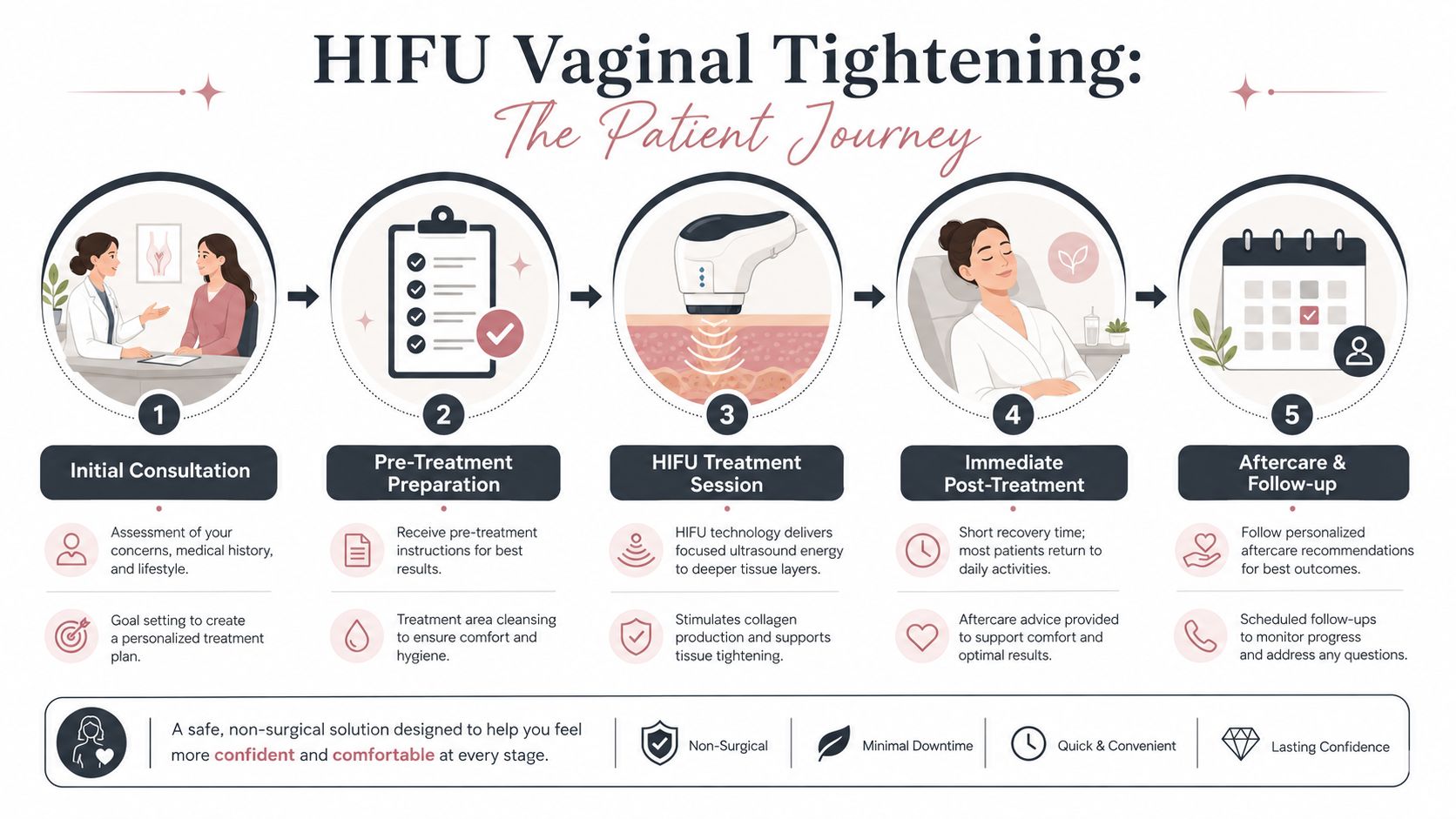
Os doentes decidem se um tratamento lhes parece de alta qualidade muito antes de os resultados se fazerem sentir. Avaliam o processo de admissão, os padrões de privacidade, a confiança do profissional, a disposição da sala e a clareza dos cuidados pós-tratamento. No caso do aperto vaginal por ultrassom focado de alta intensidade, a experiência deve ser tranquila, eficiente e clinicamente controlada.
Como é uma consulta típica
Uma consulta bem conduzida começa com a confirmação do consentimento, atualizações sobre os exames de rastreio e uma breve reafirmação dos objetivos. Parece simples, mas reduz a ansiedade da paciente. Muitas mulheres ficam mais tranquilas só de ouvir que o protocolo é rotineiro, estruturado e respeitoso.
Durante o tratamento, o profissional posiciona o aparelho, segue metódicamente o padrão de tratamento planeado e acompanha o conforto do paciente ao longo de todo o processo. Os pacientes podem referir uma sensação de calor, pressão ou um breve formigueiro. O ambiente da sala é importante neste contexto. Um comentário calmo por parte do operador costuma melhorar a tolerância mais do que explicar em pormenor cada impulso.
A configuração prática também é importante. Utilize consumíveis adequados, cumpra rigorosamente os protocolos de higiene e certifique-se de que o meio de acoplamento é adequado para a peça de mão e para o procedimento. As clínicas que já estão familiarizadas com Seleção do gel para ecografia em procedimentos baseados em energia normalmente adaptam-se com mais facilidade, porque compreendem como os pequenos pormenores da configuração afetam a consistência do tratamento.
Apoio pós-venda que simplifica a experiência
Os cuidados pós-tratamento não devem parecer uma folha de alta cirúrgica. Para a maioria dos doentes, o atrativo do HIFU reside no facto de poderem regressar rapidamente às suas rotinas normais, bastando apenas algumas orientações simples e a atenção aos sintomas.
Uma conversa sensata sobre cuidados pós-tratamento abrange normalmente:
- Expectativas imediatas: Podem ocorrer sensações ligeiras e temporárias ou um corrimento leve, e os doentes devem saber o que é normal nesta fase inicial.
- O que deve evitar, caso o seu protocolo assim o recomende: Dê instruções claras e específicas para a clínica, em vez de conselhos genéricos encontrados na Internet.
- Quando contactar a clínica: Os doentes devem saber quais os sintomas que requerem avaliação médica.
- Prazo para o acompanhamento: Marque reuniões de avaliação antes de eles saírem, enquanto a motivação ainda está em alta e as expectativas ainda estão frescas.
Este tratamento costuma ter melhores resultados quando a experiência é tão requintada quanto a tecnologia. A consulta deve ser privada, breve e sem pressas. Essa combinação é uma das principais razões pelas quais os doentes recomendam o tratamento a outras pessoas, mesmo num domínio que muitos abordam com discrição.
Como integrar com sucesso o HIFU na sua clínica
Um serviço de HIFU rentável não se consegue simplesmente comprando um aparelho e adicionando uma linha ao seu site. Resulta da disciplina operacional. A qualidade do aparelho, a conceção do tratamento, a profundidade da formação, a comunicação com os doentes e os sistemas de acompanhamento são fatores que determinam se o serviço se torna uma fonte de receitas respeitada ou um item de menu desajeitado que nunca atinge o seu potencial.
Escolha a plataforma como um operador, não como um consumidor
O primeiro erro que os proprietários de clínicas cometem é avaliar uma plataforma de bem-estar íntimo como se fosse um aparelho estético genérico. As perguntas certas são mais exigentes.
Pergunte se o sistema suporta as profundidades de tratamento exigidas pelos seus protocolos. Informe-se sobre a situação regulamentar relevante para o seu mercado. Pergunte de que forma os consumíveis, a manutenção e a durabilidade da peça de mão afetam a prestação efetiva do serviço. Pergunte o que acontece se um profissional precisar de apoio técnico enquanto houver pacientes agendados.
Uma lista de verificação útil para a contratação pública inclui:
- Credibilidade regulatória: Procure sistemas que sejam fornecidos com as certificações e a documentação de conformidade local de que a sua clínica necessita.
- Usabilidade clínica: A interface, a ergonomia da peça de mão e a lógica do protocolo devem permitir a realização de tratamentos repetíveis.
- Apoio ao serviço: O tempo de inatividade custa dinheiro. O apoio técnico local é fundamental.
- Âmbito da formação: A entrega do produto não é suficiente. É necessário ter capacidade de avaliação do tratamento, formação sobre contraindicações e orientação em matéria de consultas.
Se estiver a desenvolver um portfólio mais abrangente de tratamentos baseados na energia, também é útil pensar em termos de adequação à linha de serviços, em vez de dispositivos isolados. Muitas clínicas que já compreendem o fluxo de trabalho e as exigências em matéria de educação do doente de um Plataforma de tratamento por RF na clínica de estética adaptam-se bem ao HIFU porque já pensam em protocolos, indicações e resposta dos tecidos, em vez de se limitarem a uma simples abordagem de «antes e depois» para fins de venda.
Formar a equipa para que se expresse de forma profissional e com confiança
O bem-estar íntimo revela rapidamente falhas na comunicação. Uma recepcionista que pareça constrangida, um terapeuta que faça promessas exageradas ou um profissional de saúde que não consiga explicar os critérios de elegibilidade irão prejudicar as marcações e a confiança.
Dê formação a toda a equipa que lida diretamente com os doentes sobre três aspetos:
Como dar um nome à empresa de forma profissional
Os profissionais devem sentir-se à vontade para utilizar expressões como “laxidade vaginal”, “bem-estar íntimo” e “rejuvenescimento não cirúrgico”, sem recorrer a eufemismos ou piadas de mau gosto.Como avaliar o pedido de informação
O objetivo não é fazer um diagnóstico por telefone. Trata-se de determinar se o paciente parece ser um caso adequado para uma consulta completa.Como explicar a progressão
Todos devem compreender que se trata de um processo de remodelação gradual, e não de uma mudança drástica e imediata.
As clínicas perdem pacientes da área do bem-estar íntimo quando a sua comunicação transmite hesitação. Os pacientes interpretam essa hesitação como falta de competência.
Promova o serviço com discrição e clareza
Esta categoria não reage bem ao sensacionalismo. Os doentes não querem textos sensacionalistas. Querem tranquilidade, privacidade e a sensação de que a sua clínica leva o problema a sério.
Isso altera a forma como faz marketing. O conteúdo do seu site deve centrar-se nas indicações, em quem pode ser adequado, no que a consulta envolve e na evolução dos resultados. O conteúdo nas redes sociais deve recorrer a uma abordagem educativa e de bom gosto, em vez de linguagem provocadora. Os pacotes podem funcionar bem quando estruturados em função das necessidades de cada fase da vida, como o apoio à recuperação pós-parto ou o planeamento do bem-estar feminino, desde que se mantenha dentro do seu âmbito de atuação e evite promessas exageradas.
O acompanhamento operacional também faz parte do marketing. Os sistemas de lembretes, os avisos para deixar avaliações e os canais de comunicação privados melhoram a assiduidade e a retenção. Se estiver a aperfeiçoar essa vertente da experiência do doente, esta visão geral do vantagens dos SMS na área da saúde é útil para planear lembretes de consultas específicas, avisos de acompanhamento e fluxos de trabalho de comunicação com os doentes.
Uma linha de serviços HIFU já consolidada costuma expandir-se através de quatro canais:
- Recomendações discretas: Os doentes contam aos amigos quando a experiência do tratamento lhes pareceu respeitosa e gratificante.
- Conversão de pacientes já existentes: Os pacientes que procuram tratamentos para o corpo e para a pele costumam confiar as suas questões íntimas à mesma clínica.
- Credibilidade profissional: Os médicos que encaminham os doentes para clínicas que realizam exames de rastreio de forma adequada e evitam pedidos de reembolso excessivos.
- Retenção através do processo: Os sistemas de acompanhamento transformam um tratamento numa relação mais abrangente.
As clínicas que têm sucesso aqui não fazem publicidade mais ostensiva. Fazem melhor marketing, prestam melhor aconselhamento e funcionam melhor.
Um investimento estratégico no futuro da sua clínica
O tratamento de rejuvenescimento vaginal por ultrassom focado de alta intensidade insere-se numa categoria que muitas clínicas sabem que as pacientes procuram, mas que poucas oferecem com verdadeira consistência. Essa lacuna cria uma oportunidade. O tratamento combina uma abordagem não cirúrgica, um perfil de segurança favorável na literatura publicada e uma fundamentação clínica que as pacientes conseguem compreender quando a sua equipa a explica adequadamente.
O argumento comercial é mais convincente quando não se encara isto como uma tendência pontual. Funciona como parte de um percurso mais abrangente de bem-estar íntimo, assente na triagem, na disciplina dos protocolos, numa boa documentação e numa comunicação com o doente que transmita respeito, desde o primeiro contacto até à avaliação final. É isso que garante os resultados e assegura o retorno do investimento.
As clínicas que obtêm bons resultados com este serviço tendem a partilhar os mesmos hábitos. Escolhem cuidadosamente a tecnologia, dão formação a todos os membros da equipa que lidam diretamente com os doentes, documentam os resultados de forma adequada e são honestas quanto ao que o tratamento pode e não pode fazer. Essa combinação cria algo mais duradouro do que receitas a curto prazo. Cria confiança.
Para clínicas orientadas para o crescimento, isto não é apenas uma decisão relativa ao equipamento. É uma decisão estratégica sobre a relevância, a qualidade do serviço e o tipo de clínica pela qual querem ser conhecidas.
Se está a ponderar como incorporar tratamentos de bem-estar íntimo ou outros tratamentos baseados na energia com elevado retorno sobre o investimento na sua clínica, Lasers Omega pode ajudá-lo a avaliar a tecnologia, a formação e o apoio empresarial adequados para a sua clínica.