



If you run a clinic in South Africa, you’ve probably had the same conversation more than once lately. A client asks for a black diamond facial because she saw it on Instagram, a therapist says another salon nearby has added it, and you’re left deciding whether this is just noise or a service worth building properly.
The right answer depends on two things. First, whether you can deliver it safely on the skin types you treat every day. Second, whether the treatment can hold its place on your menu as a profitable, repeatable service rather than a short-lived trend. In South Africa, both questions matter more than the hype.
Índice
- What Is the Black Diamond Facial and Why Is It Trending
- The Science Behind the Glow How a Black Diamond Facial Works
- Key Clinical Benefits and Ideal Client Profiles
- The Clinical Protocol A Step-by-Step Guide for Practitioners
- Device Selection Safety and SAHPRA Compliance
- Pricing Packaging and Marketing Your New Service
- Conclusion Your Next Steps to Launching the Black Diamond Facial
What Is the Black Diamond Facial and Why Is It Trending
A client books on Thursday for a Saturday event, wants cleaner pores, less surface oil, brighter skin, and no visible downtime. In many South African clinics, that consultation now ends with the same treatment recommendation: the diamante negro facial.
O diamante negro facial is a laser-led resurfacing treatment also referred to as a carbon laser peel or, in some markets, a Hollywood Peel. A thin carbon layer is applied to the skin and then treated with a Q-switched laser. The goal is straightforward. Improve surface clarity, reduce visible congestion, and give the skin a fresher finish without the recovery period clients expect from stronger peels or more aggressive resurfacing.
Its popularity in South Africa is not hard to explain. Clinics are seeing steady interest from clients who want a treatment that sounds advanced, photographs well for social media, and fits into a lunch break or pre-event schedule. The Go-To Guy reported a 45% increase in demand for the treatment and noted local pricing of around R800 to R1,200 per session. As noted earlier, that matters for two reasons. There is already public awareness of the name, and there is already a visible market price range that affects how you position the service.
The trend also fits the wider shift toward energy-based facial services. Clinics tracking tendências de dispositivos estéticos na África do Sul can see why this treatment keeps getting attention. It sits in the sweet spot between “quick glow treatment” and “device procedure,” which makes it easier to sell than a basic facial and easier to accept than a more invasive option.
From a practitioner’s side, the appeal is real, but so are the limits. This is a high-demand treatment for brightness, texture refinement, visible pore improvement, and oil control. It is not an acne cure, a melasma treatment, or a substitute for a proper long-term plan in clients with scarring, inflammatory disease, or pigment instability.
That distinction matters even more in the South African market. Many clinics treat a high proportion of Fitzpatrick IV to V skin types, where poor settings, weak consultation, or aggressive repetition can create post-inflammatory pigment problems that wipe out both patient trust and profit. A black diamond facial can be an excellent entry-level laser service, but only when the clinic pairs demand with SAHPRA-aware device selection, clear contraindication screening, and realistic treatment positioning.
The Science Behind the Glow How a Black Diamond Facial Works
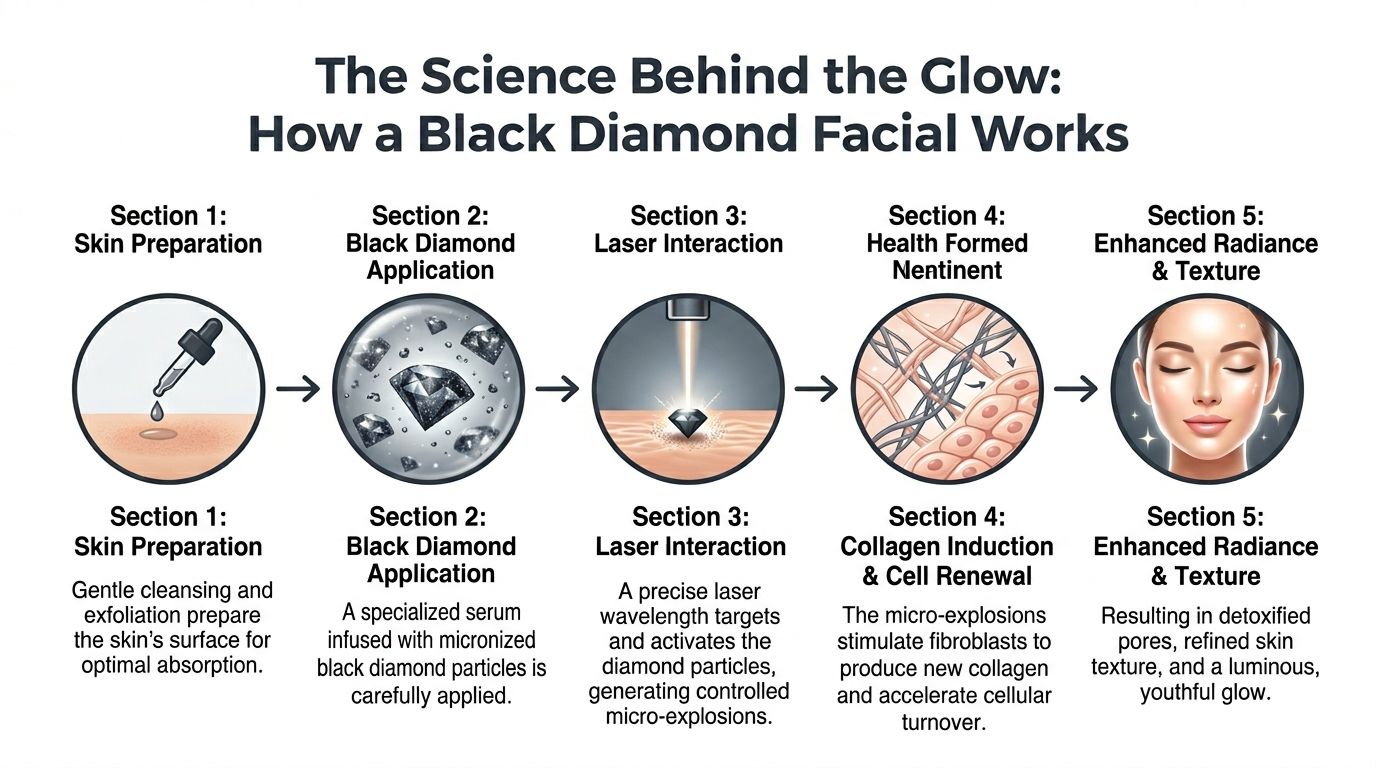
The easiest way to explain the black diamond facial to staff and clients is this: the carbon acts like a magnetic mask for surface congestion. It adheres to oil, debris, residual keratin and impurities sitting within and around the pore opening. The laser then targets that carbon, not by scraping the skin mechanically, but through controlled light-based interaction.
Carbon application and laser interaction
A proper black diamond facial starts with an active carbon mask applied evenly over clean, dry skin. That carbon absorbs impurities such as dead skin cells, sebum, oil residue and debris from deep within pores. Once the carbon is in place, the practitioner uses calibrated laser wavelengths, typically Q-switched Nd:YAG at 1064nm or 532nm, to shatter the carbon particles through photothermal and photomechanical effects (clinical mechanism of black diamond laser facial).
The treatment feels different from a scrub, a chemical peel or hydrodermabrasion due to how it works. You’re not just removing superficial buildup. You’re using the carbon as a target so the laser can deliver precise exfoliation of the stratum corneum up to 20 to 30μm depth without thermal damage to deeper dermis layers, according to the same clinical benchmarks.
For clinics that already offer exfoliation-based treatments, it helps to understand where black diamond sits. A service such as hydro dermabrasion technology can cleanse and infuse effectively, but a black diamond facial adds a laser component that changes the mechanism and the clinical conversation.
Why clients see both immediate and cumulative change
Clients usually notice the first layer of benefit straight away. The skin looks cleaner, brighter and less congested because the carbon-assisted laser pass removes surface dullness and reduces visible oiliness. That’s the part people call the glow.
The second layer is slower and more valuable. The same mechanism stimulates fibroblast activity, which regional benchmarks associate with type I collagen synthesis of 25% to 40% after a treatment series of 4 to 6 sessions spaced 2 to 4 weeks apart. The same source notes 70% improvement in skin texture e 55% reduction in enlarged pores measured via VISIA skin analysis in South African clinic reporting.
Technical settings and the Fitzpatrick reality
In South Africa, device settings can’t be copied blindly from international training notes. Your patient mix often includes Fitzpatrick III to V, and many clinics regularly treat IV and V. Regional benchmarks support pulse durations of 5 to 10ns e fluences of 1.5 to 3 J/cm² for these skin types to reduce the risk of post-inflammatory hyperpigmentation. The same clinical guidance reports PIH incidence below 5% when appropriate parameters are used.
Regra prática: The black diamond facial is forgiving when the operator respects skin type, energy selection and carbon application. It becomes risky when someone treats it like a generic “laser facial” and pushes settings to chase drama.
That’s why training must cover tissue response, not just handpiece movement. Good operators watch for the correct carbon interaction and endpoint. Poor operators watch only for speed.
Key Clinical Benefits and Ideal Client Profiles
The black diamond facial performs best when the clinic sells the right outcome to the right person. It isn’t the answer for every skin complaint, but for the correct client it fills a very useful gap between basic facials and more intensive resurfacing.
What clients usually value most
The appeal is rarely just one thing. Most suitable clients are coming in with a cluster of concerns: they feel oily by midday, makeup doesn’t sit well, pores look enlarged on the cheeks or T-zone, and the skin appears tired even when it isn’t inflamed.
Common benefits practitioners can position clearly include:
- A fresher surface finish: Skin generally looks more polished and less dull straight after treatment.
- Improved pore appearance: This is one of the strongest talking points for oily and congestion-prone clients.
- Better oil control: Many clients report that skin feels cleaner and less heavy after treatment.
- A more even-looking complexion: Especially useful for clients whose skin looks muddy or uneven from congestion and environmental stress.
- Supportive anti-ageing positioning: Fine textural change and radiance improvement can make the skin look more rested.
A good consultation separates immediate cosmetic improvement de corrective change over time. The same client can enjoy both, but they’re not the same promise.
Instant event-ready skin with zero downtime.
Who tends to be a strong fit
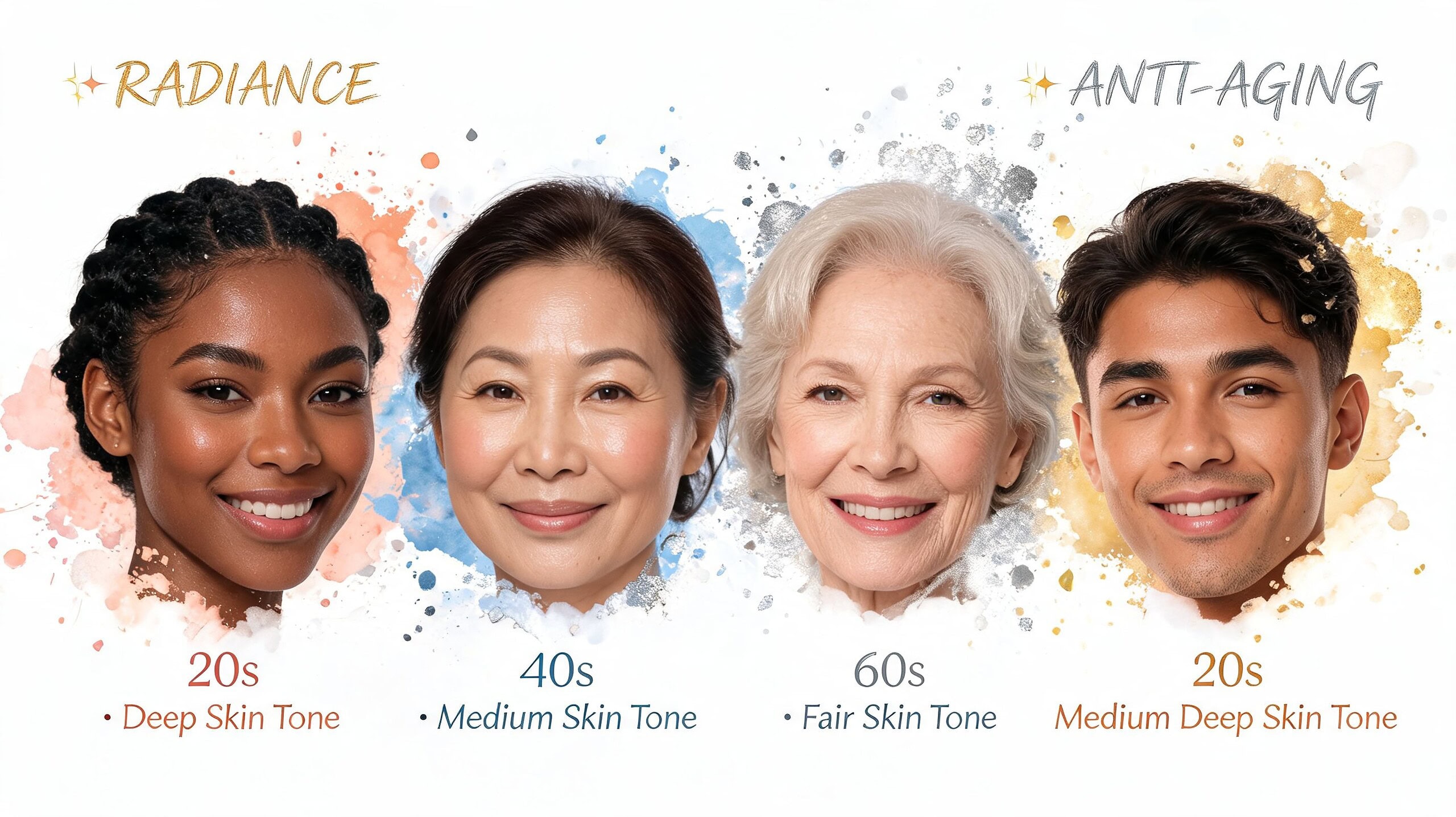
A black diamond facial often works well for clients with:
| Client type | Why the treatment fits |
|---|---|
| Oily skin clients | The carbon and laser combination suits surface oil and congestion concerns |
| Enlarged pore concerns | The treatment is often requested specifically for visible pore refinement |
| Dull, uneven-looking skin | It gives a quick brightness boost without a peel-style recovery period |
| Mild early photoageing | Texture and radiance improvements support a refreshed appearance |
| Event-driven clients | It’s easy to position before weddings, shoots, functions and work events |
Using a proper imaging workflow helps here. A consultation supported by a professional skin analyser machine makes it easier to show whether the client’s main issue is oil, texture, pigmentation pattern, dehydration, or a combination.
Who needs more caution or a different plan
Some clients are poor candidates for a same-day booking. If they have compromised skin, active irritation, poor compliance history, unrealistic expectations, or they’re seeking a result that really requires another modality, forcing a black diamond facial into the plan usually backfires.
One of the biggest mistakes I see in clinics is treating “popular” as “appropriate”. A client who needs barrier repair, acne management under medical care, or a different resurfacing approach shouldn’t be pushed into a black diamond facial because it’s trending. Good clinics protect trust by saying no when no is the correct answer.
The Clinical Protocol A Step-by-Step Guide for Practitioners
A profitable treatment needs a repeatable protocol. If one therapist gets a strong result and another leaves patchy carbon, poor endpoint control or a rushed finish, the problem isn’t the treatment. It’s the clinic standard.
Start with screening, not the laser
Begin with a full consultation and visual assessment. Record oil levels, current breakouts, pigment history, sensitivity, recent exfoliation, homecare, medication history and prior reactions to heat-based treatments. In South African practice, this screening step matters even more because post-inflammatory hyperpigmentation risk changes how cautiously you work on darker skin types.
Before the client lies down, confirm three practical things:
- Objetivo do tratamento: Are they here for pre-event brightness, oil control, texture support, or a course plan?
- Skin status today: Is the barrier calm enough for treatment, or is there active irritation that makes today the wrong day?
- Expectation level: Do they understand the difference between a glow treatment and a corrective programme?
If the consultation feels rushed, the treatment usually becomes rushed as well.
Treatment flow that keeps results consistent
Once the client is cleared, cleanse thoroughly. Remove sunscreen, makeup, surface oil and any residue that will interfere with even carbon adhesion. If you leave a film on the skin, the laser interaction becomes inconsistent.
Then follow a disciplined sequence:
Prepare the skin properly
Dry the skin fully after cleansing. Carbon should sit on the skin evenly, not slide over residual moisture.Apply the carbon layer evenly
Use a controlled, thin-to-moderate application. Too little can reduce uniformity. Too much can create unnecessary mess and inconsistent pickup.Allow appropriate settling time
The carbon needs time to bind to debris and oil. Don’t rush this because the room is busy.Set safety measures before activation
Both practitioner and patient need correct protective eyewear. Confirm handpiece readiness, treatment area control and emergency procedure familiarity.Perform the laser passes methodically
Work in organised zones. Maintain consistent overlap and movement speed. Don’t hover over high-risk areas to “get a bit more” unless you have a clear clinical reason and the skin is tolerating it well.Watch the endpoint, not your assumptions
You’re looking for clean carbon interaction and a controlled response. If the skin is telling you to reduce intensity or stop, listen.
Para Fitzpatrick IV to V, restraint is part of skill. Lower-risk treatment comes from respecting epidermal melanin, avoiding aggressive passes, and prioritising repeatable sessions over one dramatic appointment. In practice, conservative technique usually builds a better reputation than chasing intensity.
Finish with aftercare and rebooking
After treatment, remove remaining residue gently and inspect the skin under good light. Mild transient warmth or pinkness can be normal, but the finish should look clean and settled rather than stressed.
Give concise aftercare instructions. Keep the skin calm, avoid unnecessary actives immediately after treatment, and use diligent sun protection. Clients don’t need an essay. They need clarity.
A useful checkout script includes:
- What they may notice today: smoother feel, cleaner pores, a brighter look
- What to avoid briefly: friction, heat-heavy activities, and strong exfoliating products if the skin feels sensitive
- When to review: either before their next appointment or sooner if anything feels unusual
Rebooking is easiest when it’s tied to the treatment goal. Pre-event clients may return as needed. Oilier clients often do better when the clinic frames treatment as part of an ongoing maintenance plan. Corrective clients need a structured series and consistent photography so the clinic can track visible change rather than relying on memory.
Device Selection Safety and SAHPRA Compliance
A clinic owner usually notices the compliance problem after the device has arrived, the deposit is gone, and the trainer starts avoiding direct answers about registration, service support, and local documentation. By then, the cheap machine is expensive.
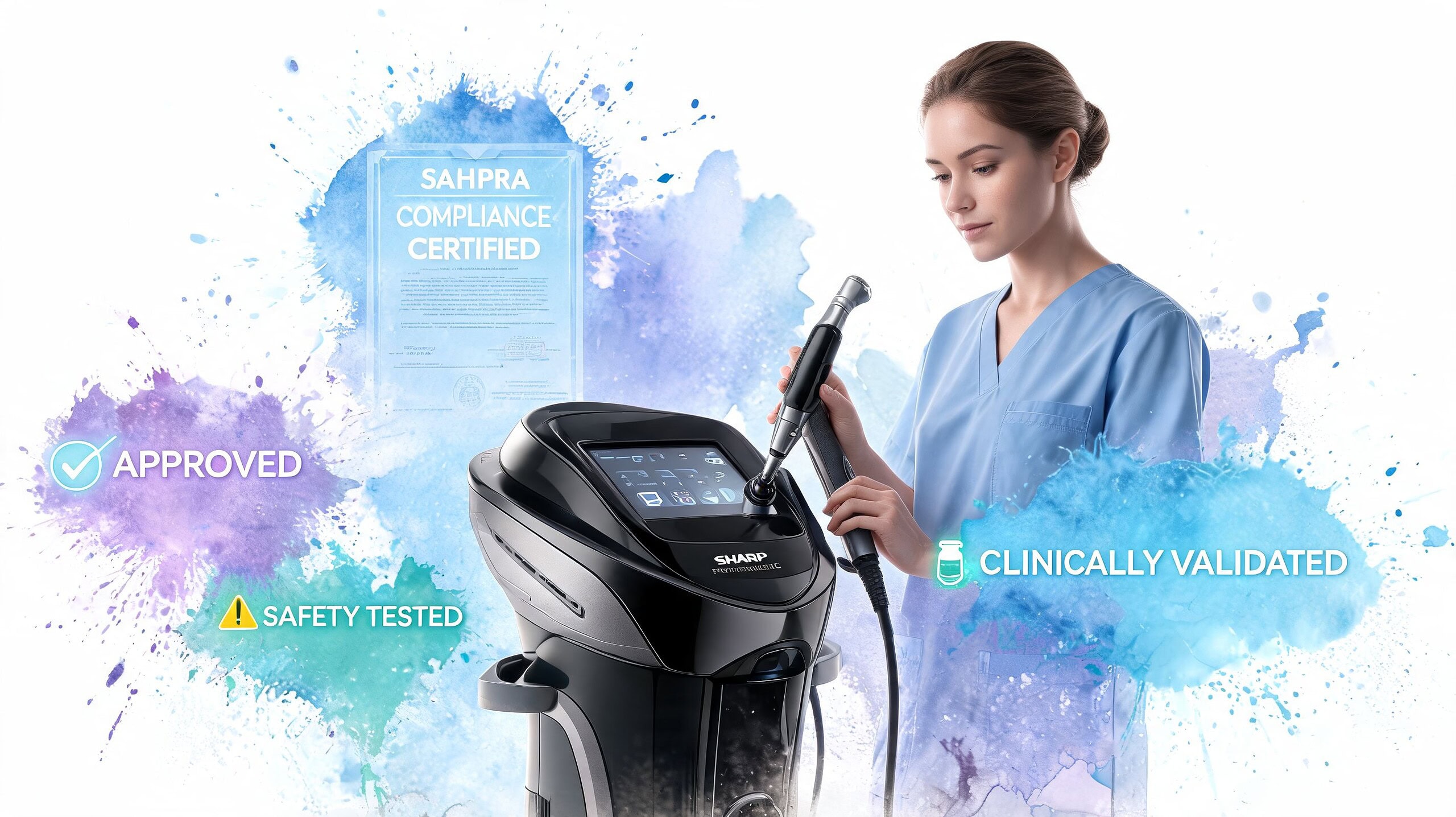
For a black diamond facial, device selection is not only a treatment decision. It is a clinical risk decision, an insurance decision, and a margin decision. In South Africa, that matters even more because clinics often treat a broader range of skin types, including Fitzpatrick IV and V, where poor parameter control and weak operator training can create preventable pigment problems.
What the platform must do
The platform needs a Q-switched Nd:YAG laser suited to carbon-based laser facials, with consistent output, clear parameter control, reliable cooling and shutdown systems where applicable, and documented local training. A spec sheet alone is not enough. Ask the supplier to show the actual treatment range used for this indication, service turnaround times, consumable requirements, calibration processes, and who carries liability if the device fails during the warranty period.
I also look at boring details first. Spot stability, service access, handpiece durability, replacement part lead times, and whether the distributor can train more than one staff member. Those details affect profitability more than flashy marketing claims because they shape downtime, remake appointments, and staff confidence.
Cheap platforms often cost more within a year. The pattern is familiar. Inconsistent energy output leads to variable results, therapists start under-treating to stay safe, client satisfaction drops, and the clinic ends up discounting a treatment that should have held premium positioning.
Why SAHPRA status matters
South African clinics should verify the device’s regulatory position before purchase and again before launch. If a supplier cannot clearly explain the product’s local status, intended use, documentation, importer details, and post-sale support, treat that as a risk signal.
The earlier version of this section cited specific SAHPRA percentages and fines from a source that was not an official SAHPRA report. Those figures should not be relied on. The practical point still stands. Imported aesthetic devices can enter the market with weak paperwork, unclear representation, or poor after-sales support, and that exposes the clinic.
A compliance gap affects more than admin files. It can affect indemnity cover, incident reporting, staff training standards, maintenance records, and how defensible your clinic is if a client develops an adverse event. If you cannot show what the device is, who supplied it, how it is maintained, and who trained the operator, your position weakens fast.
Before committing to a platform, request and file:
- Proof of local supplier identity and importer details
- Device manuals and operator training records
- Service agreement and maintenance schedule
- Consumables and accessories documentation
- Clear stated indication for use
- Serial number records for the exact unit installed in the clinic
This paperwork should sit in one place, not across email threads and WhatsApp messages.
Safety controls that protect patients and the business
Every clinic offering black diamond facial treatments needs a written protocol that covers contraindications, treatment settings, eye protection, room safety, incident logging, and post-treatment review. Staff should not work from memory. That is where mistakes creep in, especially in busy rooms and multi-operator clinics.
For South African practice, I would pay special attention to pigment history, recent heat or exfoliation exposure, photosensitising medication, active inflammation, barrier disruption, and any previous post-inflammatory hyperpigmentation. Fitzpatrick IV and V clients can do very well with this treatment, but only when the platform is predictable and the operator is disciplined.
Your pre-treatment safety checklist should include:
- Active irritation, infection, or impaired skin barrier
- Recent peels, aggressive exfoliation, or resurfacing procedures
- History of post-inflammatory hyperpigmentation or unusual healing
- Photosensitising medication or unresolved skin sensitivity
- Poor adherence to sun protection and aftercare
- Any uncertainty about diagnosis of pigmented lesions, which requires medical review before treatment
Operator behaviour matters as much as hardware. Protective eyewear matched to the wavelength, controlled treatment zoning, regular handpiece inspection, documented maintenance, and conservative parameter selection are basic requirements. Clinics that treat these laser facials casually usually run into the same problems later. Inconsistent outcomes, complaints, and avoidable rework.
The safest clinics build black diamond facials into the same governance structure used for other energy-based treatments. Signed consent. Standard photography. Patch testing when indicated. Clear escalation rules. A maintenance log that someone checks. That system protects the patient, supports the therapist, and keeps the service commercially sound.
Pricing Packaging and Marketing Your New Service
A client walks in on Thursday asking for fresher skin before a Saturday wedding. If your team can explain the result clearly, price the treatment with confidence, and book the follow-up before she leaves, the black diamond facial starts earning like a serious service rather than filling a quiet gap in the diary.
Commercial success comes from margin control, repeatability, and honest positioning. South African clinics often make the same mistake with new laser facials. They price too close to a standard facial, add too much time to the booking, then struggle to protect profit once discounts start.
Set pricing around clinic economics, not social media hype
Price from the cost structure upward. Device repayment, consumables, staff time, room time, photography, cooling products, and re-treatment risk all need to be covered before the service is profitable. If you are using a SAHPRA-compliant platform, maintaining it properly, and training your operators well, your pricing should reflect that standard.
Earlier in the article, The Go-To Guy's report was referenced for local demand and retention trends. Use those market signals as context, not as a price list.
Three factors usually determine the right fee:
Operator level
A treatment performed by a senior therapist or clinician can support stronger pricing than a junior-room slot.Time in room
A 30-minute high-efficiency protocol prices differently from a 60-minute appointment with consultation, imaging, and layered aftercare.Clinic position in your area
A medical-aesthetic clinic in Sandton, Umhlanga, or Cape Town CBD will not price the same way as a volume beauty business competing on specials.
A practical approach is to set one clear standard price, then protect it. Resist frequent discounting. Once clients see the black diamond facial as a promo treatment, it becomes harder to maintain margins and harder for your front desk to sell treatment plans with conviction.
Build packages that improve rebooking
Single sessions sell well, but packages are what make the service stable. The best-performing clinics usually offer three ways to buy the treatment, each with a clear purpose.
A single session works for event preparation, first-time trials, and clients who want a visible refresh without downtime.
A course of treatments suits clients with persistent oiliness, dullness, rough texture, and visible congestion. This format also gives you better control over expectations because improvement is reviewed over a series, not judged on one appointment.
A maintenance plan keeps the service commercially useful after the first course ends. Monthly or six-weekly maintenance is often easier for clients to accept when it is positioned as skin upkeep rather than an open-ended sales pitch.
Package design matters. Keep the options simple, state the booking interval, and include any add-ons only if they improve the result. Too many clinics over-bundle these services and then cut into their own profit with unnecessary extras.
Market the treatment with claims you can defend
This treatment is easy to market badly. Polished videos, carbon application, and immediate post-treatment glow create strong visual content, but marketing has to match what the treatment can realistically deliver on South African skin.
The strongest clinic messages are usually practical:
- Pre-event preparation for weddings, matric dances, birthdays, content shoots, and corporate functions
- Oil and pore management for younger clients or makeup wearers who want smoother-looking skin through the day
- Low-disruption skin maintenance for professionals who cannot manage visible downtime
- Men’s grooming for clients concerned with congestion, uneven texture, and a cleaner skin finish
For Fitzpatrick IV and V clients, your message should stay measured. Speak about brighter-looking skin, improved surface clarity, and refined-looking pores. Do not promise pigment correction, scar removal, or universal suitability. In this market, one careless Instagram caption can create the wrong booking mix and increase the chance of complaints from clients who were never good candidates in the first place.
Train the team to sell it properly
Reception converts interest into bookings. Therapists convert bookings into repeat business. Both need simple language.
Use one short script that is clinically accurate and easy to repeat: “This is a laser carbon facial designed to improve surface brightness, reduce the look of congestion and pores, and give a polished result with little interruption to your week.”
That phrasing is easier to defend than inflated claims, and it works across phone enquiries, WhatsApp leads, and consultation room discussions.
The final point is often overlooked. Photograph every suitable case well, get consent for marketing use, and build your local proof. South African clients respond to results they can recognise in people with similar skin tone, similar concerns, and similar lifestyles. That is far more persuasive than copied international content.
Conclusion Your Next Steps to Launching the Black Diamond Facial
The black diamond facial deserves its place on a modern South African treatment menu, but only when it’s built on solid clinical habits. The service works because it meets real demand. Clients want brighter, cleaner-looking skin, visible pore improvement and minimal downtime. Clinics want treatments that are quick to perform, easy to explain and strong on rebooking.
Success comes from three decisions made well. Use a proper protocol. Treat the right client. Choose compliant laser technology that protects both the patient and the business.
The clinics that do this best don’t treat the black diamond facial as a trend item. They treat it as a system. Consultation, skin analysis, careful settings, informed consent, aftercare, pricing and marketing all need to line up. When they do, the service can become one of the most reliable additions to your menu.
If you’re adding the treatment in 2026, don’t start with the social media reel. Start with the device, the training standard and the paperwork. Then build the offer around those foundations.
If you want to launch a black diamond facial service with the right technology, compliance pathway and team training, speak to Lasers Omega. They supply SAHPRA-licensed medical-aesthetic platforms and support clinics with device selection, clinical training, technical support and business guidance so you can add new treatments with confidence.