



You can have a smooth laser session, a clean front desk, and a technically sound result, then still lose the patient on the way out. I've seen that happen in aesthetic clinics more than once. The treatment was fine, but the patient didn't feel informed, the wait dragged, or nobody checked in after the procedure, so the experience landed as average at best.
That's the challenge with how to improve patient satisfaction in aesthetics. Patients aren't only judging the outcome, they're judging the consultation, the device comfort, the pace of the visit, and whether the clinic felt organised from first enquiry to follow-up.
Table of Contents
- Why Patient Satisfaction Goes Beyond Bedside Manner
- Optimising the Clinical Experience Through Device and Treatment Choices
- Mastering Communication and Expectation Management
- Streamlining Reception and Operational Touchpoints
- Building a Closed-Loop Feedback and Measurement System
- Investing in Staff Training and Team Engagement
- Implementing Follow-Up and Retention Strategies That Work
Why Patient Satisfaction Goes Beyond Bedside Manner
A patient can walk out of a laser hair removal appointment with a perfectly treated area and still feel let down if the room was cold, the explanation was rushed, or nobody told them what to expect next. That's the pattern I've seen in aesthetic practices, the clinical result is only one part of the scorecard. The rest is shaped by comfort, clarity, timing, and trust.

Satisfaction is a journey, not a single moment
In elective care, patients are paying out of pocket, so their tolerance for friction is much lower than in settings where they feel they have no choice. A technically successful session can still feel disappointing if the consultation felt dismissive or the clinic never followed up. Satisfaction is built, or broken, at every touchpoint.
That's why the broader experience matters as much as the device result. In South Africa, private healthcare users reported a 70% satisfaction rate in 2024, while 28% of private-sector respondents said they were dissatisfied in the same survey, which shows there's still plenty of room to improve even in better-resourced settings. The same survey found that doctor consultations were a major driver of satisfaction, with the strongest ratings going to consultation quality and doctor professionalism, which lines up with what clinics see every day, communication and punctuality shape patient perception fast. AAFP guidance on patient satisfaction and consultation quality
Practical rule: if the patient has to guess what happens next, the experience is already weakening.
The smallest gaps create the biggest disappointment
Aesthetic patients tend to remember the rough edges more clearly than the fine details. If the booking process was confusing, the waiting room ran late, or the post-treatment instructions were vague, those moments colour how they describe the whole clinic, even if the procedure itself went well.
A better way to think about it is simple. The first WhatsApp enquiry, the consultation, the treatment room, and the follow-up message all belong to the same experience. If one link feels careless, the patient often assumes the whole clinic works that way.
Optimising the Clinical Experience Through Device and Treatment Choices
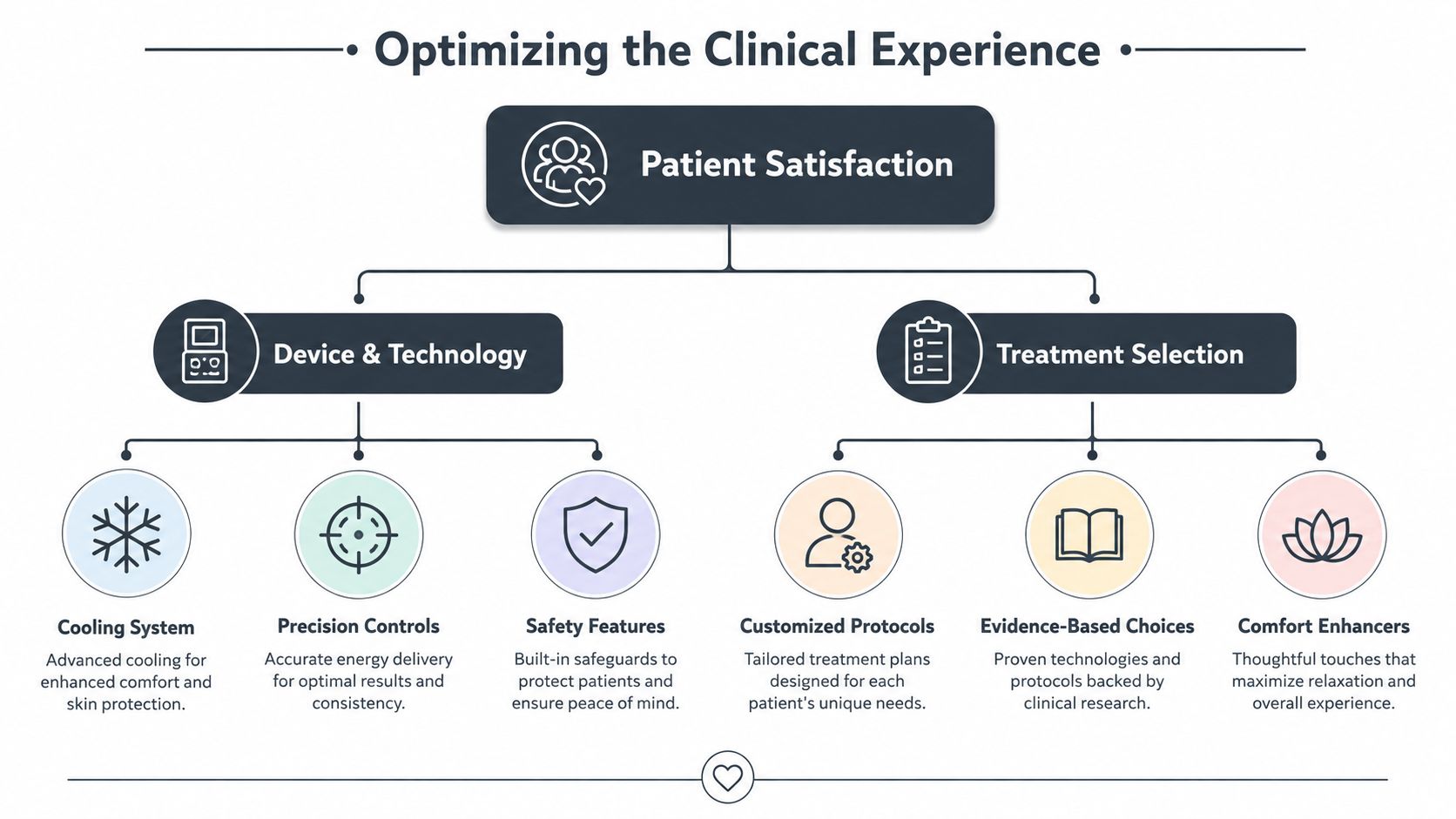
The device choice affects patient satisfaction more than many clinic owners want to admit. Comfort, speed, consistency, and the ability to treat different skin types all influence whether patients leave thinking the session was worth it. The best clinical setup is not just the one that delivers results, it's the one patients can tolerate without dreading the next visit.
Comfort is a treatment feature, not a luxury
If a device runs hot, feels harsh, or forces the clinician to slow down because the patient is struggling, satisfaction drops quickly. Integrated cooling, precise controls, and repeatable settings matter because they reduce the feeling that the patient is “enduring” the procedure rather than receiving it. That's especially true in laser hair removal and skin rejuvenation, where discomfort can shape the patient's memory of the visit more than the final result.
The easiest way to improve comfort is to standardise how the team checks in during treatment. I've found that real-time comfort questions, topical preparation when appropriate, and small setting adjustments for sensitive areas do more than any polished script. If the clinician notices strain early, they can reduce it before the patient mentally checks out.
Speed changes perceived value
Patients don't always say they want a faster appointment, but they notice when a treatment drags on. A shorter session often feels more efficient, less disruptive, and better aligned with the price they're paying. In busy practices, that difference changes how the clinic is judged overall.
Device selection should also support predictable outcomes across a range of skin types, because inconsistency creates doubt. If the result varies too much from patient to patient, confidence falls, and confidence is part of satisfaction. In practical terms, that's why clinics need platforms that balance power with control, not just raw output.
One useful way to evaluate the clinical setup is by asking three questions:
- Will this device reduce discomfort without compromising outcome?
- Can our team use it consistently across different patients and body areas?
- Does the workflow make the visit feel efficient from start to finish?
Aesthetic clinics that want a more structured device strategy often review professional laser hair removal machines alongside their treatment mix, because the equipment has to fit the patient journey, not just the marketing promise.
Patients rarely complain that a device was too advanced. They complain when it felt slow, painful, or unpredictable.
Mastering Communication and Expectation Management
Most dissatisfaction starts before the procedure, not after it. A patient arrives with hopes, assumptions, and a mental picture shaped by social media or a friend's result, and if the clinic doesn't correct that picture early, the visit starts on shaky ground. Clear communication is the cheapest satisfaction lever most practices have.
Use plain language and make the patient repeat it back
The strongest consultation habit I've seen is teach-back. After explaining the plan, ask the patient to say it back in their own words, including downtime, expected response, and aftercare. That one step catches misunderstandings before they turn into complaints.
This matters even more in mixed-language or lower-literacy settings. The PLOS ONE paper on underserved populations found that satisfaction depends on step-by-step explanations, frequent chances for questions, avoiding jargon, and tailoring care to language, culture, and health-literacy needs, while access and navigation issues also shape the experience. Patient satisfaction in underserved communities
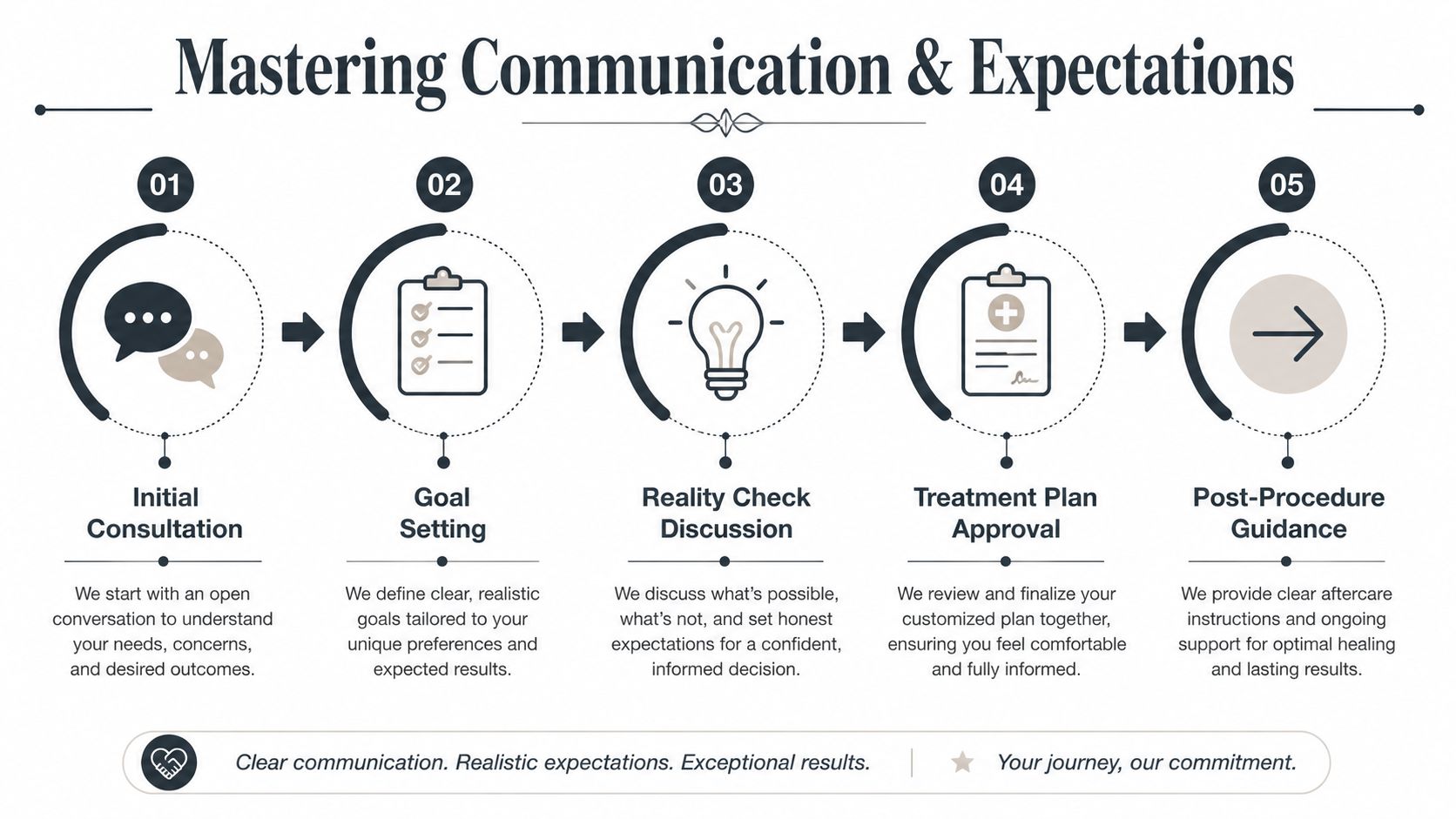
A simple consultation flow works well:
- Initial consultation. Ask what the patient wants and what they're worried about.
- Goal setting. Define the result in plain terms, not marketing language.
- Reality check discussion. Explain what this treatment can and can't do.
- Treatment plan approval. Confirm timing, cost, and aftercare.
- Post-procedure guidance. Repeat the next steps before they leave.
Scripts prevent awkward conversations from becoming lost patients
When a patient wants a result their skin type or condition can't safely deliver, the answer has to be direct and respectful. I usually recommend language like, “I can see the result you want, and this treatment can improve it, but it won't create that exact outcome in one visit.” That keeps the boundary clear without sounding dismissive.
Automated reminders and documented communication preferences also matter because they reduce pre-visit anxiety and help patients feel remembered. Digital engagement works best when it supports human follow-through, not when it replaces it. The moment the patient can't reach the clinic after the visit, confidence starts to erode.
Streamlining Reception and Operational Touchpoints
A clinic can be technically excellent and still feel disorganised if the booking process is clumsy or the waiting room runs behind all day. Operational friction shapes trust fast, especially in aesthetics, where patients notice every delay because they've arranged their day around the appointment.
Map the patient journey, then fix the worst three points
The best operational improvements usually come from identifying the top three failure points, not from trying to fix everything at once. In most clinics, those pain points cluster around pre-visit confusion, waiting-room delays, and post-visit uncertainty. Once you know that, the workflow stops being a vague “service issue” and becomes something you can manage.
Shorter booking lead times help, but only if the communication around them is clear. Digital intake forms, self-service booking, and better wayfinding reduce the back-and-forth that frustrates patients before they even arrive. The internal process matters too, because reception handoff mistakes often show up later as complaints about “poor service” even when the clinical work was fine.
patient management system is only useful when the team uses it to track where patients drop off, not just to store names.
Operational target: a clinic should know exactly who owns the response when a patient asks a question, arrives late, or feels uncertain after treatment.
The first 48 hours after treatment are fragile
That post-treatment window carries a lot of emotional weight. Patients are checking for normal healing, second-guessing their decision, and looking for reassurance that they chose the right clinic. If nobody follows up, they often interpret silence as indifference.
I like to treat complaint handling and follow-up as part of the same system. A quick response, a clear answer, and a documented next step do more for satisfaction than a polished apology after the fact. The clinic doesn't need to over-communicate, it needs to respond consistently and on time.
Building a Closed-Loop Feedback and Measurement System
Patients notice quickly when a clinic asks for feedback and then does nothing with it. Staff notice it too, because collecting comments without a follow-through plan creates extra work without improving the day-to-day flow. A useful satisfaction programme starts with baseline data, a clear target, and a simple process for turning comments into one operational change at a time.
Measure more than one thing
Satisfaction has several parts. The AHRQ patient-experience framework treats it as a mix of access to care, communication, coordination, customer service, and health education, not a single score that tells the whole story. Clinics get a more accurate picture when they review survey results alongside complaints, service audits, waiting times, and review patterns. AHRQ patient experience improvement guide
Short surveys work better than long ones. Patient-experience guidance supports keeping post-visit questionnaires to 5 to 8 questions so the burden stays low and responses stay useful. The same approach works best when the questions stay focused on quality, access, and interpersonal issues, and when the survey format stays consistent from one visit to the next. Patient satisfaction survey design guidance
A practical survey framework looks like this.
Patient Satisfaction Survey Framework
| Dimension | Sample Question | Measurement Frequency |
|---|---|---|
| Quality of care | Did you understand the treatment plan and expected outcome? | After each visit |
| Access and convenience | Was it easy to book, arrive, and be seen on time? | After each visit |
| Interpersonal experience | Did you feel listened to and respected by the team? | After each visit |
Close the loop, or don't collect the data
Once the data is in, assign ownership. Someone has to review it, identify the top issue, and put one workflow change in place before the next review cycle. Without that step, the clinic ends up with a stack of comments and no movement.
A complaint is not an inbox item. It is a signal that a process broke somewhere.
If online feedback is part of your intake and reputation work, it helps to have a structured plan to manage medspa online reviews so the clinic responds with consistency instead of panic. The point is not to chase praise, it is to spot patterns early and fix the operational cause.
patient data collection methods matter only when the team uses the results to make one visible improvement, then checks whether it helped.
Investing in Staff Training and Team Engagement
A patient notices the whole clinic, not just the clinician in the room. The front desk, the treatment chair, the handoff between steps, and the way questions are handled all read as one experience. In an aesthetic practice, that means staff training and team engagement shape satisfaction just as much as bedside manner.
Consistency comes from training that continues after onboarding
One-off training rarely holds in a busy clinic. People forget scripts, new hires copy shortcuts, and small changes in tone turn into bigger differences in how patients feel. Ongoing coaching keeps the standard visible and gives managers a way to correct drift before it becomes normal.
The best training I have seen is role-specific and tied to the actual workflow. Reception staff need clear direction on tone, pacing, and handoffs. Aestheticians need coaching on consultation clarity, comfort cues, and what to say when a patient looks uncertain. Managers need to spot where the schedule, the room turnover, or the handoff is creating stress for both the team and the patient.
Training also has to match the technology and treatments the clinic uses. A device that runs faster, feels more comfortable, or produces more consistent outcomes still creates friction if the team cannot explain what the patient will feel, how long the visit will take, or what the aftercare needs to look like. That is where good training pays off in daily operations, because the same device can feel premium in one clinic and confusing in another depending on how the team handles it.
If you want a useful reference point on team development, the Viral.new team performance guide is a practical reminder that performance improves when expectations, feedback, and repetition are built into the system, not left to chance.
Engaged staff create a better patient experience
When staff feel supported, patients feel it. Team stress shows up fast in short answers, slow handoffs, and missed details, and patients read that as poor care even when the treatment itself is solid. Staff support matters because tired teams struggle to deliver the standard the clinic promises.
The training piece needs to be practical, not motivational. Recorded consultation reviews, mystery patient audits, and peer feedback sessions make the work visible and help the team see where the message is drifting. They also show which parts of the workflow are causing tension, whether that is rushed room turnover, unclear ownership of post-treatment instructions, or inconsistent responses to questions. A clinic does not need every staff member to sound identical, but it does need everyone to deliver the same core message with the same level of care.
Team engagement is also shaped by whether people understand why the workflow exists. Staff are more consistent when they can see how comfort, speed, and outcome quality connect to patient satisfaction. When the team knows which steps reduce anxiety, which steps save time, and which steps protect results, they are more likely to follow the process instead of improvising around it.
Implementing Follow-Up and Retention Strategies That Work
The clinics that improve satisfaction fastest usually start small and stay disciplined. They standardise the follow-up, review the data monthly, and fix one friction point at a time. That is far more effective than a big rebrand or a motivational staff meeting that fades by Friday.
A practical monthly checklist
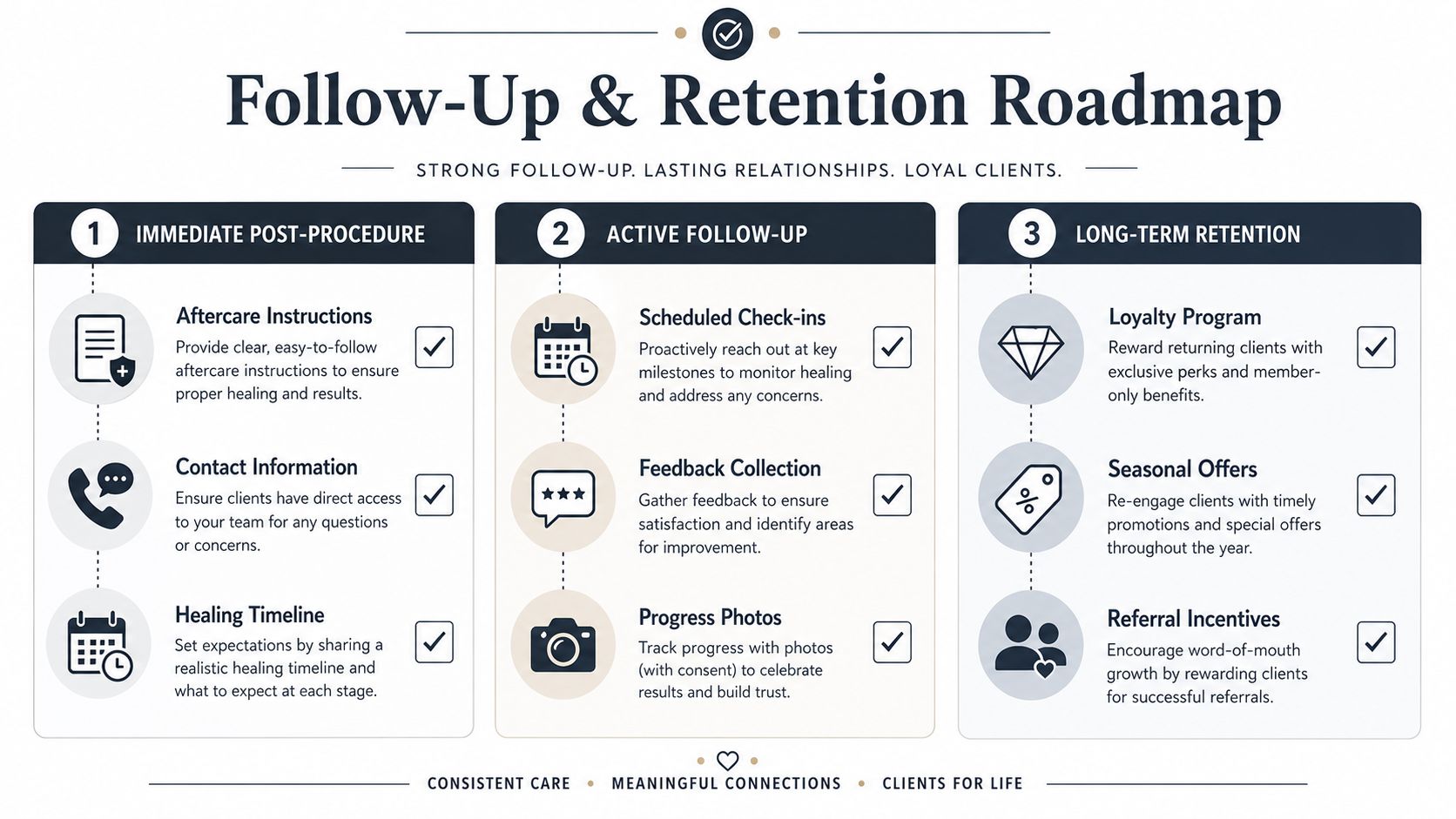
Start with a short review cadence and use the same lens every month:
- Clinical experience. Check whether comfort, outcome consistency, and device performance held up.
- Communication. Review whether patients understood expectations before treatment and instructions after it.
- Operations. Look at booking delays, arrival flow, and response time to questions.
- Feedback. Review survey trends, complaint themes, and review comments together.
- Team delivery. Check whether training gaps or handoff problems are showing up in patient comments.
Track the metrics that actually change behaviour
A useful dashboard includes Net Promoter Score, treatment completion rates, rebooking rates, and complaint resolution times. The numbers matter less than the habit of reviewing them with the team and making one targeted fix before the next meeting. If the team tries to change everything, nothing sticks.
A 90-day improvement plan works best when it starts with the lowest-effort, highest-visibility fixes. Standardise post-treatment follow-up calls first. Add a short digital survey next. Then refine the consultation script, the handoff, or the reminder flow based on what the data says, not on whoever speaks the loudest in the room.
Retention in aesthetic care also depends on how clearly the clinic communicates packages, maintenance plans, and re-engagement offers. Patients return when they feel the clinic remembers their treatment path and makes the next step easy. That's the practical side of satisfaction, not the decorative one.
If you want a patient experience that feels smooth from first enquiry to follow-up, Omega Lasers can help with FDA approved, CE certified, and SAHPRA licensed platforms built for comfort, speed, and repeatable results. Visit Omega Lasers to explore device options, training support, and clinic solutions that fit the workflow you're trying to improve.